

See Kona's Manta Rays Up Close at Night
A Kona Hawaii manta ray night snorkel lets you float at the surface beside an illuminated light board while gentle reef manta rays glide below to feed on plankton. Book a small-group tour, arrive ready to swim in open water, listen closely to the safety briefing, and keep your hands to yourself. The best encounters happen when guests stay calm, hold the float, and let the mantas choose how close they come.
In Keauhou Bay, powerful underwater lights draw in tiny plankton. That creates a natural feeding area for Kona's resident manta rays. You may see a manta sweep past, open its wide mouth to filter-feed, or perform a graceful barrel roll beneath the group. It is surreal, but it is also a wildlife encounter, not an aquarium experience.
Dolphin Discoveries' manta snorkel tours start at $99.99 per person for about two hours, though rates and availability can change. Bring a swimsuit, towel, warm layer for afterward, and a sense of Aloha. Your crew should provide the essential snorkel gear, flotation support, and guidance to help keep the experience safe and secure.
I am Shelley Carey, and in the sections ahead, I will help you plan a respectful, comfortable night with Kona's majestic manta rays.
Kona hawaii manta ray night snorkel vocab to learn:
Why Kona Is the Global Capital for Manta Ray Encounters
Kona offers a rare combination of sheltered coastal waters and a thriving population of resident coastal reef mantas. Along the western side of Hawaii's Big Island, massive volcanic mountains shield the coastline from dominant trade winds. This geography creates calm seas and pristine visibility along the Kona coast.
The deep ocean trenches surrounding the island funnel cold, nutrient-rich currents upward against the shallow volcanic shelves. These upwellings generate dense clouds of microscopic marine life. Over decades, local mantas learned that coastal lights concentrate their natural food source into predictable feeding zones. Because these animals do not migrate across open oceans like pelagic species, hundreds of individual rays live along this coastline year-round. Browsing through Manta Ray Night Snorkel at Kona, Big Island (with Reviews) highlights just how consistent and memorable these encounters are for visitors from around the globe.
Why Keauhou Bay Is the Epicenter for a Kona Hawaii Manta Ray Night Snorkel
Keauhou Bay serves as the historical birthplace of night manta viewing in Hawaii. In the early 1970s, the coastal hotel on the rocky point began illuminating the surf zone with floodlights. Plankton quickly gathered in the light beams, and local mantas arrived to feast on the easy meal.
Today, this site remains the premier destination for close encounters. The bay provides natural protection from offshore ocean swell, creating stable water conditions for floating guests. Departing directly from Keauhou Harbor means you enjoy a quick 5-minute boat ride to the manta site. That leaves more time for in-water viewing rather than long transits in the dark. If you want to dive deeper into their biology, you can learn about manta rays before stepping aboard.
Understanding Manta Ray Behavior and Safety
The species you meet in Kona is the reef manta ray (Mobula alfredi). With wingspans reaching up to 12 to 14 feet and weights exceeding 1,000 pounds, these gentle giants can look intimidating at first glance. However, mantas are completely harmless filter feeders. Unlike their distant stingray cousins, manta rays have no venomous tail barb, no sharp teeth, and no aggressive instincts.
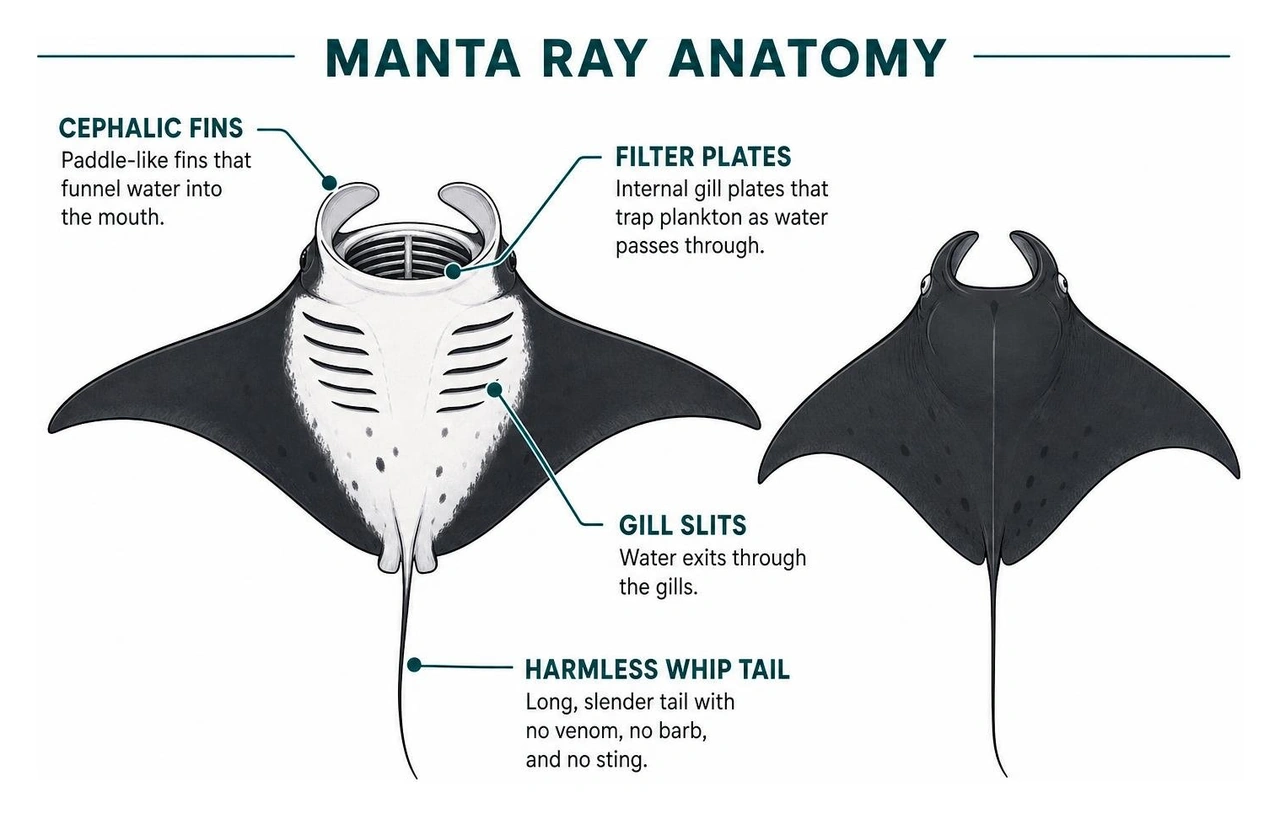
Mantas use paddle-like cephalic fins on each side of their head to funnel water into their wide mouths. As water passes over internal gill plates, plankton gets trapped and swallowed while filtered water exits through their gills. When plankton concentrates near the lights, mantas execute backward somersaults, known as a barrel roll. They glide within inches of the floating boards without making intentional contact. Watching a 1,000-pound animal pivot gracefully in front of your mask is a life-changing experience that illustrates how docile these animals are.
How a Kona Hawaii Manta Ray Night Snorkel Works

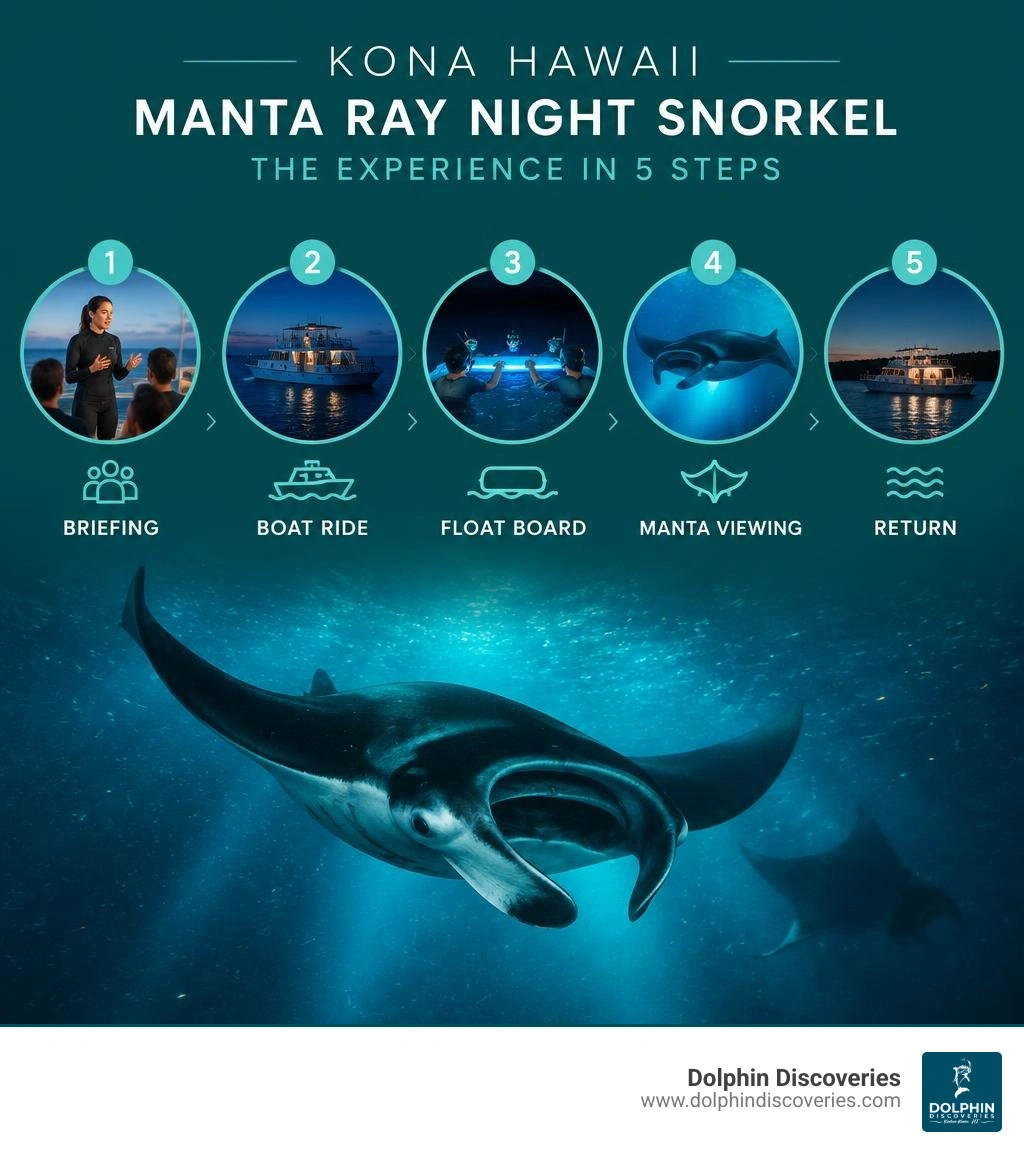
A night manta tour is a structured, passive wildlife encounter designed for maximum safety and comfort. After checking in at the harbor, you board our fast, rigid-hull inflatable boat with your small group. Our crew delivers a comprehensive safety briefing covering water entry, breathing techniques, and marine etiquette.
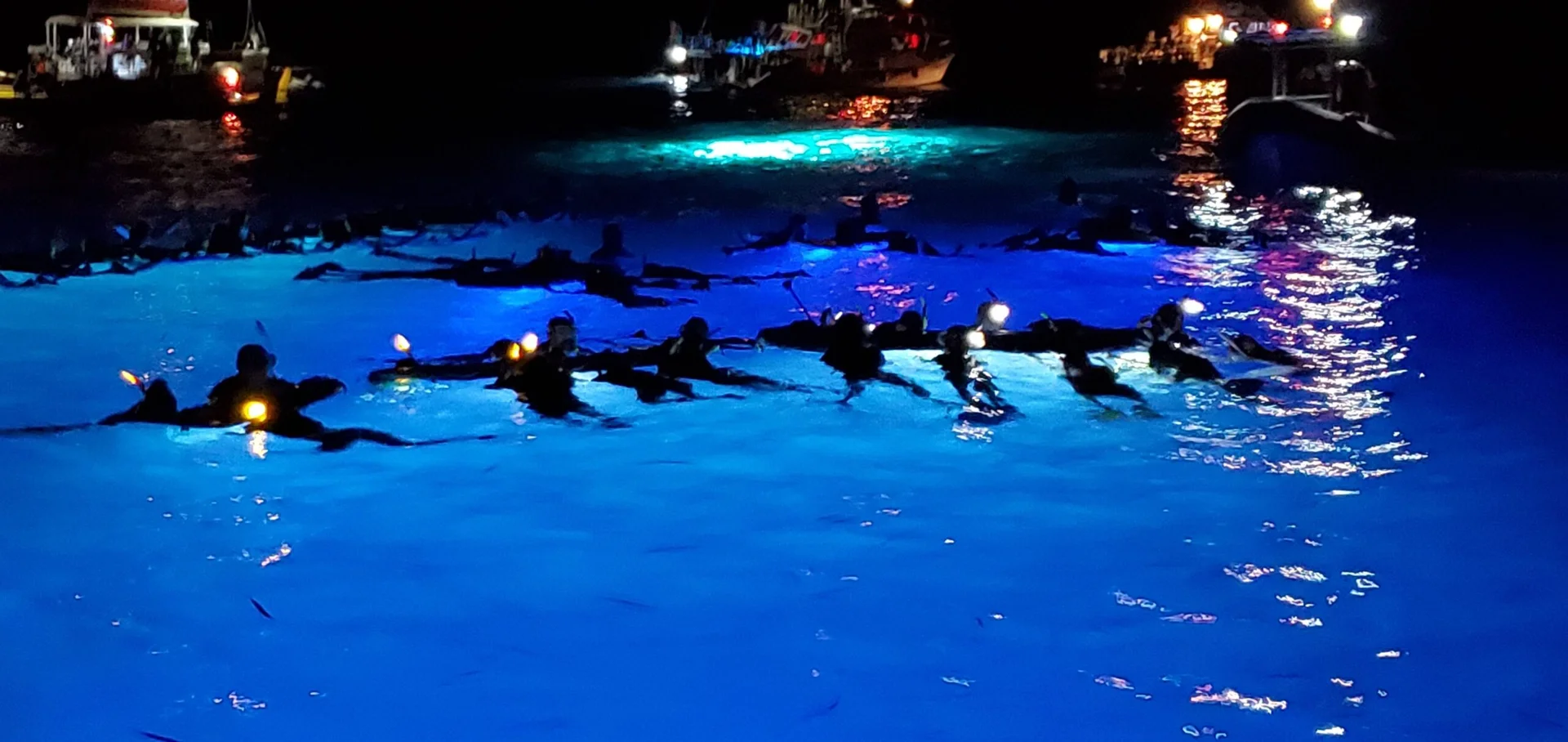
Once on-site, you slip into the warm Pacific and swim a few yards to our custom-built flotation board. You rest your chest against the float, place your hands on the secure handles, and place your face in the water. High-lumen blue LED lights mounted beneath the board point downward, illuminating the clear water column below your feet. For a full breakdown of the logistics, our Night Snorkel Manta Rays Guide 2026 covers everything you need to know about the flow of the evening.
The Light Board Technique and Plankton Attraction
The floating light board works like an aquatic "floating campfire." Microscopic ocean organisms, known as phototactic plankton, are naturally drawn toward bright light sources. Within minutes of turning on the high-powered LEDs, millions of copepods, crab larvae, and tiny crustaceans gather in the illuminated beam beneath your board.
This concentration sets a rich buffet for the rays. Rather than having to swim miles across open ocean to filter sparse food, mantas swoop up into the illuminated beam with their mouths open. You float flat on the surface without needing to kick or chase the wildlife. The mantas control the entire encounter, swooping up from the deep blue, turning just below your mask, and diving back down to gather speed for another pass.
Tour Timing: Sunset Departure vs. Dark Night Dives
Tours generally run in two time slots each evening. Both offer advantages depending on your schedule and personal preferences.
| Feature | Sunset Departure (Manta Mellow) | Late-Night Departure (Dark Magic) |
|---|---|---|
| Atmosphere | Golden hour colors over the ocean, gradual shift to darkness | Total nighttime immersion under starry island skies |
| Water Clarity | High visual contrast during twilight transition | Deep, dramatic contrast with focused LED light beams |
| Plankton Density | Builds steadily as natural ambient light fades | Maximum concentration already gathered around lights |
| Best For | Families with young children and sunset lovers | Night owls seeking high-intensity feeding activity |
| Boat Transit | Scenic coastal cruise during twilight | Fast, dark ocean run under open stars |
Both options deliver phenomenal viewing. Selecting the right departure comes down to whether you prefer watching the sunset over the water or jumping straight into the midnight-blue sea.
Preparing for Your Excursion: Requirements, Gear, and Etiquette
A smooth night snorkel starts with simple physical preparation and packing the right gear. Because the tour takes place in open ocean water after dark, feeling comfortable in your equipment makes all the difference. If you are prone to motion sickness, taking a non-drowsy preventative before departure helps keep your stomach settled while floating. Review our manta ray night swim tips to ensure you arrive prepared.
Essential Gear to Bring for Your Kona Hawaii Manta Ray Night Snorkel
We supply the specialized equipment you need for the water, but bringing along a few personal items will keep you warm and organized throughout the night:
- Swimsuit: Put this on before arriving at the marina so you are ready to board immediately.
- Towel: A large, absorbent beach towel for drying off after exiting the water.
- Warm Post-Swim Layers: A windbreaker, hoodie, or warm fleece jacket helps block the cool ocean breeze on the boat ride back.
- Neoprene Top or Wetsuit: We provide quality wetsuit tops to keep your core warm during the 40 to 45 minutes of floating.
- Underwater Action Camera: Bring a GoPro or waterproof camera with a secure wrist lanyard to capture high-definition footage.
- Dry Bag: A small splash-proof bag keeps your phone, car keys, and dry clothes protected while aboard the vessel.
Swimming Ability, Age Limits, and Health Guidelines
Guests should possess basic water competency and feel comfortable putting their face in the water while breathing through a snorkel. You do not need to be an endurance swimmer because the rigid flotation board supports your upper body, and pool noodles support your lower legs to keep your body horizontal.
Children as young as six or seven thrive on this excursion when accompanied by an adult, provided they are comfortable in open water. Non-swimmers or family members who prefer staying dry can often join as ride-along passengers to watch the glowing spectacle from the boat deck. If you have specific medical conditions or back concerns, check our frequently asked questions for detailed accessibility guidelines.
Strict Conservation Rules and Ocean Stewardship
Protecting Kona's manta population requires strict adherence to ethical viewing standards. When floating at the board, the golden rule is look, but never touch.
Manta rays are coated in a thin, protective mucus layer that shields their skin from harmful bacteria, parasites, and infections. Touching a manta strips away this barrier, leaving the ray vulnerable to skin lesions. Avoid reaching downward, splashing, or kicking your feet. Keeping your legs flat near the surface ensures the rays have clear, open water to loop without accidental contact. Our team upholds these conservation principles on every departure, aligning with standard Hawaii manta ray guidelines to preserve these delicate reef ecosystems for generations to come.
Planning Your Ultimate Kona Itinerary and Accommodations
A night manta snorkel is often the highlight of a Big Island vacation, but Kona offers plenty of daytime adventures to fill your schedule. Planning your activities and lodging around Keauhou Bay makes your entire trip smoother and less rushed.
Pairing Manta Snorkeling with Daytime Big Island Adventures
Make the most of your ocean time by pairing your night manta snorkel with a morning reef adventure. You can book our Captain Cook snorkel tour to explore the pristine marine sanctuary of Kealakekua Bay, home to historic monuments, vibrant coral gardens, and passing pods of Hawaiian spinner dolphins.
During the winter months from December through April, you can also join our seasonal Kailua-Kona whale watching charters to witness majestic humpback whales breaching offshore. On land, consider exploring local Kona coffee farms up the slopes of Hualalai or taking a day trip to Hawaii Volcanoes National Park before returning to the coast for your evening ocean adventure.
Where to Stay in Kona for Convenient Marina Access
Staying along the southern end of the Kona coast keeps your commute to the boat slip short and easy:
- Keauhou Bay Resorts: Properties like the OUTRIGGER Kona Resort & Spa sit right on the cliffs overlooking the bay, offering short walks to our departure slips.
- Kailua Village: Downtown Kailua-Kona offers a variety of oceanfront condos, boutique hotels, and bustling restaurants within a 15-minute drive of Keauhou Harbor.
- South Kona Cottages: Quiet rentals nestled in Captain Cook and Kealakekua place you near lush farm country while remaining a quick drive from both daytime and nighttime harbor departures. You can learn more about staying near manta viewing locations to choose the best base for your Ohana.
Frequently Asked Questions About Kona Manta Ray Snorkeling
Are manta rays dangerous or do they have stingers?
Manta rays are completely harmless to humans. They lack venomous tail stingers, barbs, and sharp teeth. They do not hunt large prey and feed exclusively on plankton, making them safe to float with in open water.
What is the best month to see manta rays in Kona?
Manta rays can be seen year-round in Kona. Because reef mantas are non-migratory residents, sighting conditions remain consistent throughout every month. The calm leeward waters off the Big Island provide stable snorkeling conditions in both summer and winter.
What happens if we do not see manta rays on our tour?
Mantas are wild ocean animals, so sighting success rates average around 85 to 90 percent over the course of a year. If mantas do not appear during your scheduled run, most reputable operators offer standby vouchers or return-ride policies so you can try again on another night during your stay.
Conclusion: Book Your Unforgettable Keauhou Bay Manta Encounter
Floating above wild manta rays as they glide and swoop beneath your light board is a surreal sight you will never forget. Our small-group tours offer a personal, uncrowded experience with dedicated naturalists who share insights about these majestic giants while keeping every guest safe and secure.
Spaces fill up quickly, especially during peak holiday and summer travel seasons. Mahalo Nui for taking the time to learn about responsible ocean stewardship, and we look forward to welcoming you aboard our Manta Ray Night Snorkel Kona tour for a night on the water with our island family.