

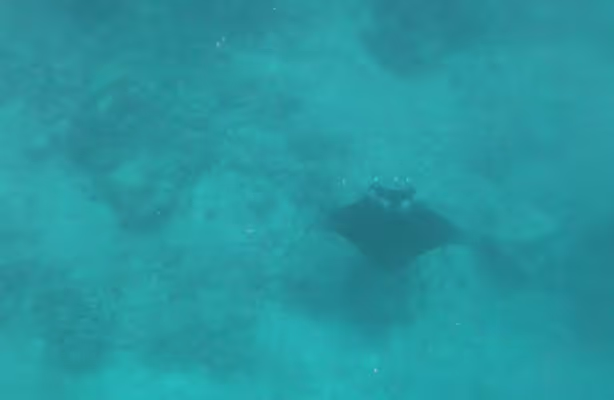
What is the Manta Ray Night Swim Kona Experience Like?
Manta ray night swim in Kona is one of the most unforgettable wildlife experiences on the planet — and it's available to almost any traveler, any night of the year.
Here's what you need to know at a glance:
- What it is: A guided ocean tour where you float on the surface at night while giant manta rays glide beneath you to feed on light-attracted plankton
- Where: Keauhou Bay, on the Kona Coast of Hawaii's Big Island
- Who can join: Ages 6–70, under 285 lbs, must be able to swim and tread water in open ocean
- How long: 2 hours total, with roughly 30–45 minutes in the water
- Price: Starting at $99.99 per person with Dolphin Discoveries
- Success rate: Manta rays are spotted on approximately 85–95% of tours
- Non-swimmers: Can join as paid ride-along passengers and watch from the boat
- What's included: Wetsuit top, snorkel gear, safety briefing, crew supervision
Kona is one of the only places in the world where this experience is reliably available after dark, every single night. The bay's nutrient-rich waters support a resident population of over 300 individually identified manta rays that don't migrate — meaning there's no single "best season." You can book in January or July and face the same high odds of an encounter.
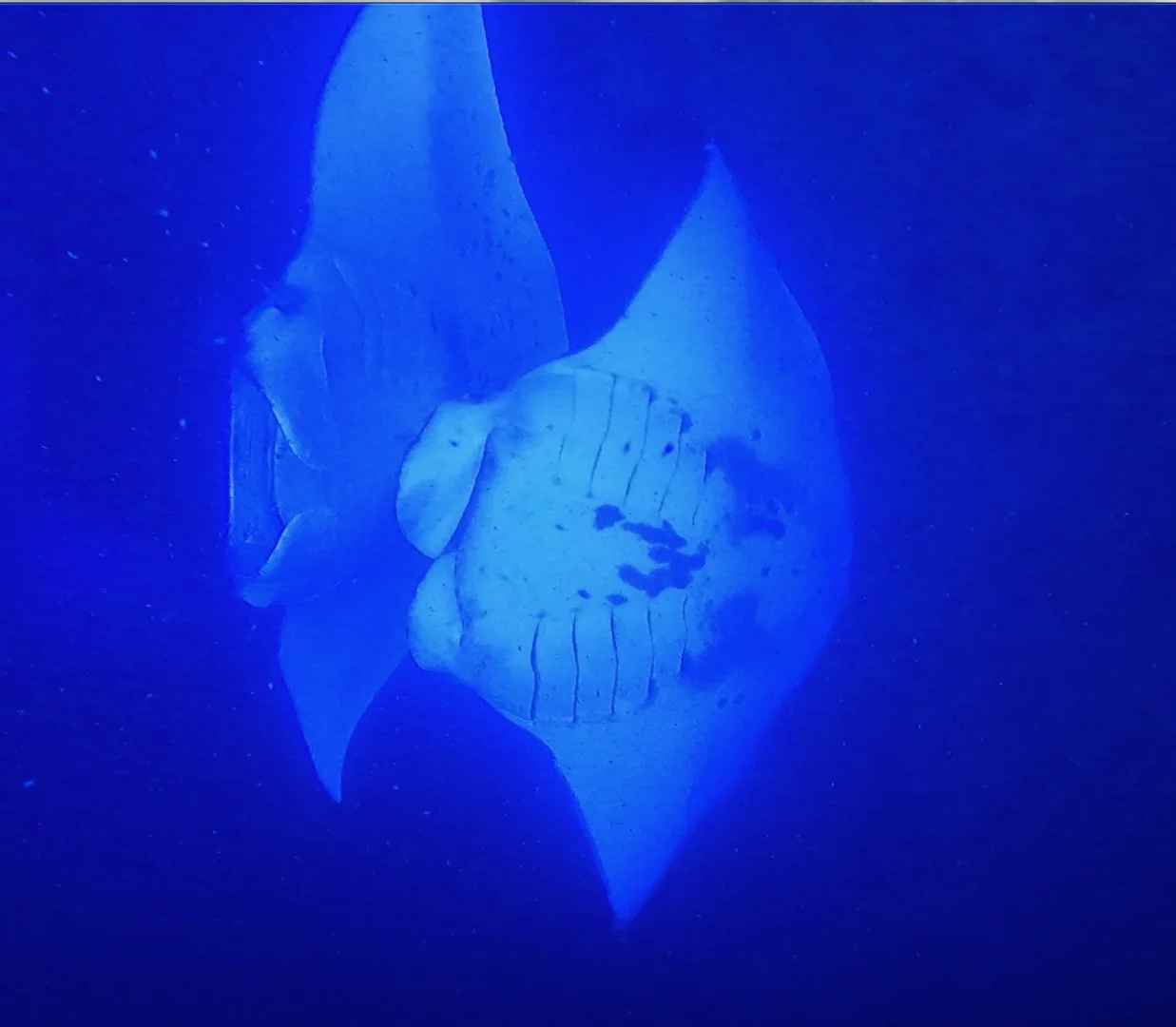
During a tour, one guest described floating in the dark Pacific while massive manta rays swooped and glided inches below her and her children and being the highlight of their vacation. That kind of reaction is common. These animals can reach 16 feet across and weigh over 1,000 pounds, yet they are completely harmless, with no teeth, no stingers, and no interest in you — only the plankton.
This guide covers everything you need to plan and book your night swim with confidence, from physical requirements and safety rules to what to bring and what happens if no rays show up.

Stepping into the Pacific Ocean after dark might sound intimidating, but it is quickly transformed into a magical, surreal experience. As you slip off the boat and hold onto our customized floating light board, the darkness of the night ocean fades. The high-powered LED lights shine downwards into the deep blue, creating an ethereal, glowing arena.
Almost immediately, the "underwater ballet" begins. Giant manta rays emerge from the dark, gliding effortlessly through the illuminated water. They perform slow, gravity-defying barrel rolls and loops directly beneath the light board, sometimes coming within inches of your snorkel mask. Because they are filter feeders, they are completely focused on their microscopic feast, ignoring human presence while offering a front-row seat to their majestic movements.
As of July 2026, travel trends show that visitors are increasingly seeking out these authentic, small-group eco-adventures. Rather than crowded, massive commercial vessels, travelers prefer the intimate, quiet atmosphere of a smaller group where the tranquility of the night amplifies the soft sounds of the ocean.
The Science Behind the Manta Ray Night Swim Kona
The magic of the night swim is entirely driven by a biological phenomenon known as phototaxis. When we turn on our high-intensity LED light boards, the artificial light mimics the moon's reflection on the water. This triggers positive phototaxis in microscopic zooplankton, causing them to swarm and concentrate in dense clouds directly beneath our boards.
This concentrated feast acts as an underwater dinner bell for the reef manta rays (Mobula alfredi). As passive filter feeders, these "gentle giants" rely on swallowing massive quantities of plankton. They swim forward with their mouths wide open, using specialized cephalic fins (which look like horns) to funnel the plankton over their gill rakers. To learn more about these fascinating creatures, their lifespans of 40 to 80 years, and how they must stay in constant motion to breathe, check out our resource to Learn About Manta Rays.
What to Expect During Your Manta Ray Night Swim Kona
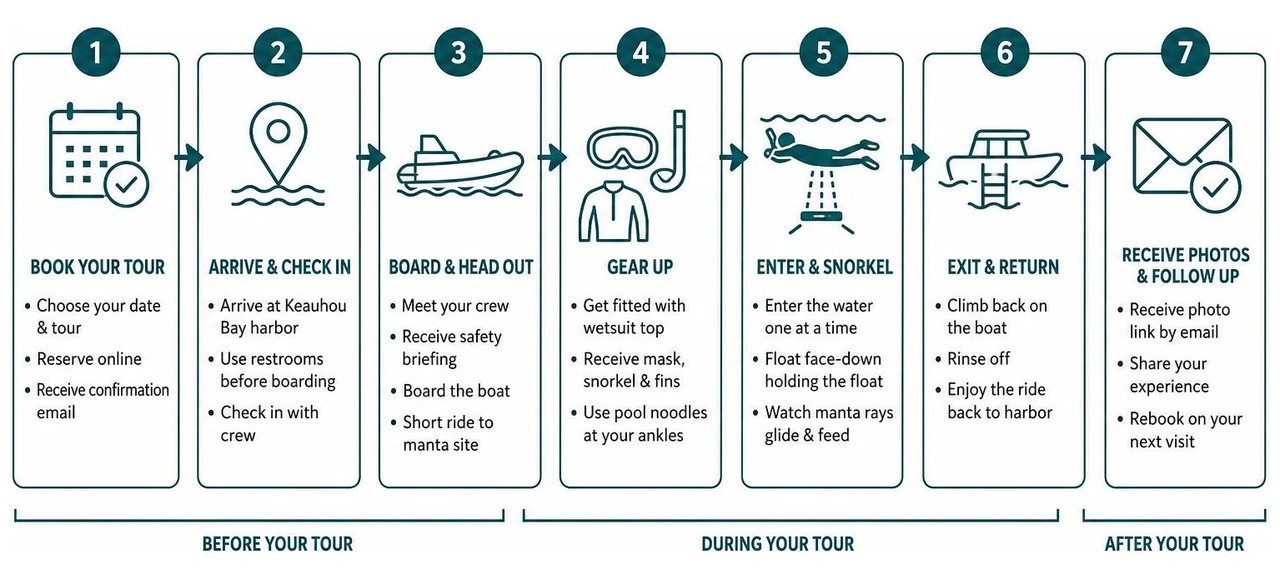
Our tours have a total duration of 2 hours, and guests spend approximately 30 to 45 minutes floating in the water with the manta rays. This is the optimal window to enjoy the encounter without getting too chilled by the night air.
When choosing your tour, you can opt for either a sunset departure or a late-night departure.
- Sunset Tours: These depart during the golden hour, allowing you to enjoy a beautiful Hawaiian sunset on the boat ride out. Entering the water as twilight transitions into darkness is highly recommended for apprehensive swimmers, as having some remaining daylight eases the initial anxiety of entering the open ocean.
- Late-Night Tours: These take place under a fully starlit sky. Because fewer tour boats remain at the viewing sites later in the evening, these tours offer a more exclusive, dramatic, and intimate atmosphere.
For a detailed breakdown of what to expect from the moment you check in to the moment you step back onto the dock, read our guide on What to Expect From a Night Snorkel With Manta Rays in Kailua Kona.
Essential Requirements and Tour Logistics
To help you choose the best fit for your vacation schedule, here is a quick comparison of our primary evening tour options:
FeatureSunset Manta TourLate-Night Manta TourDeparture TimeJust before sunset (varies seasonally)Fully after darkAtmosphereScenic, sunset views, great for familiesDramatic, quiet, fewer surrounding boatsIn-Water Time30–45 minutes30–45 minutesBest ForBeginners & apprehensive swimmersAdventurous travelers & couples
Our check-in location is at 78-6831 Ali‘i Dr, Kailua-Kona, HI 96740, located in the courtyard behind Tropics, KTA, and Bianelli's. After checking in and getting fitted for your gear, you will drive a short distance to Keauhou Bay, which is the historical birthplace of the manta ray night snorkel.
Important Navigation Warning: Apple Maps is notoriously unreliable for locating our check-in boutique. We highly recommend using Google Maps or Android navigation and searching specifically for "Dolphin Discoveries- Snorkel Tour Check-in and Boutique".
If you are using rideshare services like Uber or Lyft, you must schedule a two-stop trip: your first stop must be at our check-in boutique on Ali‘i Drive, and your second stop will be at the Keauhou Bay boat launch where our vessel departs.
Age, Weight, and Physical Fitness Restrictions
While the manta ray night swim in Kona is highly accessible, safety is our absolute priority. We require all participants to meet the following physical standards:
- Age Limits: Participants must be between 6 and 70 years old. Young children under 6 may experience extreme fear in the dark, open ocean at night, and the physical demands are not suited for guests over 70.
- Weight Limit: The maximum weight limit for participants is 285 lbs.
- Physical Mobility: Re-boarding our rigid inflatable boat requires climbing a vertical metal ladder resting on a pontoon. This requires basic upper and lower body strength. For this reason, this tour is not recommended for individuals with chronic neck, back, shoulder, or severe mobility issues, or pregnant women.
- Swimming Proficiency: All snorkeling participants must be competent swimmers who are comfortable treading water in the open ocean without the assistance of a flotation device.
For a comprehensive checklist of health considerations and safety guidelines, review our Know Before You Go page.
What to Bring and What is Included
We provide almost everything you need for a comfortable and successful night snorkel:
- High-quality snorkel mask and snorkel
- Buoyant neoprene wetsuit tops to maintain your core body temperature
- High-intensity LED floating light boards
- Professional naturalist guides to supervise the swim
Note: We do not provide prescription masks on board. If you require a corrective lens mask, please rent one from a local shop like Snorkel Bob's or Boss Frog's prior to your scheduled check-in.
To ensure you have the best experience, please consult our guide on What You Need to Know About Manta Ray Night Snorkeling in Kona and bring the following personal items:
- Your own towel: We do not provide towels on board, and you will want to dry off immediately after exiting the water.
- Warm, dry layers: The boat ride back to the harbor after dark can feel quite chilly and breezy. Bring a light windbreaker, sweatshirt, or dry change of clothes.
- Motion sickness prevention: The ocean swell can cause the boat and the floating light boards to rock gently. If you are prone to seasickness, we highly recommend taking medication (such as Bonine or Dramamine) at least an hour before check-in.
Safety Measures and Ethical Wildlife Guidelines
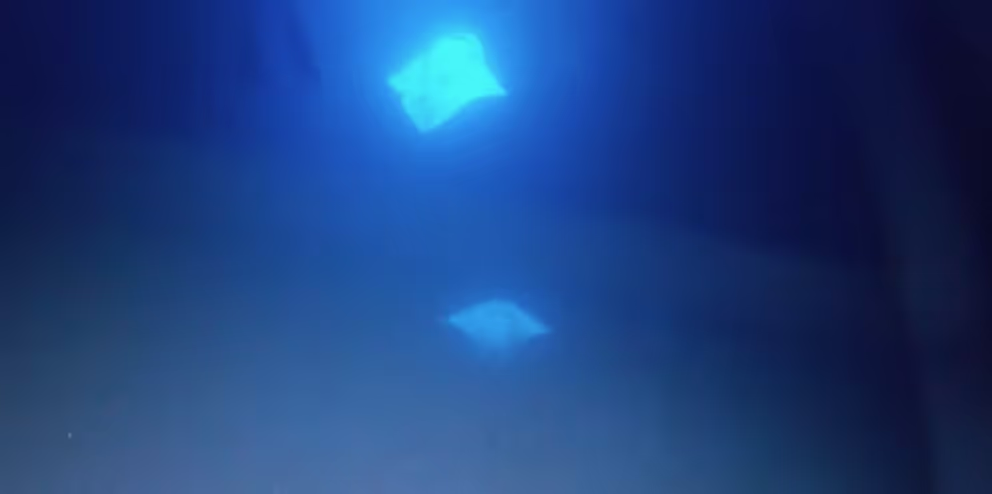
To protect both our guests and the wild marine life, we adhere strictly to the community-established manta tour operator guidelines. Our encounters are based entirely on passive observation.
We utilize a "viewing corridor" system. Divers sit stationary on the sandy ocean floor (often referred to as the "campfire"), while snorkelers float flat on the surface holding onto the light boards. This leaves the middle water column completely clear, creating a safe, unobstructed runway for the manta rays to glide and loop.
The No-Touch Rule and Protecting the Manta's Mucus Layer
The absolute golden rule of snorkeling with manta rays is: never touch the animals.
Manta rays have a delicate, protective mucus coating (or slime coat) on their skin. This layer acts as their primary immune system, barrier, and shield against marine bacteria and infections. If a human touches a manta ray, the friction rubs off this protective layer, leaving the animal highly vulnerable to painful and potentially life-threatening bacterial infections.
Always maintain a respectful, passive distance. Let the mantas control the proximity of the interaction — they are incredibly skilled navigators and will naturally glide inches from you without making physical contact. For more on these critical conservation rules, read our Guidelines for a Safe and Enjoyable Hawaii Manta Ray Dive.
Flotation Equipment and Why Life Jackets are Discouraged
A common question first-time snorkelers ask is whether they can wear standard orange life jackets during the swim. On ethical manta charters, standard life jackets are strictly discouraged.
Standard life jackets are designed to force your body into an upright, vertical position with your head high out of the water. In a vertical position, your legs dangle straight down into the feeding corridor. This significantly increases the risk of accidentally kicking, striking, or spooking a feeding manta ray swimming directly beneath you.
Instead, we provide wetsuit tops and foam pool noodles to place under your ankles. This combination keeps your entire body, including your legs, perfectly flat and horizontal on the water's surface, ensuring a safe and comfortable viewing experience. For a deeper look into the equipment we use to keep you safe, read Everything You Need to Know About Manta Ray Snorkeling in Kona.
Frequently Asked Questions about Kona Manta Ray Swims
What happens if no manta rays are sighted?
Because manta rays are wild ocean animals, their presence can never be 100% guaranteed. However, because our resident population does not migrate, we maintain an incredibly high success rate of approximately 85–95% year-round.
In the rare event that no manta rays are sighted during your tour, we offer a Manta Guarantee. This policy allows you to rebook and join another scheduled tour for free on a standby basis, subject to availability. Because of this, we highly recommend booking your manta ray night swim early in your vacation itinerary to allow for flexible rescheduling. For more details on booking policies, visit our FAQ page.
Can non-swimmers participate in the tour?
Non-swimmers cannot enter the water under any circumstances, as our safety protocols require all in-water participants to be competent swimmers. However, non-swimmers are welcome to join as paid ride-along passengers. From the safety and comfort of our boat, ride-along guests can watch the glowing green and blue lights illuminate the water and easily view the massive shadows of the manta rays gliding right alongside the vessel.
Are there restrooms on the boat?
Our fast rigid inflatable boats are designed for speed, agility, and getting you to the manta site in just minutes. To maintain this streamlined design, there are no restroom facilities on the boat. We highly recommend using the public restroom facilities at the Keauhou Bay harbor prior to boarding the vessel.
Conclusion
A manta ray night swim in Kona is a true bucket-list adventure that connects you directly with the raw beauty of Hawaii's marine ecosystem. By choosing Dolphin Discoveries, you are opting for an intimate, small-group experience on fast, maneuverable boats with a team dedicated to safety, education, and ethical wildlife encounters.
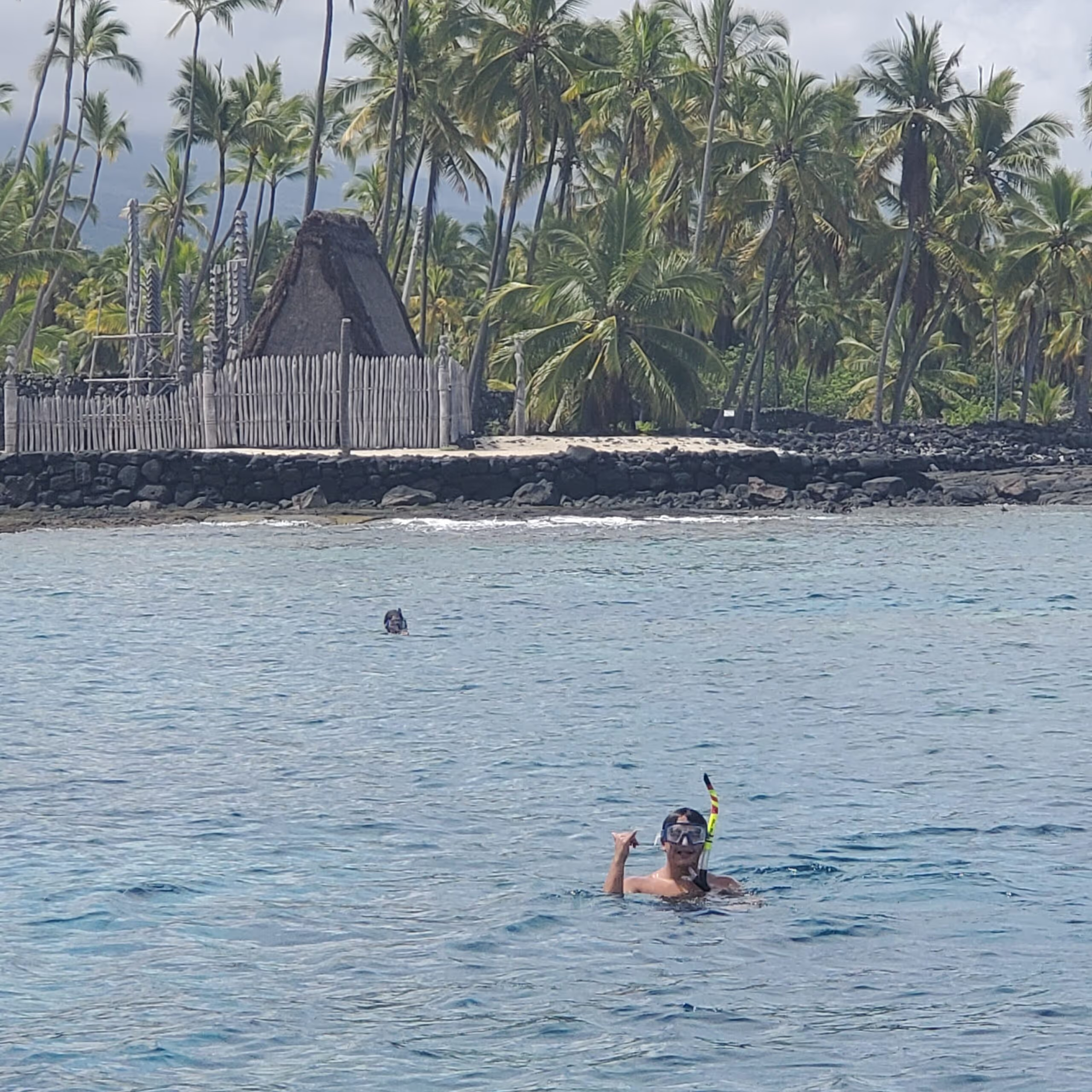
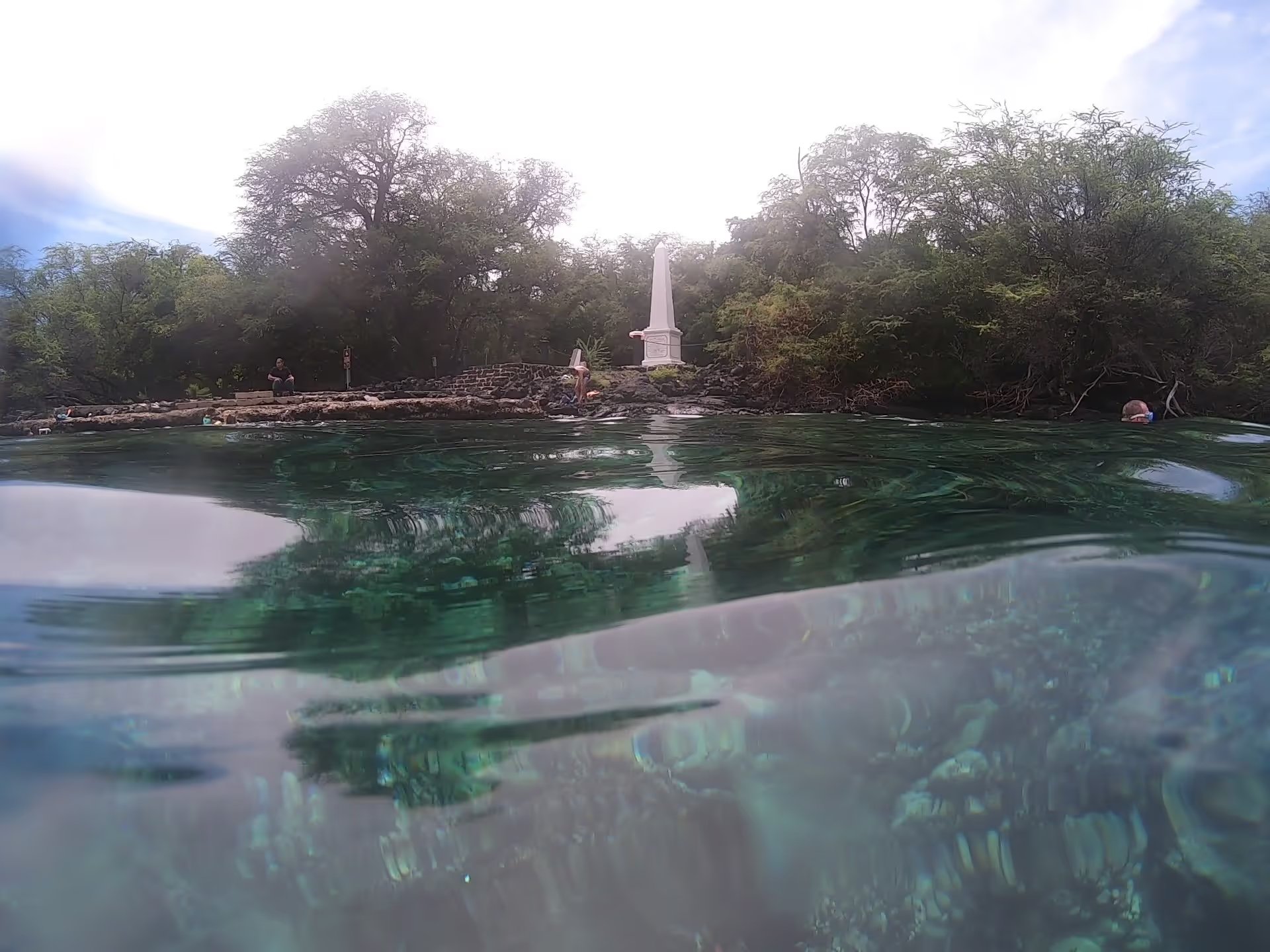
Beyond our night swims, we offer a variety of incredible ocean adventures departing from Keauhou Bay HI, including Captain Cook snorkel trips, seasonal whale watching, and double-reef snorkel tours.
Our standard 2-hour Manta Ray Night Snorkel and Dolphin & Whale Watching tours start at $99.99 per person. For a longer daytime reef adventure, our Captain Cook Snorkel Tour is $99.99 per person (3.5 hours, including check-in), and the Kona Snorkel Tour – Two Snorkeling Spots starts at $109.99 per person (4 hours). If you are traveling with a large group or celebrating a special occasion, we also offer fully customizable private boat charters on our spacious "Holo Holo" vessel starting at $1,050 for up to 34 guests.
All prices are subject to change, so we always recommend verifying current rates and availability directly on our website.
Space on our small-group excursions is highly limited and tours frequently sell out weeks in advance. Don't wait until you arrive on the Big Island — secure your spot today and prepare for the ocean adventure of a lifetime!
Ready to book? Reserve your adventure now: Manta Ray Night Snorkel Kona.