

Check Honaunau Bay Snorkeling Conditions Before You Enter
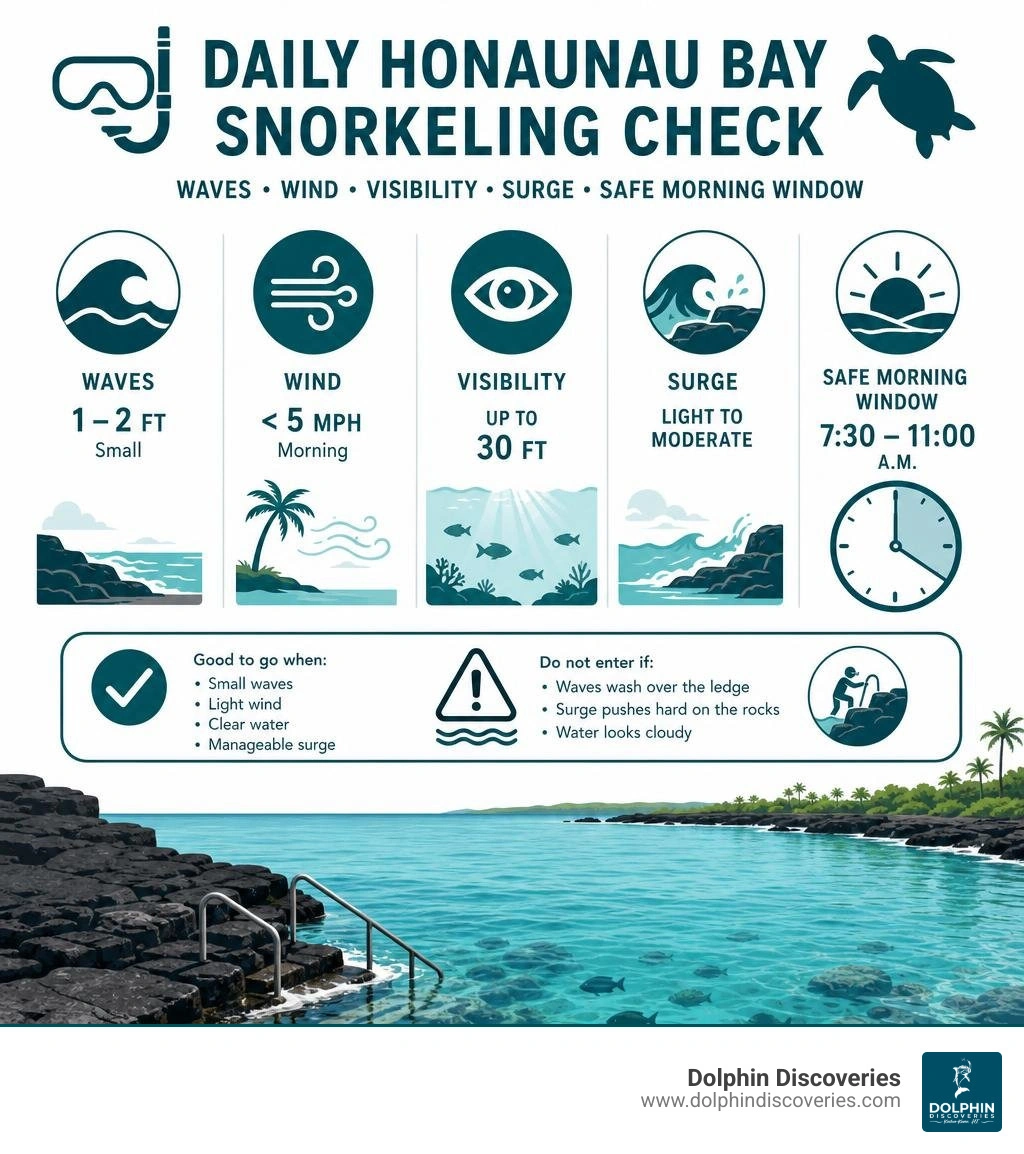
For Two Step, a good snorkel day means clear water, light wind, small waves, and manageable surge at the lava ledge. Recent reports rate conditions as good, with roughly 1 to 2 foot waves, wind below 5 mph in the morning, and light-to-moderate surge. Visibility can reach about 30 feet, and the water is typically near 80 F.
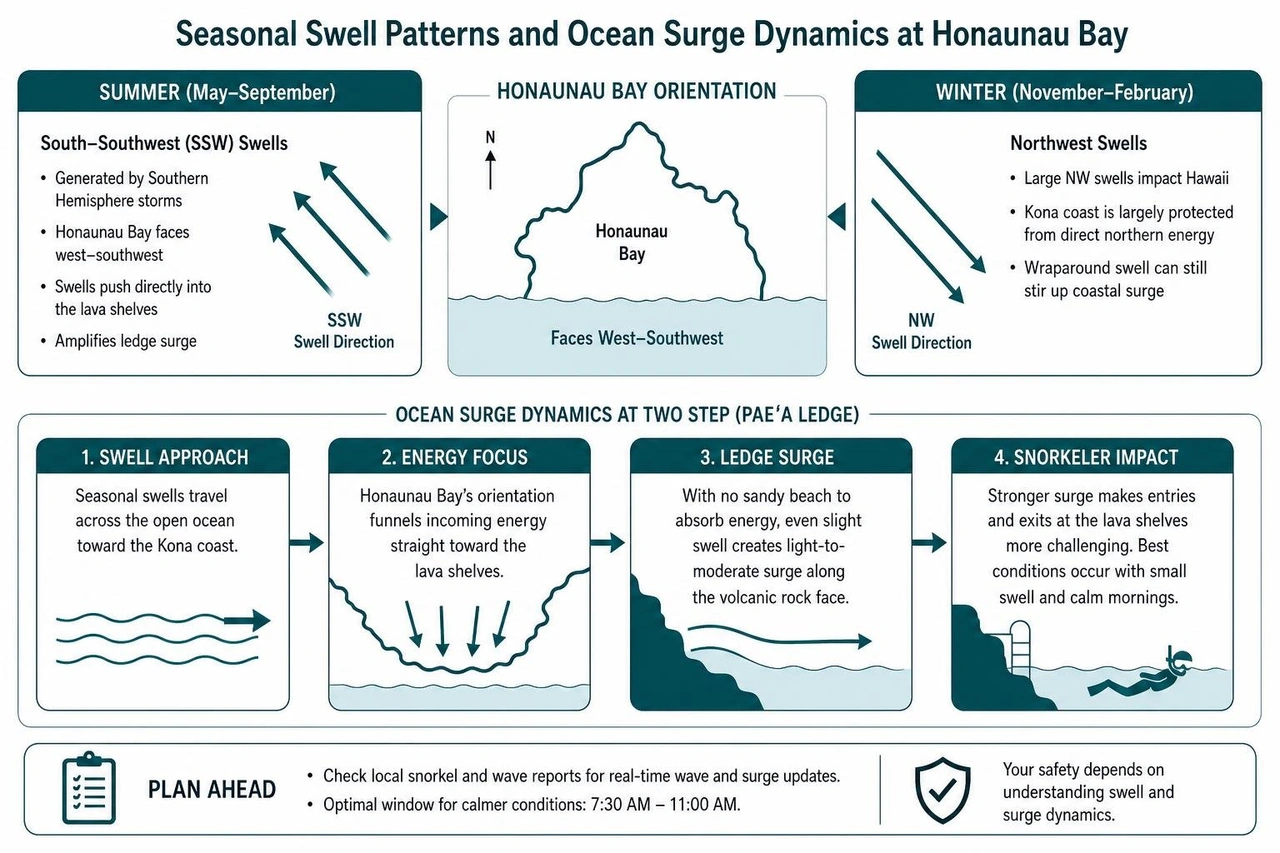
Before entering, take 5 to 10 minutes to watch the Pae'a lava steps. Do not go in if waves are washing across the ledge, surge is pushing hard against the rocks, or the water looks cloudy. The safest usual window is 7:30 to 11:00 a.m., before afternoon breezes and south-southwest swell can build.
Two Step offers an immediate deep-water entry, not a gentle beach wade. It can be excellent for confident swimmers, but the slippery lava, sea urchins, boat activity, and changing surge demand care. At Dolphin Discoveries, we believe the best ocean day is one that protects both people and the reef.
I'm Shelley Carey, and I'll help you read the key conditions so you can make a smart, respectful plan for Honaunau Bay.
Know your honaunau bay snorkeling conditions terms:
Current Honaunau Bay Snorkeling Conditions: Waves, Visibility, and Tides
Evaluating current ocean metrics is the foundation of a safe, rewarding snorkel along the South Kona coast. Honaunau Bay boasts a solid 4.7/5 rating among experienced snorkelers, largely due to its remarkable clarity and thriving marine life.
Underwater visibility here consistently reaches 30 feet or more under calm morning conditions, with water temperatures averaging a comfortable 26.9°C (80.4°F). Typical wave heights hover between 1 and 3 feet (0.79m to 0.94m), keeping the local sea state at a manageable slight rating (State 2 to 3 on the WMO scale). However, because there is no sandy shoreline to cushion incoming energy, even a slight swell creates a light-to-moderate surge right along the volcanic rock face.
| Snorkel Site | Average Depth | Typical Visibility | Swell Exposure | Entry Type |
|---|---|---|---|---|
| Hōnaunau Bay (Two Step) | 10–30+ ft | 30–50 ft | Exposed to SSW swells | Volcanic lava shelf (Paeʻa) |
| Kealakekua Bay | 15–40+ ft | 40–60 ft | Highly sheltered cove | Boat / Kayak / Steep trail |
| Kahaluʻu Beach Park | 3–8 ft | 15–25 ft | Protected by outer reef | Sandy / Shallow lava reef |
| ʻAnaehoʻomalu Bay (A-Bay) | 5–15 ft | 15–30 ft | Open bay / Trade wind chop | Gradual sandy beach entry |
Checking local condition platforms such as the Kealakekua Bay Snorkel Report gives valuable context on how South Kona’s underwater topography channels offshore energy compared to neighboring bays.
Best Time of Day for Optimal Honaunau Bay Snorkeling Conditions
Timing makes all the difference when visiting Two Step. The optimal window runs from 7:30 AM to 11:00 AM.
During these early hours, gentle offshore breezes keep the surface glassy and mirror-flat. The sun angles directly into the water column, illuminating the coral heads without creating blinding surface glare.
By midday, island heating triggers onshore sea breezes that create choppy surface conditions. Mid-morning also brings heavier vehicle traffic and crowded rock shelves. Planning your entry for early morning ensures maximum underwater clarity, cooler air temperatures, and minimal competition at the lava access ledges. You can learn more about planning your day with our Honaunau Bay Snorkeling resource.
How Seasonal Weather Impacts Honaunau Bay Snorkeling Conditions
Understanding seasonal swell patterns helps you choose the right days to explore South Kona.
During the summer months (May through September 2026), southern hemisphere storms generate south-southwest (SSW) swells. Because Honaunau Bay faces west-southwest, these swells push water straight into the lava shelves, amplifying ledge surge.
Winter months (November through February) often bring massive northwest swells to Hawaii. While the Kona coast is largely protected from direct northern energy, wraparound swell can still stir up coastal surge. Checking the Big Island Snorkel Report Today provides real-time wave blockers and drift alerts so you never enter blindly.
Two Step Entry Guide: Managing Surge, Lava Shelves, and Reef Safety
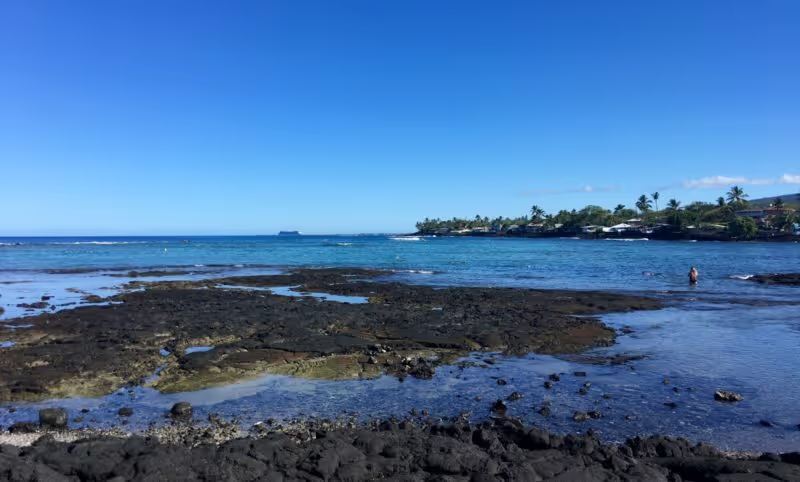
The geologic formation known as Two Step is a smooth, tiered pahoehoe lava shelf situated at Paeʻa ledge, just north of the county boat ramp. There is no sand here; the shoreline drops immediately into deep blue water ranging from 10 to over 20 feet.
Because volcanic basalt is sharp and can harbor sea urchins, wearing neoprene booties or sturdy water shoes while gearing up on the rocks is essential.
The structure of the shelf creates two distinct submerged platforms that act like natural steps, giving the site its popular nickname. Familiarize yourself with the layout using the Honaunau Bay Two Step overview before you head down to the shoreline.
Safe Entry and Exit at Pae'a Ledge
Mastering the entry and exit at Paeʻa requires patience and ocean awareness. Rushing your entry is the fastest way to scrape a knee or damage equipment.
- Observe the rhythm: Stand back from the ledge for at least 5 minutes to count the sets and note the height of the surging water.
- Gear up fully: Fasten your mask, place your snorkel in your mouth, and hold your fins securely in hand before walking to the wet rock zone.
- Sit and slide entry: Sit directly on the lower lava tier. Put your fins on while seated, keep your hands flat on the basalt (never grip blindly into crevices), and slide forward into deep water between wave sets.
- Time your exit with the surge: As you return, swim close to the lower ledge and wait for an incoming wave to gently lift you. Place your hands flat on the rock shelf, boost yourself into a seated position on the high tier, and promptly stand and clear the splash zone.
Detailed spatial layouts are available on our Honaunau Bay Map Guide 2026.
Identifying Marine Hazards and Surge Risks
While Honaunau Bay is a world-class snorkel site, volcanic shorelines present specific natural risks:
- Sea Urchins (Wana): Long-spined venomous sea urchins tuck themselves into cracks and crevices on the submerged basalt. Always keep your hands flat when stabilizing yourself on the rock face.
- Ledge Surge: Water compressing against a sheer vertical rock wall moves upward with significant force. Never fight the surge; let it lift you, or kick gently outward into deeper water until the set passes.
- Slippery Algae Bands: The intertidal zone is covered in slick microalgae. Step only on dry rock or completely submerged ledges rather than the slick transition zone.
- Open Currents and Boat Lanes: The county boat ramp adjacent to Two Step active vessel traffic. Stay clear of the boat channel and always practice the buddy system.
Review our Best Snorkel Spots Big Island Guide to evaluate which coastal entries match your comfort level.
Wildlife Guidelines and Cultural Stewardship at Two Step

The underwater world of Honaunau Bay is teeming with life. Ancient lobe and finger coral formations here have grown undisturbed for up to 1,000 years, creating complex habitats for yellow tang, raccoon butterflyfish, trumpetfish, boxfish, and spotted puffers.
The bay also serves as a crucial resting and foraging habitat for protected Hawaiian green sea turtles (honu) and endangered Hawaiian monk seals (ʻīlioholoikauaua). You can read more about the historical backdrop of these waters in our guide About Honaunau Bay.
Protected Marine Species and Legal Distance Rules
Federal and state laws under the Marine Mammal Protection Act and Endangered Species Act strictly safeguard Hawaii's wildlife:
- Hawaiian Spinner Dolphins (Naiʻa): It is illegal under federal law to swim within, approach, or remain within 50 yards of Hawaiian spinner dolphins in coastal Hawaiian waters. Spinner dolphins use sheltered bays during the daylight hours to rest, nurse calves, and recover from nocturnal hunting. If dolphins enter the bay while you are snorkeling, do not pursue or swim toward them; maintain your course and give them space. You can learn about dolphins and their biology directly through our educational resources.
- Hawaiian Monk Seals: Keep at least 50 yards (150 feet) of distance from resting or swimming monk seals, and stay 150 feet away from mothers with pups.
- Green Sea Turtles (Honu): Maintain a respectful distance of at least 10 feet (3 meters) in the water. Never crowd, chase, corner, or touch a sea turtle.
- Humpback Whales (Koholā): In season, maintain a mandatory 100-yard buffer from all whales.

Cultural Respect and Pu'uhonua O Honaunau Sacred Grounds
Honaunau Bay borders one of the most culturally significant wahi pana (sacred places) in the Hawaiian Islands: Puʻuhonua o Hōnaunau National Historical Park.
In ancient times, this site served as a sanctuary for lawbreakers seeking refuge, as well as a royal residence for Hawaiian aliʻi (chiefs).
It is vital to distinguish between County-managed shoreline at Two Step and federal park boundaries:
- Keoneʻele Cove: The sheltered, sandy cove inside the national historical park is strictly closed to recreational swimming, snorkeling, and sunbathing to protect its archaeological and spiritual integrity.
- County Boat Ramp: Keep gear and staging areas clear of local fishermen and boaters launching their vessels.
- Leave No Trace: Pack out all trash, avoid moving rocks or building cairns, and treat the surrounding community with aloha and quiet courtesy.
Discover more about the park's sacred history via our Honaunau Bay National Park guide.
Frequently Asked Questions About Honaunau Bay Snorkeling
Is Honaunau Bay suitable for beginner snorkelers?
Honaunau Bay is best suited for intermediate to advanced swimmers.
Because the entry drops off immediately into 10 to 20 feet of deep water with no shallow sandy bottom or handrails, it can be intimidating for beginners. Entering and exiting over the surging lava shelf requires balance and ocean confidence.
Novice snorkelers who wish to visit should use high-visibility flotation vests, keep a competent swim buddy close by, or consider joining a guided boat charter where professional naturalists provide direct entry support into calm waters.
What facilities and parking options are available at Two Step?
Facilities at Two Step are minimal:
- Parking: Roadside parking along Honaunau Beach Road is extremely limited, with only a few public spaces that fill quickly before 8:00 AM. Visitors may park in the adjacent Puʻuhonua o Hōnaunau National Historical Park lot for an entrance fee, provided they comply with park visitation rules.
- Restrooms: There are portable toilets (port-a-potties) near the boat ramp. There are no running-water restrooms, changing rooms, or public outdoor showers.
- Water and Food: There is no potable drinking water or concession stand on-site. Bring plenty of fresh water to hydrate and rinse gear, along with sun protection.
Is reef-safe sunscreen legally mandated at Honaunau Bay?
Yes. Under Hawaii State Law (Act 104), sunscreens containing oxybenzone and octinoxate are banned to protect coral reefs from chemical bleaching and DNA damage.
When visiting Honaunau Bay, use only 100% mineral-based sunscreens that utilize non-nano zinc oxide or titanium dioxide as their active ingredients. Even better, wear UV-protective rash guards, swim leggings, and surf hats to reduce the amount of sunscreen entering the bay.
Conclusion
Knowing how to read the waves, tides, and surge makes all the difference when snorkeling at Two Step. By aiming for the calm morning window, stepping carefully onto the Paeʻa lava ledge, and honoring the wildlife and cultural heritage of South Kona, you will enjoy an unforgettable day in the water while keeping our delicate marine ecosystems safe.
As a woman- and veteran-owned small business operating out of Keauhou Bay, Dolphin Discoveries is deeply dedicated to ethical, conservation-minded ocean excursions. If you want to experience world-class Kona snorkeling without navigating tricky rock entries or parking hassles, join our passionate naturalists on an intimate boat adventure.
Explore our Captain Cook snorkel tour, discover two pristine reefs on the Kona snorkel tour, or witness gentle ocean giants under the stars on our signature manta ray night snorkel. We look forward to sharing Hawaii’s incredible waters with you!