

Honaunau Bay Snorkeling: What You Need to Know Before You Go
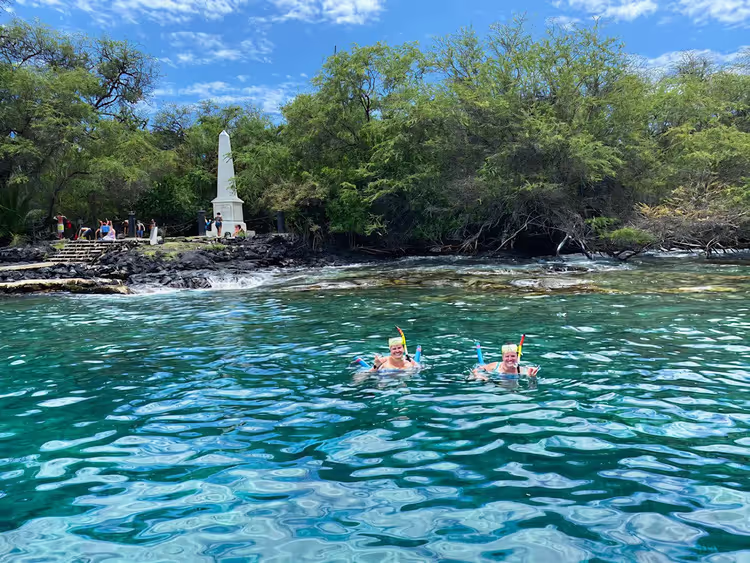
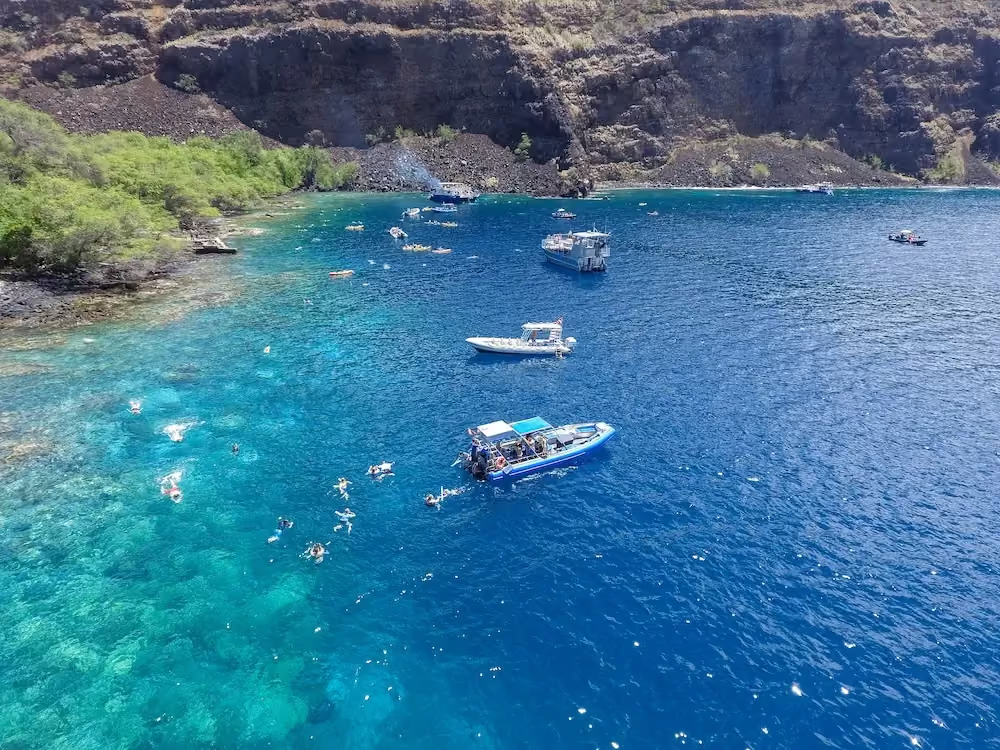
Honaunau Bay snorkeling — also known as Two Step — is widely considered the best shore snorkeling spot on Hawaii's Big Island, thanks to its calm, crystal-clear water, easy lava-rock entry, and extraordinary marine life.
Here's a quick overview of what to know:
- Location: South Kona, about 20 miles from Kailua-Kona, next to Puʻuhonua o Hōnaunau National Historical Park
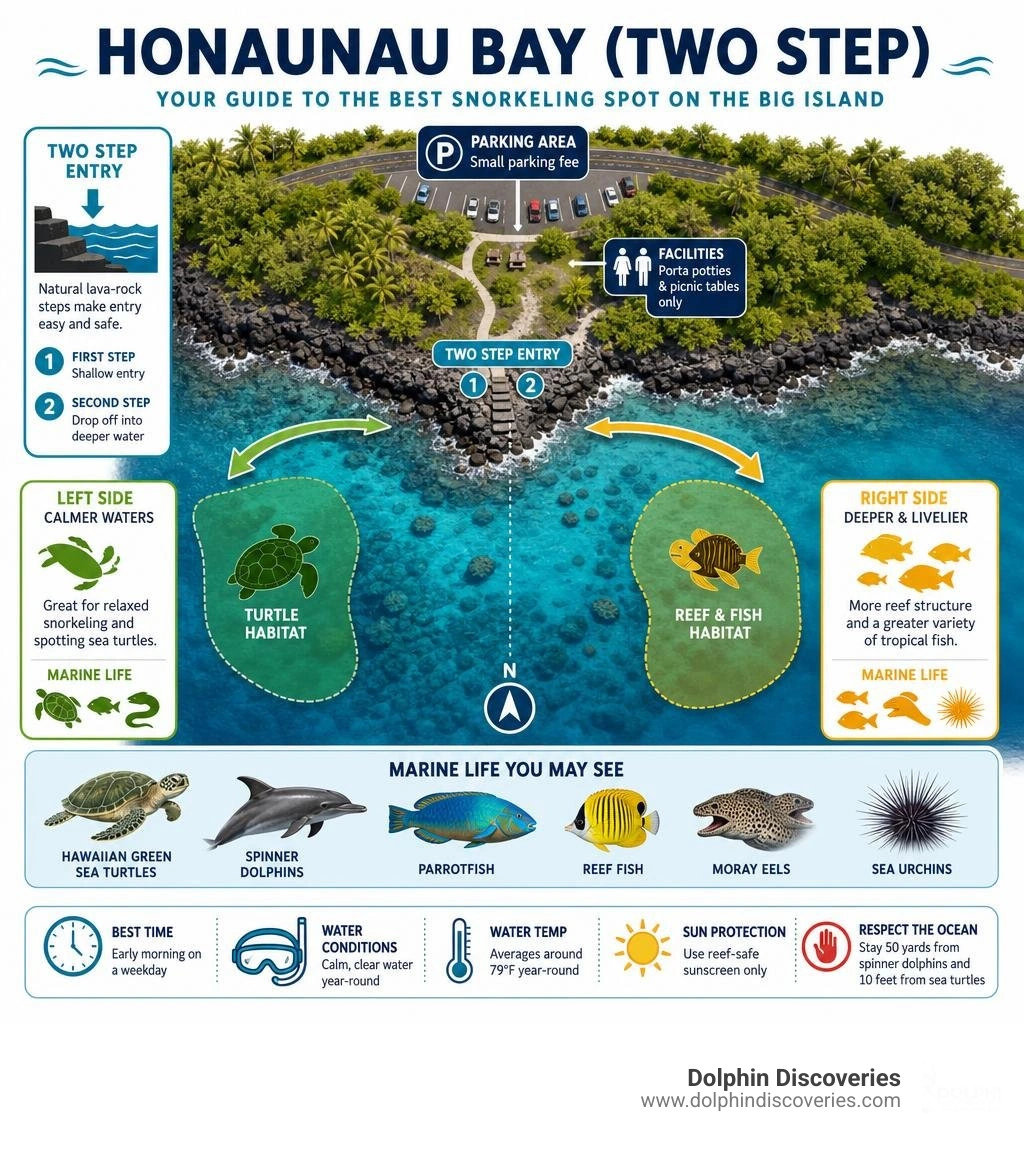
- Entry point: Two natural lava-rock steps (nicknamed "Two Step") that drop you straight into the ocean
- Best time to go: Early morning on a weekday for the calmest water and best visibility
- What you'll see: Hawaiian green sea turtles, spinner dolphins, parrotfish, eels, moray eels, and hundreds of reef fish
- Water conditions: Visibility often exceeds 100 feet; water temperature averages around 79°F year-round
- Facilities: Very limited — porta potties and picnic tables only; no showers or drinking water
- Cost: Small parking fee; no entry fee for the snorkeling area itself
- Rules: Stay 50 yards from spinner dolphins, 10 feet from sea turtles, and use reef-safe sunscreen only
Honaunau Bay sits inside a protected Marine Life Conservation District (MLCD), which means fishing and other disruptive activities are tightly restricted. The result is an underwater world that genuinely feels untouched — turtles gliding past you like you're barely there, coral gardens packed with color, and visibility so clear it almost feels unreal.
It's the kind of place where first-time snorkelers and experienced divers both come away amazed. But to make the most of it — and to keep it that way — there are a few things worth knowing before you jump in.
Why Honaunau Bay (Two Step) is a Snorkeling Paradise
There is a reason Honaunau Bay attracts over 190,000 visitors annually, with an astounding 85% of visitors rating it as their absolute favorite snorkeling spot on the Big Island. This pristine cove is a designated Marine Life Conservation District (MLCD), meaning its marine life and delicate coral habitats have been protected for generations.
Because of the bay's unique volcanic geography, it is shielded from major open-ocean swells by the massive volcanic peaks of Mauna Loa and Hualālai. This geographic shield keeps the water exceptionally calm and glassy, resulting in underwater visibility that frequently exceeds 100 feet. Combined with a comfortable year-round water temperature averaging 79°F, it feels like swimming in a giant, heated saltwater aquarium.
What truly sets Honaunau Bay apart is its biodiversity. The bay contains one of the largest varieties of coral in the entire state of Hawaii, supporting over 400 species of fish. In fact, the Kona coast holds roughly 57% of Hawaii’s coral reefs, and Honaunau is the crown jewel of this coastline. As you explore, you can find more tips on finding these underwater treasures in our guide to the best places to snorkel on Hawaii's Big Island.
While many travelers debate whether to visit Honaunau Bay or Kealakekua Bay, both offer world-class experiences but with very different vibes. You can read more about the area's geography on Honaunau Bay - Great Snorkeling on the Big Island. To help you plan, here is how they compare:
| Feature | Honaunau Bay (Two Step) | Kealakekua Bay (Captain Cook) |
|---|---|---|
| Primary Access | Direct shore entry via flat lava rock | Boat tour, strenuous 3.8-mile hike, or kayak |
| Water Depth | Slopes from 10 feet to over 100 feet | Slopes from 25 feet to 150+ feet |
| Best For | Independent travelers & families | Guided history & snorkel tours |
| Facilities | Porta potties, picnic tables | None at the monument site |
| Crowd Levels | High near shore; spreads out quickly | High around tour boat arrivals |
A Complete Guide to Honaunau Bay Snorkeling
Locally known as Pae‘a, the shoreline of Honaunau Bay is not your typical sandy beach. Instead, it consists of a smooth, ancient lava rock shelf that meets the turquoise ocean. This lack of sand is actually a major benefit: without waves churning up sandy sediment, the water clarity remains pristine even when the bay gets busy.
If you are planning to experience honaunau bay snorkeling on your own, getting here is relatively straightforward. From Kailua-Kona, drive approximately 20 miles south on Highway 11 (the Hawaii Belt Road). Around Mile Marker 103, turn right onto Keala O Keawe Road (Highway 160). Follow the winding road down the hill for about 3.5 miles, following the signs for Puʻuhonua o Hōnaunau National Historical Park. Just before the park entrance gates, turn right onto the narrow beach road.
For more details on navigating the region's top aquatic treasures, check out our breakdown of the 3 best snorkeling spots in Kona.
Best Time of Day for Honaunau Bay Snorkeling
Timing is everything when visiting Two Step. We always recommend arriving early in the morning—ideally between 7:00 AM and 9:00 AM.
During the morning hours, the ocean is at its calmest, and the sun shines directly into the bay, illuminating the coral reef below. By afternoon, the Kona coast frequently experiences localized cloud cover and offshore breezes, which can chop up the water and reduce underwater visibility. Furthermore, arriving early is your best bet for securing a parking spot before the crowds arrive.
What to Pack for Honaunau Bay Snorkeling
Because Honaunau Bay is relatively undeveloped, you must bring everything you need for the day. Here is your essential packing checklist:
- Reef-Safe Sunscreen: Hawaii state law strictly bans sunscreens containing oxybenzone, octinoxate, avobenzone, and other coral-harming chemicals. Always choose mineral-based formulas utilizing non-nano zinc oxide or titanium dioxide.
- Water Shoes or Sturdy Sandals: The black lava rock gets incredibly hot under the Hawaiian sun and can be sharp. Wear water shoes to walk to the edge, then swap them for fins.
- Rash Guard: A UV-blocking sun shirt protects your back from sunburn while you float, reducing the need for sunscreen.
- Quality Mask, Snorkel, and Fins: Well-fitting gear makes all the difference. If you are looking for more gear advice, check out our comprehensive guide to snorkeling on the Big Island.
- Rinse Water: Bring a large jug of fresh tap water in your car. Since there are no showers on-site, you will be glad to have a quick rinse after salt-water immersion.
How to Safely Enter, Exit, and Navigate the Bay

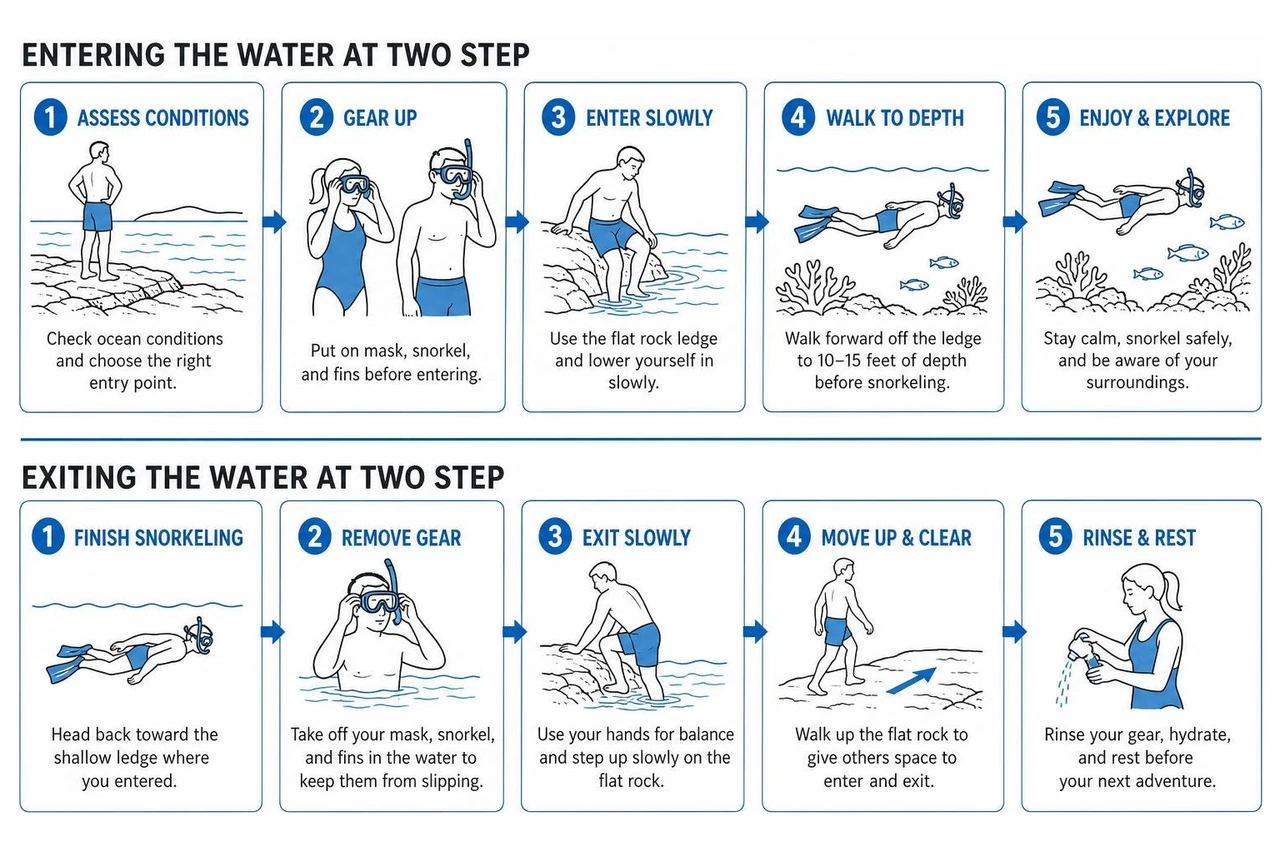
Entering the ocean from a rocky lava ledge can look intimidating, but the natural formation at Two Step makes it surprisingly elegant if you know what to do. The key is to look for the flat lava ledge where an orange traffic cone is frequently placed by locals. Here, the rock has naturally formed into two steps that lead directly into deep, calm water.
For a deeper dive into the physical layout of the shoreline, you can read more at Snorkeling at Honaunau Bay or Two Step - Big Island, HI - Live That Adventure.
To enter safely, walk down to the second step, sit down, put your fins on, and wait for the ocean's natural rhythm. Do not fight the waves. Instead, wait for a gentle surge of water to rise up and lift you, then slide forward and swim out.
When exiting, reverse the process. Swim up to the step, wait for an incoming wave surge to lift you up onto the ledge, and quickly grab the rock with your hands to slide yourself up. Avoid standing up immediately; slide onto your knees or stomach first, then crawl away from the wet zone before taking off your fins.
Always keep an eye out for sea urchins (wana) hiding in the rock crevices near the entry point, and be mindful of small boat traffic utilizing the active county boat ramp on the far right side of the bay.
Left Side vs. Right Side: Where to Swim
Once you are safely in the water, you have two primary directions to explore:
- The Right Side (The Shallows): This area is shallower, ranging from 6 to 15 feet deep. It is perfect for beginners or those who want to hover closer to the marine life. While parts of the shallow coral suffered from historical bleaching events, it is still home to massive schools of colorful reef fish.
- The Left Side (The Deep & The Canyons): This is where the magic happens. The water quickly drops to depths of 20 to 30 feet, eventually cascading down to over 100 feet in the middle of the bay. Here, you will find healthy, towering coral structures, deep volcanic fissures, and underwater canyons. If you swim out far enough over the sandy floor, look down to spot the word "ALOHA" spelled out in concrete blocks on the seabed.
Marine Life, Regulations, and Cultural Respect

Snorkeling at Honaunau Bay feels like stepping directly into a nature documentary. The healthy coral structures host a dazzling array of marine life. You will easily spot schools of vibrant yellow tangs, parrotfish (uhu) crunching loudly on the coral, triggerfish (including the famous humuhumunukunukuāpuaʻa), trumpetfish, and elegant moray eels peeking out from rocky crevices.
To help you identify what you are looking at, read our guide on from sea turtles to tropical fish: 5 things you may see on a Big Island snorkel trip.
Hawaiian green sea turtles (honu) are also regular residents here, often grazing on the algae growing along the shallow lava rocks on the southern edge of the bay. For more local insights on wildlife sightings, check out Two Step Beach at Honaunau Bay.
Rules for Interacting with Dolphins and Sea Turtles
Honaunau Bay is a critical resting habitat for wild Hawaiian spinner dolphins. These highly social mammals hunt in the deep ocean at night and use the calm, shallow waters of bays like Honaunau to rest, socialize, and nurse their young during the day.
Because dolphins use "unihemispheric sleep"—shutting down only half of their brain at a time while keeping one eye open—they may look awake and playful even when they are technically asleep. Disturbing them during these critical resting hours can severely impact their health.
Under federal law and the Marine Mammal Protection Act, it is strictly illegal to swim with, approach, or remain within 50 yards (150 feet) of Hawaiian spinner dolphins in shallow waters. If a pod of dolphins enters the bay while you are snorkeling, you must make every effort to swim away and maintain the legal distance.
Similarly, you must always maintain a respectful distance of at least 10 feet (3 meters) from wild sea turtles. Never chase, touch, or attempt to ride them.
Respecting the Sacred Puʻuhonua o Hōnaunau
Directly adjacent to the snorkeling area lies the sacred ground of Puʻuhonua o Hōnaunau National Historical Park. In ancient Hawaii, this 182-acre park was a designated "Place of Refuge." Under the strict kapu (sacred law) system, any lawbreaker who faced the penalty of death could flee to this sanctuary. If they reached the safety of the puʻuhonua, they were absolved of their crimes by a priest and permitted to return to society in peace.
Because of this rich history, the area carries immense cultural and spiritual significance to Native Hawaiians. Visitors must respect the boundaries between the recreational snorkeling area and the sacred historical park:
- No Water Entry from the Park: Do not enter or exit the water at Keoneʻele Cove, the scenic sandy beach located inside the national park boundaries. This cove was historically reserved for the arrival of royal canoes (aliʻi) and remains strictly off-limits to swimmers and snorkelers.
- Dress Appropriately: If you plan to tour the national park before or after your snorkel, do not walk through the sacred grounds in wet swimwear. Change into dry, respectful clothing first.
- Keep it Peaceful: Maintain a quiet, respectful demeanor. The park is a place of peace, history, and reflection.
Frequently Asked Questions About Honaunau Bay
Where do you park for Honaunau Bay?
Parking can be a bit of a puzzle. There is a tiny county-managed gravel lot right at the end of the road near the boat ramp that holds about 13 cars for free. If that is full, there is a private lot directly across from the entry point that charges a $5 parking fee. Alternatively, you can pay to park inside the National Historical Park lot and walk over, or parallel park along the ocean side of Honaunau Beach Road—just ensure your tires are completely off the paved road and you are not blocking any private driveways.
Are there restrooms or showers at Two Step?
Amenities at Two Step are incredibly basic. There are a few portable toilets (porta potties) and picnic tables located near the boat ramp. There are no public showers, changing rooms, drinking water fountains, or food concessions. Plan to bring your own drinking water and a rinse jug.
Can beginners snorkel at Honaunau Bay?
Yes, but with caution. Because there are no lifeguards on duty, beginners should only enter the water during calm morning conditions and should always wear a high-visibility flotation vest or use a snorkel noodle. If you are not a strong swimmer, entering via the lava steps can be challenging when there is a swell. For those who want a completely stress-free experience, booking a guided boat tour is the safest way to enjoy the bay.
Conclusion
Honaunau Bay is a breathtaking slice of old Hawaii, combining world-class marine life with deep cultural roots. Whether you are watching a green sea turtle glide effortlessly over vibrant coral gardens or listening to the distinct sound of parrotfish feeding on algae, a morning spent here is unforgettable.
If you want to experience the absolute best of Kona's coastline without the stress of navigating rocky entries, finding parking, or managing gear logistics, we would love to welcome you aboard. At Dolphin Discoveries, we specialize in small-group, naturalist-led boat charters departing from convenient Keauhou Bay. Our fast, comfortable vessels can whisk you away to the island's most pristine waters, offering a safe, educational, and deeply ethical way to connect with Hawaii's marine wonders.
Ready to explore the magic of the Kona Coast? Learn more about Honaunau Bay and discover how we can help you create the ultimate Hawaiian adventure. You can also explore our Kona Snorkeling packages, book a spot on our flagship Kona Snorkel Tour - Two Snorkeling Spots, or read about why snorkeling tours in Kona are a league above the rest. Safe travels, and we hope to see you on the water soon!