

Biology and Species of Manta Rays Hawaii
The species of manta rays Hawaii is most famous for is the reef manta ray (Mobula alfredi). While giant oceanic manta rays (Mobula birostris) occasionally pass through deeper offshore waters, reef mantas are the resident ocean giants living along our island coasts.
These creatures are remarkably large, with wingspans reaching up to 23 feet, though most individuals measured along the Kona coast average between 10 and 12 feet from wingtip to wingtip. Reef mantas have a surprisingly long life expectancy, often living up to 50 years in the wild. Hawaii's resident population is relatively small, with scientists estimating around 200 to 300 individuals frequently using the waters off the Kona coast.
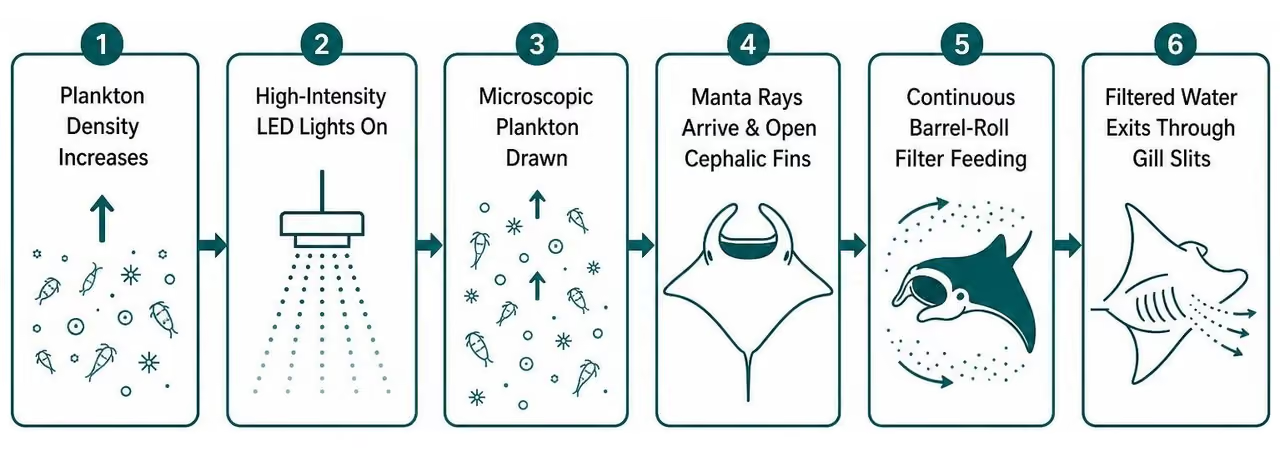
Reef mantas are pelagic filter feeders. As they swim, they unroll two flexible structures on either side of their mouth called cephalic fins. These fins funnel water into their wide mouths, where internal gill rakers filter out microscopic zooplankton. A single adult manta ray can filter up to 60 gallons of water per minute while feeding. To learn more about their unique anatomy and life cycle, check out our guide on how to Learn About Manta Rays.
Differences Between Manta Rays Hawaii and Common Stingrays
It is common for visitors to confuse manta rays with stingrays, but they belong to different families and have distinct physical traits and behaviors.
| Feature | Manta Rays (Mobula alfredi) | Common Stingrays (Dasyatidae) |
|---|---|---|
| Stinger / Barb | None. Completely harmless. | Possess a venomous barb on the tail. |
| Feeding Style | Open-water filter feeders (plankton). | Bottom dwellers (crabs, mollusks, worms). |
| Mouth Location | Forward-facing (terminal) at front of head. | Bottom-facing (ventral) on underside. |
| Swimming Habit | Constantly swimming in open water column. | Rest on sandy ocean bottoms. |
| Cephalic Fins | Present (paddle-like fins on head). | Absent. |
Hawaiian Culture and Ecological Role
In Native Hawaiian culture, the manta ray is known as hāhālua, which translates to "two mouths," referring to the paddle-like cephalic fins on their heads. Traditional Hawaiian culture holds a deep reverence for the ocean (moana) and its inhabitants, recognizing hāhālua as a symbol of grace, wisdom, and marine strength.
From an ecological perspective, manta rays act as an essential indicator species for ocean health. Because they consume vast quantities of plankton, their presence signals a clean, nutrient-rich marine habitat. By cycling nutrients through coastal ecosystems, mantas help sustain a healthy balance within Hawaii's coral reef environments.
Mechanics of the Kona Night Snorkel Experience
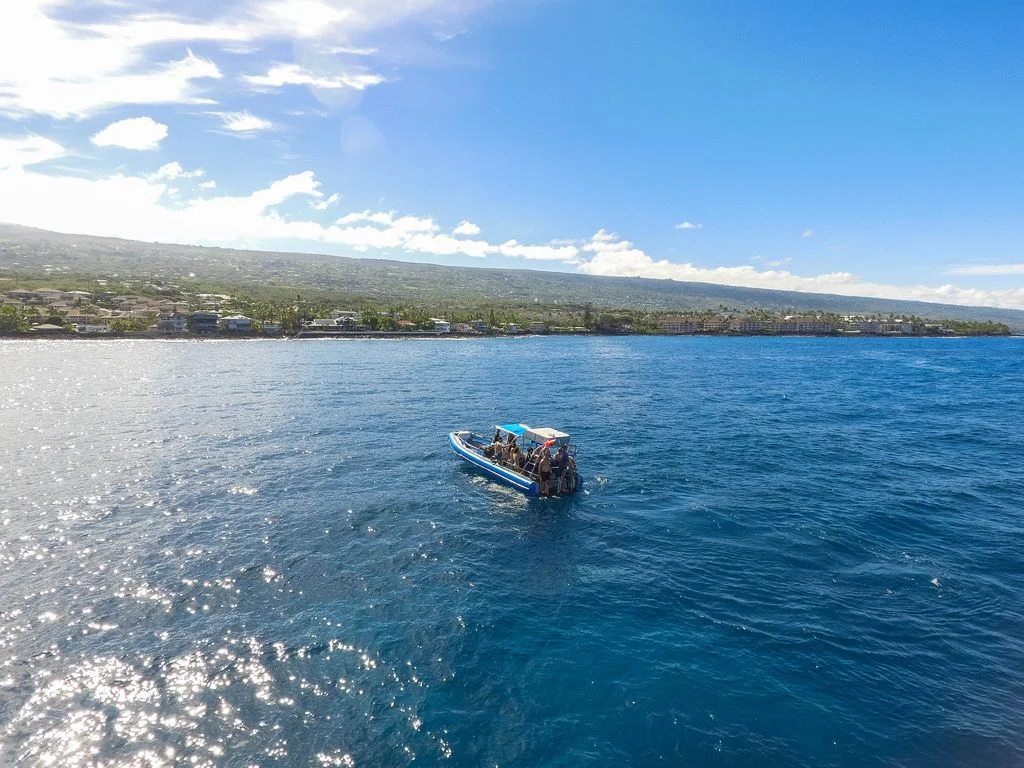
Kona's night snorkel experience is a world-renowned adventure, but its setup is remarkably simple and safe. Boats depart near dusk and make a short trip out to local feeding grounds. Once on site, guides place customized floating rafts outfitted with high-intensity LED lights into the water.
These lights create what we call a "floating campfire." The bright beam shines down into the water column, drawing millions of microscopic phototactic plankton. Within minutes, the ocean light beam becomes a dense buffet, signaling to nearby mantas that dinner is served.
What to Expect During Night Feeding Sessions
When mantas arrive at the illuminated raft, they exhibit a mesmerizing behavior known as barrel rolling. A manta will swim toward the light beam with its mouth wide open, loop upside down near the surface, and drop back down in a continuous vertical somersault.
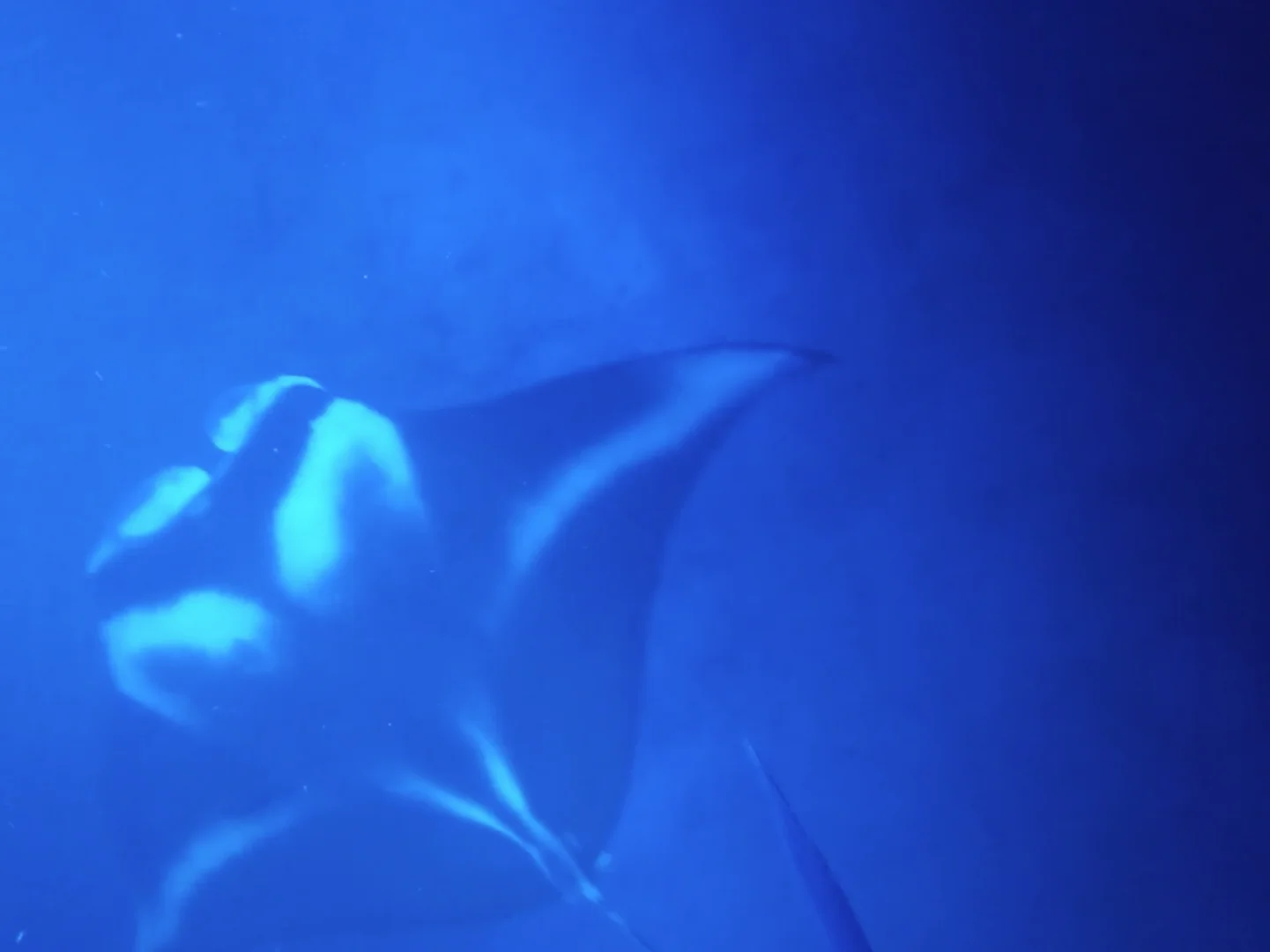
Because the plankton gathers right beneath the floating light board, mantas often glide within inches of snorkelers. They show remarkable physical awareness, swooping smoothly past your mask without touching you.
Snorkeling vs Scuba Diving for Manta Encounters
Both snorkelers and scuba divers can enjoy night encounters, but they experience them from different perspectives.
- Snorkelers: Float comfortably on the surface while gripping the light raft. Since the strongest plankton concentration gathers right under the surface lights, snorkelers get an eye-level view of the mantas performing barrel rolls just inches away.
- Scuba Divers: Kneel on the sandy sea floor in a circle (often called the "campfire") and point their dive lights upward toward the surface. Mantas swim loops between the divers on the bottom and the snorkelers at the top.
Floating on the surface with a light raft is accessible to almost any skill level, making snorkeling the most popular way to see them. If you want to dive deeper into how these setups work, read our piece on Where to Find the Best Manta Ray Night Dive in Hawaii.
Best Hotspots and Timing for Sightings
Manta rays are present in Hawaiian waters all year. They do not migrate across oceans, so sightings remain consistent throughout the year.
Night snorkels depart daily near sunset. The West Hawaii coastline is sheltered from prevailing trade winds by the massive summits of Mauna Loa and Hualālai, creating calm evening sea conditions.
Prime Locations for Manta Rays Hawaii Night Dives
There are three primary sites off the Kona coast where manta rays Hawaii gather to feed:
- Keauhou Bay (Manta Village): Located right outside Keauhou Bay, this is the historic birthplace of manta ray night snorkeling. It is famous for its close proximity to shore, making for a quick 5-minute boat ride. You can learn more by reading about how to Discover the Wonders of Manta Rays at the Sheraton Kona.
- Garden Eel Cove (Makako Bay): Situated further north near the Kona airport, this site features a shallow sandy floor bordered by coral reefs.
- Kahuwai Bay: Located near Kaupulehu, this secondary feeding site sees lighter boat traffic.
To explore these locations in detail, check out our full breakdown on Manta Dive Big Island Hotspots Discovering the Best Locations in Hawaii for These Close Encounters.
Weather and Seasonal Ocean Considerations
Kona offers shelter from strong offshore ocean winds, but swell patterns shift seasonally. Summer months generally bring flat, glass-like water across West Hawaii. Winter months can bring northwest ocean swells that alter surface conditions at northern sites, but local captains adjust dive site choices to match the calmest waters available on any given night. Sighting success rates across Kona remain over 90% throughout the entire year.
Rules, Conservation, and Safe Interaction Practices
Manta rays are covered in a delicate protective skin mucus layer. This thin coating shields their skin from bacterial infection. Touching a manta ray strips away this layer, leaving the animal vulnerable to disease and skin lesions.
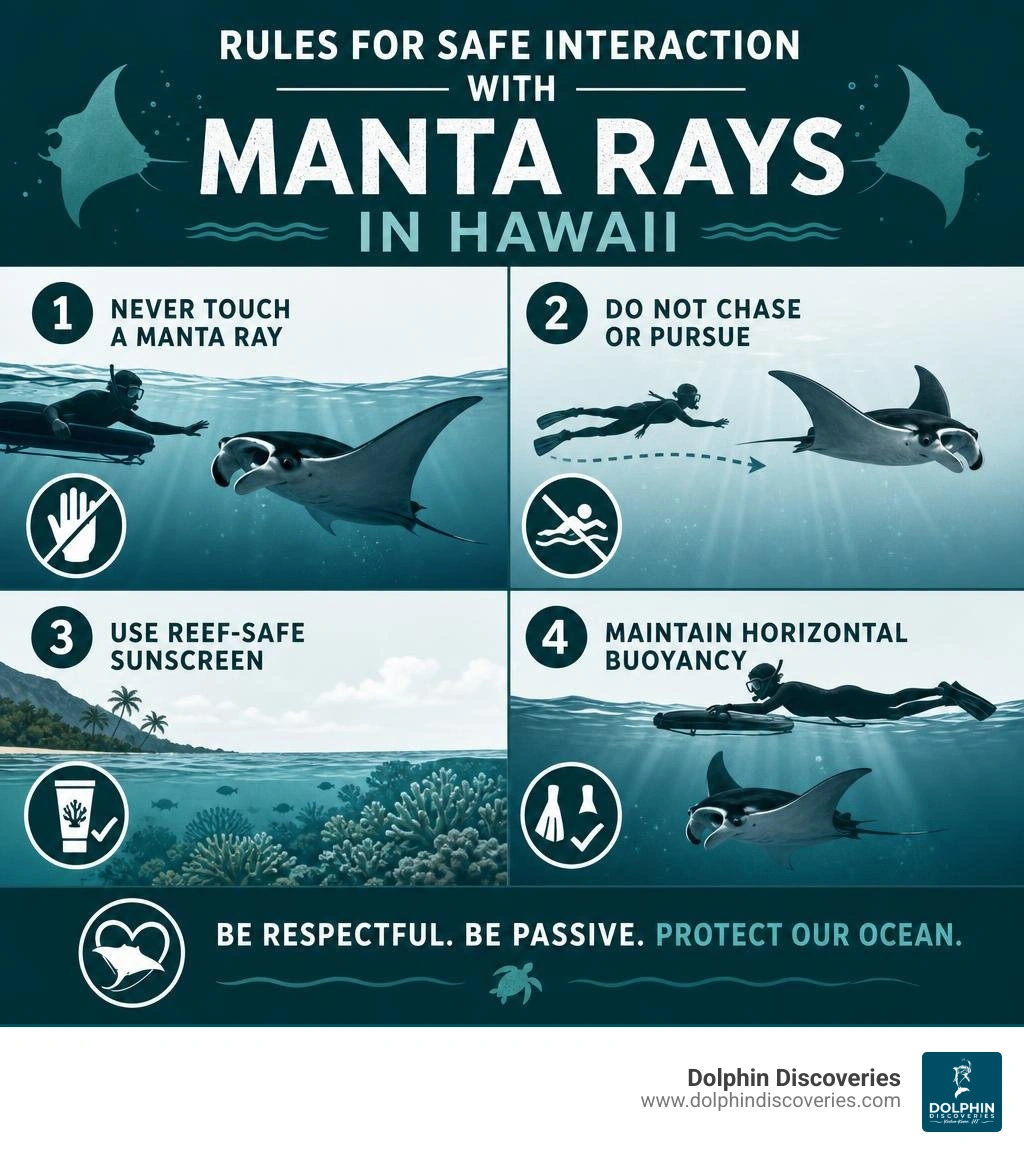
To protect the animals, local tour operators follow strict passive observation protocols:
- Never touch a manta ray: Keep your hands on the floating raft at all times.
- Do not chase or pursue: Let the mantas approach the lights on their own terms.
- Use reef-safe sunscreen: Protect the delicate coral ecosystems by using mineral-based sunscreens.
- Maintain horizontal buoyancy: Keep your feet up at the water surface so you do not kick a manta as it passes below.
Review our safety guidelines on Guidelines for a Safe and Enjoyable Hawaii Manta Ray Dive to prepare for your excursion.
Protecting Manta Rays Through Citizen Science
While manta rays have no natural predators in Hawaii outside of the occasional large shark, they face human-created risks like monofilament fishing line entanglement, hook injuries, and boat propeller strikes.
Researchers monitor individual rays using the unique belly spot identification patterns on their undersides. Just like human fingerprints, no two mantas share the same spot pattern.
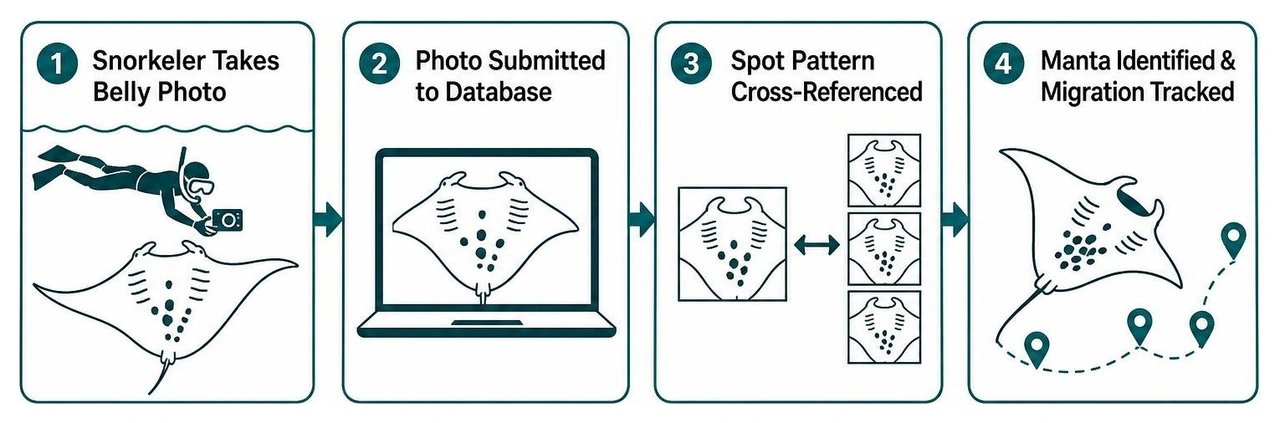
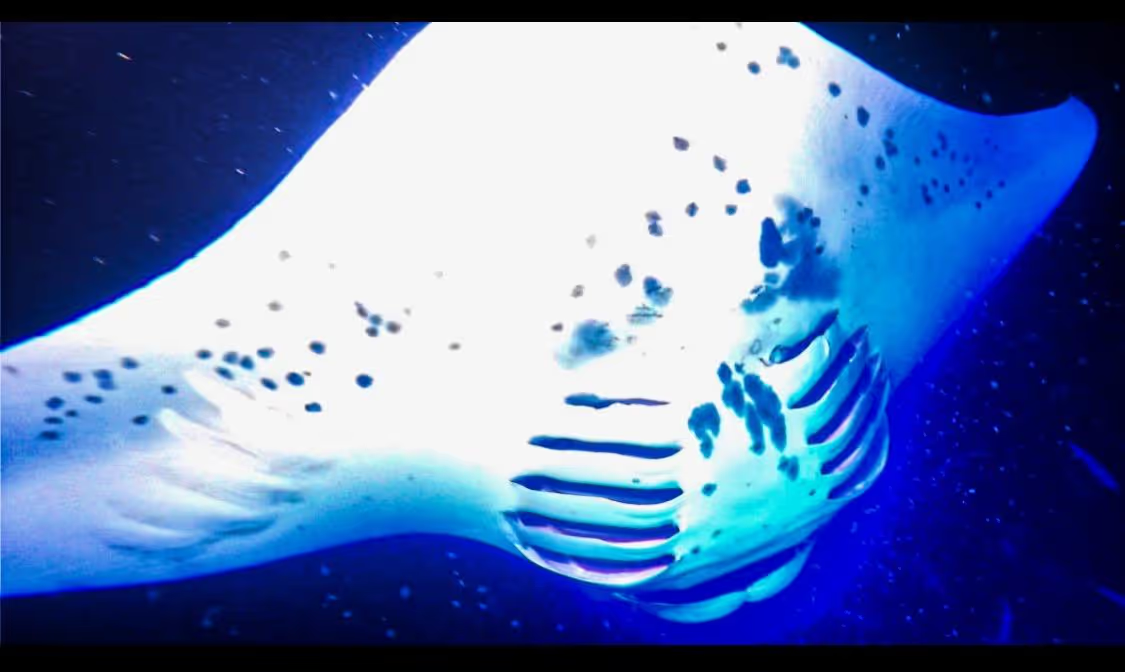
Travelers can actively support Hawaii manta conservation by:
- Submitting clear photo identification shots of manta bellies to local citizen science databases.
- Supporting tour operations that enforce strict non-touching standards.
- Picking up loose fishing line and marine debris from coastal reefs.
- Sharing conservation practices with fellow travelers.
Tour Preparation and Snorkel Etiquette
Proper preparation keeps you warm and comfortable in the water at night:
- Wear a wetsuit: Even in warm Hawaiian ocean waters, spending 30 to 45 minutes floating at night can chill your body. Neoprene wetsuits provide necessary thermal protection and natural buoyancy.
- Flotation gear: Operators provide flotation pool noodles or specialized buoyancy gear for non-swimmers.
- Motion sickness care: If you are prone to seasickness, take motion sickness medication well before boarding the boat.
For additional practical advice before booking, read our articles on What to Expect on a Big Island Manta Ray Snorkel Trip and Manta Ray Night Swim Tips 2026.
Frequently Asked Questions About Hawaiian Manta Rays
Do manta rays in Hawaii have stingers or pose any danger?
No, manta rays do not have stingers, barbs, or sharp teeth. They are gentle filter feeders that pose no threat to humans. Their primary defense is their speed and agility in the water.
What is the best time of year to swim with manta rays in Hawaii?
Mantas can be seen year-round in West Hawaii without significant seasonal drops in population. Weather conditions and water temperatures remain warm and comfortable in every season.
Can non-swimmers participate in a manta ray night snorkel?
Yes, non-swimmers can comfortably participate. Snorkelers hold onto a floating light raft outfitted with sturdy handles while wearing a buoyant wetsuit. Professional guides stay beside the raft in the water to assist you throughout the entire trip.
Plan Your Night Snorkel with Dolphin Discoveries
Watching a giant reef manta ray glide smoothly through an illuminated beam of light is an extraordinary experience. At Dolphin Discoveries, we lead ethical, small-group fast boat tours departing directly out of Keauhou Bay, putting you on the manta grounds within 5 minutes. As a local, veteran- and woman-owned company, our naturalist guides love sharing these remarkable ocean encounters with guests while prioritizing wildlife safety and reef conservation.
Read about Why Manta Ray Tours on the Big Island Are Magical, or head over to our tour page to Book a Manta Ray Night Snorkel in Kona with our experienced team today.