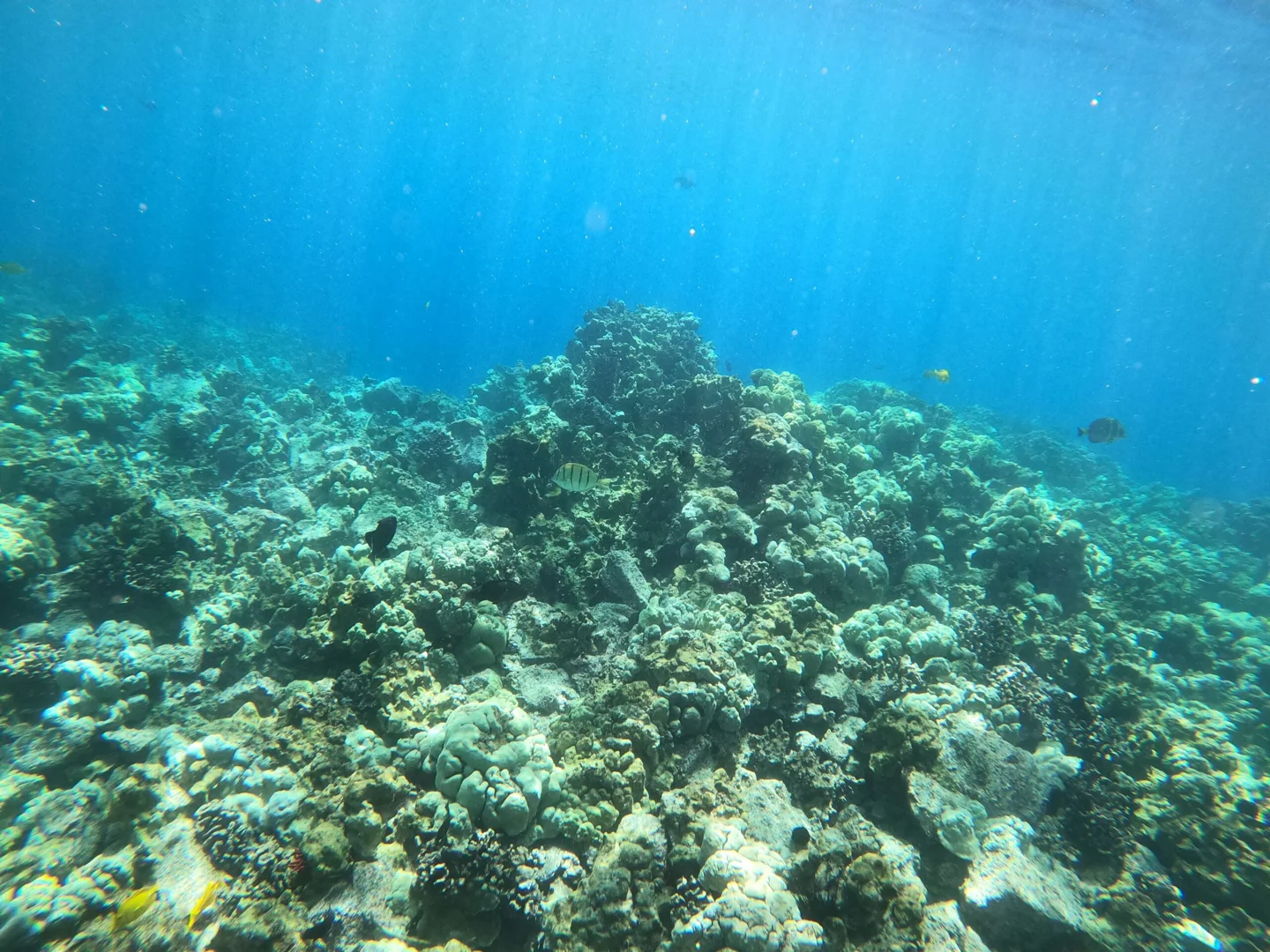


Why the Big Island Has Some of Hawaii's Best Snorkeling
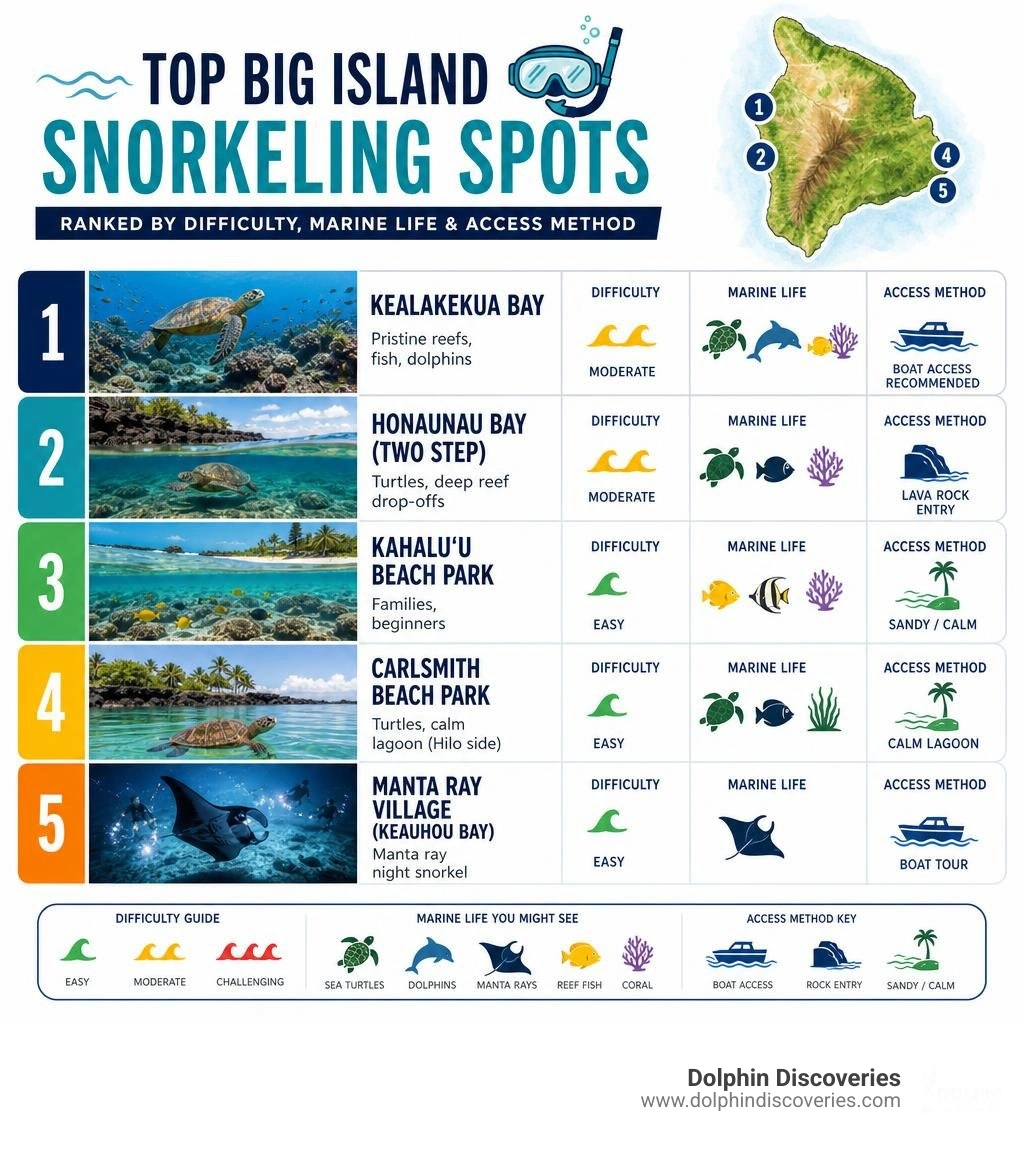
The best places to snorkel on the Big Island of Hawaii put you face-to-face with green sea turtles, spinner dolphins, manta rays, and some of the healthiest coral reefs in the entire Pacific. Here's a quick look at the top spots:
| Snorkel Spot | Best For | Difficulty |
|---|---|---|
| Kealakekua Bay | Pristine reefs, fish, dolphins | Moderate (boat access recommended) |
| Honaunau Bay (Two Step) | Turtles, deep reef drop-offs | Moderate (lava rock entry) |
| Kahalu'u Beach Park | Families, beginners | Easy (sandy/calm) |
| Carlsmith Beach Park | Turtles, calm lagoon (Hilo side) | Easy |
| Manta Ray Village (Keauhou Bay) | Manta ray night snorkel | Easy (boat tour) |
The Big Island is younger than the other Hawaiian islands — somewhere between 400,000 and 800,000 years old. That means its reefs have had less time to erode into sand, which translates to clearer water and more vibrant coral. Add a smaller resident population than Oahu or Maui, and you get marine ecosystems that are still largely intact.
The visibility at top spots like Kealakekua Bay can exceed 100 feet. The Kona Coast alone is home to 200–300 resident manta rays — one of the only places on the planet where you can swim with them year-round.
Whether you're a first-timer looking for a calm, shallow reef or an experienced snorkeler chasing big marine life encounters, this island delivers.
The Best Places to Snorkel on the Big Island: Top 5 Spots Ranked
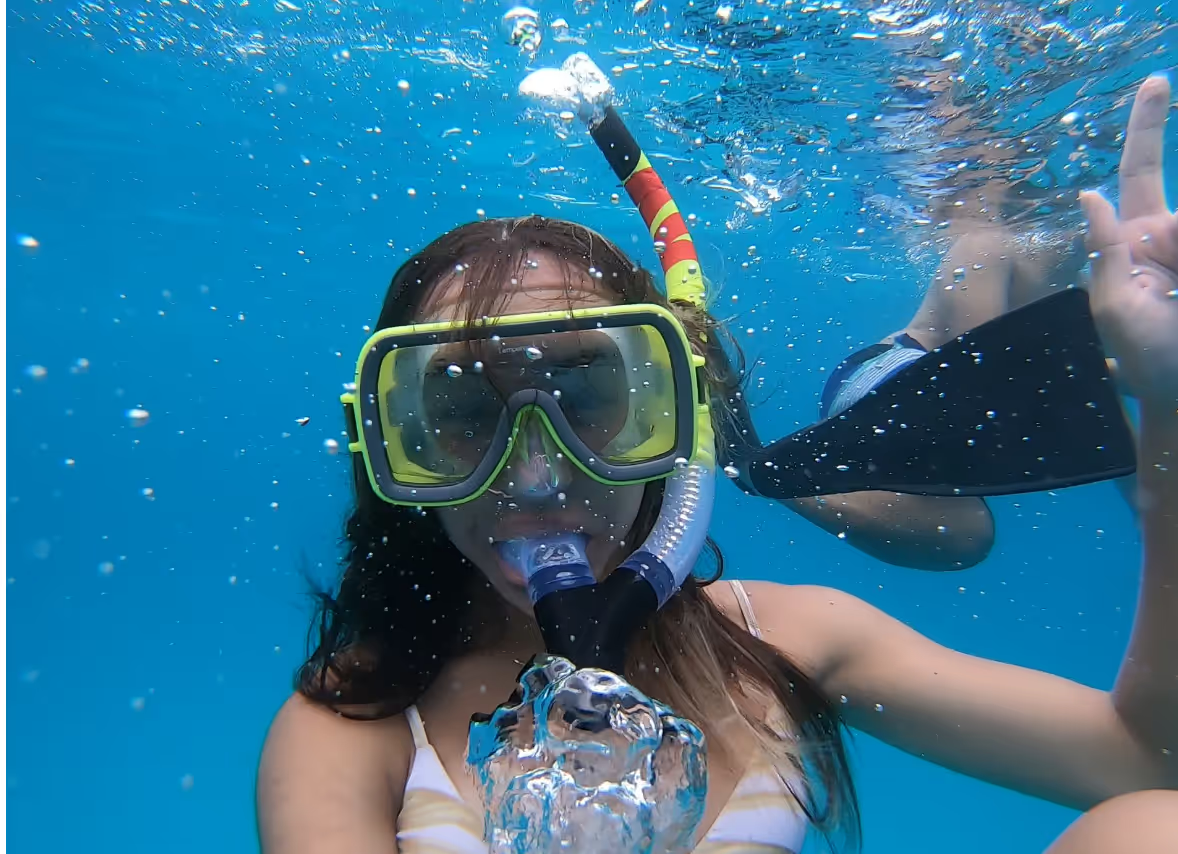
When you are planning your Hawaiian getaway, finding the absolute best places to snorkel on the Big Island is likely at the top of your bucket list. Because the island is so geologically young, the coastline is a dramatic mix of volcanic basalt and pockets of white, black, and even green sand. This unique topography creates underwater structures like lava tubes, steep drop-offs, and shallow, protected lagoons that marine life absolutely loves.
To help you navigate these waters, we have compiled and ranked the top five snorkeling locations on the island. Each offers a distinct experience, from historical marine sanctuaries to family-friendly "snorkeling schools."
Before diving into the details of each spot, check out this comprehensive breakdown of how they compare in depth, accessibility, and what you can expect to see. For a broader look at what makes this island's waters so special, you can also explore the Island of Hawaii Snorkeling Guide.
| Snorkel Spot | Average Depth | Entry Type | Key Marine Life | Best Suited For |
|---|---|---|---|---|
| Kealakekua Bay | 5 to 50+ feet | Boat / Rocky Shore | Yellow Tang, Spinner Dolphins, Coral Gardens | All Levels (via Boat) / Advanced (via Hike) |
| Honaunau Bay | 6 to 30+ feet | Lava Rock Flat ("Two Step") | Green Sea Turtles, Moray Eels, Pods of Tangs | Intermediate to Advanced |
| Kahalu’u Beach Park | 2 to 6 feet | Shallow Sandy/Rocky | Reef Triggerfish, Turtles, Parrotfish | Families and Beginners |
| Carlsmith Beach Park | 3 to 10 feet | Sandy Lagoon / Steps | Green Sea Turtles, Spotted Eagle Rays | Families and Leisure Snorkelers |
| Manta Ray Village | 15 to 25 feet | Boat / Floating Board | Reef Manta Rays (wingspan up to 12+ feet) | Night Snorkelers (All Levels) |
Kealakekua Bay: The Best Places to Snorkel on the Big Island for Pristine Reefs
When people talk about world-class snorkeling in Hawaii, Kealakekua Bay is almost always the first name mentioned. Located about 12 miles south of Kailua-Kona, this 2-square-mile marine sanctuary is historically and ecologically magnificent.
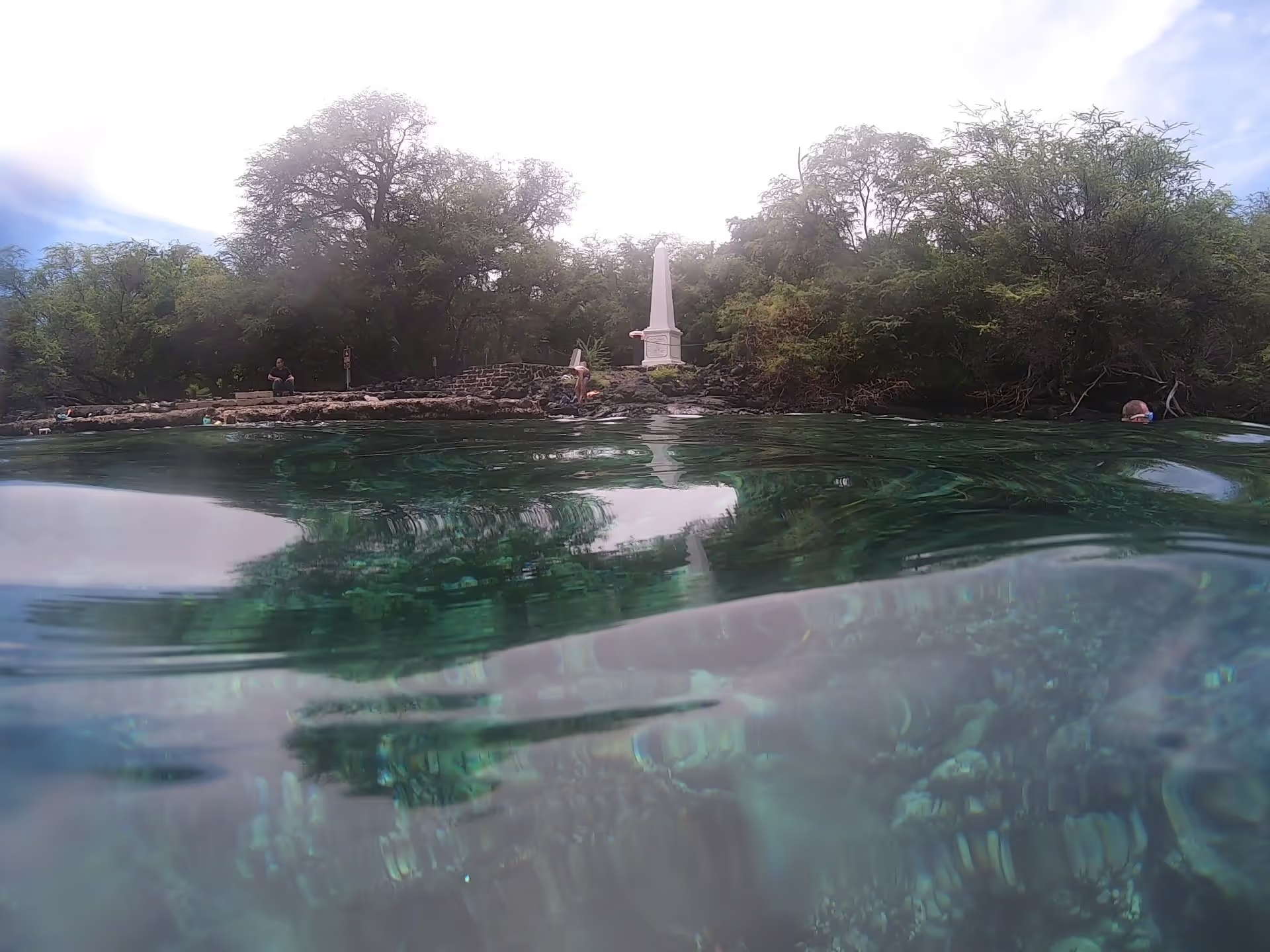
The star attraction here is the water surrounding the historic Captain Cook Monument—a 27-foot white obelisk erected in 1874 to mark the area where British explorer Captain James Cook lost his life in 1779. Interestingly, the tiny patch of land where the monument stands is technically British soil, deeded to the United Kingdom for a token sum of $1!
Under the water, however, the real magic happens. Because Kealakekua Bay is a highly protected Marine Life Conservation District, fishing is strictly regulated. This has created an incredibly bold and dense population of reef fish that are completely unafraid of swimmers.
As you float over the shallow reef flats (which range from 5 to 20 feet deep before plunging into a 100-foot abyss), you will be enveloped by schools of bright yellow tangs that look like floating lemon drops. You will also hear the distinct, rhythmic "crunching" sound of parrotfish scraping algae off the healthy coral heads with their beak-like teeth—a process that actually creates the bay's fine white sand!
Keep your eyes peeled for spinner dolphins, too. These playful mammals frequently use the calm, deep waters of the bay to rest and play after their nightly offshore hunts. If you want to learn more about the history and marine life of this spectacular sanctuary, check out our guide About Kealakekua Bay and discover why Captain Cook Snorkeling is a must-do activity. For those interested in booking direct excursions, you can also view these Kealakekua Bay snorkeling options.
Honaunau Bay (Two Step): Dramatic Lava Entry and Deep Reefs
Located roughly 23 miles south of Kona, right next to the sacred Puʻuhonua o Hōnaunau National Historical Park (the Place of Refuge), lies Honaunau Bay—affectionately known by locals as "Two Step."
The nickname comes from the natural volcanic flat rock shelf on the bay's northern side, where the lava has worn away into two convenient steps. When the ocean is calm, you simply walk down, wait for a gentle swell to lift you, and slide right into the crystal-clear water.
Entering the water here feels like diving into a giant, saltwater aquarium. The water depth starts at about 6 feet over a vibrant coral shelf and quickly drops off into a deep blue channel of 30 feet or more. Because of this dramatic drop-off, you get the best of both worlds: shallow coral gardens teeming with ornate butterflyfish, black durgon triggerfish, and needlefish on the left, and deep-water visitors like spotted eagle rays and green sea turtles on the right.
Turtles (honu) love to rest in the small lava crevices near the shallow entry point. The clarity here is astounding, often matching the 100-foot visibility of Kealakekua Bay. However, because there is no sandy beach, entering and exiting over the wet lava rock requires some balance and timing.
To plan your visit to this spectacular volcanic bay, read our detailed overview About Honaunau Bay or look into booking a Kona Snorkel Tour - Two Snorkeling Spots to experience both Honaunau and Kealakekua in a single day.
Kahalu’u Beach Park: The Best Places to Snorkel on the Big Island for Families
If you are traveling with young children, beginners, or anyone who feels a bit nervous in deep water, Kahalu’u Beach Park is your absolute paradise. Known locally as the island's "snorkeling school," Kahalu’u is a shallow, natural lagoon protected from the open ocean by a massive, 3,900-foot ancient breakwall.
This breakwall dampens the Pacific swells, keeping the inner cove calm, glassy, and incredibly safe. The water is exceptionally shallow—mostly ranging from 2 to 6 feet deep—meaning you can easily stand up (on designated sandy patches, of course, to protect the coral!) if you need to adjust your mask.
Despite its accessibility and high visitor numbers (drawing over 400,000 people annually), Kahalu’u boasts an astonishing amount of marine life. Researchers and volunteers have documented over 100 species of fish in this tiny cove. You are almost guaranteed to see Hawaii’s state fish, the humuhumunukunukuāpuaʻa (reef triggerfish), alongside pufferfish, boxfish, and bright orange-spine unicornfish.
It is also one of the most reliable spots on the Kona Coast to see green sea turtles grazing on the shallow, sun-drenched algae flats. Because the park features lifeguards, restrooms, showers, and gear rentals, it is incredibly convenient.
To see how Kahalu'u compares to other shore spots, check out our article on The Best Places to Snorkel on Hawaii's Big Island and consult The Ultimate Guide to Snorkeling in Kona, Hawaii for helpful parking and arrival tips.
Carlsmith Beach Park: Hilo's Brackish Turtle Lagoon
While the west side of the Big Island gets most of the snorkeling fame, the lush, rainy Hilo side on the east coast holds a magical secret: Carlsmith Beach Park (often called Four Mile).
Located about 3 miles east of Hilo’s town center, Carlsmith does not look like a traditional beach. Instead of sand, you will find manicured green lawns that lead directly to a series of calm, volcanic lagoons protected by a barrier reef.
What makes Carlsmith incredibly unique is its water composition. Cold, fresh groundwater springs bubble up through the ocean floor, mixing with the warm seawater to create a refreshing, brackish "halocline" effect. As you swim, you will feel sudden pockets of cool, crisp freshwater clashing with the warm ocean currents.
This unique environment is a favorite hangout for green sea turtles. In fact, these local honu are so accustomed to humans that they will often swim right up to your feet in the shallow, sandy-bottomed areas. Some turtles even walk right up to the grassy edges to munch on the freshwater grass growing along the shoreline!
Because the lagoon is sheltered, there are rarely any strong waves, making it an incredibly peaceful swim. If you find yourself exploring the rainy side of the island, Carlsmith is an absolute must-visit. You can read more about this east-side gem in this guide on Unmissable snorkelling spots on the Big Island Hawaii.
Manta Ray Village (Keauhou Bay): The Ultimate Night Snorkel
No guide to the best places to snorkel on the Big Island would be complete without mentioning the world-famous manta ray night snorkel. Located right in our backyard at Keauhou Bay (Manta Village), this is widely considered one of the most magical wildlife encounters on the planet.
Manta rays are gentle giants of the ocean. Unlike stingrays, they do not have barbs, teeth, or stingers—they feed exclusively on microscopic plankton. Decades ago, oceanfront hotels in Keauhou began shining bright spotlights into the water at night to create a beautiful aesthetic for guests. They quickly realized that the bright blue light attracted massive clouds of plankton, which in turn attracted the local manta rays looking for an easy feast.
Today, this has evolved into a highly coordinated, eco-friendly experience. Snorkelers board custom boats at dusk and head out to the designated viewing areas. Once in the water, you hold onto a custom-designed floating light board that projects powerful blue lights down into the water.
As the plankton gathers in the light beams, the manta rays—which can have wingspans exceeding 12 to 15 feet—swim up from the darkness. They perform graceful, looping barrel rolls just inches beneath your chest, scooping up the plankton with their wide, cavernous mouths.
It is a surreal, silent ballet that feels more like skydiving through space than swimming in the ocean. To secure your spot on this bucket-list adventure, book our highly rated Manta Ray Night Snorkel Kona tour.
Reaching the Captain Cook Monument: Hike, Kayak, or Boat Tour?

Because the waters surrounding the Captain Cook Monument in Kealakekua Bay offer the most pristine snorkeling on the island, almost every visitor wants to go there. However, there is a catch: there is no road access to the monument.
To reach this underwater paradise, you must choose between three distinct routes. To help you decide which method is right for your group, we have mapped out the decision process below:
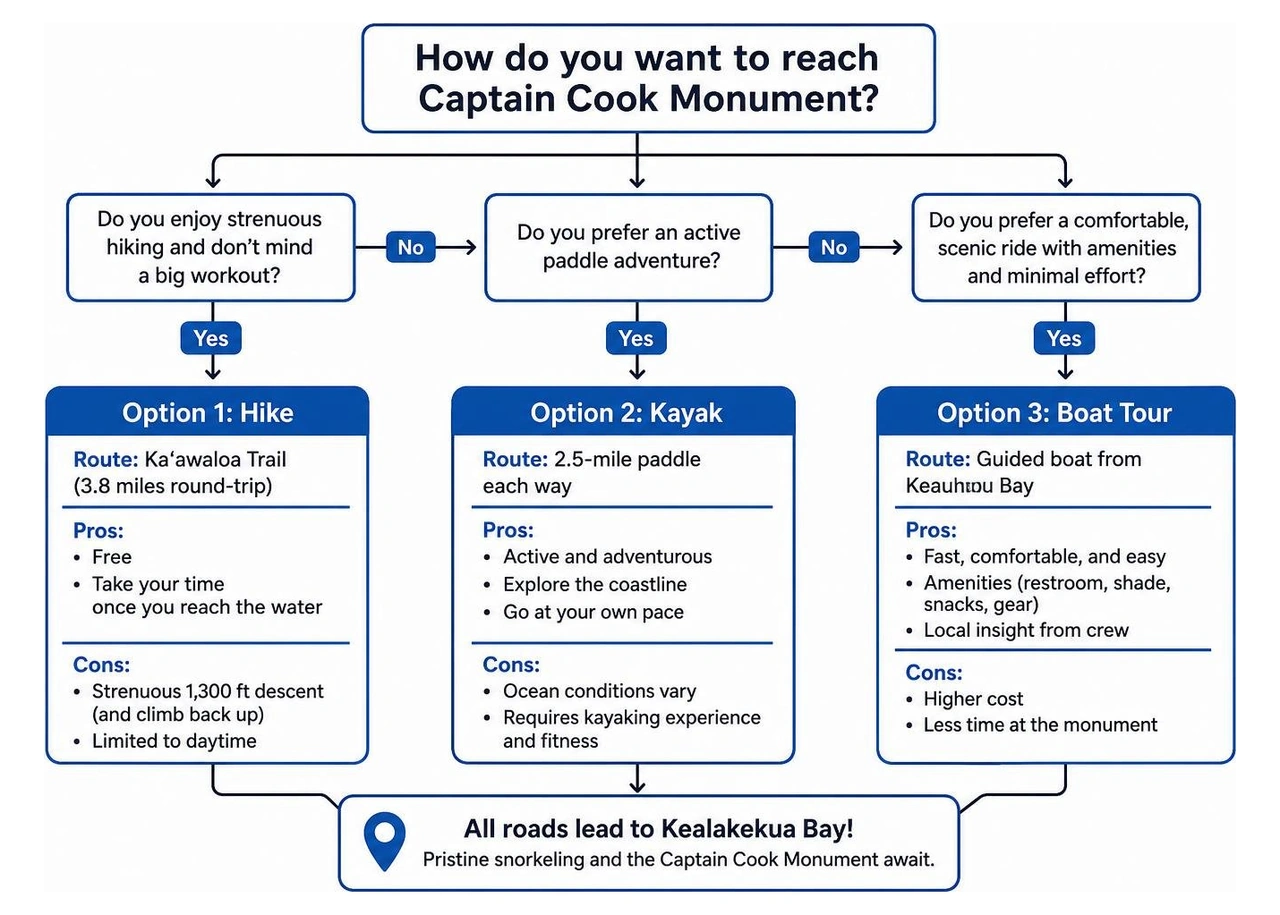
Here is an honest breakdown of the pros and cons of each access method:
Option 1: The Strenuous Hike (Ka'awaloa Trail)
- The Route: A 3.8-mile round-trip trail that starts off Napo’opo’o Road and descends nearly 1,300 feet to the shoreline.
- Pros: It is completely free, and you can take as much time as you want once you reach the water.
- Cons: The hike down is steep, hot, and rocky, but the hike back up is a brutal, uphill climb through unshaded lava fields in the midday heat. It is highly discouraged for families, casual hikers, or anyone carrying heavy snorkeling gear.
Option 2: The Kayak Journey
- The Route: Renting a kayak and paddling roughly one mile across the bay from Napo’opo’o Pier.
- Pros: A fun, active way to experience the bay with a high chance of seeing spinner dolphins swimming alongside your kayak.
- Cons: Hawaii state regulations require strict, hard-to-get permits to land or tie up your kayak near the monument. If you do not have a landing permit, you must snorkel while towing your kayak behind you, which can be exhausting and dangerous when the wind picks up.
Option 3: A Guided Boat Tour (The Gold Standard)
- The Route: Boarding a fast, comfortable ocean vessel that takes you directly to the monument.
- Pros: By far the safest, most relaxing, and most educational option. You skip the hot hike and the permit hassle entirely. Professional guides provide all of your high-quality snorkel gear, custom flotation devices, and a fascinating narrative about the history and marine biology of the bay. Plus, our fast boats can easily navigate the coastline to spot dolphin pods along the way.
- Cons: It is a paid experience that must be booked in advance.
To learn more about why this spot belongs on your itinerary, read Why Captain Cook Monument Snorkeling Should Be on Your Hawaii Bucket List and consult The Ultimate Guide to Snorkeling in Kona, Hawaii to compare your options.
Essential Safety, Gear, and Reef-Safe Practices
We love sharing the beauty of the Big Island's underwater world, but we are even more passionate about protecting it. Hawaiian reefs are fragile ecosystems that can be damaged in seconds by careless behavior.
When you head out to explore the best places to snorkel on the Big Island, please keep these essential safety and conservation rules in mind:
- Use ONLY Mineral-Based, Reef-Safe Sunscreen: Traditional sunscreens contain chemicals like oxybenzone and octinoxate, which bleach and kill coral reefs (which grow at a painfully slow rate of just 3 millimeters per year!). Hawaii state law strictly prohibits the sale and use of non-reef-safe sunscreens. Look for active ingredients like zinc oxide or titanium dioxide. Better yet, wear a UV-blocking rash guard to limit your sunscreen use entirely!
- Never Touch, Step On, or Stand on Coral: Coral reefs are living, breathing animal colonies. Stepping on them crushes the delicate polyps and introduces bacteria that can wipe out entire sections of the reef. Always keep your body horizontal in the water, float flat, and keep your fins up.
- Respect the Wildlife (Look but Don't Touch): Hawaii's green sea turtles (honu) and Hawaiian monk seals are protected by federal and state laws. You must maintain a distance of at least 10 feet (3 meters) from sea turtles and 50 yards from wild spinner dolphins. If a dolphin pod enters the bay, enjoy them from a distance—it is illegal to swim out to intercept, chase, or harass them.
- Avoid Full-Face Snorkel Masks: Many safety experts and local guides strongly discourage the use of cheap, full-face snorkel masks. They have been linked to dangerous carbon dioxide (CO2) buildup, which can cause sudden disorientation or drowning. Stick to a high-quality, traditional mask-and-snorkel set.
- Assess the Ocean Before Entering: Always spend at least five minutes watching the waves and currents before entering the water. If there is a strong swell or if the water looks murky, choose a different day or spot. Remember the golden Hawaiian rule: When in doubt, don't go out!
For more detailed safety tips, gear checklists, and ocean regulations, read our Know Before You Go guide and browse our comprehensive FAQ page.
Frequently Asked Questions About Big Island Snorkeling
What is the best time of day and year to snorkel on the Big Island?
Mornings are almost always the best time of day to snorkel. The winds are calmest, the ocean is glassy and clear, and the marine life is highly active. By afternoon, the daily trade winds pick up, creating choppy water and stirring up sediment that reduces visibility.
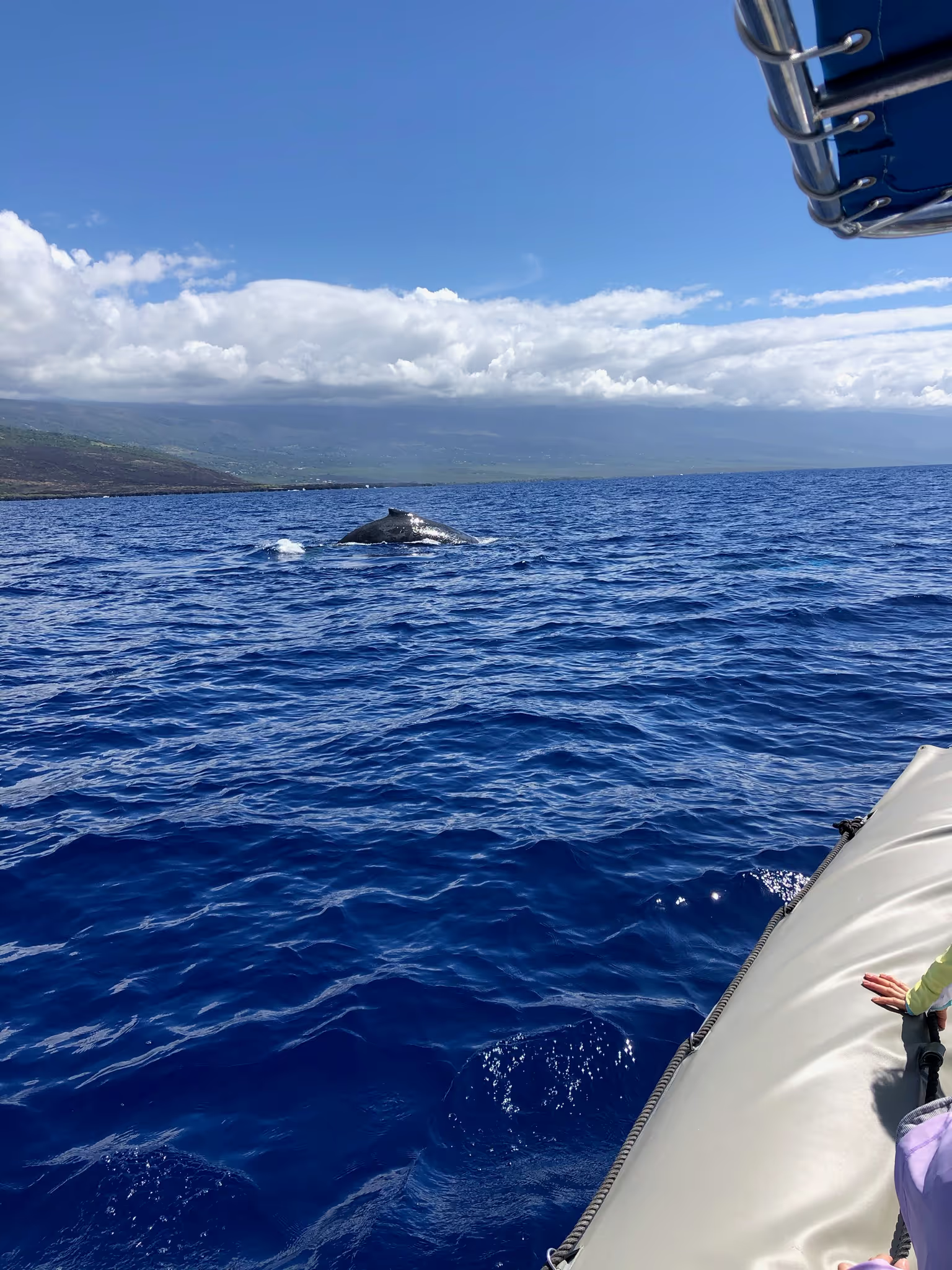
In terms of seasons, the summer months (May through September) offer the warmest water temperatures (up to 84°F) and the calmest ocean swells. Winter (December through March) can bring larger north swells that make shore entry dangerous, but it also brings migratory humpback whales—meaning you might hear whale songs vibrating through the water while you snorkel!
Are there any famous Big Island snorkel spots that are no longer accessible?
Yes. The most famous example is the Kapoho Tide Pools on the eastern tip of the island. Once celebrated as one of the most unique, diverse, and protected tide pool ecosystems in Hawaii, the entire Kapoho area was completely covered and destroyed by lava during the historic Kilauea volcanic eruption in 2018. This serves as a powerful reminder of how dynamic, active, and ever-changing the geology of the Big Island truly is.
Where should I stay on the Big Island to be closest to the best snorkeling?
To be closest to the absolute best snorkeling, you should stay on the Kona Coast (west side), specifically in the Kailua-Kona or Keauhou areas. Keauhou Bay is the launching point for our manta ray night snorkels and Captain Cook boat tours, making it an incredibly convenient basecamp. The Kohala Coast to the north also offers beautiful sandy beaches like Mauna Kea and Hapuna, though they are more prone to wind and seasonal swells than the sheltered bays of South Kona.
Conclusion
The volcanic reefs of the Big Island offer an underwater playground that is unmatched anywhere else in the Hawaiian islands. From the historical depths and dolphin-filled waters of Kealakekua Bay to the shallow, turtle-laden lagoons of Kahalu'u and the mind-blowing nighttime dance of the manta rays in Keauhou, there is an adventure here for every age and skill level.
At Dolphin Discoveries, we believe that the best way to experience these fragile aquatic wonders is safely, comfortably, and ethically. Our small-group, naturalist-led tours on fast, rigid-hull inflatable boats ensure that you get a personalized, uncrowded experience while learning from experts who deeply respect the ocean and its inhabitants.
Ready to make some unforgettable ocean memories? Check out our guide to The Best Places to Snorkel on Hawaii's Big Island and book your next adventure with us today!