

Is a Kona Night Manta Ray Tour Worth Booking?
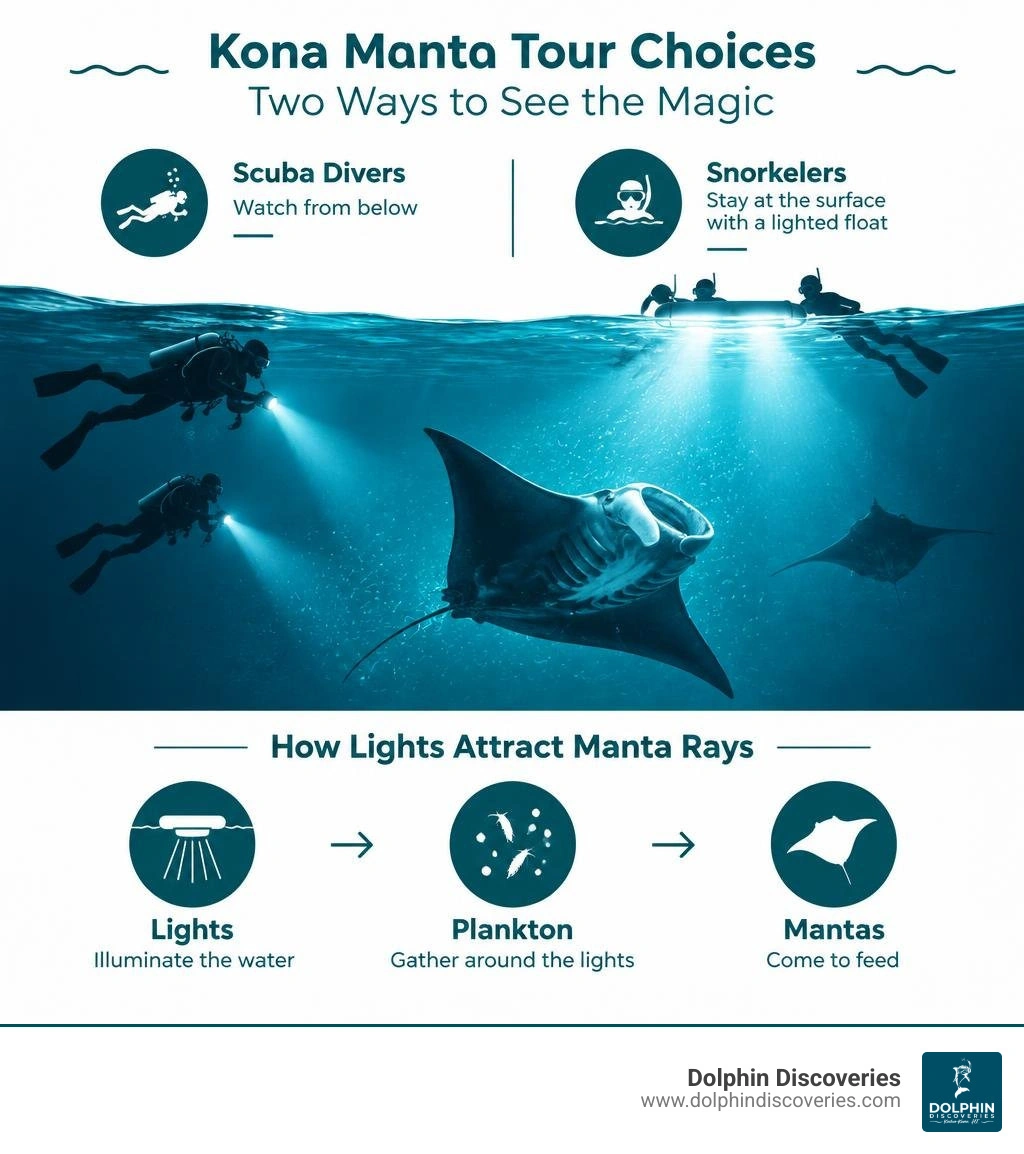
A manta ray glides beneath the lights as you float on the dark ocean. To book a Kona night manta ray dive, first choose your view: certified scuba divers watch from below, while snorkelers stay at the surface and hold a lighted float. Check each tour's skill requirements and wildlife policies, then reserve early if your travel dates are fixed. For a surface option, see Dolphin Discoveries' manta ray night snorkel.
The lights gather plankton, which draws feeding mantas close enough to see without touching them. Sightings are never guaranteed, but the chance to watch a manta barrel roll below you is what makes this Kona experience stand out. According to marine biologists, manta rays are among the most intelligent fish in the ocean, with the largest brain-to-body ratio of any fish species.
I'm Shelley Carey, and I'll help you decide whether this night swim is right for you.
Essential kona night manta ray dive terms:
The Magic Behind the Kona Night Manta Ray Dive Experience
The Kona coast of the Big Island is recognized around the globe for its resident population of reef manta rays (Mobula alfredi). While manta rays can be found across tropical waters worldwide, Kona is one of the few places on Earth where humans can reliably encounter them up close at night.
Most tours depart from Keauhou Bay and travel just a few minutes out to local feeding grounds, primarily the famous site known as Manta Village. What makes this coastal stretch special is the unique interaction between coastal topography, lighting, and marine food chains. Decades ago, shore lights from coastal resorts began drawing dense clouds of microscopic marine life. The mantas learned that light means an easy meal, establishing a nightly tradition that continues today.
Booking our manta ray night snorkel in Kona allows you to enter this nighttime marine sanctuary without disturbing the natural rhythm of the animals.
Why the Kona Night Manta Ray Dive Attracts Giant Rays
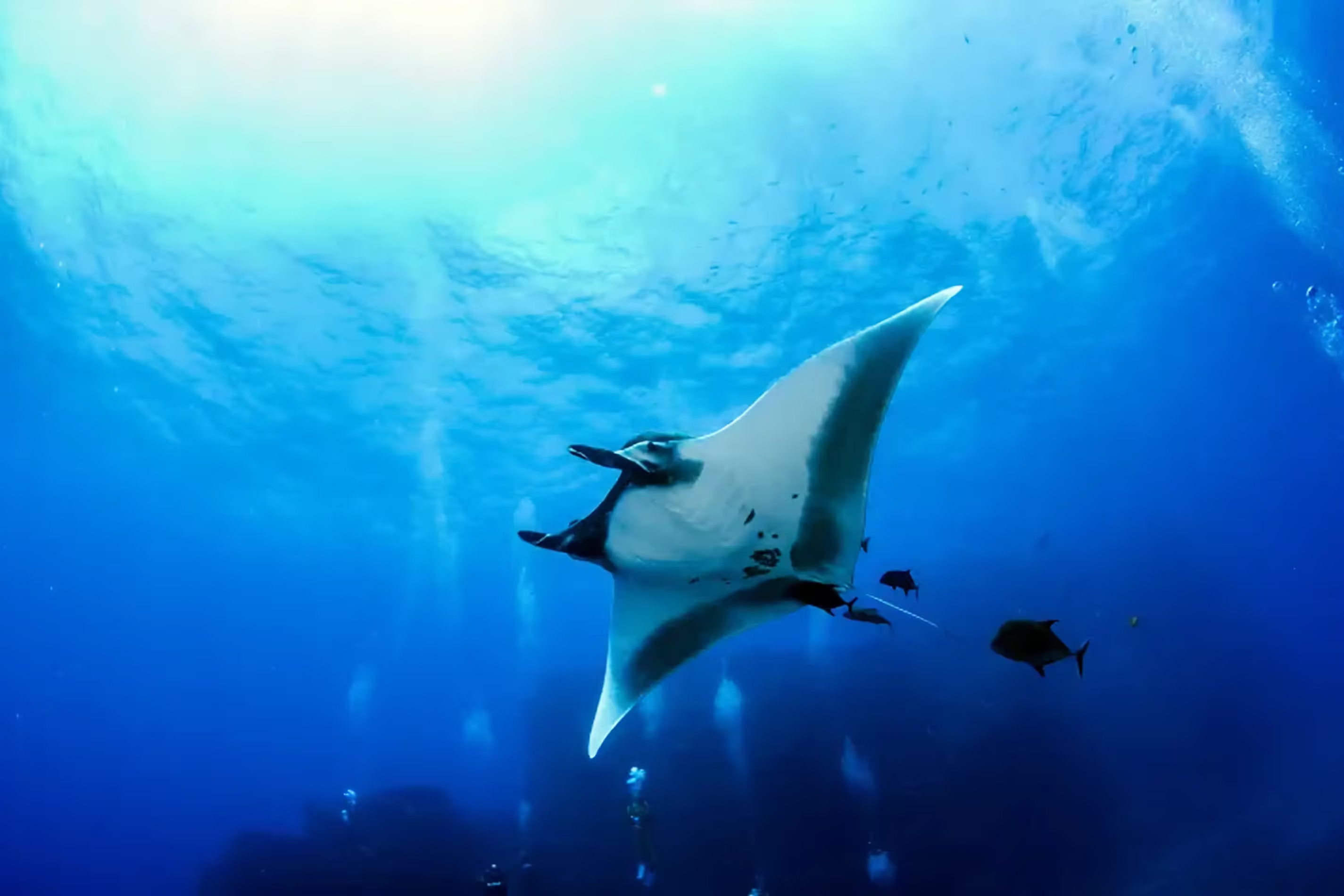
Manta rays are massive, gentle creatures that can reach a wingspan of up to 12 feet in Hawaiian waters. Despite their imposing size, they are harmless filter feeders that sustain themselves entirely on tiny organisms.
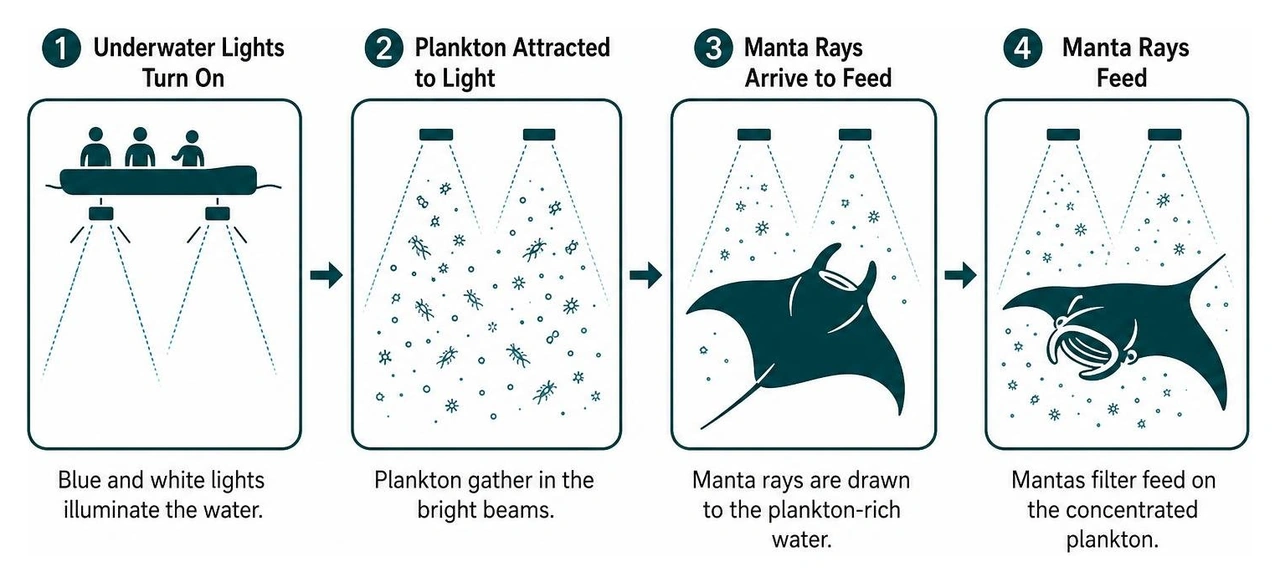
During the day, mantas cruise deeper waters and offshore currents. As dusk sets in, high-powered blue and white underwater lights illuminate the water column. These beams act like a magnet for phytoplankton and zooplankton. As billions of microscopic organisms gather in the bright beams, the mantas arrive to feast.
If you want to understand these animals before hopping into the water, you can learn about manta rays and their unique anatomy, life cycles, and intelligence.
How Snorkelers Experience a Kona Night Manta Ray Dive
For snorkelers, the excursion is straightforward, relaxing, and beginner-friendly. Instead of swimming around independently in the dark, you hold onto a customized, lighted surface float board.
Our guests simply hold onto the perimeter handles of the float, resting comfortably at the surface with a mask and snorkel. The lights shine downward from beneath the board, creating what many refer to as an underwater floating campfire. Plankton concentrates directly in the light beam beneath your chest, bringing the mantas right up toward the surface below you.
Before your trip, reviewing a manta night dive complete guide will help you visualize the entire timeline from boat departure to the ocean swim.
| Feature | Snorkel Tour (Surface) | Scuba Dive (Seafloor) |
|---|---|---|
| Participant Depth | Surface (0 feet) | Seafloor (approx. 25–35 feet) |
| Equipment Used | Mask, snorkel, wetsuit, float board | Full scuba kit, tank, weights |
| Certification Needed | None (beginner-friendly) | Open Water Scuba Certification |
| Manta Proximity | Mantas feed inches below your chest | Mantas glide directly overhead |
| Effort Level | Passive holding on float board | Active buoyancy control on bottom |
What to Expect: Manta Ray Behavior, Feeding, and Marine Etiquette

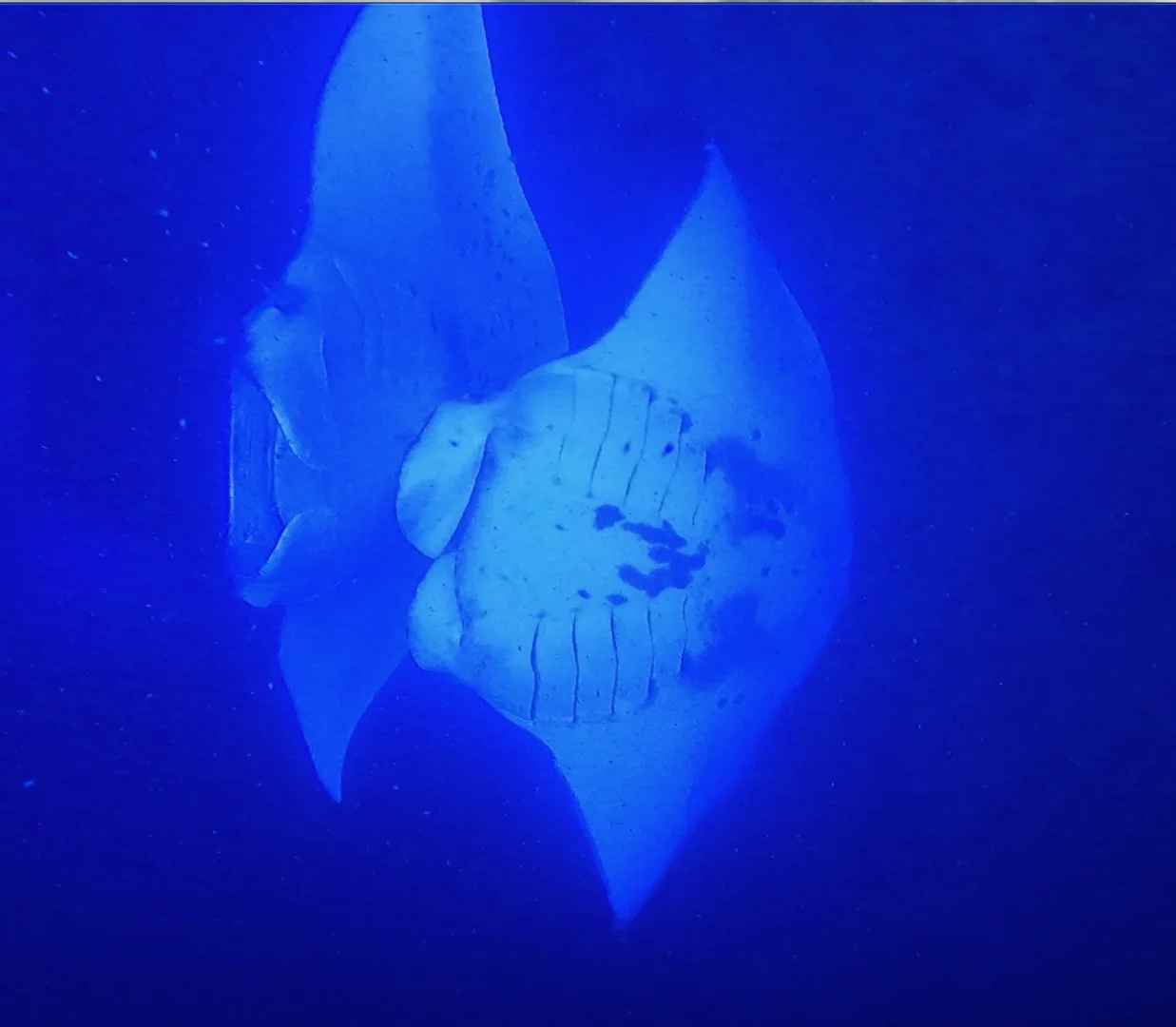
When you look into the illuminated water, you will witness acrobatic feeding behaviors rarely seen elsewhere in the wild. Manta rays use specialized cephalic fins on either side of their heads to channel plankton-rich water straight into their wide mouths.
To maximize food intake, mantas perform backward somersaults, known as a barrel roll. They swoop upward through the beam of light with their mouths open, glide just inches below your mask, and loop back down toward the ocean floor. Seeing a 1,000-pound animal execute these maneuvers with grace is truly surreal.
Reading about what to expect on a Big Island manta ray snorkel trip can help prepare your entire family for the sights and sounds of the night.
Ethical Wildlife Viewing and Marine Conservation
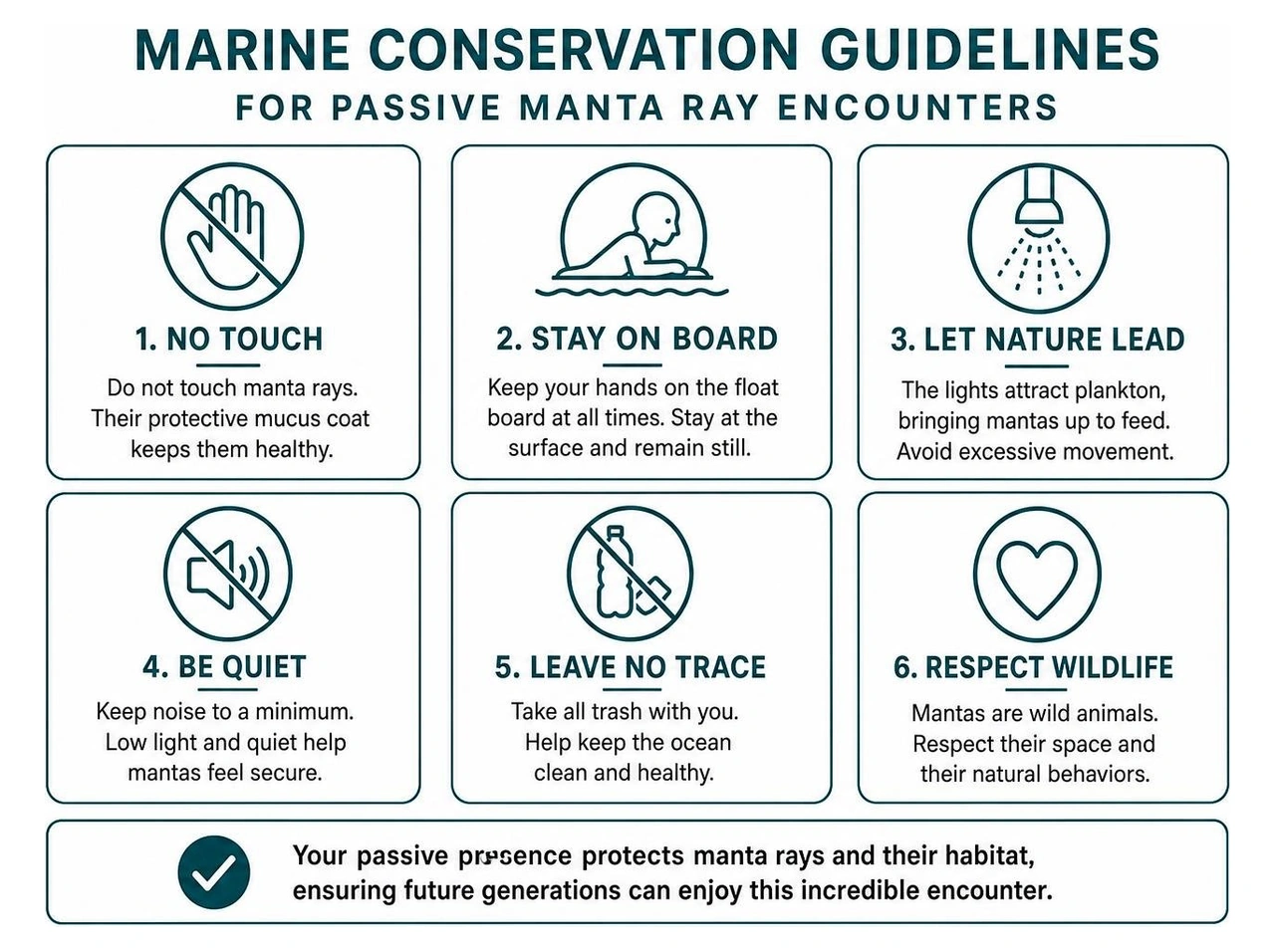
Because manta rays are wild animals, passive interaction is vital. Responsible operators follow strict guidelines to protect the local manta ray population and preserve their habitat.
The most important rule during any manta excursion is the no-touch policy. Manta rays have a protective mucus coat on their skin that shields them from ocean bacteria and infections. Touching them strips away this barrier, leaving the animals vulnerable to disease. Keeping your hands on the float board ensures you remain safe and secure while keeping the rays protected.
By choosing ethical, naturalist-led operators, you support sustainable wildlife tourism. You can discover more conservation tips in our manta ray night swim guide 2026 to make sure your ocean footprint remains minimal.
Preparing for Your Excursion: What to Bring and Safety Essentials
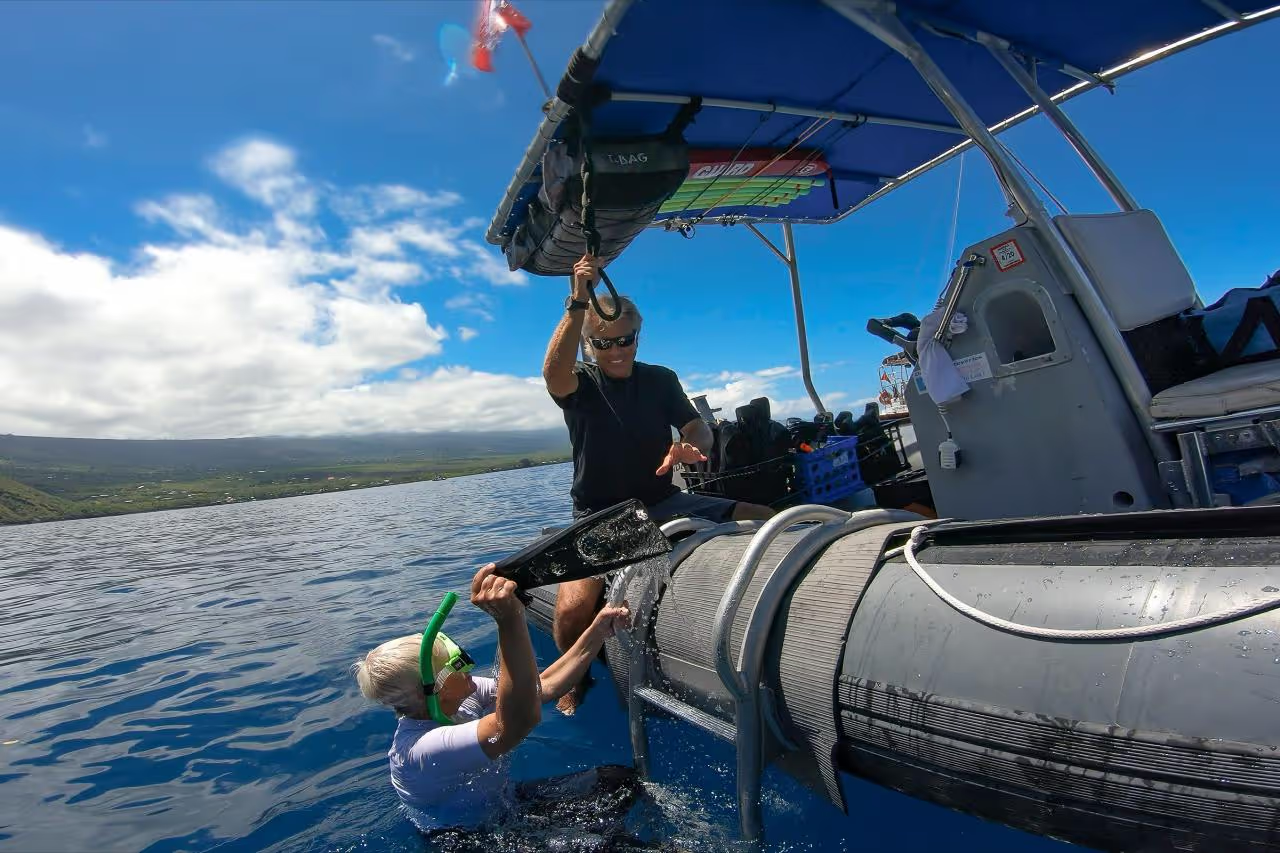
Preparation is key to getting the most out of your night snorkel. Even in Hawaii, ocean water can feel brisk after 45 minutes of floating at night. We supply wetsuit tops or full suits to keep your core body temperature comfortable throughout the encounter.
Here is a checklist of what to pack and consider:
- Swimwear & Towel: Wear your swimsuit under your clothes before boarding. Bring a dry towel for the ride back.
- Warm Layer: Pack a light jacket, windbreaker, or hoodie to put on after exiting the water.
- Seasickness Prevention: If you are prone to motion sickness, take non-drowsy medication an hour before departure. Floating on ocean swells in the dark can sometimes trigger mild nausea.
- Underwater Camera: A waterproof action camera with low-light capability or a secure wrist strap is ideal. Turn off direct flashes, as the float board lights supply plenty of illumination.
Check out our full list of know before you go details to help your evening run smoothly.
Booking Tips and Tour Timing
Kona manta tours are popular and frequently sell out weeks in advance, especially during peak travel windows like summer, spring break, and the winter holidays. Reserving early in your trip planning ensures you secure the best dates.
Opting for small-group excursions provides a calm, personalized outing compared to crowded, large-capacity catamarans. With fewer passengers on board, you receive dedicated attention from our crew, quick gear fittings, and uncrowded float board positions. Check our verified traveler reviews to see why guests value small-boat ocean tours.
Frequently Asked Questions About Kona Manta Encounters
Are manta rays dangerous or do they possess stingers?
Manta rays are completely harmless to humans. Unlike stingrays, manta rays do not possess a barbed stinger or venomous spine on their tails. They are also toothless filter feeders, meaning they cannot bite you. They glide around snorkelers with complete awareness and agility.
What happens if no manta rays appear during the tour?
Because manta rays are wild animals roaming open coastal waters, sightings cannot be 100% guaranteed on every outing. However, Kona boasts high sighting success rates due to regular feeding patterns. Most reputable tour companies provide rebooking policies if mantas do not show up on your scheduled night.
Do I need prior snorkeling experience to participate?
No prior snorkeling experience is required. Guests hold onto a high-flotation board equipped with handles, allowing you to float effortlessly without treading water. Crew members and naturalists accompany the group throughout the entire swim to ensure everyone remains safe and comfortable.
Conclusion: Is the Kona Night Manta Encounter Worth It?
Floating in the dark waters off the Kona coast while majestic manta rays perform backward somersaults below you is an encounter you will never forget. Between the rich naturalist insights shared by our crew, the short 5-minute boat ride from Keauhou Bay to the manta site, and the ease of viewing from our lighted float board, the Kona night manta tour delivers on every bit of its reputation.
Whether you are traveling as an adventurous couple or bringing the entire Ohana for an evening under the stars, this experience connects you with Hawaii's marine world in an intimate, respectful way.
If you are ready to plan your evening on the water or have questions about which tour fits your group best, contact us today and let our team help you get ready for the water. Mahalo Nui for exploring our island's living waters with care.