

What to Know Before You Go: Kona Snorkeling at a Glance
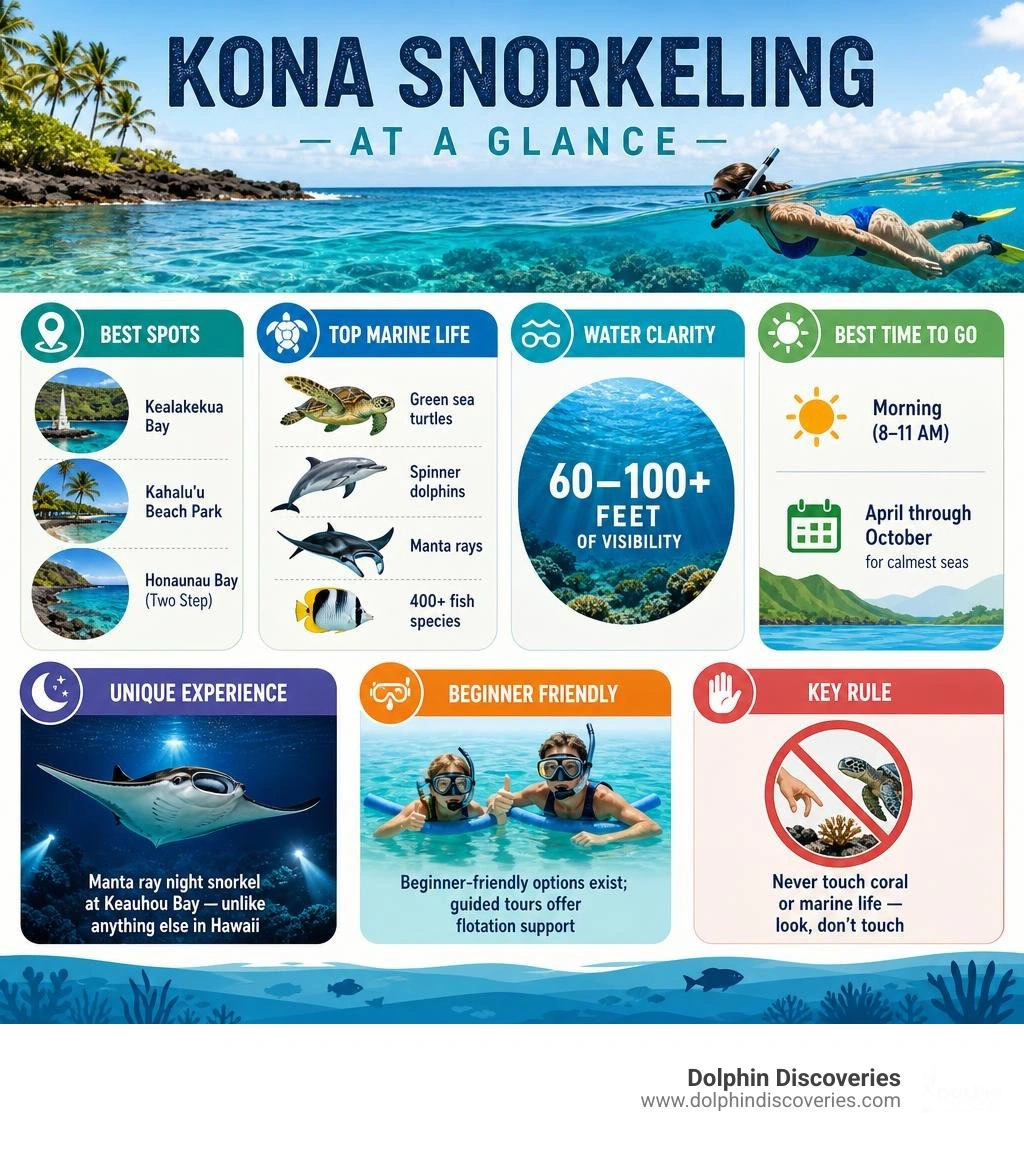
Kona snorkeling is widely considered the best in Hawaii, thanks to the Big Island's sheltered west coast, volcanic geology, and year-round calm, clear water. Whether you're a first-timer or a seasoned snorkeler, here's a quick overview of what to expect:
- Best spots: Kealakekua Bay, Kahalu'u Beach Park, Honaunau Bay (Two Step)
- Top marine life: Green sea turtles, spinner dolphins, manta rays, 400+ fish species
- Water clarity: Routinely 60–100+ feet of visibility
- Best time to go: Morning (8–11 AM), April through October for calmest seas
- Unique experience: Manta ray night snorkel at Keauhou Bay — unlike anything else in Hawaii
- Skill level needed: Beginner-friendly options exist; guided tours offer flotation support
- Key rule: Never touch coral or marine life — look, don't touch
Imagine floating in water so clear you can see the reef 100 feet below you. Schools of tropical fish drift past. A green sea turtle glides within arm's reach. This isn't a fantasy — it's a typical morning on the Kona coast.
The Big Island's west-facing shoreline is naturally protected from Hawaii's prevailing trade winds. That means smaller waves, less chop, and some of the most transparent ocean water in the world. Kealakekua Bay alone draws roughly 190,000 visitors a year and is consistently ranked among the top five snorkeling spots on the planet.
But knowing where to go and how to plan your trip makes all the difference. The wrong spot for your skill level — or the wrong tour operator — can turn a dream day into a stressful one.
This guide walks you through everything: the best spots, how to choose between shore snorkeling and a guided boat tour, what marine life to expect, safety rules, and how to make the most of your time in the water.
Why Kona Snorkeling Offers the Best Conditions in Hawaii

When you ask ocean enthusiasts why they prefer the Big Island over other Hawaiian islands, the answer is almost always the same: water clarity. The Kona Coast is a legendary destination for underwater exploration. But this stellar reputation isn't just luck; it is a direct result of the island's unique geographical and meteorological makeup.
The primary reason for these pristine conditions is Kona's leeward position. Because the massive volcanic peaks of Mauna Kea, Mauna Loa, and Hualalai block the damp, prevailing easterly trade winds, the west coast of the island remains sheltered. This wind shadow keeps the coastal waters incredibly calm for over 320 days of the year, preventing the churning surface conditions that often reduce visibility elsewhere.
If you want to understand the broader picture of what makes this island so spectacular for underwater adventures, you can explore our guide to Why Kona Snorkeling is the Best in Hawaii. To get a traveler's perspective on mapping out your coastal itinerary, check out The Ultimate Guide to Snorkeling in Kona, Hawaii.
The Science Behind Kona's 100-Foot Visibility
To truly appreciate the underwater clarity here, you have to look at the island's youth. Geologically speaking, the Big Island is the youngest in the Hawaiian chain. Because of this, it has very little soil development and relatively few freshwater rivers or streams dumping muddy runoff into the ocean.
When rain falls on the porous volcanic slopes of Hualalai and Mauna Loa, the water is quickly absorbed directly into the basalt rock rather than rushing down dirt-filled riverbeds. It filters slowly through the subterranean lava rock before emerging as crystal-clear freshwater springs along the shoreline.
Furthermore, the island's steep volcanic slopes drop off dramatically into the deep blue ocean very close to the shore. This deep water access brings clean, nutrient-rich pelagic currents near the coast while preventing sand from settling in shallow bays. Without fine sand to get kicked up by the waves, the water remains absolutely transparent, routinely offering visibility that exceeds 100 feet. Learn more about how the island's volcanic nature shapes these conditions in our overview of Snorkeling on the Big Island.
Marine Life You Will Encounter While Kona Snorkeling
Because the water is so clean and sunlight penetrates so deeply, Kona's coral reefs thrive. These healthy coral ecosystems support an astonishing array of marine life. In fact, about a quarter of the fish species you will see here are endemic to Hawaii, meaning you won't find them anywhere else on Earth.
When you dip your mask below the surface, the first thing you will notice is a burst of yellow. Schools of yellow tang graze on the reef like underwater herds of cattle. You will also encounter various butterflyfish, parrotfish (listen closely and you can actually hear them crunching on the coral), and the famous humuhumunukunukuapua'a (the reef triggerfish and Hawaii's state fish).
Beyond the colorful reef fish, Kona's waters are home to larger, iconic marine residents:
- Hawaiian Green Sea Turtles (Honu): These gentle reptiles are frequently spotted resting on shallow reefs or visiting "cleaning stations" where small fish pick algae off their shells.
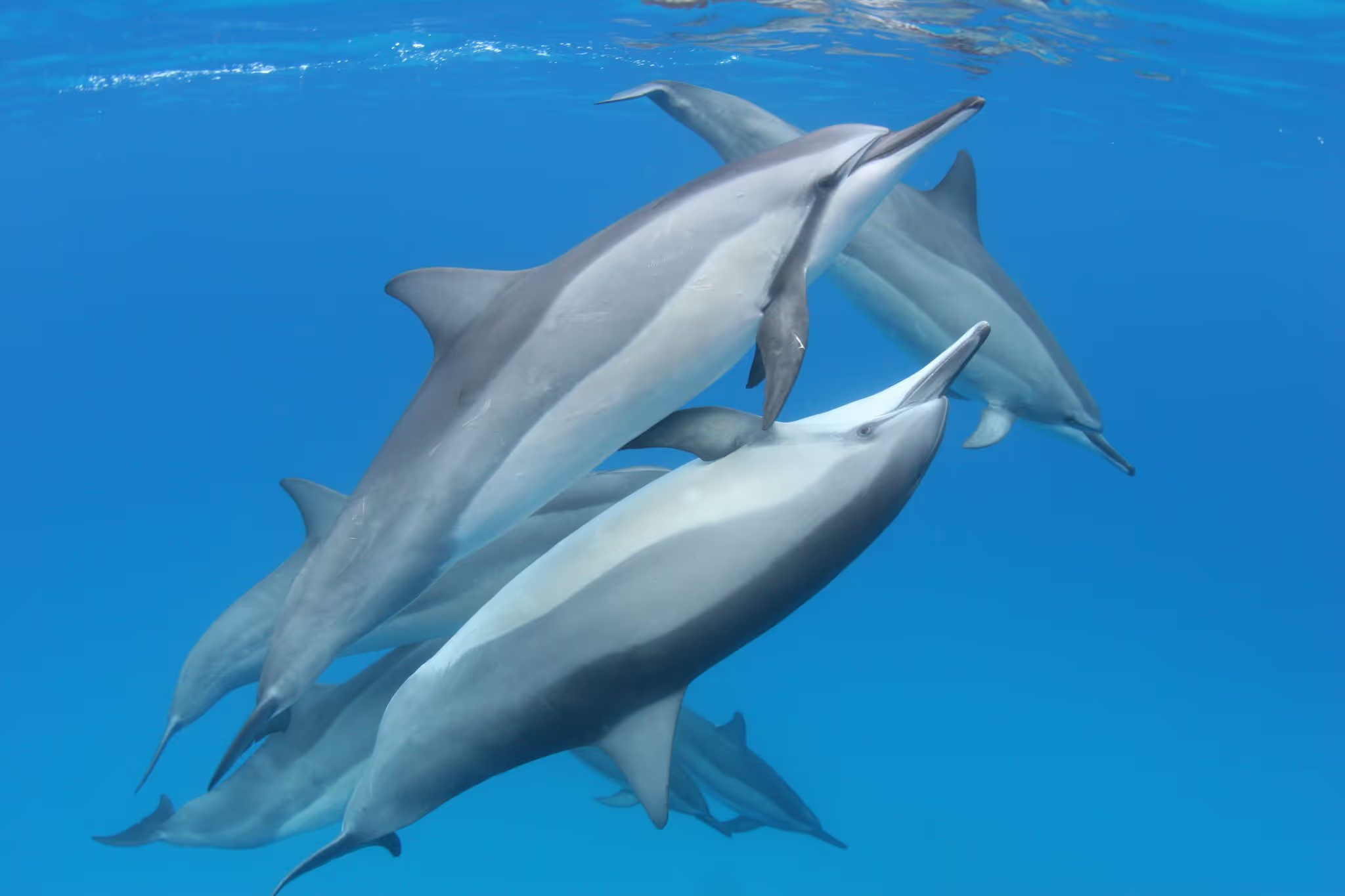
- Spinner Dolphins (Nai'a): Known for their playful acrobatic leaps, pods of spinner dolphins use Kona's sheltered bays to rest and socialize during the morning hours.
- Manta Rays: These harmless giants, with wingspans often exceeding 12 to 15 feet, glide gracefully through the coastal waters feeding on microscopic plankton.
For a deeper dive into identifying these incredible creatures and finding where they like to hang out, refer to our guide on The Best Places to Snorkel on Hawaii's Big Island.
Top Snorkeling Spots Along the Kona Coast

The Kona Coast boasts a diverse array of snorkeling locations, ranging from easily accessible beach parks to remote marine sanctuaries. Several of these areas are designated as Marine Life Conservation Districts (MLCDs), which means fishing is highly restricted or entirely prohibited. These protections allow marine life to flourish without human interference, creating underwater environments that feel like swimming in a giant, natural aquarium.
To help you decide where to focus your underwater exploration, we’ve broken down the top three spots that define the Kona experience. For a quick comparison, you can also read about The 3 Best Snorkeling Spots in Kona.
| Snorkel Spot | Average Depth | Entry Type | Best For | Accessibility |
|---|---|---|---|---|
| Kealakekua Bay | 5 – 30 ft (slopes to 100+) | Boat or Rocky Shore | Pristine coral, extreme visibility, history | Best accessed via boat tour |
| Honaunau Bay (Two Step) | 10 – 35 ft (slopes to 100+) | Flat Lava Rock | Reef diversity, deep water marine life | Shore entry (intermediate/advanced) |
| Kahalu'u Beach Park | 2 – 10 ft | Sandy/Shallow | Beginners, families, sea turtles | Easy shore entry |
Kealakekua Bay and the Captain Cook Monument
Kealakekua Bay is the crown jewel of Big Island snorkeling. Located about 12 miles south of Kailua-Kona, this historic bay is a protected marine sanctuary that boasts over 100 feet of visibility and is home to more than 400 species of fish. The best snorkeling is concentrated in the shallow, calm waters directly in front of the 27-foot white obelisk erected in 1878 to commemorate Captain James Cook, who lost his life here in 1779.
Getting to this pristine reef is part of the adventure. There is no direct road access to the monument side of the bay. Your options are:
- A Strenuous Hike: The Ka'awaloa Trail is a hot, unshaded 3.8-mile round-trip hike with a grueling 1,300-foot elevation change. Walking back up over loose lava rock in the midday heat can be exhausting.
- A Kayak Paddle: You can rent a kayak, but Hawaii state regulations require a valid permit to land any vessel at the monument.
- A Relaxing Boat Tour: By far the most comfortable and popular option. Taking a boat tour allows you to bypass the logistical headaches, save your energy for the water, and enjoy professional marine guides.
If you want to experience this historic sanctuary hassle-free, you can book our guided Captain Cook Snorkel Tour, where we combine light-hearted historical storytelling with world-class snorkeling.
Honaunau Bay (Two Step)
Located adjacent to the Pu'uhonua o Honaunau National Historical Park (a sacred place of refuge in ancient Hawaiian culture), Honaunau Bay is affectionately known by locals as "Two Step." The nickname comes from the natural flat lava rock formations on the north side of the bay that form a perfect two-step ladder into the water.
Once you step off the lava ledger, you are instantly immersed in a vibrant coral garden. The bay slopes from a shallow 10-foot shelf to a deeper 30-to-100-foot sandy channel. Because of this quick transition to deep water, it's not uncommon to spot larger marine life here, including green sea turtles and pods of wild spinner dolphins.
Safety Tip: Entering at Two Step requires a bit of timing. You must wait for a gentle swell to lift you up onto the flat rock ledge before stepping up. It is best suited for intermediate to advanced snorkelers who are comfortable without a sandy beach.
Kahalu'u Beach Park
If you are traveling with children, are new to snorkeling, or simply want an easy, relaxing day in the water, Kahalu'u Beach Park is your paradise. Located right in the heart of the Kona district, this sheltered cove is protected from major ocean swells by a large, ancient breakwater wall.
The water here is shallow (often only waist-deep in many areas) and features a gentle, sandy entry point. Kahalu'u is famous for its dense population of green sea turtles that come to feed on the shallow, sun-drenched reef.
To help protect this fragile ecosystem, the park features "Reef Teach" volunteers. These dedicated educators stand on the shoreline to teach visitors how to snorkel responsibly without stepping on the living coral. If you are planning a family trip, check out our helpful guide on Snorkeling Big Island with Kids.
How to Plan Your Kona Snorkeling Adventure
A successful snorkeling trip requires a little bit of preparation. The Pacific Ocean is a dynamic environment, and understanding its rhythms will ensure you have a safe and memorable experience. To make sure you don't miss a single step, read our comprehensive guide on How to Plan a Kona Snorkel Trip - No Prior Experience Required.
One of the most important decisions you will make is choosing the right time of day.
- Mornings (8:00 AM – 11:00 AM): This is the golden window for reef snorkeling. The winds are typically calmest, the ocean is glassy, and the marine life is highly active.
- Afternoons (12:00 PM – 4:00 PM): While the afternoon sun lights up the reef beautifully for underwater photography, the trade winds often pick up, creating choppy surface conditions that can reduce visibility.
Choosing Between Shore Snorkeling and Guided Boat Tours
While shore snorkeling offers incredible flexibility and is highly budget-friendly, it does come with logistical challenges. You have to find parking (which fills up incredibly fast at spots like Honaunau and Kahalu'u), navigate sharp volcanic rock entries, rent and transport your own gear, and constantly monitor ocean swells and currents on your own.
Guided boat tours, on the other hand, remove all the guesswork. When you join a professional charter, you get:
- High-quality, sanitized snorkeling gear, wetsuits, and flotation aids.
- In-water support from lifeguard-certified guides who can help beginners feel safe.
- Safe and easy access to remote reefs like Kealakekua Bay without the strenuous hike.
- Educational commentary about the island's marine biology and rich cultural history.
For a detailed look at how to prepare for your first ocean outing, explore our A Beginner's Guide to Kailua Kona Snorkeling Tips and Tricks.
Experiencing the Manta Ray Night Kona Snorkeling Tour
No trip to the Big Island is complete without experiencing the world-famous manta ray night snorkel. This activity is consistently rated as one of the most unique wildlife encounters on the planet.
Unlike daytime snorkeling, which is all about actively swimming and exploring, the manta ray night snorkel is an exercise in peaceful stillness. The tour takes place just off the coast of Keauhou Bay, a historically significant area where you can learn more about local activities through the Keauhou Bay, Hawaii | OUTRIGGER Kona Resort and Spa guide.
Here is how the magic happens:

Because manta rays do not have teeth, stingers, or barbs, they are completely harmless "gentle giants." They glide and loop within inches of your mask, performing graceful underwater somersaults (barrel rolls) to scoop up the plankton. It feels like watching a silent, majestic ballet in outer space.
Ocean Safety and Reef Etiquette in Hawaii
As visitors to these fragile marine ecosystems, we have a collective responsibility to protect the 'āina (land) and the ocean. Hawaii's reefs are living, breathing organisms that take decades to grow, and even a single careless step can destroy centuries of progress.
To ensure your snorkel session is safe for both you and the marine life, always follow these golden rules:
- Use Reef-Safe Sunscreen: Hawaii state law strictly prohibits the sale and use of sunscreens containing chemicals like oxybenzone and octinoxate, which bleach and kill coral reefs. Always choose mineral-based sunscreens made with zinc oxide or titanium dioxide. Better yet, wear a UV-protective rash guard to minimize the need for sunscreen altogether.
- Keep Your Distance from Sea Turtles: Hawaiian green sea turtles (honu) are protected under federal and state law. You must maintain a distance of at least 10 feet (3 meters) from them at all times. Never chase, touch, or corral them.
- Never Touch or Stand on the Coral: Coral is made of tiny, fragile animals with a thin layer of living tissue. Standing on it, scraping it with your fins, or holding onto it can kill the colony. If you need to adjust your gear or rest, find a patch of clear sand or float on your back.
- Stay 50 Yards Away from Spinner Dolphins: Federal law requires all ocean users to maintain a distance of at least 50 yards from wild spinner dolphins to allow them to rest undisturbed during their critical morning hours.
- Snorkel with a Buddy: Never swim alone. Even the most experienced swimmers can get caught in a sudden current or experience muscle cramps. Always keep an eye on your partner.
Frequently Asked Questions About Kona Snorkeling
What is the best time of day to snorkel in Kona?
The absolute best time of day for reef snorkeling is early in the morning, between 8:00 AM and 11:00 AM. During these hours, the ocean is typically calmest, wind speeds are low, and visibility is at its peak. It also allows you to beat the midday crowds and secure parking at popular shore-entry locations. If you are looking to see manta rays, however, you will want to book a night charter that departs just after sunset.
Do I need to be a strong swimmer to snorkel in Kona?
While basic comfort in the water is highly recommended, you do not need to be an Olympic swimmer to enjoy Kona's reefs. Many beginner-friendly spots like Kahalu'u Beach Park offer very shallow, protected waters where you can stand up if needed. Additionally, booking a guided boat tour is a fantastic option for hesitant swimmers, as we provide high-visibility flotation noodles, snorkel vests, and hands-on assistance from lifeguard-certified guides.
Are full-face snorkel masks safe to use?
We strongly discourage the use of full-face snorkel masks, and they are not permitted on our tours. These masks have been linked to serious safety concerns, including carbon dioxide (CO2) buildup inside the mask, which can lead to dizziness, panic, and even unconsciousness. Traditional two-piece mask and snorkel sets are much safer, easier to clear of water, and allow you to breathe normally and comfortably.
Conclusion
At Dolphin Discoveries, we believe that the best way to experience the magic of the Kona Coast is through intimate, respectful, and educational encounters. Our small-group, naturalist-led tours are designed to get you away from the crowds on fast, comfortable boats, ensuring you receive personalized attention and a safe, unhurried adventure.
Whether you want to swim beneath the towering sea cliffs of Kealakekua Bay, learn about the rich history of the Captain Cook Monument, or float in awe as giant manta rays glide beneath you in the dark, we are here to make your Hawaiian vacation truly unforgettable.
Ready to dive into the crystal-clear waters of the Big Island? Read more about our ocean excursions at Kona Snorkeling, or secure your spot on our most popular double-reef adventure by visiting Book the Best Kona Snorkel Tour today!