

The Best Kailua-Kona Snorkeling: What You Need to Know
Kailua-Kona snorkeling is widely regarded as some of the best in the world, thanks to crystal-clear water, abundant marine life, and calm conditions year-round. Here's a quick overview of what to expect:
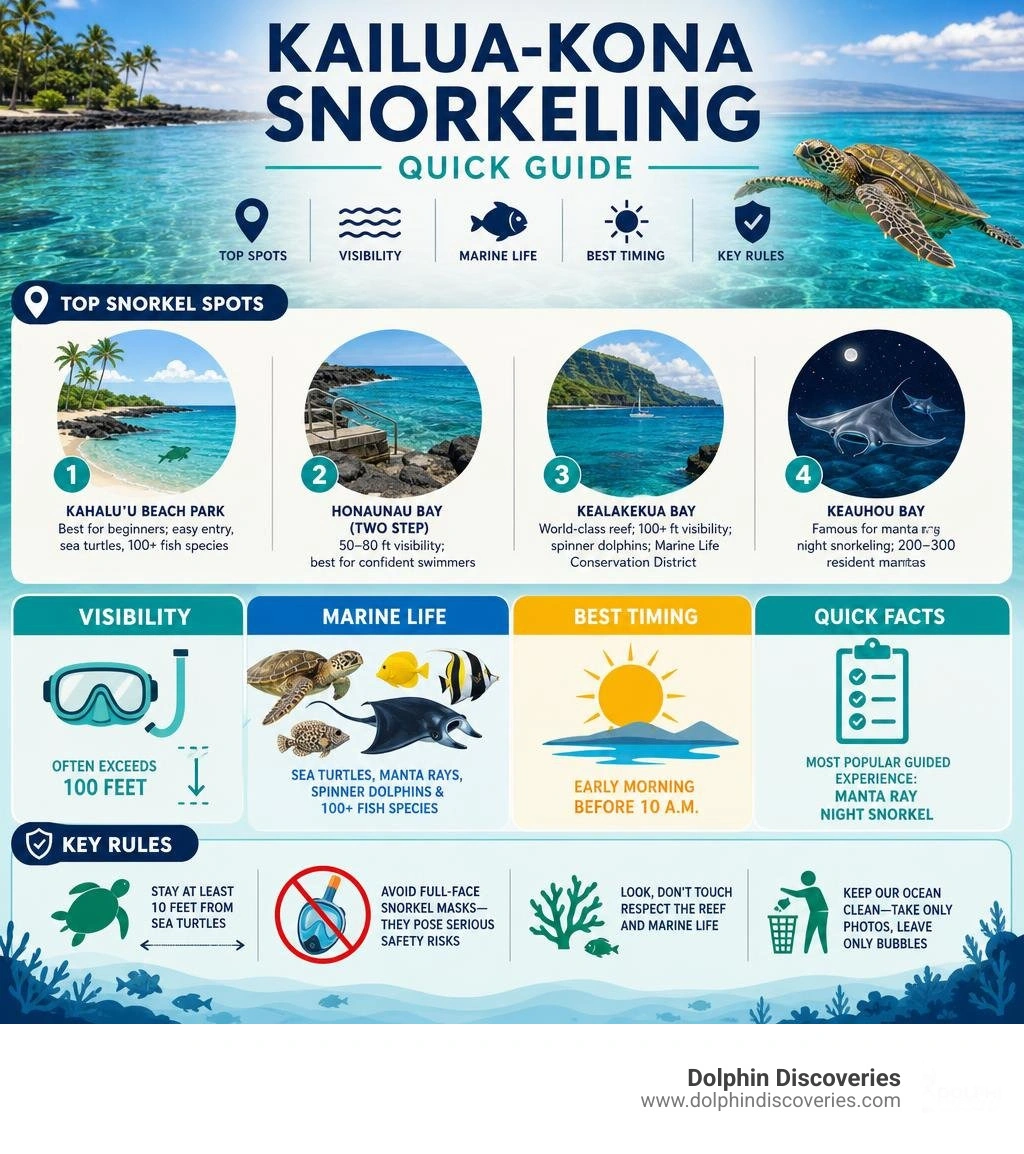
Top snorkeling spots in Kailua-Kona:
- Kahalu'u Beach Park - Best for beginners; easy entry, sea turtles, 100+ fish species
- Honaunau Bay (Two Step) - 50-80 ft visibility; best for confident swimmers
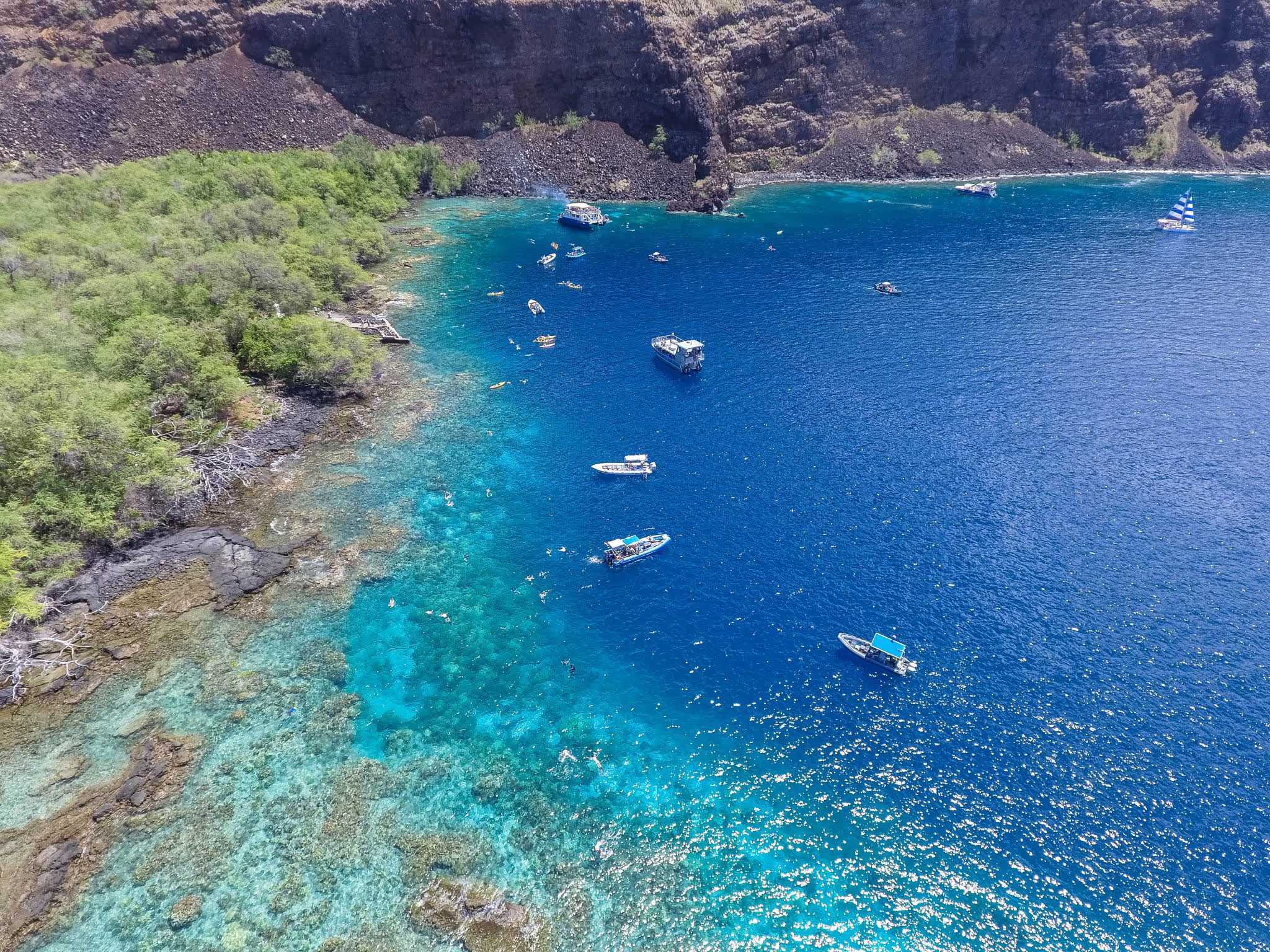
- Kealakekua Bay - World-class reef; 100+ ft visibility; spinner dolphins; Marine Life Conservation District
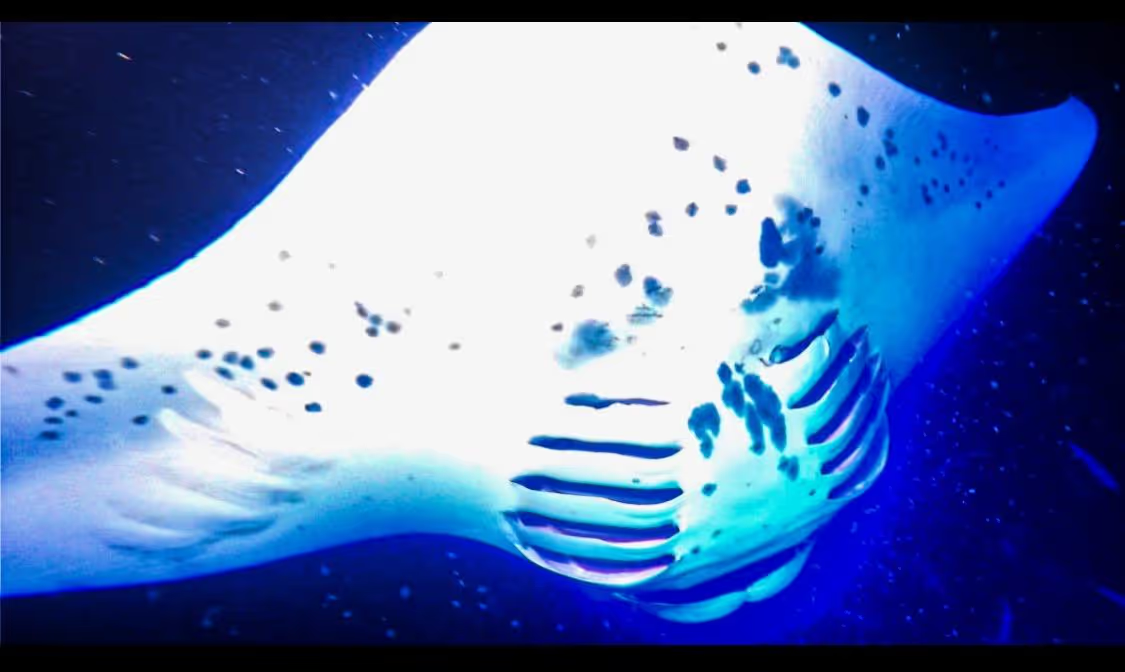
- Keauhou Bay - Famous for manta ray night snorkeling; 200-300 resident mantas
Quick facts:
- Best time to snorkel: early morning (before 10 a.m.)
- Water visibility: often exceeds 100 feet
- Most popular guided experience: manta ray night snorkel
- Hawaii law: stay at least 10 feet from sea turtles
- Avoid full-face snorkel masks — they pose serious safety risks
The Kona Coast sits on the leeward side of the Big Island, sheltered by two massive volcanoes. That geography is the reason the water here is so remarkably clear and calm compared to almost anywhere else in Hawaii.
Whether you're a first-time snorkeler or an experienced diver looking for your next underwater adventure, the reef systems, sea turtles, manta rays, and spinner dolphins along this coastline make it genuinely hard to beat.
This guide covers every major snorkel spot, the best tours, safety tips, gear advice, and the rules you need to follow — so you can plan a trip that's both unforgettable and responsible.
Why Kailua-Kona Snorkeling is World-Class

When people ask us why the Big Island features such legendary ocean conditions, we always point to the dramatic volcanic landscape rising up behind our beaches. Kailua-Kona isn't just another tropical destination; it is an underwater wonderland protected by some of the tallest mountain structures on Earth.
If you are trying to understand Why Kona Snorkeling is the Best in Hawaii, you have to look at our shoreline's exceptional water clarity. While other windward coasts across the Hawaiian islands frequently experience visibility drops down to 20 or 50 feet due to wind-driven waves and sediment, Kona's waters regularly exceed 100 feet of visibility. In fact, our coastal turbidity levels typically sit below 1 NTU (Nephelometric Turbidity Unit), meaning the water is practically as clear as glass. This makes the region a premier destination for Best Snorkeling Hawaii.
The Unique Geography of the Big Island
This incredible clarity is a direct result of the island's unique volcanic geology. The Kona Coast is a classic leeward environment. Two massive volcanic peaks — Mauna Loa, towering at 13,679 feet, and Hualālai, rising to 8,271 feet — act as giant, stony shields. They completely block the prevailing northeast trade winds that batter the eastern side of the island.
Without constant wind whipping up the surface, the ocean along the Kona Coast remains glassy and calm. Furthermore, because the Big Island is geologically young, we do not have massive, slow-moving rivers dumping muddy freshwater runoff into our bays. Instead, rainwater filters down through porous basalt rock directly into the water table, keeping sediment to an absolute minimum. This pristine volcanic filtration system creates a stable, nutrient-rich marine sanctuary where delicate coral polyps and over a quarter of Hawaiian sea life — much of which is found nowhere else on earth — can thrive undisturbed.
Top Snorkeling Spots Along the Kona Coast
The Kona Coast stretches for roughly 60 miles, offering a diverse mix of shallow tide pools, dramatic drop-offs, and protected marine sanctuaries. To help you plan your itinerary, here is how the top spots compare:
| Snorkel Spot | Best For | Water Clarity | Accessibility | Parking & Facilities | Crowd Levels |
|---|---|---|---|---|---|
| Kahalu’u Beach Park | Beginners & Families | Moderate (can get stirred up) | Very Easy (sandy channel) | $14 paid lot; restrooms & lifeguards | High |
| Honaunau Bay (Two Step) | Intermediate / Confident Swimmers | Excellent (50–80 ft) | Moderate (lava rock ledge step-in) | $5 paid lot or street; port-a-potties | Moderate to High |
| Kealakekua Bay | Advanced Reef Seekers | World-Class (100+ ft) | Difficult by land (boat tour recommended) | No facilities at monument; boat restrooms | High near monument |
| Keauhou Bay | Manta Ray Night Snorkeling | Good | Easy (boat harbor launch) | Free harbor parking; restrooms | Moderate |
For a more comprehensive look at these locations, check out The Ultimate Guide to Snorkeling in Kona, Hawaii to see how they fit into your travel plans.
The Best Kailua-Kona Snorkeling Spots for Beginners

If you are traveling with children, nervous swimmers, or are putting on a mask for the first time, Kahalu’u Beach Park is your absolute best starting point. This shallow, protected cove is incredibly welcoming. A natural basalt breakwater wall blocks the open ocean swells, keeping the inner pool remarkably calm even when the outer ocean is rough.
What makes Kahalu’u truly magical is its biodiversity. Researchers and volunteers have observed over 100 species of fish in the reefs at Kahalu’u Beach Park. As you glide over the shallow coral gardens, you can expect to see bright yellow tangs, pufferfish, boxfish, moorish idols, and the famous humuhumunukunukuapua’a (the Hawaiian reef triggerfish).
Additionally, Kahalu’u is renowned for its resident Hawaiian green sea turtles (honu). In fact, Kahalu’u Beach Park is one of the most reliable places on the Kona Coast where sea turtles can be observed daily in the shallow water, feeding on the algae-covered rocks. To learn more about how to navigate these waters safely, read The 3 Best Snorkeling Spots in Kona.
Advanced Reefs: Honaunau Bay and Kealakekua Bay
For those with more ocean experience, Honaunau Bay (affectionately known by locals as "Two Step") offers a step up in adventure. Located adjacent to the Pu'uhonua o Hōnaunau National Historical Park, this bay features a natural lava rock shelf where you can literally step right into 15 to 20 feet of water. True to its name, "Two Step" has two flat volcanic ledges that make entering and exiting the water relatively easy on calm days, though it requires good balance and confidence. Once in, you will be treated to 50 to 80 feet of visibility, healthy coral flats, and deep-water drop-offs where schools of black durgon triggerfish, needlefish, and ornate butterflyfish congregate.
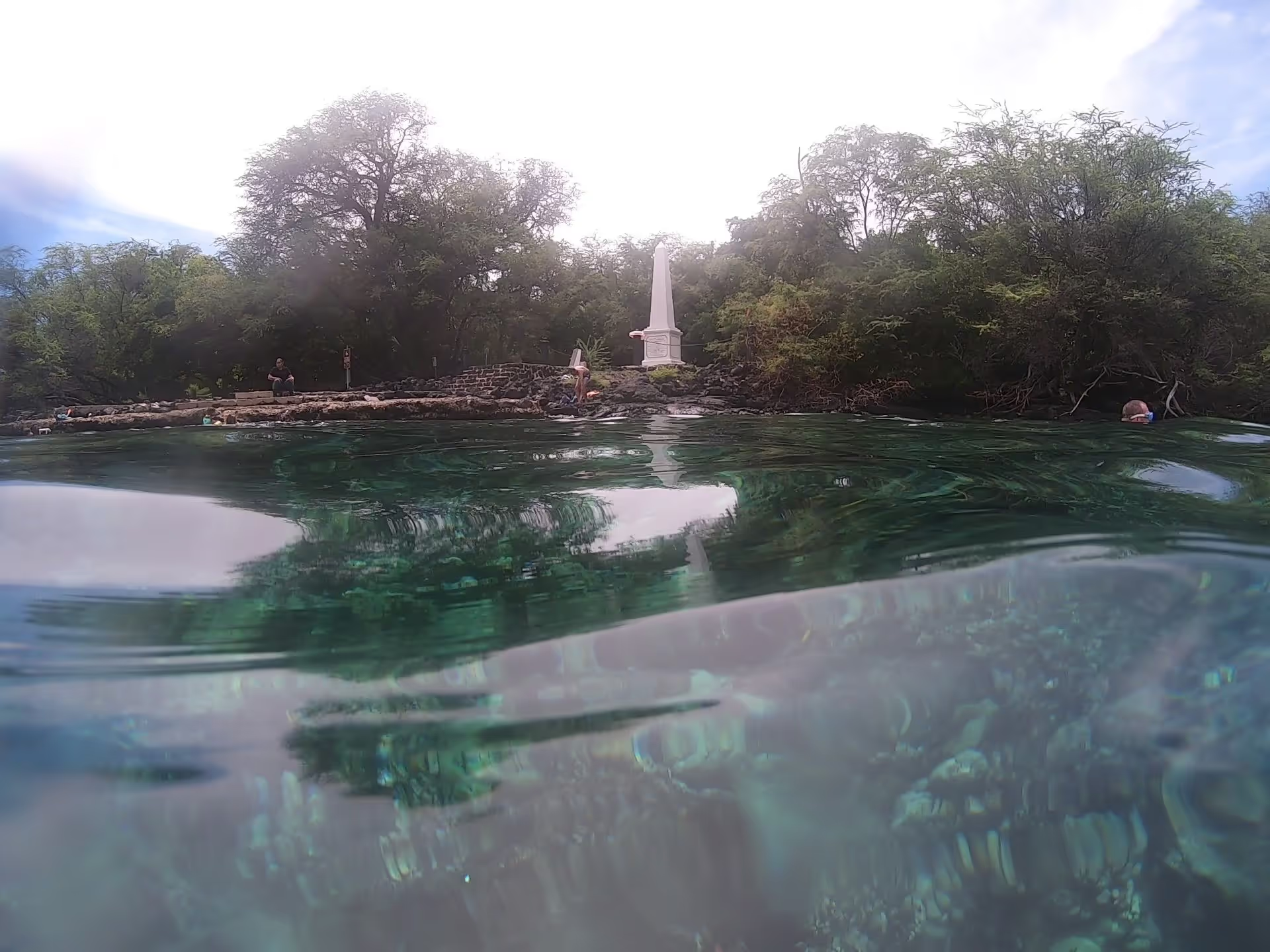
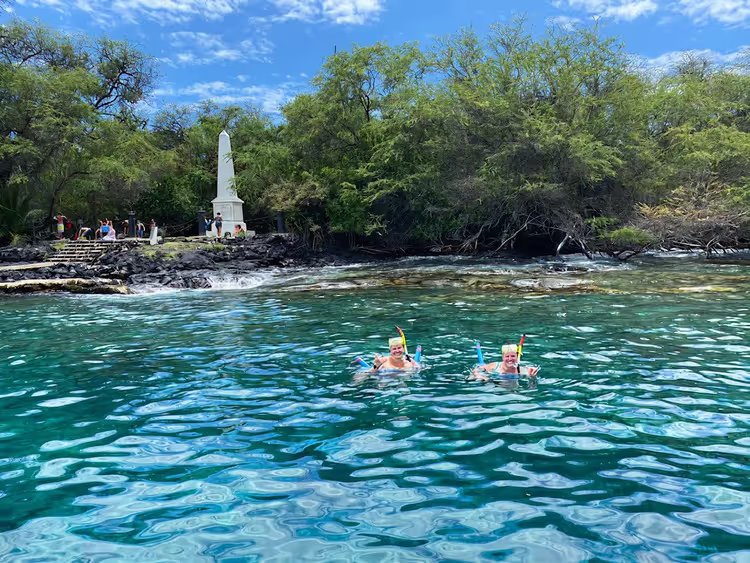
Further south lies Kealakekua Bay, home to the historic Captain Cook Monument. Widely considered one of the top-rated snorkeling spots in the world, this 315-acre Marine Life Conservation District has been strictly protected since 1969. Because fishing and motorized watercraft are heavily restricted, the marine life here is spectacularly bold and abundant.
The reef slopes gently from a shallow, sunlit shelf near the shore down to a deep, 153-foot volcanic trench. The visibility here regularly exceeds 100 feet. It is also a critical morning resting habitat for Hawaiian spinner dolphins, who seek shelter in the calm bay after hunting in the deep ocean overnight.
Keauhou Bay and the Famous Manta Ray Night Snorkel
Keauhou Bay is a place of deep cultural and natural significance. Historically, it is famous as the birthplace of Hawaii’s King Kamehameha III. Today, however, it is globally recognized as the epicenter of one of the most thrilling wildlife encounters on the planet: the manta ray night snorkel.
The waters just outside Keauhou Bay are home to a resident population of between 200-300 manta rays. Unlike stingrays, manta rays do not have stingers or teeth; they are gentle giants that feed exclusively on microscopic plankton.
During the evening, tour operators head out to spots like "Manta Village" near Keauhou Bay, using custom-designed floating light boards. The bright blue LED lights attract clouds of plankton, which in turn attract the massive manta rays. Snorkelers hold onto the floating boards and watch in awe as these majestic creatures — with wingspans often exceeding 10 to 12 feet — somersault and glide mere inches from their masks. It is consistently rated as the single best activity on the Big Island. If you want to experience this bucket-list adventure, you can book a manta ray night snorkel tour or learn more about the logistics in our guide to Kailua Kona Snorkeling.
Guided Tours vs. Independent Shore Snorkeling
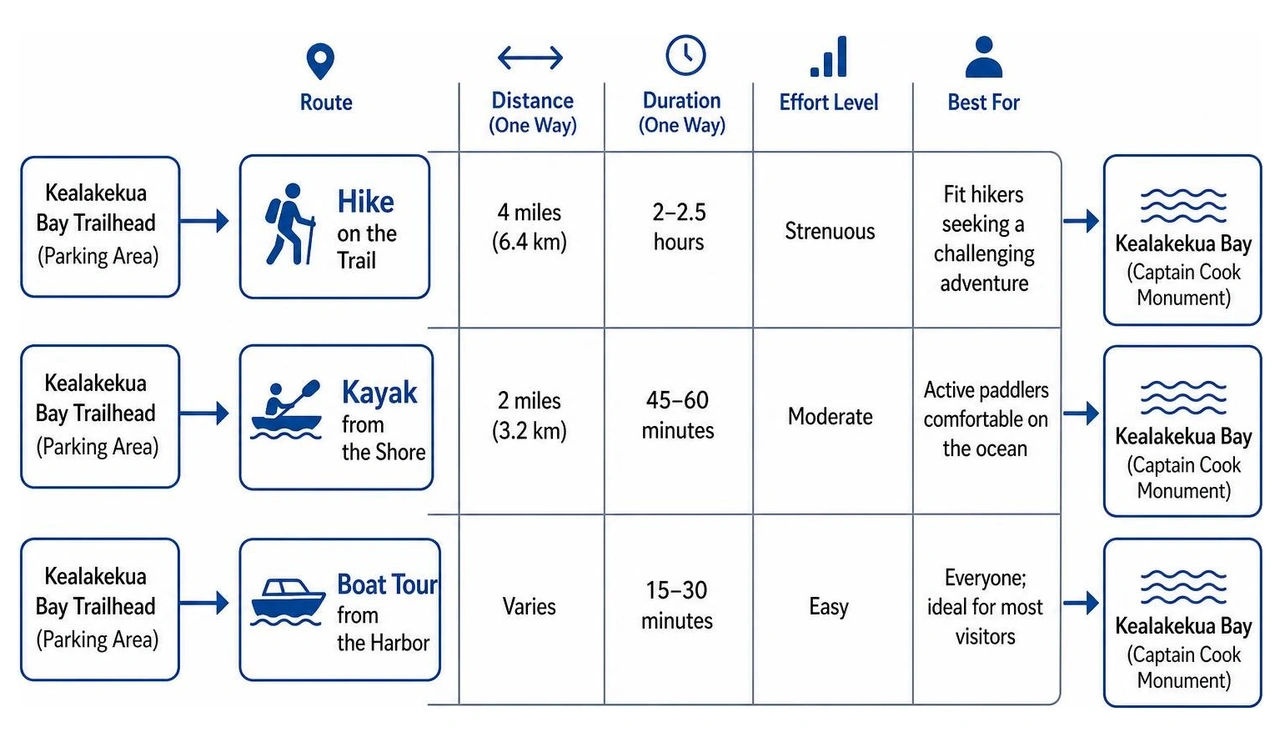
While shore snorkeling at places like Kahalu’u or Two Step is wonderful for casual practice, attempting to access remote spots like Kealakekua Bay on your own can be highly challenging. To reach the Captain Cook Monument by land, you must embark on the Ka’awaloa Trail — a hot, dusty, and incredibly steep 3.8-mile round-trip hike with a 1,300-foot elevation change. Carrying heavy snorkel gear, fins, and enough water down a barren lava path is exhausting, and there are absolutely no facilities, shade, or freshwater at the bottom.
Kayaking is another independent option, but it requires securing hard-to-get state permits, and landing your kayak near the monument is strictly prohibited to protect the delicate shoreline.
Joining a guided boat tour bypasses all of these logistical headaches. When you step aboard a fast, comfortable vessel, you get to enjoy the scenic coastline, look for humpback whales (seasonally from December to April) or resident dolphins, and slip directly into the best parts of the reef from the boat.
Our small-group, naturalist-led excursions provide professional in-water guides, high-quality sanitized gear, flotation aids, and educational storytelling about the history and marine biology of the area. It is a safer, more relaxing, and far more enriching way to experience the ocean.
Essential Safety, Gear, and Reef Etiquette
To ensure your time in the water is safe for both you and the marine environment, there are several best practices and local regulations you must follow.
Preparing for Your Kailua-Kona Snorkeling Adventure
Preparation is the key to a successful snorkel trip. We always advise visitors to get into the water early. Morning snorkeling (between 8 a.m. and 11 a.m.) usually gives you the clearest reef views and the calmest surface conditions before afternoon trade winds and beach traffic pick up.
Before you head out, make sure your gear fits properly. A leaking mask or ill-fitting fins can quickly ruin an excursion. If you are new to the sport, read our comprehensive guides on How to Plan a Kona Snorkel Trip No Prior Experience Required and A Beginner's Guide to Kailua Kona Snorkeling Tips and Tricks to get comfortable with the basics.
Ocean Safety and Environmental Protection
When it comes to ocean safety, we have a strict rule: avoid full-face snorkel masks entirely. While they are marketed as convenient, these masks have been linked to multiple near-drownings and snorkeling deaths due to dangerous carbon dioxide (CO2) buildup inside the mask. They are also incredibly difficult to clear if water leaks inside. Stick to a traditional, high-quality two-piece mask and snorkel set.
Equally important is protecting the delicate marine ecosystem. Hawaiian reef etiquette is rooted in the ancient tradition of Mālama Kai (caring for the ocean). Coral reefs are living animals, not rocks. Stepping on, touching, or kicking them can destroy decades of growth in a single second.
Hawaii state law also strictly prohibits the use of chemical sunscreens containing oxybenzone or octinoxate, which cause rapid coral bleaching. You must use mineral-based, reef-safe sunscreen containing only zinc oxide or titanium dioxide.
Finally, respect the local wildlife. Hawaii state law requires everyone to stay at least 10 feet away from sea turtles (honu). Federal law under the Marine Mammal Protection Act also mandates staying at least 50 yards away from Hawaiian spinner dolphins. Never chase, corner, touch, or attempt to feed any marine animal. Be a silent, respectful observer. For more helpful tips, check out our resource on Kona Snorkeling.
Frequently Asked Questions About Kailua-Kona Snorkeling
What is the best time of day to snorkel in Kailua-Kona?
The early morning hours, specifically between 8:00 a.m. and 10:30 a.m., are by far the best time to snorkel. During this window, the ocean is typically glassy and calm, the water clarity is at its peak, and marine life is highly active. By midday, solar heating generates onshore wind swells that can stir up sediment and reduce visibility, while popular beach parks become crowded.
Can you see manta rays during the day in Kona?
While manta rays live along the Kona Coast year-round, seeing them during the day is rare and completely coincidental. Manta rays are nocturnal feeders. They gather in large numbers at night because that is when plankton rise to the ocean surface, drawn by our custom high-powered blue LED light boards. A night snorkel is the only reliable way to guarantee a close-up encounter with these gentle giants.
Do I need a permit to snorkel at the Captain Cook Monument?
If you are visiting Kealakekua Bay on a guided boat tour, you do not need to worry about permits — your tour operator holds all the necessary state park and Marine Life Conservation District permits. However, if you plan to kayak into the bay independently, you must apply for and secure a specific state vessel permit in advance, as unpermitted vessels are subject to heavy fines.
Conclusion
Kailua-Kona is home to some of the most spectacular, pristine, and biologically diverse snorkeling waters on the planet. From the family-friendly tide pools of Kahalu’u to the historic, deep-blue waters of Kealakekua Bay and the thrilling night-time dances of the manta rays, there is an ocean adventure waiting here for everyone.
At Dolphin Discoveries, we are proud to offer small-group, naturalist-led ocean tours designed to give you an intimate, unhurried, and highly educational experience. Departing from the convenient Keauhou Harbor — the closest commercial harbor to the region's best snorkel sites — our fast, comfortable boats get you to the reefs quickly, maximizing your time in the water.
Whether you want to explore two unique reefs on our signature Kona Snorkel Tour - Two Snorkeling Spots, search for wild dolphins, or watch humpback whales breach against a volcanic backdrop, our certified guides are ready to show you the magic of the Big Island. We also invite you to look into our other curated Snorkeling Tours Near Me to find the perfect fit for your vacation.
Ready to make memories that will last a lifetime? Let us guide you through our favorite underwater playgrounds. Learn more about The Magic of a Kona Hawaii Snorkeling Tour and book your seat today!