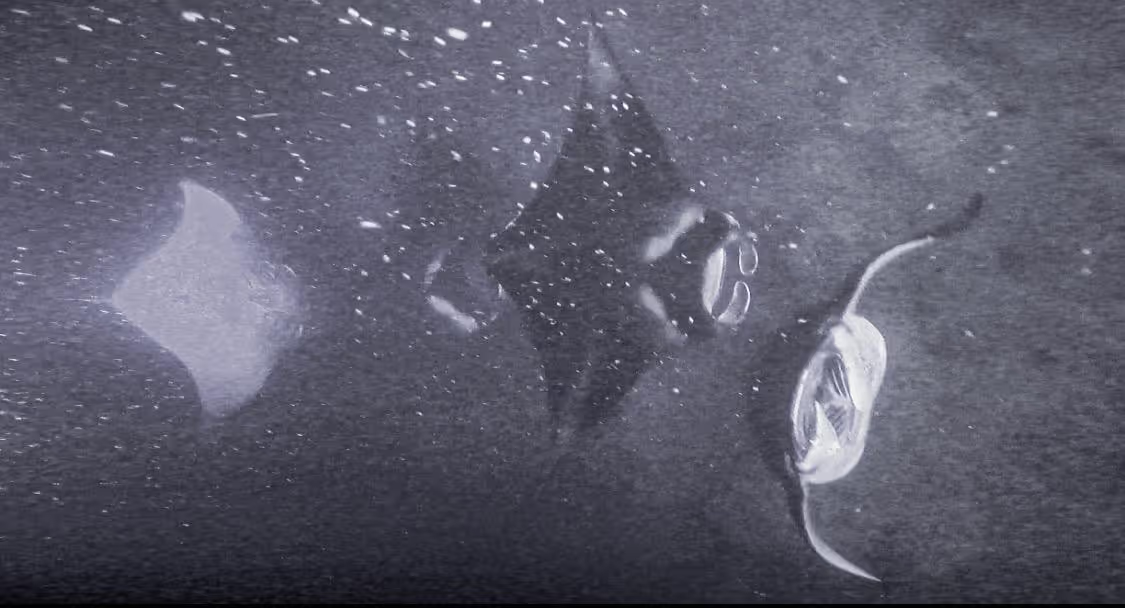




Watch a manta ray glide under the lights at night and it looks like it is barely moving. So how fast can manta rays swim? Most of the time, not fast at all. Studies that measured mantas in the wild found them cruising at about 1 to 5 miles per hour. That is close to a person's walking pace.
This guide covers what researchers have measured, how a manta moves through the water, why it never stops swimming, and what that slow, steady style looks like when you float above mantas on a night snorkel with us in Kona.
How Fast Can Manta Rays Swim?
The best numbers come from scientists who filmed or tracked mantas in open water. Here is what they found. We converted each speed from meters per second to miles per hour and rounded it.
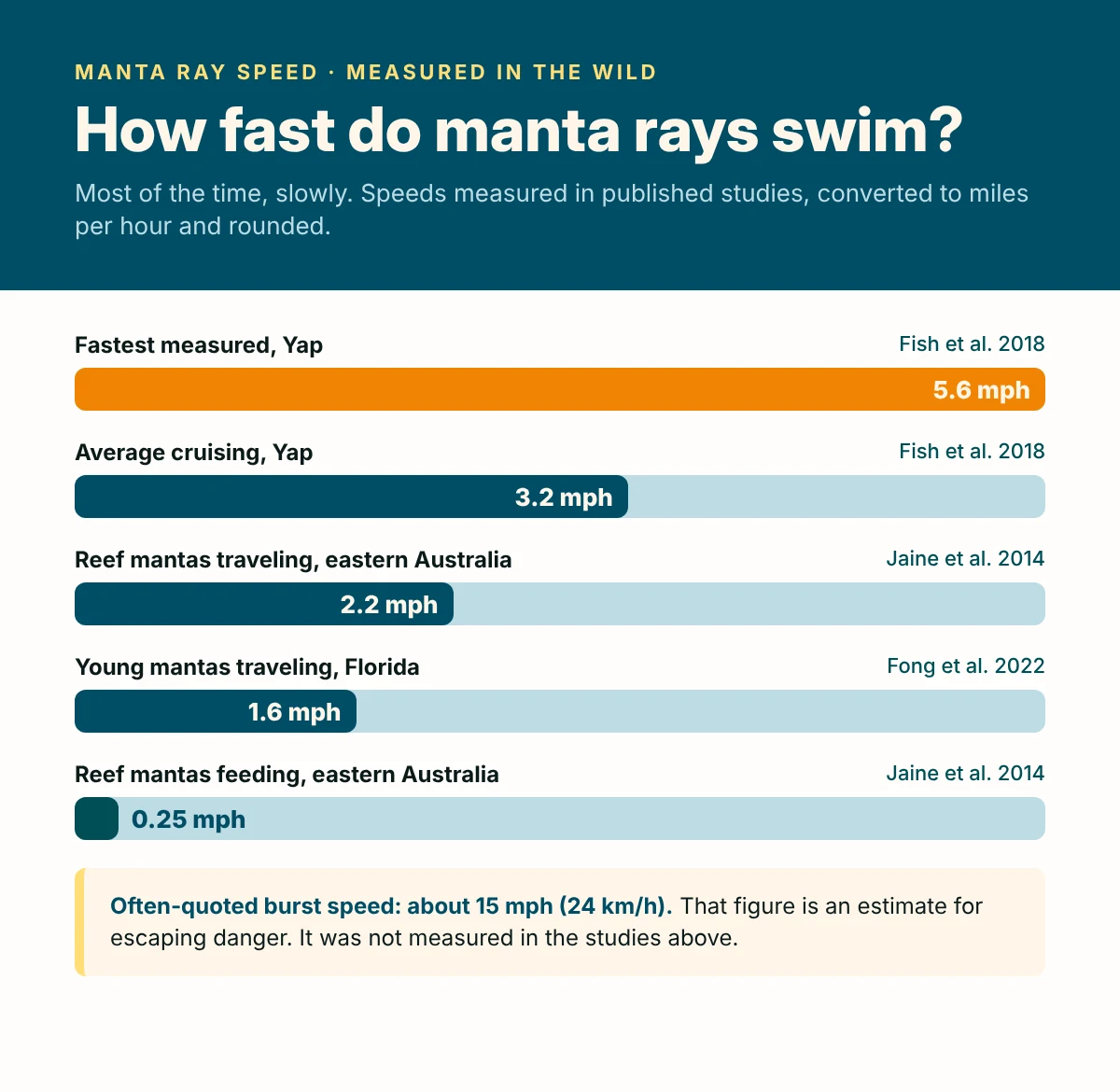
- Average cruising speed: about 3.2 mph. A 2018 study in the Journal of Experimental Biology filmed giant mantas near a cleaning station off Yap, Micronesia. The authors wrote that the mantas "swam slowly," averaging 1.42 meters per second.
- Fastest measured in that study: about 5.6 mph. The same mantas ranged from about 1 mph to 5.6 mph.
- Reef mantas traveling: about 2.2 mph. Satellite tracking of reef mantas in eastern Australia (Jaine et al. 2014) logged a traveling speed of 0.97 meters per second.
- Young mantas traveling: about 1.6 mph. A 2022 drone study in the journal Drones followed juvenile mantas off southeast Florida.
- Reef mantas feeding: about 0.25 mph. In the Australian tracking data, feeding mantas moved at just 0.11 meters per second.
What about manta ray top speed?
You will often see a top speed of about 15 mph (24 km/h). Wikipedia's reef manta ray article lists it as an escape speed when a manta is in danger, citing the Manta Trust. That figure is an estimate for escaping danger. It was not measured in the studies above, so treat it as a rough idea, not a lab result.
For everyday life, slow wins. The Florida Fish and Wildlife Conservation Commission describes giant mantas as "often viewed swimming slowly near surface."
How Manta Rays Swim
A manta does not wiggle its tail like a fish. It flies. The 2018 Yap study describes manta swimming as "analogous to the flight of birds."
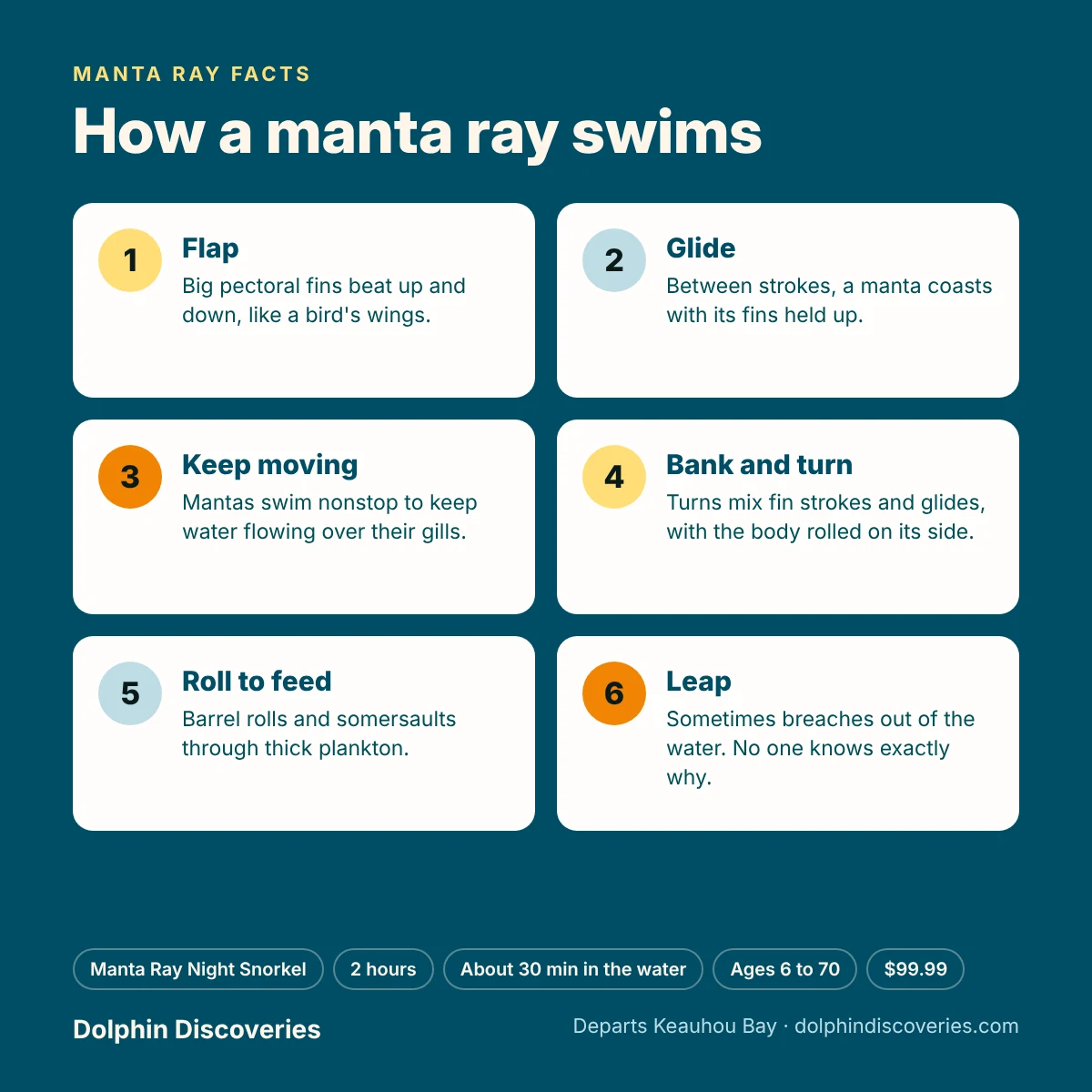
- Flap. Big pectoral fins beat up and down, like a bird's wings. Those fins are the "wings" you see from the surface.
- Glide. Between strokes, a manta coasts with its fins held up. The Florida drone study counted about one wingbeat every two seconds for traveling mantas.
- Keep moving. Mantas swim nonstop to keep water flowing over their gills. Wikipedia's manta ray article notes that "mantas must swim continuously to keep oxygenated water passing over their gills."
- Bank and turn. Turns mix fin strokes and glides, with the body rolled on its side. In the Yap study, mantas banked 3 to 80 degrees as they turned.
- Roll to feed. Mantas do barrel rolls and somersaults through thick plankton. Hawaii's Division of Aquatic Resources (DAR) says mantas are "commonly seen barrel rolling and creating feeding chains to maximize feeding efficiency."
- Leap. A manta sometimes breaches out of the water. No one knows exactly why. The Florida commission says leaping may be part of mating behavior or a way to shake off parasites.
Why Mantas Swim So Slowly
Mantas are filter feeders. NOAA Fisheries says they mainly eat plankton such as copepods, shrimp and other tiny animals. Plankton can't outrun anything, so a manta has no reason to sprint for dinner. It opens its mouth, holds its cephalic fins in an "O" shape, and funnels water and food over its gill plates.
Slow and steady also saves energy. A manta has to keep swimming all day and all night to breathe. Gliding between wingbeats lets it cover ground without wearing itself out.
Size helps too. NOAA notes the giant manta is the world's largest ray, with a wingspan of up to 26 feet. Very few animals can catch an adult manta. Our guide to what eats manta rays covers the few predators that try.
What Manta Speed Looks Like on a Night Snorkel
On our manta ray night snorkel in Kona, you see this slow, looping style up close. Our lights draw plankton, and the plankton draw the mantas. Here is how the night goes.
- Check in. Meet us at our store in the Keauhou Shopping Center, 78-6831 Ali'i Dr, Suite F-146, Kailua-Kona.
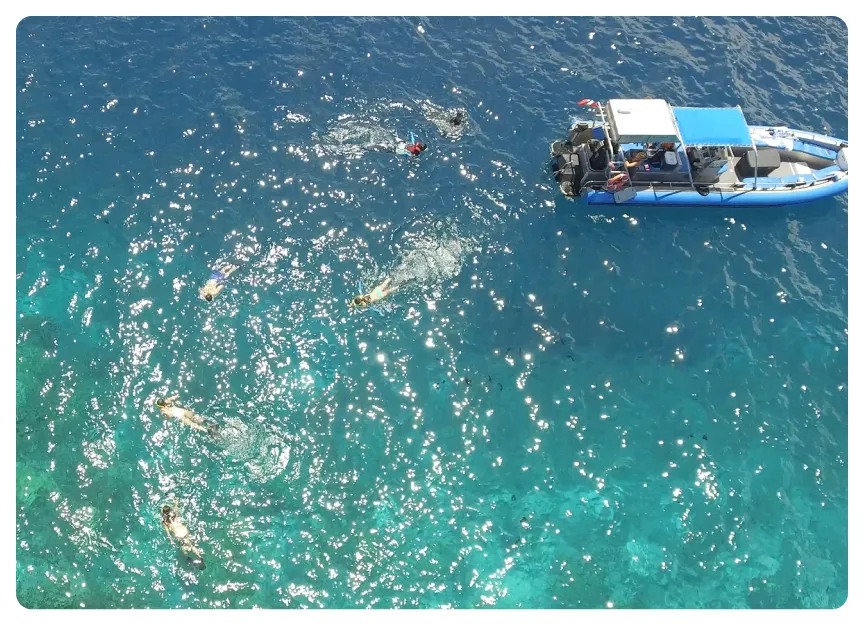
- Short boat ride. We depart Keauhou Bay on a small-group rigid-hull inflatable boat. The manta site is about 5 minutes away.
- Get in and hold the board. You swim a short way to a lit float board, lie flat and hold on. Pool noodles help keep you level.
- Watch them feed. If mantas come in, they swim up through the light, barrel roll and turn just below you. Because they move slowly, you get a good long look.
- Back to the boat. You spend about 30 minutes in the water. The whole tour is 2 hours.
Mantas are wild animals, so sightings are never guaranteed. Please don't touch or chase them. DAR asks people not to, and state law protects all rays in Hawaii's waters. Keep your feet up and your hands on the board, and let the mantas come to you.
Before you go, read our Know Before You Go page for a packing list, and check Kona water temperature by month so you know what the ocean will feel like. Want to learn more first? Visit our Learn About Manta Rays page or browse all of our tours.
How Fast Can Manta Rays Swim? FAQ
How fast can manta rays swim?
Studies of mantas in the wild measured speeds of about 1 to 5.6 mph, with an average cruising speed of about 3.2 mph. An often-quoted burst speed of about 15 mph is an estimate, not a measurement from those studies.
Do manta rays ever stop swimming?
No. Mantas must swim continuously to keep oxygenated water passing over their gills. They glide between wingbeats to save energy.
How do manta rays swim?
They flap their large pectoral fins up and down, much like a bird flies, and glide between strokes. They roll their bodies to turn and do barrel rolls when feeding.
Why do manta rays jump out of the water?
No one knows for sure. Leaping may be part of mating behavior or a way to shake off parasites.
How long is the Manta Ray Night Snorkel?
It is 2 hours total, with about 30 minutes in the water, for ages 6 to 70. The price is $99.99. You need to know how to swim to get in the water. Have questions? Call us at (808) 322-8000 or read our FAQ.