

Choosing the Best Snorkeling Tour Kona Has to Offer
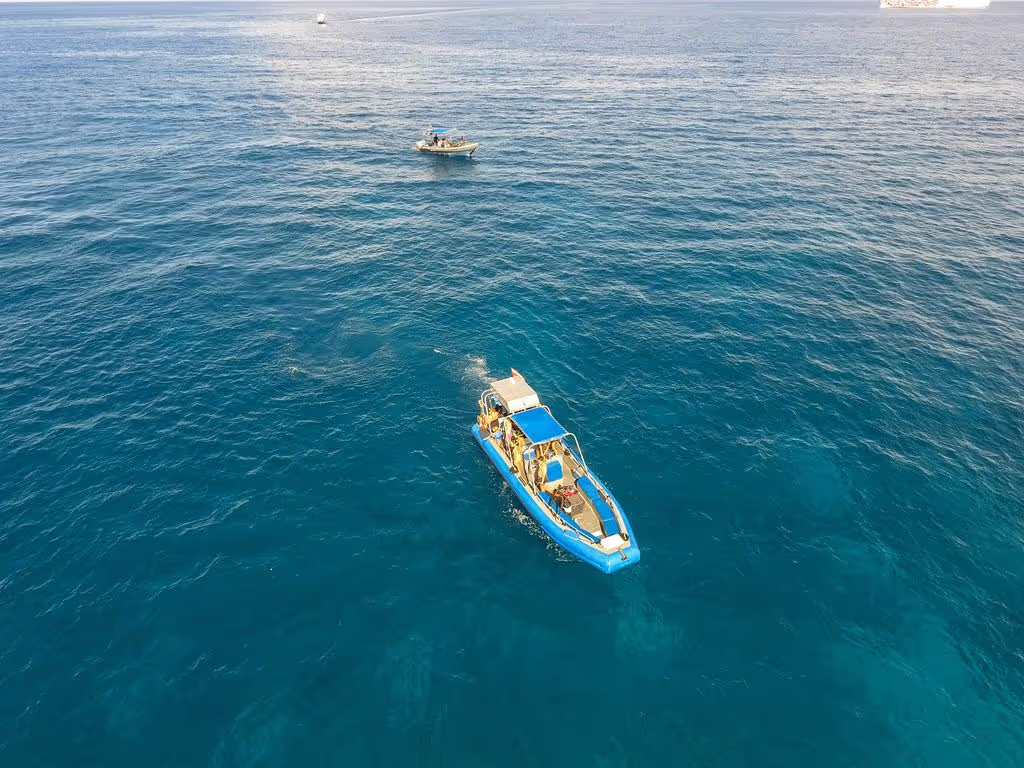
Finding the right excursion comes down to your personal priorities: how much time you want to spend on the water, the destinations you wish to explore, and the type of vessel you prefer. Along the Kona coast, small-group rigid inflatable boats (RIBs) offer significant advantages over large multi-deck catamarans. Faster boats get you to remote reef locations before large crowds arrive, while smaller group sizes ensure direct access to knowledgeable naturalist guides.
Planning ahead makes all the difference when scheduling your island itinerary. To help plan your time on the water, reviewing Kona Hawaii Snorkeling Trips and understanding How To Find And Book The Best Kona Snorkeling Tours can help you match the right trip to your group's experience level.
| Tour Type | Typical Duration | Best For | Key Highlights |
|---|---|---|---|
| Captain Cook Snorkel Tour | 3 Hours | History buffs & families | Kealakekua Bay Marine Sanctuary, monument history, vibrant shallow reefs |
| Two-Spot Reef Adventure | 4 Hours | Avid snorkelers | Kealakekua Bay plus Honaunau Bay (Two Step), sea caves, volcanic cliffs |
| Manta Ray Night Snorkel | 2 Hours | Unique wildlife seekers | Evening boat ride, custom light boards, observing gentle feeding rays |
| Dolphin & Whale Watching | 2 Hours | Seasonal travelers & nature lovers | Offshore wildlife spotting, seasonal humpback behavior, coastal cruising |
| Private Holo Holo Charter | Customizable (Up to 34 guests) | Large groups & celebrations | Fully tailored itinerary, exclusive boat use, flexible swim stops |
Morning vs Afternoon Snorkeling Tour Kona Options
Wind and sea patterns in West Hawaii follow a predictable diurnal cycle. In the early morning, cool air descending from Mauna Loa and Hualalai creates gentle offshore breezes, resulting in flat, glassy ocean conditions. This morning window consistently delivers prime underwater visibility, making it an excellent choice for first-time snorkelers, young families, or anyone prone to motion sickness.
By early afternoon, solar heating on the island's lava fields draws the trade winds onshore, creating a light sea chop. While afternoon tours offer warmer ambient air temperatures and easier scheduling for late risers, morning departures provide the crispest reef viewing. If you are debating when to schedule your outing, you can Take The Plunge On A Kona Snorkeling Tour during the early hours to catch optimal water clarity.
What to Expect on a Manta Ray Snorkeling Tour Kona Excursion
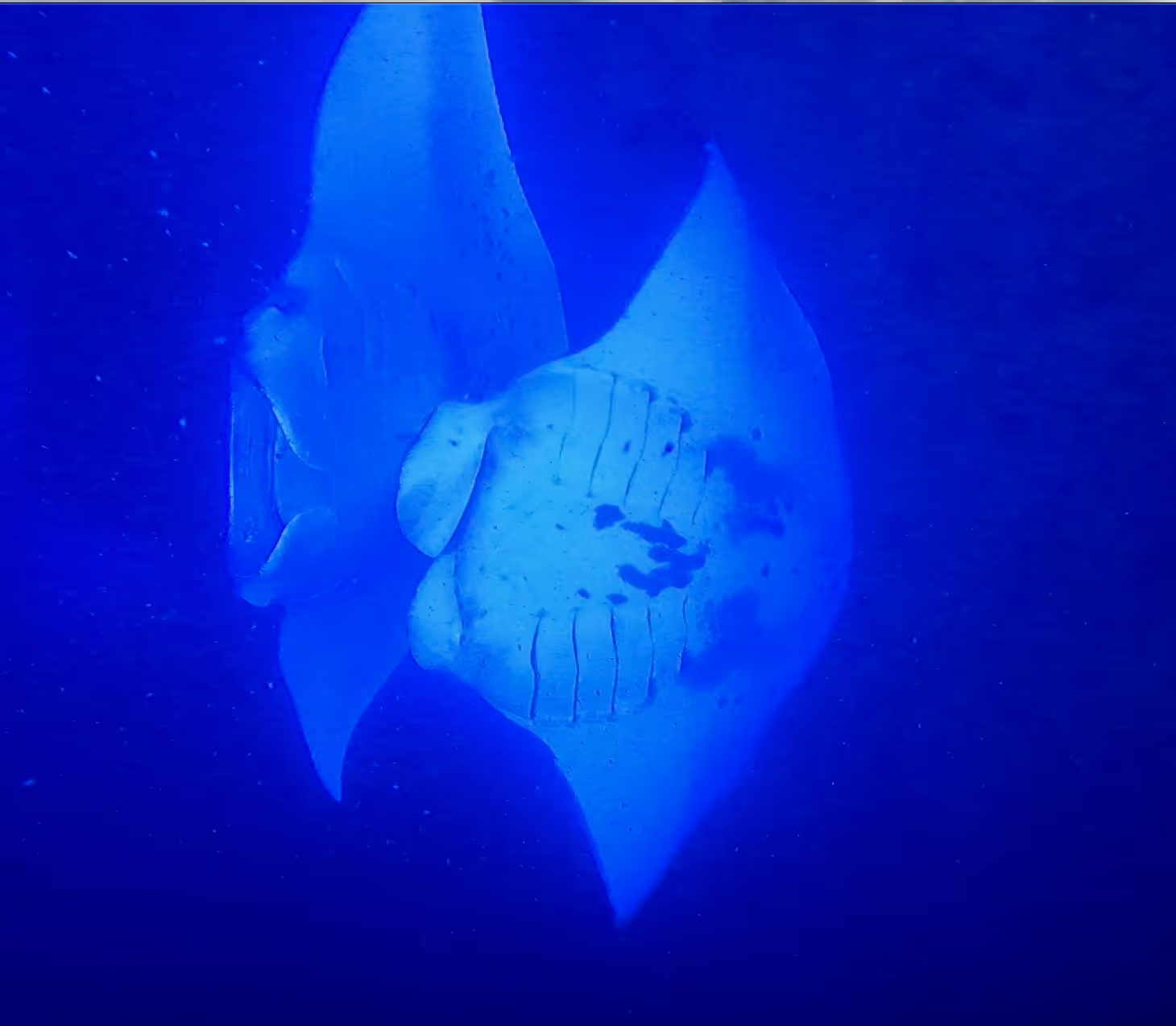
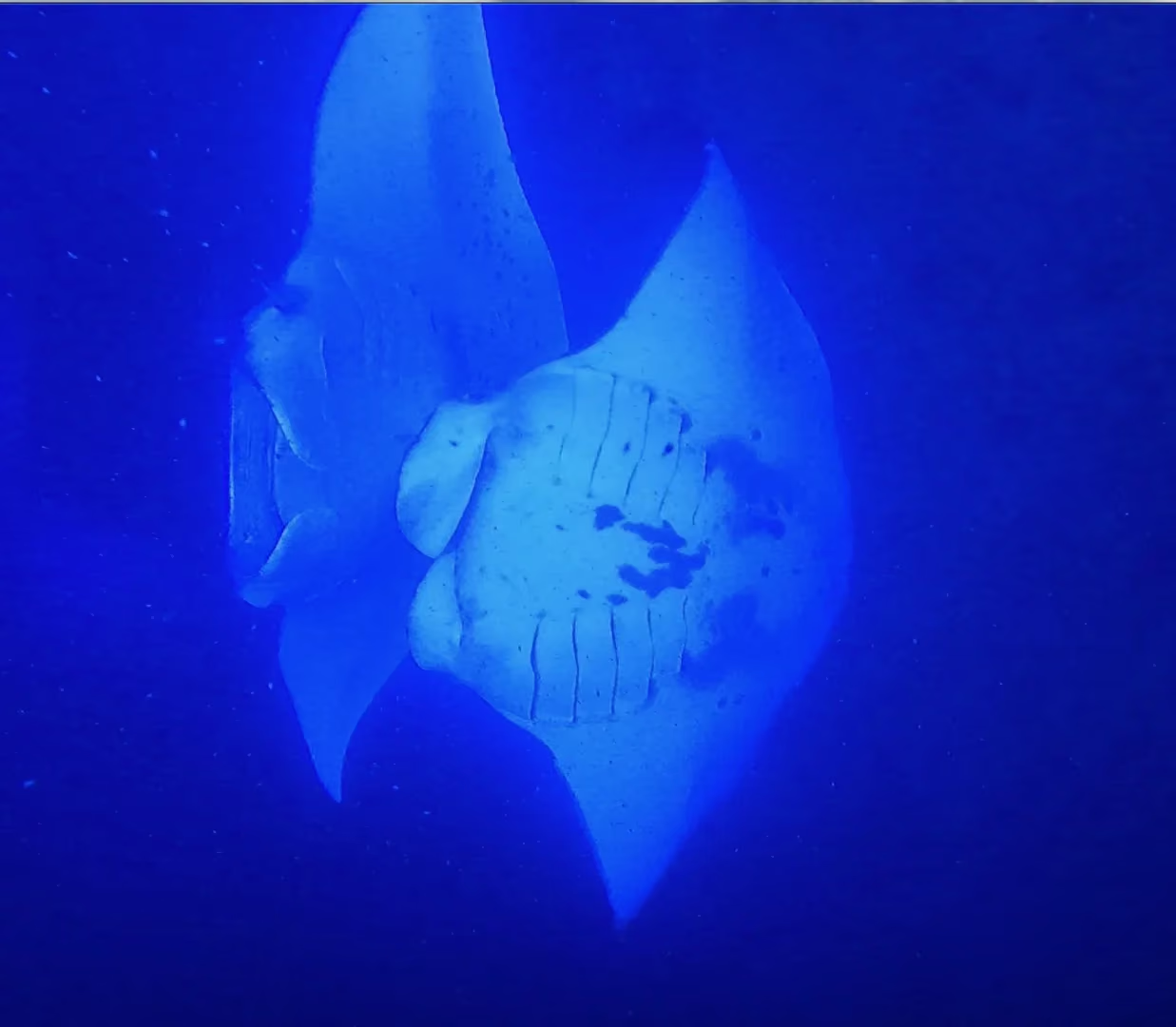
The Kona coast is globally renowned for its resident population of coastal manta rays (Mobula alfredi). Unlike stingrays, manta rays possess no barbs, stingers, or teeth; they are harmless filter feeders that consume microscopic zooplankton.
During a night excursion, guests hold onto a specially designed floating light board that shines powerful blue and white illumination downward into the water column. The bright lights attract clouds of phototaxic plankton. In response, mantas glide up from the depths, executing graceful backward somersaults—known as barrel rolls—just inches below the surface to scoop up the plankton with their cephalic fins.
With local sighting consistency exceeding 95% on any given evening, an organized manta ray night snorkel tour offers an unforgettable encounter with wild marine life in its natural habitat.
The Best Snorkeling Spots Along the Kona Coast
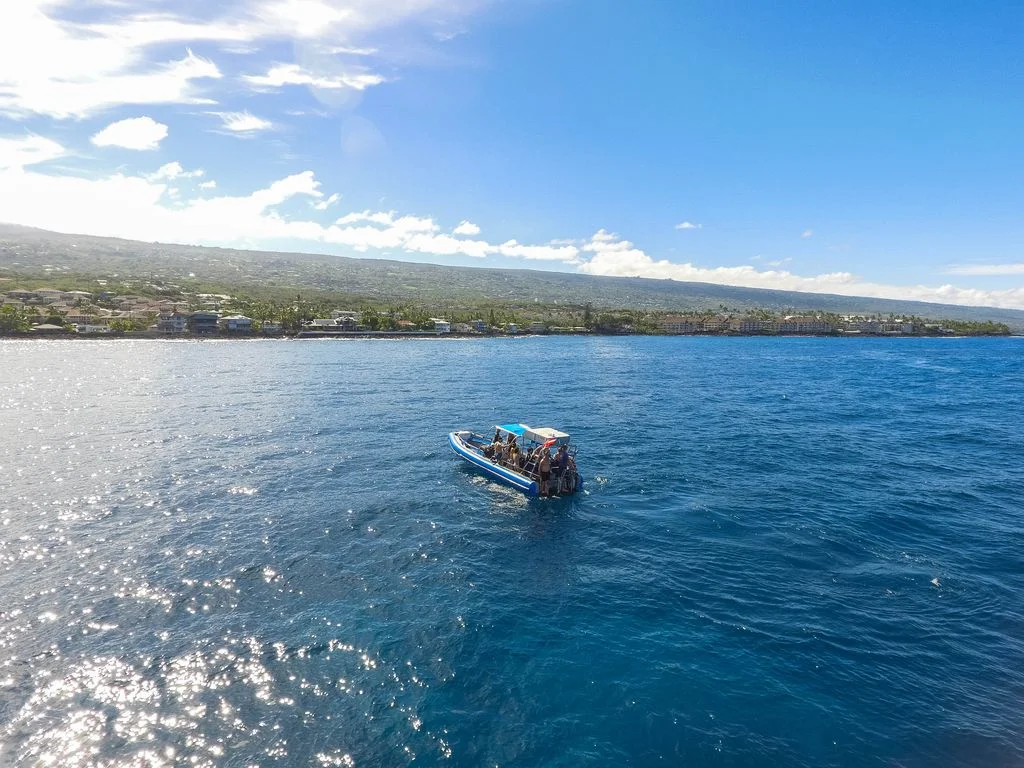
The leeward side of the Big Island features underwater topography shaped by historic lava flows, creating underwater arches, drop-offs, and protected coves. Exploring The 3 Best Snorkeling Spots In Kona gives you a deeper look at what makes this coastline special, while our comprehensive Kailua Kona Snorkeling Guide 2026 covers shore access and boat-only locations across the district.
Kealakekua Bay and the Captain Cook Monument
Established as a Marine Life Conservation District in 1969, Kealakekua Bay encompasses 315 acres of protected marine habitat. The bay is framed by dramatic 600-foot volcanic cliffs and holds deep cultural importance in Hawaiian history. The shallow shelf adjacent to the white stone Captain Cook Monument contains dense colonies of finger coral (Porites compressa) and lobe coral (Porites lobata).
Because land access requires a strenuous four-mile hike and kayak landings require strict permits, booking a dedicated Captain Cook snorkel tour provides the most convenient way to reach these pristine coral gardens.
Honaunau Bay and Multi-Stop Reef Adventures
Located just south of Kealakekua, Honaunau Bay (frequently called "Two Step" due to its natural pahoehoe lava entry shelves) borders the sacred Pu'uhonua o Honaunau National Historical Park. The underwater topography here drops rapidly from a 10-foot shallow bench into a 30-foot sand channel, creating distinct ecological zones where green sea turtles graze on algae and schooling reef fish congregate.
For travelers who want to experience both world-class bays alongside views of sea caves and volcanic sea cliffs, a two-spot snorkel excursion provides an active four-hour journey along the coast.
Marine Life and Seasonal Conditions in Kona Waters
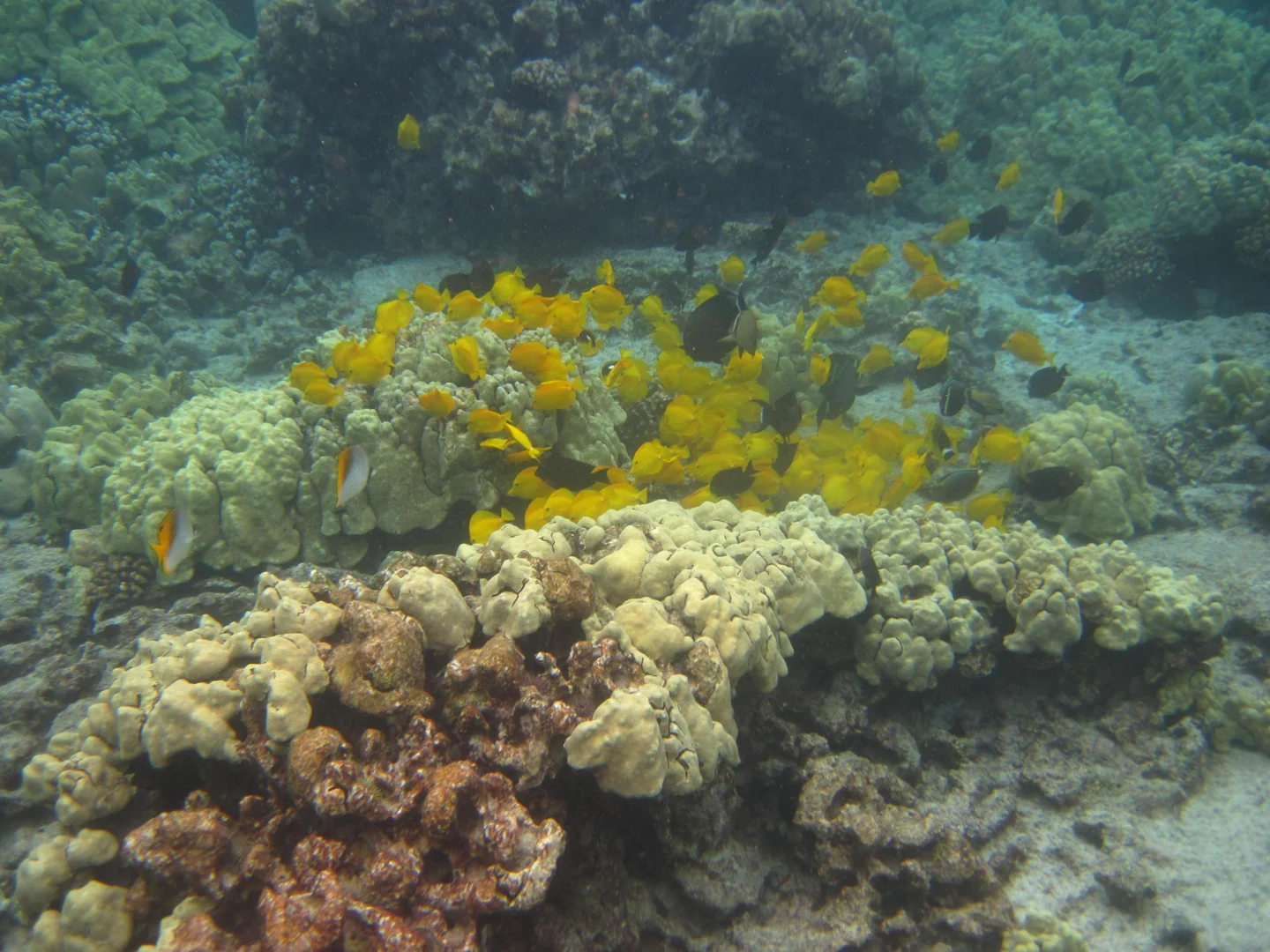
Because the Big Island is geologically the youngest in the Hawaiian archipelago, its reefs are dynamic and resilient. Kona waters maintain comfortable temperatures averaging 77–80°F (25–27°C) throughout all twelve months of the year, providing stable conditions for both wildlife and swimmers.
Kona's reef ecosystem includes remarkable biodiversity:
- Endemic Reef Species: Approximately 25% of Hawaii's reef fish are found nowhere else on Earth, including the vibrant Hawaiian saddle wrasse, milletseed butterflyfish, and Potter's angelfish.
- Abundant Herbivores: Schools of bright yellow tangs (lau'i-pala), Moorish idols, and parrotfish (uhu) constantly graze the reef, keeping the coral heads clean and healthy.
- Green Sea Turtles (Honu): These ancient reptiles frequent shallow bays to feed on limu (algae) and rest along underwater ledges.
- Hawaiian Spinner Dolphins (Stenella longirostris): An estimated 1,000 spinner dolphins use Kona's sheltered bays for daytime rest and social behaviors after hunting in pelagic waters overnight.
- Seasonal Humpback Whales (Kohola): Between December and April, thousands of humpback whales migrate from Alaskan feeding grounds to breed, calve, and nurse in shallow Hawaiian waters.
To learn why these biological factors combine to produce such extraordinary conditions, explore our article on Why Kona Snorkeling Is The Best In Hawaii.
Essential Tips: Preparation, Safety, and What to Bring
Being well-prepared ensures a relaxed and comfortable day on the water. Before your excursion, consult our know before you go ocean safety guidelines and read through Kona Guided Snorkeling Tips 2026 for packing and safety details.
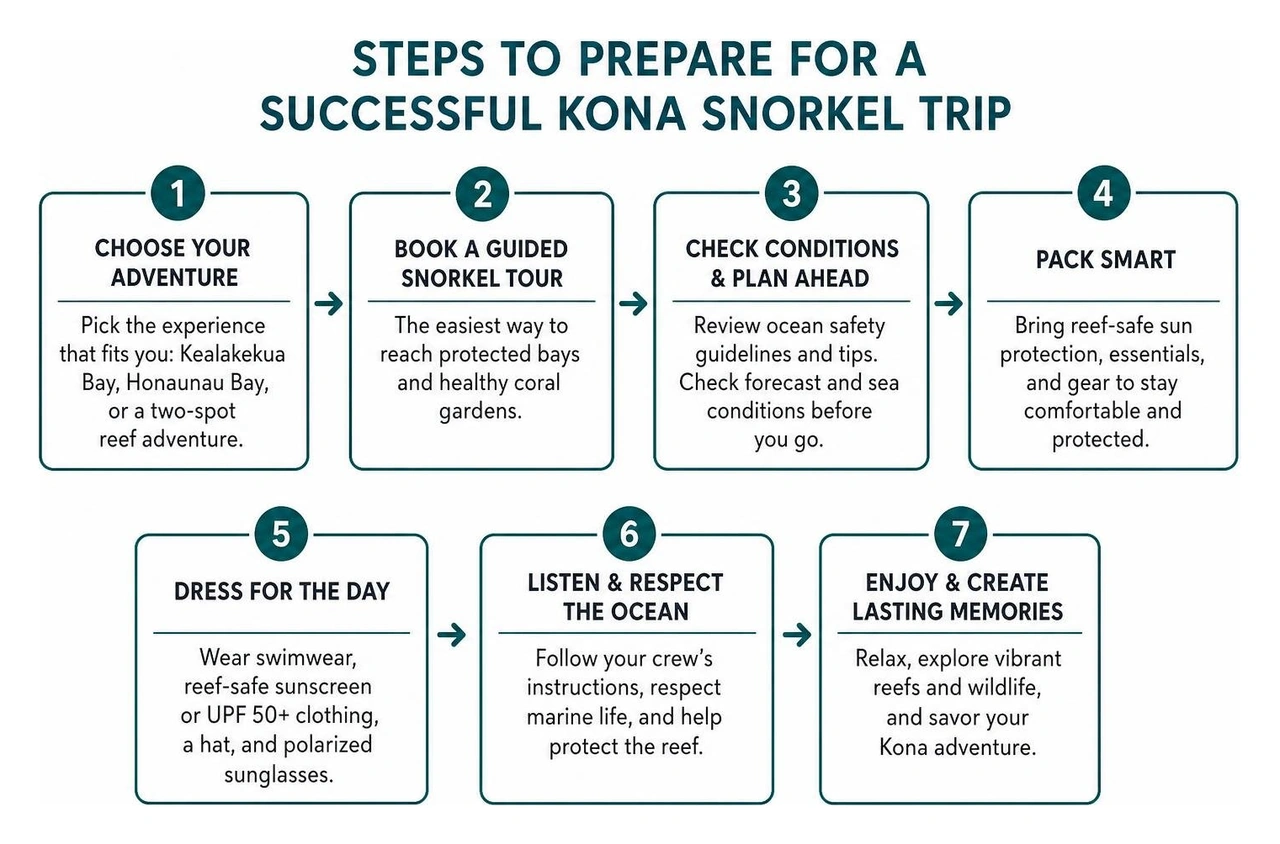
Keep these packing and safety recommendations in mind:
- Mineral Sun Protection: Hawaii state law prohibits sunscreens containing oxybenzone and octinoxate, which bleach and damage coral reefs. Apply non-nano zinc oxide or titanium dioxide formulas, or opt for long-sleeve UPF 50+ rash guards.
- Dry Bag: Keep your phone, towel, dry clothing, and car keys protected from ocean spray on high-speed boat transits.
- Polarized Sunglasses & Hat: Reduce surface glare while scanning the ocean for dolphins, mantas, and flying fish during the ride.
- Physical Comfort: If you are prone to seasickness, consider taking non-drowsy medication or ginger supplements an hour before boarding.
- Wildlife Distances: Federal regulations require staying at least 50 yards away from wild spinner dolphins. Never touch, chase, or harass resting green sea turtles or feeding manta rays; let the animals dictate the encounter.
Frequently Asked Questions About Kona Snorkeling
Do you need to be an experienced swimmer to join a snorkel tour?
You do not need to be an advanced swimmer to participate in a guided tour. Modern small-group tours cater to all comfort levels by providing high-buoyancy life vests, waist belts, flotation noodles, and prescription-lens masks upon request. In-water guides and naturalists stay alongside guests, offering tips on mask clearing, gentle kicking techniques, and reef navigation to keep everyone feeling safe and supported.
How much does a typical Kona snorkel tour cost and how long does it last?
Kona snorkeling excursions generally last between 2 and 4 hours, depending on the itinerary and distance traveled. Dolphin Discoveries tours start at $79.99 per person for the Captain Cook Snorkel Tour (3 hours). The Manta Ray Night Snorkel and Dolphin & Whale Watching tours start at $99.99 per person (2 hours each), and the Kona Snorkel Tour – Two Snorkeling Spots starts at $109.99 per person (4 hours).
Private boat charters start at $1,050 for up to 34 guests on a fully customizable "Holo Holo" trip. All prices are per person unless noted, and subject to change—always confirm current rates and availability directly at dolphindiscoveries.com. Most tours include sanitized snorkel gear, safety vests, local snacks, and cold beverages.
What makes a snorkel tour eco-friendly and reef-safe?
An eco-friendly tour operator prioritizes marine conservation over intrusive entertainment. Sustainable operators adhere strictly to passive observation guidelines, never feeding fish or corralling marine mammals. They enforce the use of mineral reef-safe sunscreens, utilize fuel-efficient vessels to minimize carbon output, avoid dropping anchors on live coral structures by using state-maintained moorings, and integrate marine science education into every tour briefing.
Conclusion
From the calm, historical waters of Kealakekua Bay to the thrilling nighttime ballet of feeding manta rays, Kona offers some of the most accessible and diverse ocean encounters in the world. Reviewing the Kona Snorkeling Ultimate Guide 2026 is a great next step as you finalize your travel details and select the right adventures for your group.
As a woman- and veteran-owned ocean tour operator running out of Keauhou Bay, Dolphin Discoveries is dedicated to small-group, naturalist-led excursions that put ethical wildlife interactions first. When you are ready to explore the reefs, we invite you to browse our upcoming departures and join us for a memorable day along the Kona coast.