

Plan Your Kailua-Kona Adventure From the Coast Out
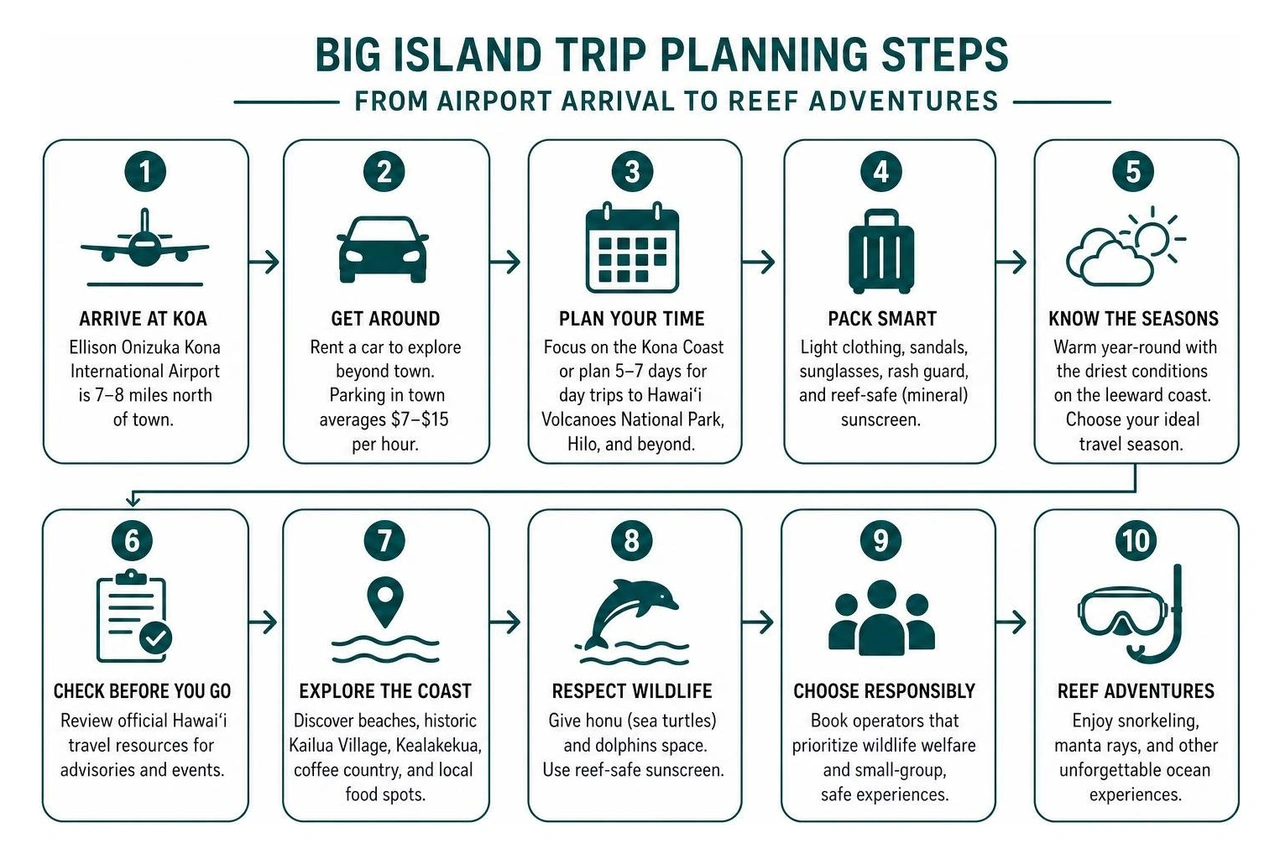
Start your Kailua-Kona travel guide with a simple plan: stay near Historic Kailua Village or Keauhou, rent a car, reserve your key ocean tour early, and leave time for both the coast and the island's volcanic interior. Kona's sunny, leeward shoreline makes it an easy base for snorkeling at Kealakekua Bay, manta ray night snorkeling, coffee-country stops in Hōlualoa, and historic sites along Ali'i Drive.
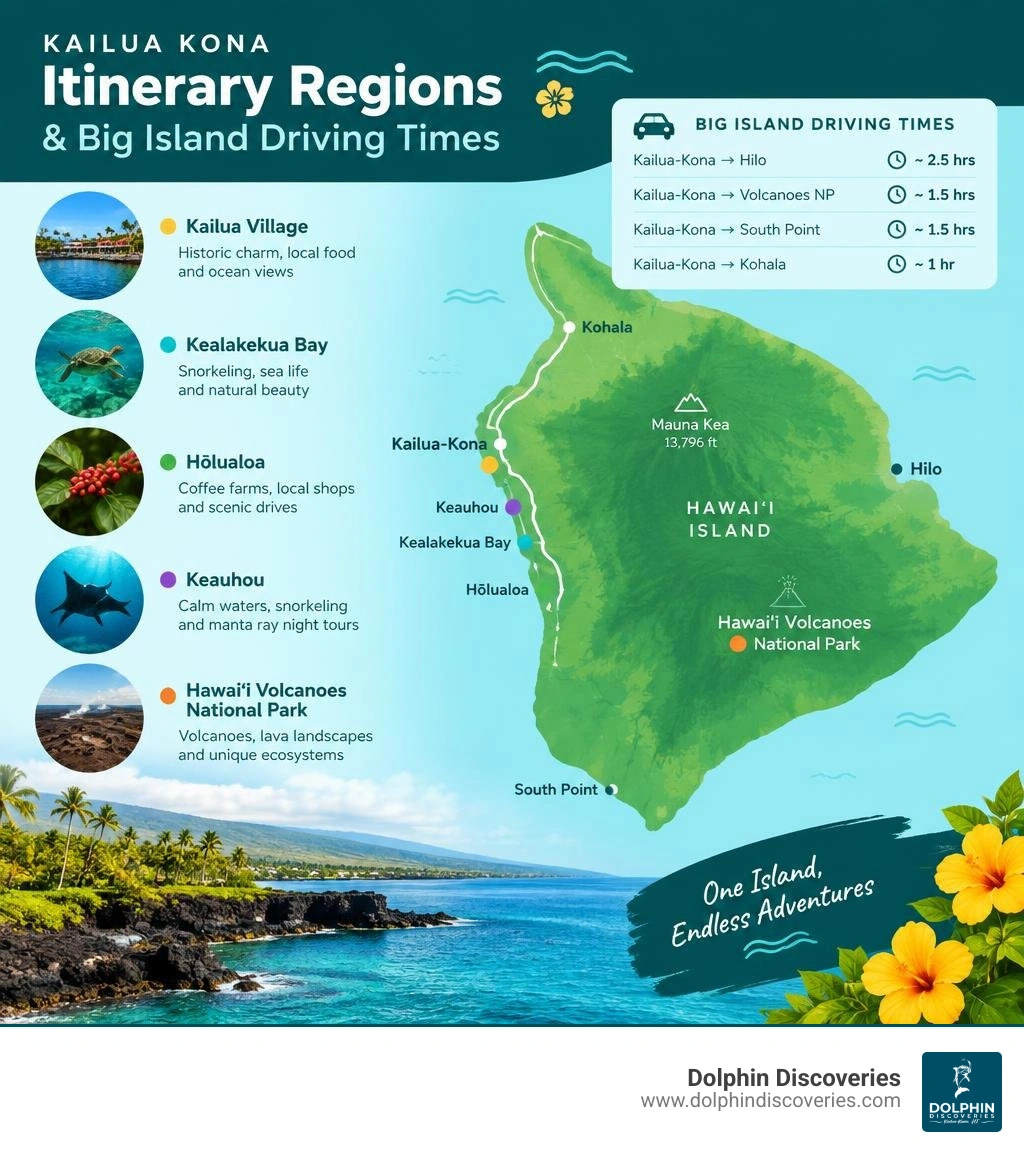
Kailua-Kona sits on the west side of Hawai'i Island, the largest Hawaiian island. It blends royal history, rugged lava landscapes, calm-water reef experiences, and everyday local food in one practical home base. A short trip can focus on the Kona Coast, while five to seven days gives you room for day trips to Hawai'i Volcanoes National Park, Hilo, and beyond.
Plan ocean time with care. Keep a respectful distance from honu, or Hawaiian green sea turtles, and dolphins, use reef-safe sunscreen, and choose operators that put wildlife welfare and safe and secure small-group experiences first.
I'm Shelley Carey, and I will help you build a clear Kona itinerary that makes room for Kealakekua, culture, coffee, and the majestic moments that happen on the water.
Discover more about kailua kona travel guide:
Essential Kailua Kona Travel Guide: Best Time to Visit, Logistics, and Costs
Kona sits on the dry, sheltered leeward coast of the Big Island, shielded from persistent trade winds by Mauna Loa and Hualālai. The Kona District stretches almost two-thirds of the entire west side of the island of Hawaiʻi, running from south of ʻAnaehoʻomalu Bay down to Manukā Park. The area averages only about 20 rainy days per year, making it one of the most reliable spots in the state for outdoor ocean plans.
Getting here is straightforward. Most travelers fly directly into Ellison Onizuka Kona International Airport (KOA), located just seven to eight miles north of town. The open-air terminal welcomes you with warm trade winds right off the tarmac. If you plan to explore beyond the walkable stretch of Historic Kailua Village, renting a car is essential. Parking in town ranges from metered stalls along Aliʻi Drive to public lots that average between $7 and $15 per hour. At KOA, automated ticketless parking systems streamline entry and exit for airport lots.
Packing requires practical thinking. You will want light, breathable clothing, sturdy walking sandals, polarized sunglasses, and a reliable rash guard for sun protection in the water. Hawaii state law strictly bans sunscreens containing oxybenzone and octinoxate to protect delicate coral reef systems. Be sure to pack or purchase mineral-based sunscreens that use non-nano zinc oxide or titanium dioxide.
For official regional advisories and events, check official Hawaii travel resources before finalizing your schedule.
| Season | Months | Weather & Conditions | Highlights & Accommodation Rates |
|---|---|---|---|
| Winter (Peak) | Dec – Mar | Warm, 78°F–82°F; calm ocean mornings; rare rain | Whale watching season; higher lodging rates; book tours early |
| Spring (Shoulder) | Apr – Jun | Sunny, 82°F–85°F; gentle breezes; clear water | Excellent snorkeling visibility; moderate accommodation prices |
| Summer | Jul – Aug | Warmest, 85°F–88°F; flat ocean swells | Ideal for family travel and water sports; peak summer rates |
| Fall (Shoulder) | Sep – Nov | Pleasant, 83°F–86°F; light crowds | Great value on lodging; relaxed pace across town |
Top Ocean Adventures and Marine Wildlife in Kailua-Kona
The calm waters off the Kona Coast offer some of the richest marine biodiversity in the Pacific. Clear ocean visibility and sheltered bays make Kailua-Kona snorkeling a core part of any visit.
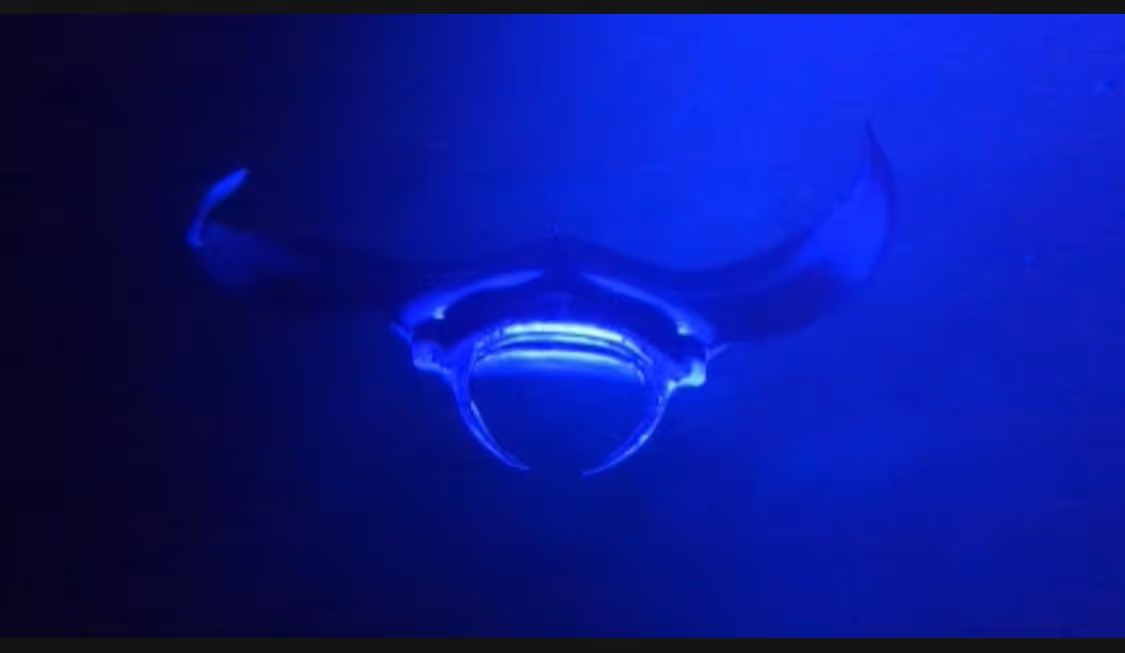
Our favorite evening activity is the world-famous manta ray night snorkeling. Departing right out of Keauhou Bay, our boats reach the manta site in a quick 5-minute boat ride. Once in the water, guests hold onto our custom "floating campfire" light board. The high-powered lights attract clouds of microscopic plankton, drawing in majestic coastal manta rays (Mobula alfredi).
These gentle giants glide up from the dark, performing their graceful "barrel roll" feeding loops mere inches beneath you. With wingspans often stretching 10 to 14 feet, watching them filter plankton in illuminated blue water is a surreal, life-changing encounter. Our marine naturalists guide you throughout the entire trip, ensuring everyone feels safe and secure in the water.
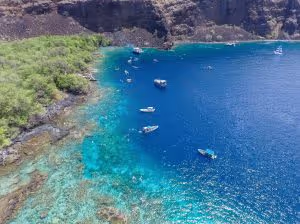
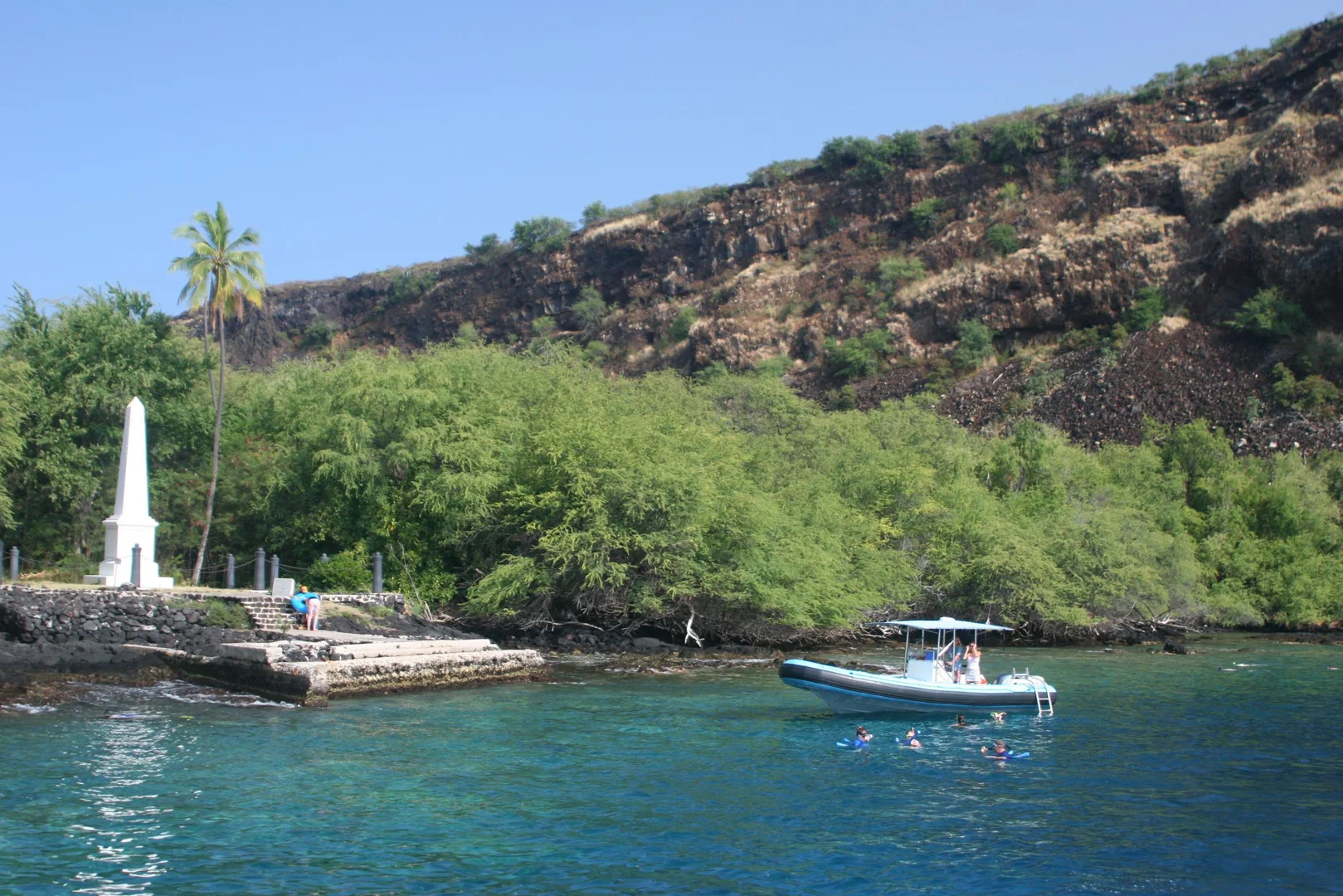
During the morning hours, our Captain Cook snorkel tour takes you 12 miles south of Historic Kailua Village to Kealakekua Bay State Historical Park. Kealakekua Bay is a protected Marine Life Conservation District that features steep underwater drop-offs and thriving coral gardens filled with yellow tangs, parrotfish, and Moorish idols.
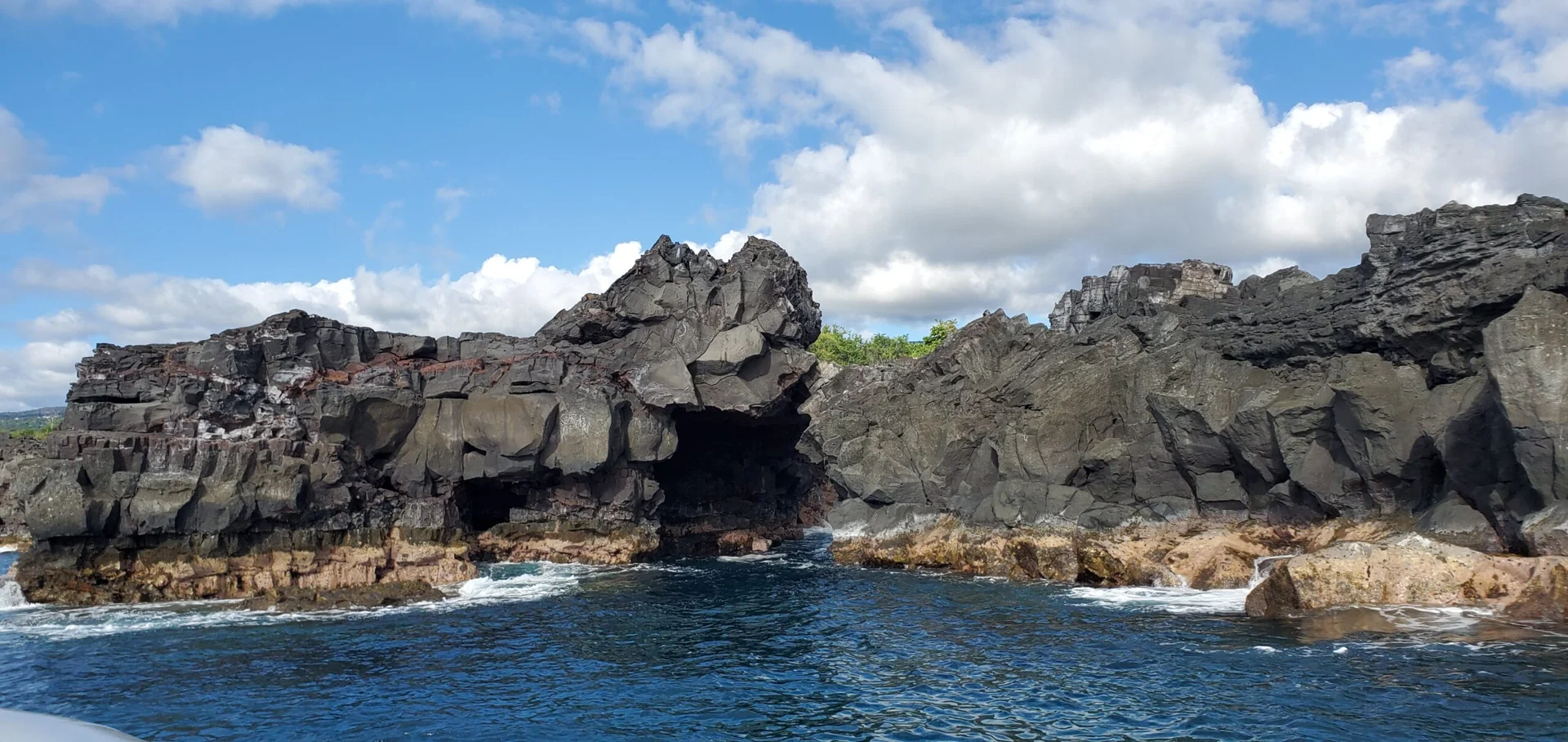
As we travel along the dramatic sea cliffs, you may spot pods of Hawaiian spinner dolphins (Stenella longirostris). These acrobatic dolphins rest in sheltered bays after hunting offshore at night. Federal and state laws require boaters, swimmers, and paddleboarders to maintain a strict distance of at least 50 yards from wild dolphins to avoid disrupting their natural resting cycles.
Between December and April, more than 8,000 humpback whales (Megaptera novaeangliae) migrate from Alaskan feeding grounds to mate and give birth in Hawaii's warm, shallow channels. Booking seasonal whale watching tours lets you listen to whale songs through hydrophones and observe breaches, tail slaps, and mother-calf pairs with expert naturalist insights.
We run small-group tours on fast, rigid-hull inflatable boats (RIBs). This gives our guests a personal, front-row seat to marine behavior without the crowded decks of large catamaran boats.
Best Beaches, Historic Landmarks, and Coffee Country
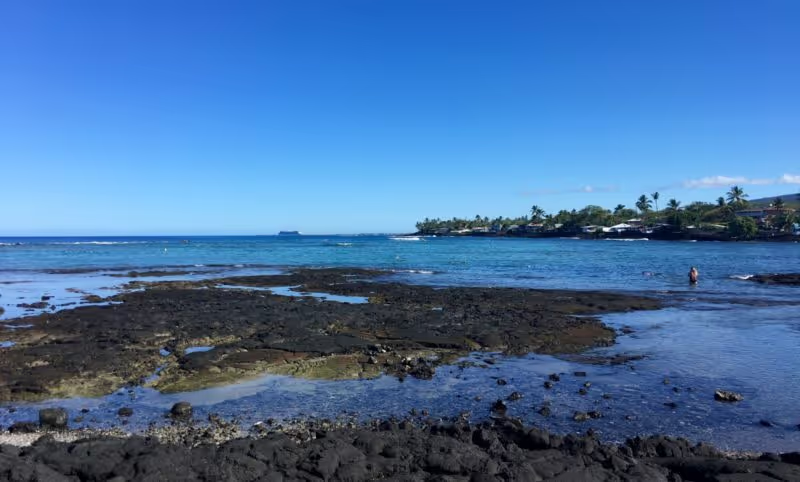
Kailua-Kona balances rich historical roots with accessible shoreline parks and cool upland farming communities.
Pristine Beaches and Coastal Escapes
Finding the best snorkel spots on the Big Island begins right along the coast. Kahaluʻu Beach Park, situated just north of Keauhou, features a shallow, reef-protected bay that is ideal for beginner snorkelers and families. It is a common feeding ground for honu (Hawaiian green sea turtles), which graze on the limu (algae) covering the lava rocks. Always remember that Hawaiian law requires you to maintain a respectful distance of at least 10 feet from sea turtles both in the water and while they bask on the sand.
To the north, Maniniʻōwali Beach (Kua Bay) boasts fine white sand and bright turquoise waters surrounded by stark black lava flows. The water here is pristine for swimming on calm mornings, though shorebreak waves pick up in the afternoon. For bodyboarding and casual sunbathing, Magic Sands Beach (Laʻaloa Beach Park) offers warm sand that naturally washes away during winter swells, revealing the underlying lava shelf before returning in the summer.
Kailua Kona Travel Guide to Top Historic Sites and Cultural Landmarks
Kailua-Kona served as the seat of government when King Kamehameha I unified the Hawaiian Islands and spent his final days at Kamakahonu in Kailua Bay. Exploring the top attractions in Kailua-Kona provides essential context for the island's deep heritage.
Right along Aliʻi Drive sits Huliheʻe Palace, constructed in 1838 out of native koa wood and lava rock as a summer retreat for Hawaiian royalty. Just north of town, the 1,160-acre Kaloko-Honokōhau National Historical Park showcases ancient Hawaiian engineering. You can walk trails past traditional heiau (stone temples), petroglyphs carved into smooth pāhoehoe lava, and working fishponds (loko iʻa) that sustained early communities along the arid coast.
A short drive south brings you to Puʻuhonua o Hōnaunau National Historical Park, also known as the City of Refuge. In ancient times, Hawaiians who broke traditional laws (kapu) or fled defeated battles could seek sanctuary here, undergo ceremonial purification by priests, and return home safely. The park's towering wooden kiʻi statues and massive stone masonry wall remain powerful reminders of ancestral traditions, as noted in many Big Island exploration highlights.
Exploring Kona Coffee Country in Hōlualoa
Perched directly above Kailua-Kona on the fertile slopes of Hualālai volcano is the quiet artisan village of Hōlualoa. The region's cloud forest, mineral-rich volcanic soil, and sunny morning/rainy afternoon cycle create a distinctive microclimate tailored for growing 100% Kona coffee.
Visiting an authentic family-run farm allows you to walk through the coffee trees, tour wet and dry processing mills, and taste distinct roast profiles. You can sample estate roasts with tasting notes ranging from sweet caramel and dark chocolate to delicate jasmine. Hōlualoa also features independent art galleries, woodturners, and local ceramic studios tucked along winding mountain roads.
Curated Itineraries and Island Day Trips from Kailua-Kona
Whether you have three days or an entire week, Kailua-Kona serves as an efficient hub for exploring both west coast reefs and inland volcanic wonders.
Crafting Your 3-Day Kailua Kona Travel Guide Itinerary
For a quick visit, this balanced 3-day plan helps you experience the core things to do in Kailua-Kona:
Day 1: Coastline, Culture, and Local Eats
Begin with an early morning walk through Historic Kailua Village. Grab a fresh tropical fruit bowl or locally caught ahi poke from a neighborhood deli. Tour Huliheʻe Palace, explore the grounds at Kaloko-Honokōhau, and head to Kahaluʻu Beach Park for midday snorkeling with reef fish. In the evening, sample local island beers or dine waterfront along Aliʻi Drive to experience the relaxed Kailua-Kona nightlife.Day 2: Morning Reefs, Upland Coffee, and Manta Rays
Join our morning snorkel excursion down to the historic monument at Kealakekua Bay to enjoy crystal-clear water before midday trade winds pick up. Head up the mountain in the afternoon to Hōlualoa for private coffee mill tours. Finish your evening with our guided manta ray night snorkel out of Keauhou Bay for a magical encounter under our custom light boards. For additional scheduling ideas, read our comprehensive 2026 activities rundown.Day 3: North Coast White Sands and Stargazing
Spend your morning swimming at the white sands of Kua Bay. Afterward, drive north along Highway 19 to explore the Kohala coastline. In the late afternoon, make your way toward the Mauna Kea Visitor Information Station to watch the sunset above the cloud inversion layer before returning to town.
Epic Big Island Day Trips: Volcanoes, Waterfalls, and Green Sands
If you have five or more days on the island, plan one or two full-day road trips:
Hawaiʻi Volcanoes National Park
Located about two to two-and-a-half hours southeast of Kailua-Kona, this national park showcases active volcanic landscapes. Hike the 3.4-mile Kīlauea Iki Trail across a solidified lava lake bed, walk through the lush rainforest surrounding the Thurston Lava Tube (Nāhuku), and look for steam vents along Crater Rim Drive.The Hilo Waterfall Loop
Driving from Kona across the Daniel K. Inouye Highway (Saddle Road) takes about 75 to 90 minutes. In Hilo, stop by the Hilo Farmers Market, which has been operating since 1988 with stalls featuring rambutan, dragon fruit, and locally baked goods. Visit the drive-up 80-foot Rainbow Falls in Wailuku River State Park, then head north up the coast to view the 442-foot plunge of ʻAkaka Falls.South Point and Papakōlea Green Sand Beach
Drive south through Kaʻū to reach South Point (Ka Lae), the southernmost point in the United States. Ocean currents here are severe, and jumping from the 40-foot sea cliffs carries high hazard risks and is strongly discouraged. Nearby lies Papakōlea, one of only four green sand beaches in the world, carved by ocean erosion from a cinder cone rich in green olivine crystals.Mauna Kea Summit
Reaching 13,803 feet above sea level, Mauna Kea is the highest point in Hawaiʻi. While the visitor center at 9,200 feet is accessible in standard passenger cars, driving to the summit requires a true 4-wheel-drive vehicle with low range to navigate steep gravel switchbacks safely and protect your brakes on the descent.
Frequently Asked Questions About Visiting Kailua-Kona
How many days do you need in Kailua-Kona?
Five to seven days is ideal for most travelers. This window gives you enough time to enjoy world-class morning snorkeling, experience an evening manta ray tour, tour the Hōlualoa coffee belt, and take full-day trips out to Hawaiʻi Volcanoes National Park or Hilo waterfalls without feeling rushed.
Do you need to rent a car in Kailua-Kona?
Yes. While you can walk around Historic Kailua Village on foot, public transit on the Big Island is sparse. A rental car provides the freedom needed to reach scenic white sand beaches, upland coffee plantations, mountain lookouts, and national parks across the island's diverse terrain.
Is it better to stay in Kona or Hilo?
Kailua-Kona is the preferred base for sunny weather, resort amenities, calm snorkeling bays, and marine wildlife charters. Hilo offers lush tropical rainforests, botanical gardens, and quick access to waterfalls, but it experiences significant annual rainfall. If you have a full week, splitting your stay with four nights in Kona and two to three nights in Hilo provides a wonderful balance of both island microclimates.
Finding Your Rhythm on the Kona Coast
Exploring the Big Island leaves you with a deep appreciation for the living ocean and the volcanic land that shapes it. When you travel through these communities, practice mālama ʻāina by respecting cultural sites, keeping safe distances from wild wildlife, and choosing reef-friendly habits in and out of the water.
At Dolphin Discoveries, our small ohana has been sharing these waters for decades. Whether you are floating over the vibrant coral gardens of Kealakekua or watching mantas loop beneath our light board, we invite you to experience the natural beauty of the Kona Coast with us. Explore our small-group guided ocean tours to find the right morning or evening adventure for your trip. Mahalo Nui, and we look forward to welcoming you aboard in Keauhou Bay.