

What Makes Honaunau Bay a Premier Snorkeling Destination
The Kona Coast is world-renowned for its calm, sun-drenched waters, but South Kona holds some of the most vibrant marine environments in Hawaii. Honaunau Bay stands out because of its unique geological layout and exceptional underwater visibility, which routinely exceeds 80 to 100 feet. Instead of a sandy seafloor that gets stirred up by wave action, the bay is framed by ancient, smooth basalt shelves. This volcanic architecture keeps the water remarkably clear, allowing natural sunlight to illuminate expansive coral gardens.
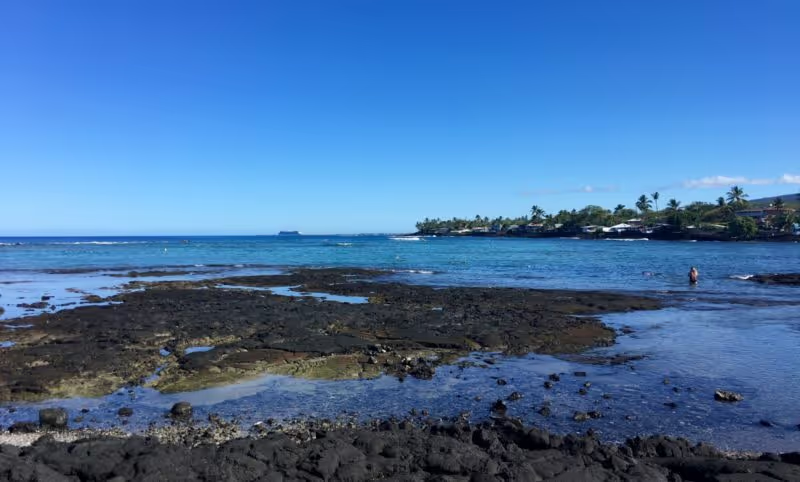
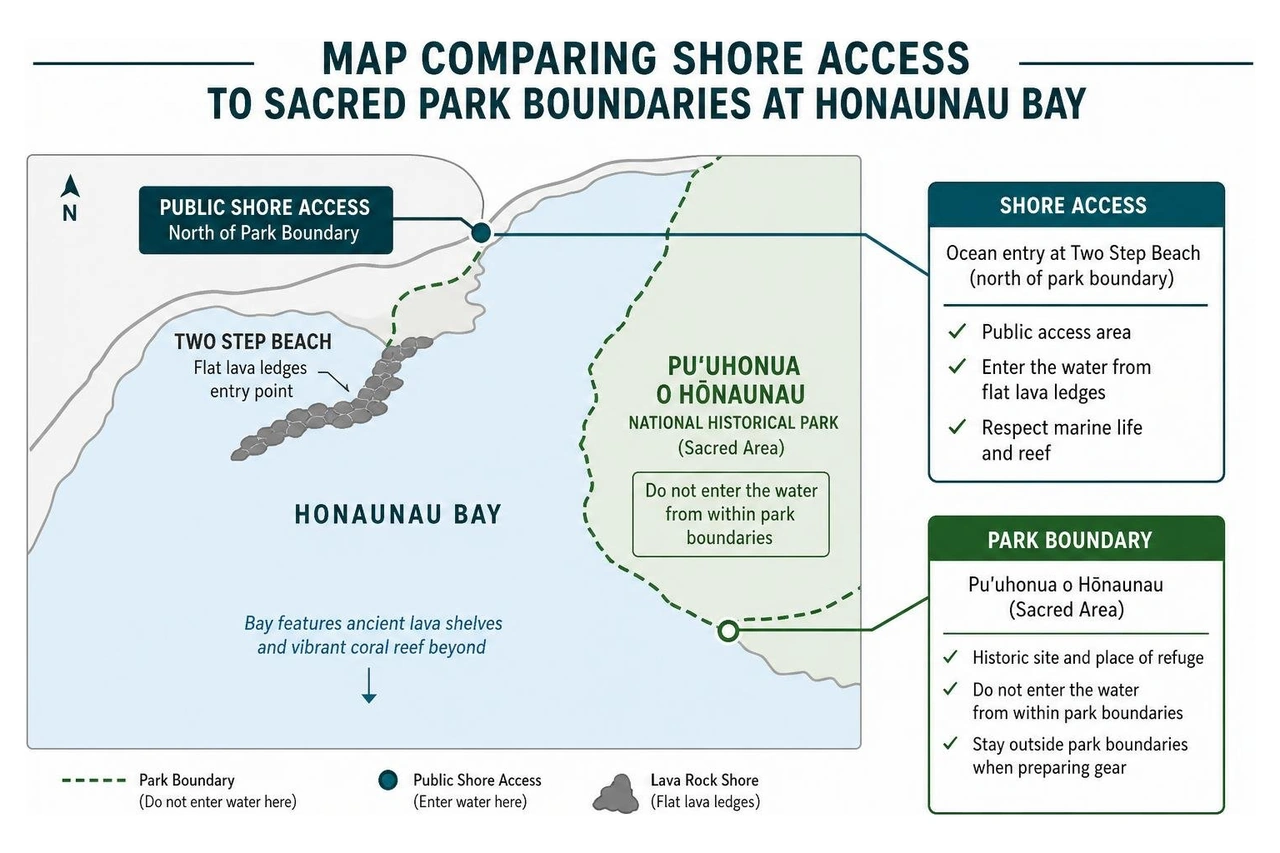
Most shore visitors access the water via the famous flat lava ledges known as Two Step Beach at Honaunau Bay. Just a few feet past these shelves, the ocean floor drops into a wonderland of finger coral, lobe coral, and massive brain coral heads.
The marine biodiversity here is stunning. When you glide along the outer reef wall, you can spot large schools of bright yellow tangs, iridescent parrotfish (uhu), raccoon butterflyfish, and spotted pufferfish grazing on algae. The bay serves as an essential feeding and resting ground for native Hawaiian green sea turtles (Honu). These majestic creatures can often be observed gliding peacefully over the reef or resting along underwater lava ridges.
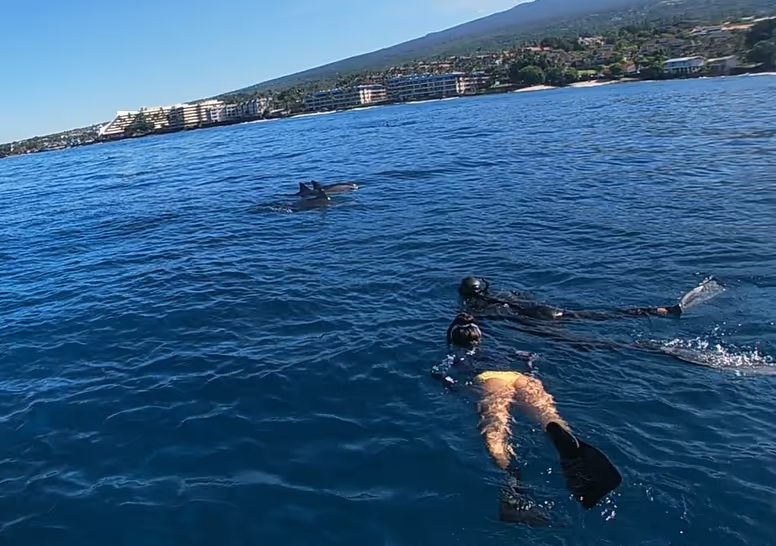
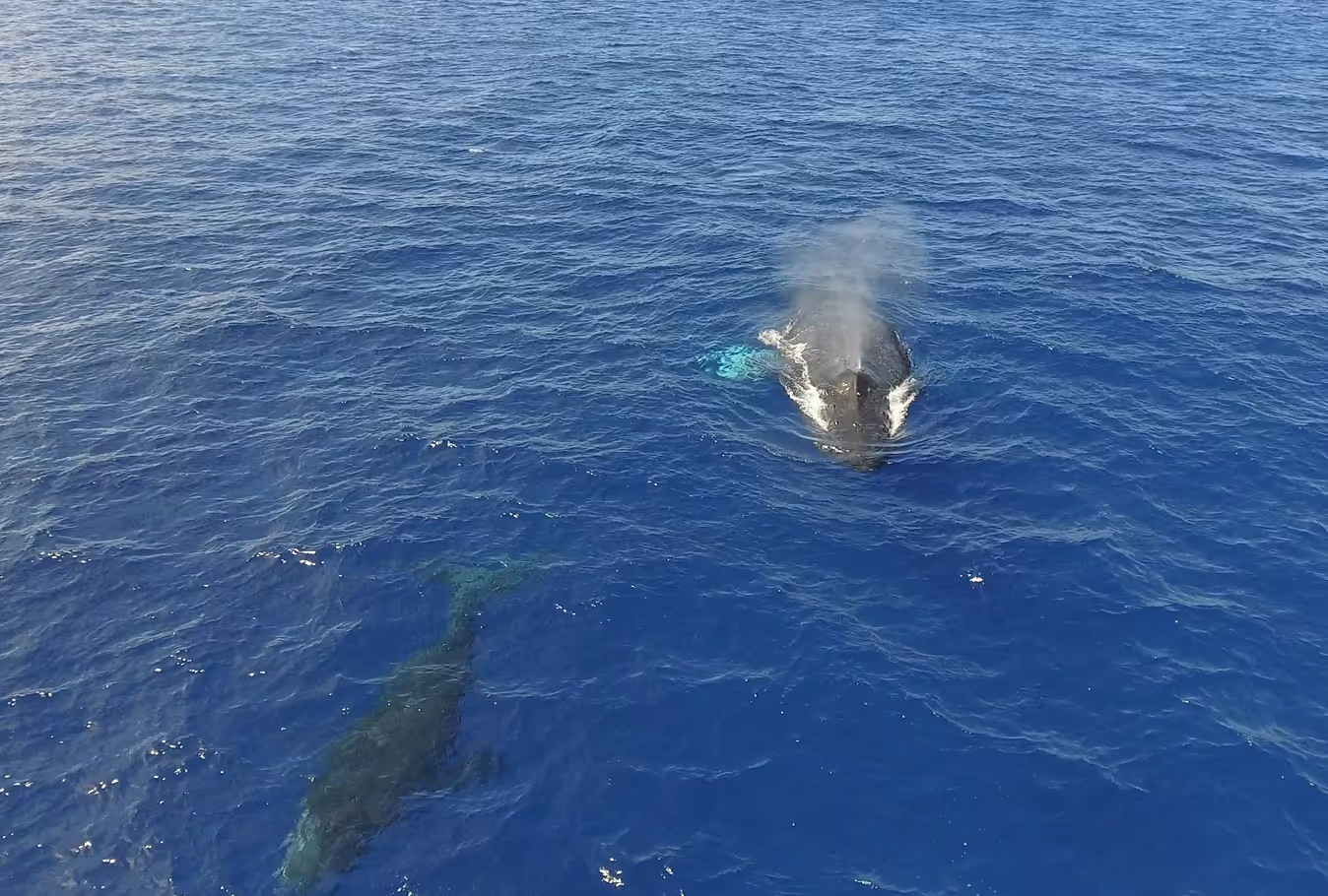
Pod-forming Hawaiian spinner dolphins also frequent the deeper offshore sections of the bay to rest after hunting in open water overnight. Learning more about Honaunau Bay helps snorkelers understand why this unique ecosystem thrives and why maintaining respectful distances is crucial for wildlife preservation.
Cultural Significance and Puʻuhonua o Hōnaunau
Beyond its marine life, the bay is steeped in deep Hawaiian cultural heritage. Immediately adjacent to the primary entry area sits Puʻuhonua o Hōnaunau National Historical Park, historically known as the City of Refuge.
In ancient times, under the strict kapu system, breaking a sacred law was punishable by death. If an individual managed to reach the sacred boundaries of this puʻuhonua by foot or by swimming across the bay, a kahuna (priest) would perform a ceremony of absolution, granting them safety and a second chance at life. The area also served as a sanctuary for non-combatants during times of war.
Because of this profound history, treating the bay with reverence is an absolute priority:
- Never step on or touch the coral heads or historical rock walls.
- Avoid entering the water directly from the national historical park grounds; ocean entry is strictly limited to the public access points north of the park boundary.
- Maintain a respectful, quiet presence while preparing your gear along the rocky shore.
Exploring our Honaunau Bay National Park guide provides vital context before you step into these sacred waters.
Top-Rated Honaunau Bay Snorkeling Tours and Excursions
While shore access via Two Step is popular, joining a dedicated boat excursion offers distinct advantages. Navigating rocky entries, crowded shorelines, and limited local parking can add stress to your morning. Guided boat excursions departing from nearby Keauhou Bay allow you to bypass the crowds, access deeper coral drop-offs safely, and receive continuous safety oversight from our experienced crew.
| Feature | Shore Snorkeling (Two Step) | Guided Boat Excursion |
|---|---|---|
| Water Entry | Navigating slippery, wet lava ledges on foot | Easy step-down ladder from boat deck |
| Parking & Logistics | Limited roadside parking; fills by 8:30 AM | Dedicated marina parking at Keauhou Bay |
| Safety Oversight | Self-monitored; no municipal lifeguards on duty | Marine naturalists and rescue-certified crew |
| Gear Provided | Must rent or bring your own equipment | Sanitized, custom-fitted masks, fins, and float belts |
| Multi-Location Access | Restricted to Honaunau Bay only | Combines Honaunau, Kealakekua Bay, and sea caves |
Booking our Kona Snorkeling Tours gives you four full hours on the water, exploring two distinct South Kona reef systems with naturalist insights along the way.
Small-Group Honaunau Bay Snorkeling Tours
Our small-group tours utilize rigid hull inflatable boats (RIBs). These fast, nimble vessels sit low to the water line, providing a smooth ride along the dramatic volcanic coastline while eliminating the crowded feel of large double-decker "cattle-maran" boats.
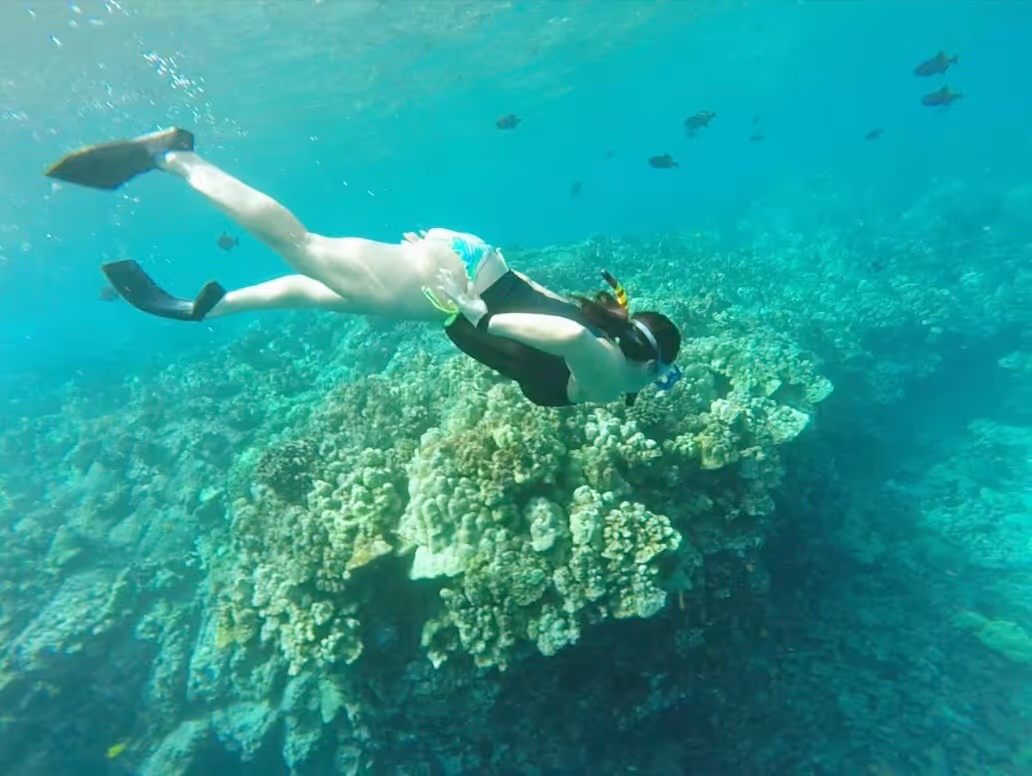
With a small passenger count, every guest receives personalized attention. Our marine naturalists explain fish behaviors, point out cryptic species like octopuses or moray eels hidden within the reef, and ensure everyone feels safe and secure in the water. For families or groups seeking a private itinerary, our Kona Private Boat Tour offers a fully customized charter tailored to your pace.
Combining Kealakekua Bay and Honaunau Bay Snorkeling Tours
One of the greatest benefits of taking an ocean excursion is the ability to visit multiple remote marine sanctuaries in a single morning. A short boat ride north of Honaunau brings you into Kealakekua Bay State Historical Reserve. Home to the historic Captain Cook Monument, Kealakekua Bay features dramatic sea cliffs, secret lava tubes, and some of the densest coral coverage on the Big Island.
Touring both locations by boat allows you to witness the visual contrast between the volcanic shelves of Honaunau and the towering 600-foot sea cliffs of Kealakekua. Check out our Captain Cook snorkel tour to see how simple it is to explore both premier marine reserves seamlessly.
Essential Gear, Safety, and Ocean Conditions for Honaunau Bay
Preparation is key to a smooth and safe snorkeling adventure. Ocean conditions on the Kona coast are typically calmest during morning hours, but open ocean currents and sudden swells can change water dynamics quickly.
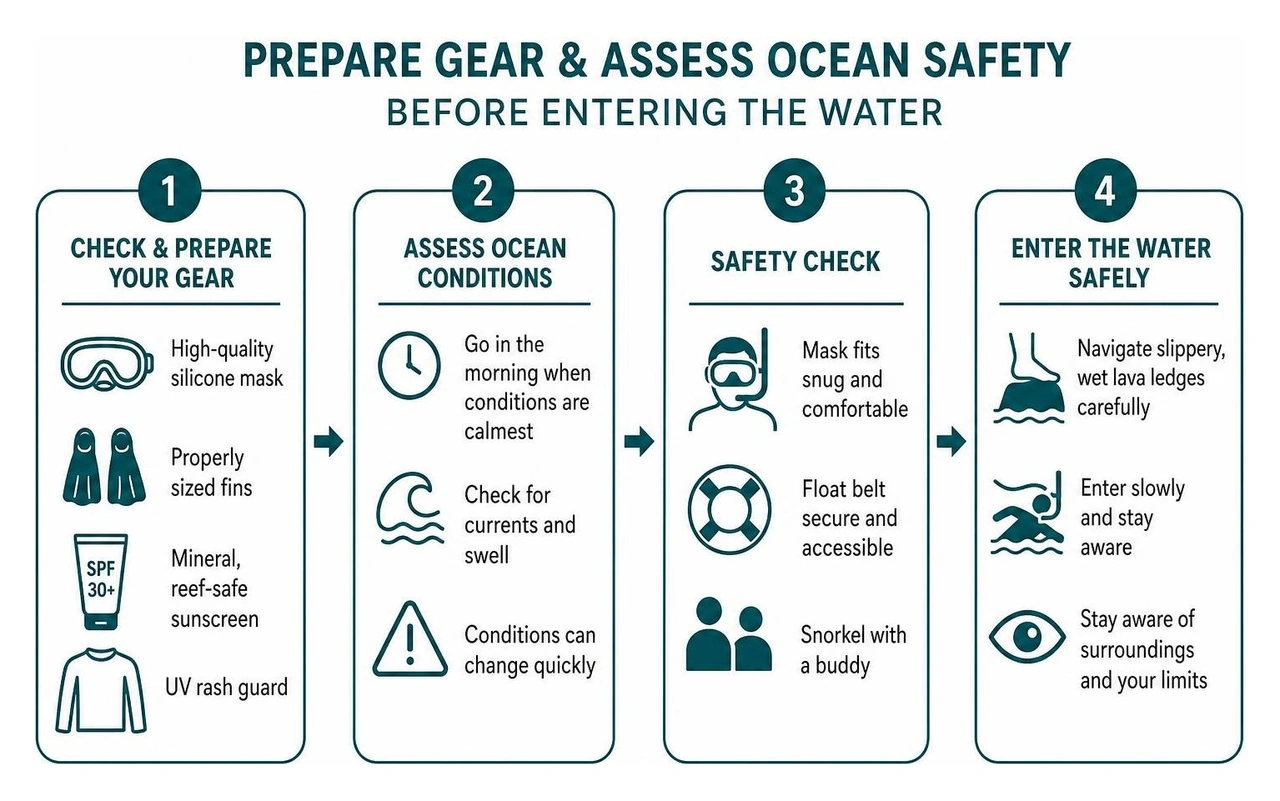
Recommended Equipment Checklist
- High-Quality Silicone Mask: A supple silicone skirt prevents salt water from leaking in. Ensure a snug seal on your face without over-tightening the strap.
- Properly Sized Fins: Fins provide effortless propulsion and maneuvering against mild currents without tiring your legs.
- Mineral Reef-Safe Sunscreen: Traditional sunscreens contain oxybenzone and octinoxate, chemical compounds that damage delicate coral polyps. Hawaii state law mandates the use of mineral-based sunscreens featuring non-nano zinc oxide or titanium dioxide.
- UV Rash Guard: A long-sleeve rash guard protects your back and shoulders from sun exposure while keeping you warm during extended snorkel sessions.
- Flotation Devices: Neoprene vests or waist-worn float belts provide effortless buoyancy, letting you relax and focus entirely on the marine life below.
If you choose to enter from shore, study the natural lava ledge carefully. The area gets its nickname, "Two Step," from two submerged lava platforms that resemble a pair of stairs. Wait for a wave to wash over the shelf before smoothly stepping off into deep water. When exiting, float over the ledge, wait for the incoming surge to gently lift you, and plant your feet firmly on the upper rock step. Reviewing our Honaunau Bay Two Step guide and Honaunau Bay Snorkeling Tips 2026 will help you handle entry points smoothly.
Best Times of Day and Year to Snorkel
Morning is the best window for snorkeling along South Kona. Between 7:30 AM and 11:30 AM, offshore winds remain light, leaving the ocean surface glassy and smooth. As afternoon approaches, thermal heating across the slopes of Mauna Loa generates onshore breezes, creating surface chop that can reduce underwater clarity.
Seasonal considerations also play a role. Current conditions in September 2026 provide warm water temperatures near 80°F and steady visibility. Summer and early autumn generally bring the calmest overall conditions to West Hawaii, while winter months can occasionally produce northwest ocean swells that sweep into exposed coastal areas.
Frequently Asked Questions About Snorkeling at Honaunau Bay
What marine life can I expect to see on a Honaunau Bay snorkeling tour?
Snorkelers regularly encounter hundreds of native fish species, including Achilles tangs, Moorish idols, banded coral shrimp, and dynamic schools of black triggerfish. Green sea turtles (Honu) forage along the shallow coral terraces, while spotted eagle rays and manta rays occasionally cruise through the deeper channels. Keep an eye out for octopus (heʻe) camouflaged seamlessly against the basalt floor.
Is Honaunau Bay suitable for beginner snorkelers?
Yes, provided ocean conditions are calm. Because the bay drops immediately into 15 to 30 feet of water from the shore entry without a shallow sandy slope, beginners may feel intimidated entering on foot. Joining a guided boat excursion provides beginners with fitted float belts, a secure ladder for entry, and continuous supervision from trained guides, making the experience accessible and relaxing.
What is the difference between Two Step Beach and Honaunau Bay?
Honaunau Bay refers to the entire geographical marine bay spanning from the northern volcanic headland down to the southern national historical park. Two Step Beach is simply the local nickname for the smooth lava shelf entry point located on the northern shore of the bay.
Conclusion
Honaunau Bay represents the very best of South Kona's ocean beauty: crystal-clear visibility, resilient coral reefs, and frequent encounters with iconic Hawaiian marine life. Whether you are observing a resting Honu or watching clouds of yellow tangs dart across the reef, this marine sanctuary leaves a lasting impression.
By using reef-safe sun protection, respecting historic grounds, and giving wild marine animals the space they need, you help ensure these delicate ecosystems remain vibrant for future generations.
If you want to experience the beauty of South Kona with an intimate group, our naturalist-led excursions from Keauhou Bay make it easy to explore both Honaunau and Kealakekua in comfort. Learn more about our daily trips and reserve your next guided ocean excursion to get out on the water with our Ohana. Mahalo Nui!