

Science of the Shore: What Makes an Ideal Vantage?
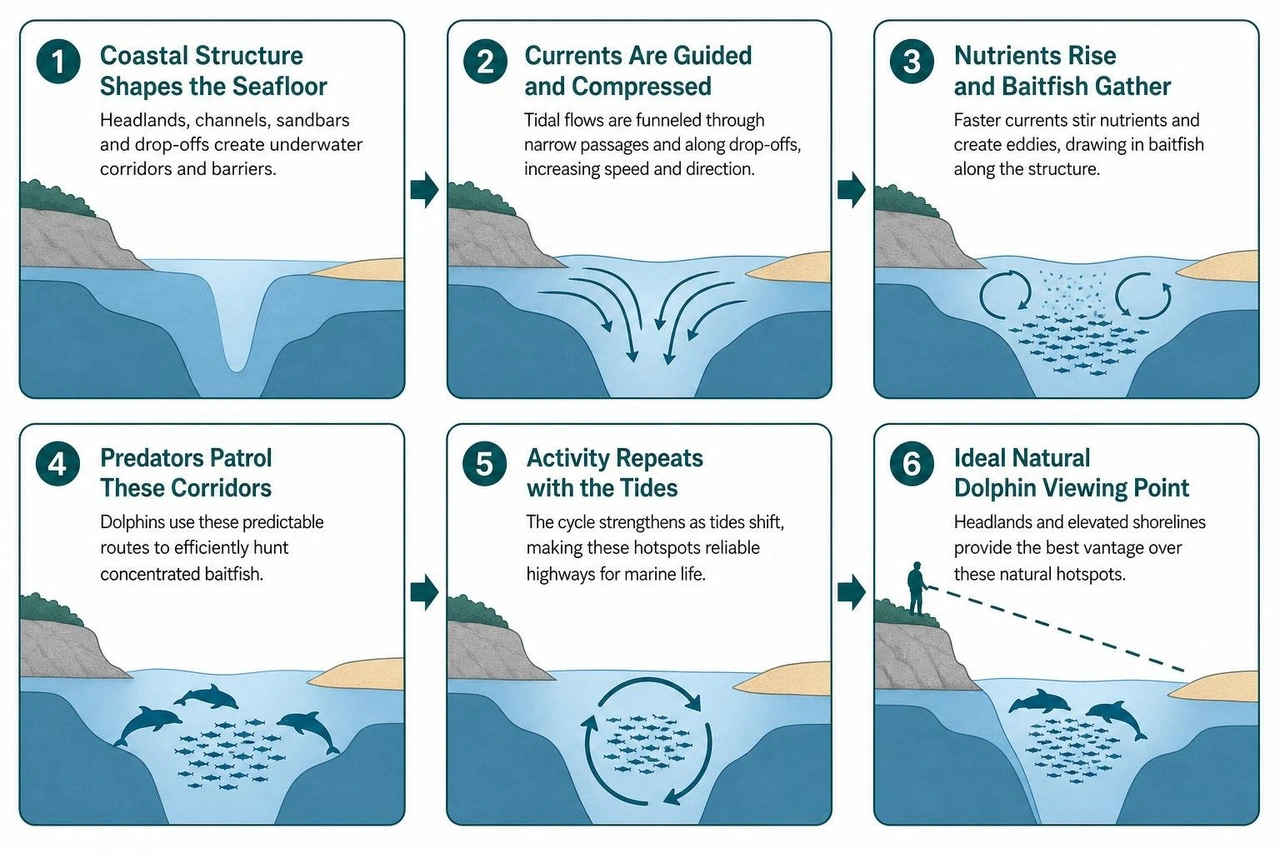
Spotting dolphins from land comes down to understanding coastal bathymetry, underwater topography, and fish movement. Dolphins do not wander aimlessly along the shoreline. They patrol predictable underwater corridors where seafloor structures concentrate schooling fish.
When you stand on land looking out at the ocean, you are reading the surface of an underwater landscape. Deep trenches, submerged ledges, and steep drop-offs create natural highways for marine life. Understanding these dynamics is the foundation of ethical dolphin watching, allowing you to observe wild animals in their natural routines without causing disruption.
A good dolphin viewing point rewards patience and a little ocean literacy. You are not just waiting for a splash. You are watching for the places where current, structure, and prey overlap. On the Kona Coast, for example, nearshore ledges and lava shelves often hold baitfish close to shore, and pods of spinner dolphins may travel along those contours during their morning return to resting bays. The same principles apply anywhere in the world: find the underwater edge, and you often find the dolphins.
How Geography Creates a Natural Dolphin Viewing Point
A premier dolphin viewing point usually features distinct geographic markers:
- Funnel Channels: Narrow passages between islands or spits compress moving water. This forces schooling fish into tight areas where hunting pods can corral them easily.
- Headlands and Rocky Points: These landmasses jut out into deeper water, giving you an elevated view over offshore travel routes.
- Sandbars and Shallows: Shallow margins next to deep water create natural barriers that pods use to trap prey against the bottom or the shoreline.
- Current Confluences: Places where two opposing tidal streams collide churn up nutrients. This draws baitfish, which promptly attracts larger predators.
A prime global example of this dynamic is Scottish dolphin watching at Chanonry Point, where a narrow gravel spit projects straight into a deep, fast-flowing tidal channel. The spit acts like a natural funnel, and the dolphins use it as a reliable feeding station during salmon runs.
Reading Water Signals: Birds, Current Rips, and Choke Points
To spot dolphins before they leap, you need to read subtle changes on the surface. Scan the horizon for these key indicators:
- Diving Seabird Flocks: Terns, gulls, and shearwaters gathering and diving over a specific patch of water almost always signal a bait ball pushed toward the surface by feeding marine life.
- Current Rips and Tide Lines: Look for distinct lines where smooth "slick" water meets choppy chop. These rips collect plankton and small fish.
- Surface Nervousness: Small, flickering ripples that break against the general wave pattern indicate tightly packed schools of baitfish trying to escape beneath.
- Consistent Wake Lines: Unlike boat wakes that dissipate steadily, a moving pod generates sharp, rhythmic surface breaks with visible dorsal fins cutting the chop.
Learning to read these ocean cues is one of the first steps when you learn about dolphins and their complex cooperative hunting techniques. The more time you spend watching a shoreline, the more these patterns begin to feel familiar, and the easier it becomes to predict where a pod will surface next.
The Best Dolphin Viewing Point Destinations Worldwide
Around the world, unique coastal habitats draw resident pods and seasonal travelers right up to the shoreline. Some locations are famous for predictable tidal windows. Others are known for calm morning conditions that make surface activity easier to see. In every case, the best dolphin viewing point is tied to a specific combination of geography, prey movement, and time of day.
Chanonry Point and Moray Firth: High-Tide Salmon Runs
Chanonry Point, located on the Black Isle in the Scottish Highlands, is one of the most famous land-based vantage points in Europe. A resident population of roughly 200 bottlenose dolphins calls the Moray Firth home.
During the salmon run from spring through early autumn, these large, cold-water dolphins hunt in the deep, narrow channel just off the beach. The strongest viewing window occurs roughly two hours before high tide, when the powerful incoming surge forces migrating fish directly through the spit's narrow choke point. Observers often stand close enough to hear the dolphins exhale as they surface, which makes this one of the most intimate shoreline wildlife experiences in the world.
Tropical Sanctuaries: Kozhikode, Lhaviyani Atoll, and Monkey Mia
Warm tropical waters offer very different, yet equally remarkable, shoreline viewpoints:
- Kozhikode, India: Overlooking the Arabian Sea, the Dolphin View Point Kozhikode provides an open promenade where coastal dolphins pass by. Sightings are most common in the calm morning hours between 6:30 and 8:30 AM, when the sea surface is glassy and local fishing activity is still light.
- Lhaviyani Atoll, Maldives: The Lhaviyani Atoll viewpoint provides clear views across shallow lagoons and coral reefs, where spinner and bottlenose pods feed during early mornings and late afternoons. The clear water and bright tropical light make dorsal fins and leaping behavior visible from a long distance.
- Monkey Mia, Western Australia: Detailed in the official Monkey Mia visitor guide, this marine sanctuary in Shark Bay is known for Indo-Pacific bottlenose dolphins visiting the shallow shoreline under strict ranger supervision. Up to five females from two resident families are offered small fish rations during the morning, while rangers enforce strict wildlife protocols to protect natural hunting behaviors.
Laem Klat and Coastal Estuaries
In Trat Province, Thailand, the Irrawaddy Dolphin Point at Laem Klat protects a resident population of around 100 Irrawaddy dolphins. These unique, blunt-snouted marine mammals feed in shallow coastal bays and estuaries, with pods of up to 40 individuals observed hunting seasonal fish runs. The calm, brackish water of the estuary creates a reliable feeding area, and the viewing platform gives visitors a clear line of sight without disturbing the animals.
| Location | Primary Species | Prime Tidal / Time Window | Peak Season |
|---|---|---|---|
| Chanonry Point (Scotland) | Bottlenose Dolphin | 2 hours before high tide | May to September |
| Kozhikode (India) | Indo-Pacific Humpback / Bottlenose | Early morning (6:30–8:30 AM) | October to May |
| Lhaviyani Atoll (Maldives) | Spinner & Bottlenose Dolphin | Early morning & late afternoon | November to April |
| Monkey Mia (Australia) | Indo-Pacific Bottlenose | Morning (from 7:45 AM onward) | Year-round |
| Laem Klat (Thailand) | Irrawaddy Dolphin | Morning (08:00–10:00 AM) | November to April (Peak: Feb–May) |
Shoreline Vantage vs. Guided Boat Expeditions
Choosing between standing on shore or heading out onto the water depends on coastal access, water depth, and local geography. Both approaches have advantages, and many dolphin enthusiasts use a mix of the two depending on the season and the behavior of the pods they hope to see.
Choosing an Accessible Shoreline Dolphin Viewing Point
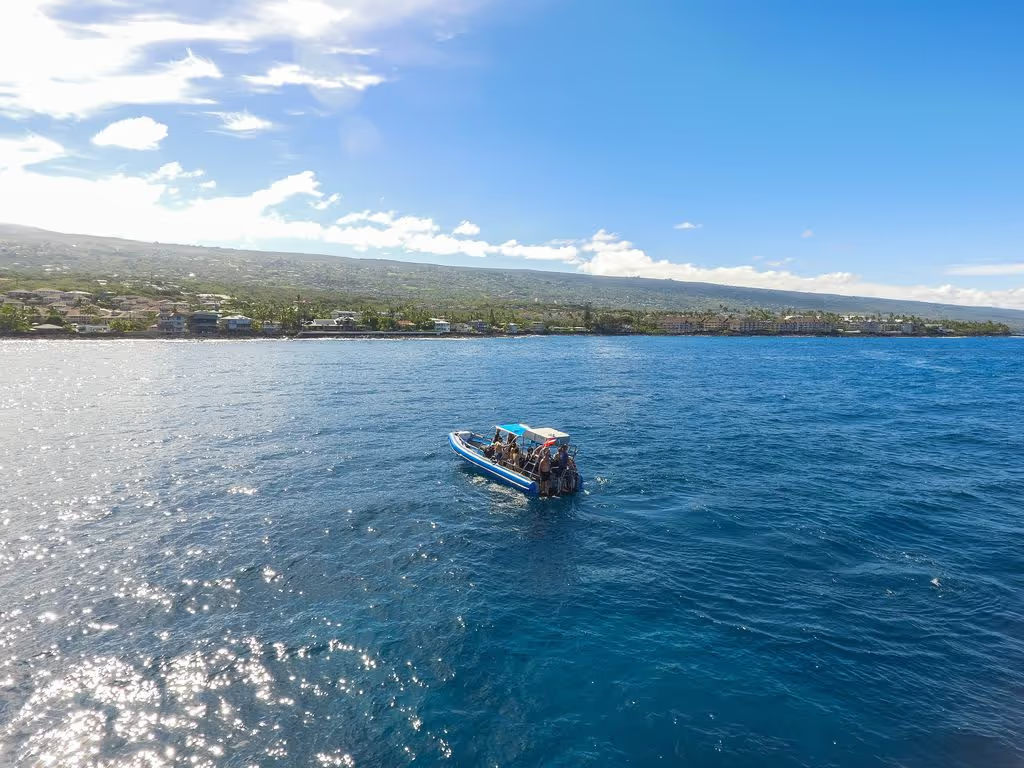
Shoreline watching is ideal for self-paced, budget-friendly observation. High headlands, public piers, and beach spits allow you to scan the water without getting your feet wet. You can stay for ten minutes or three hours, and you can return to the same spot across multiple days to learn the local patterns.
To maximize your success from land, pack these essentials:
- Polarized Sunglasses: Cuts surface glare, allowing you to see through the water column.
- Binoculars (7x50 or 8x42): Balances magnification with a wide field of view for scanning moving pods.
- Telephoto Camera Lens: A 100-400mm lens captures clean action shots without disturbing wildlife.
- Tide Chart App: Lets you align your arrival with incoming or slack tides.
- Sun Protection & Wind Layers: Coastal points often experience brisk offshore winds and strong sun exposure.
A shoreline dolphin viewing point also gives you a wider perspective on the whole seascape. You can watch how birds, boats, and currents interact, and you can move along the coast if the pod shifts farther down the shoreline. That flexibility is especially useful when dolphins are traveling rather than feeding in one place.
When Open-Ocean Boat Tours Offer Better Sightings

While shore spots work well where deep water touches land, many tropical coasts feature wide, shallow reefs or deep offshore drop-offs that keep pods out of clear sight from the beach.
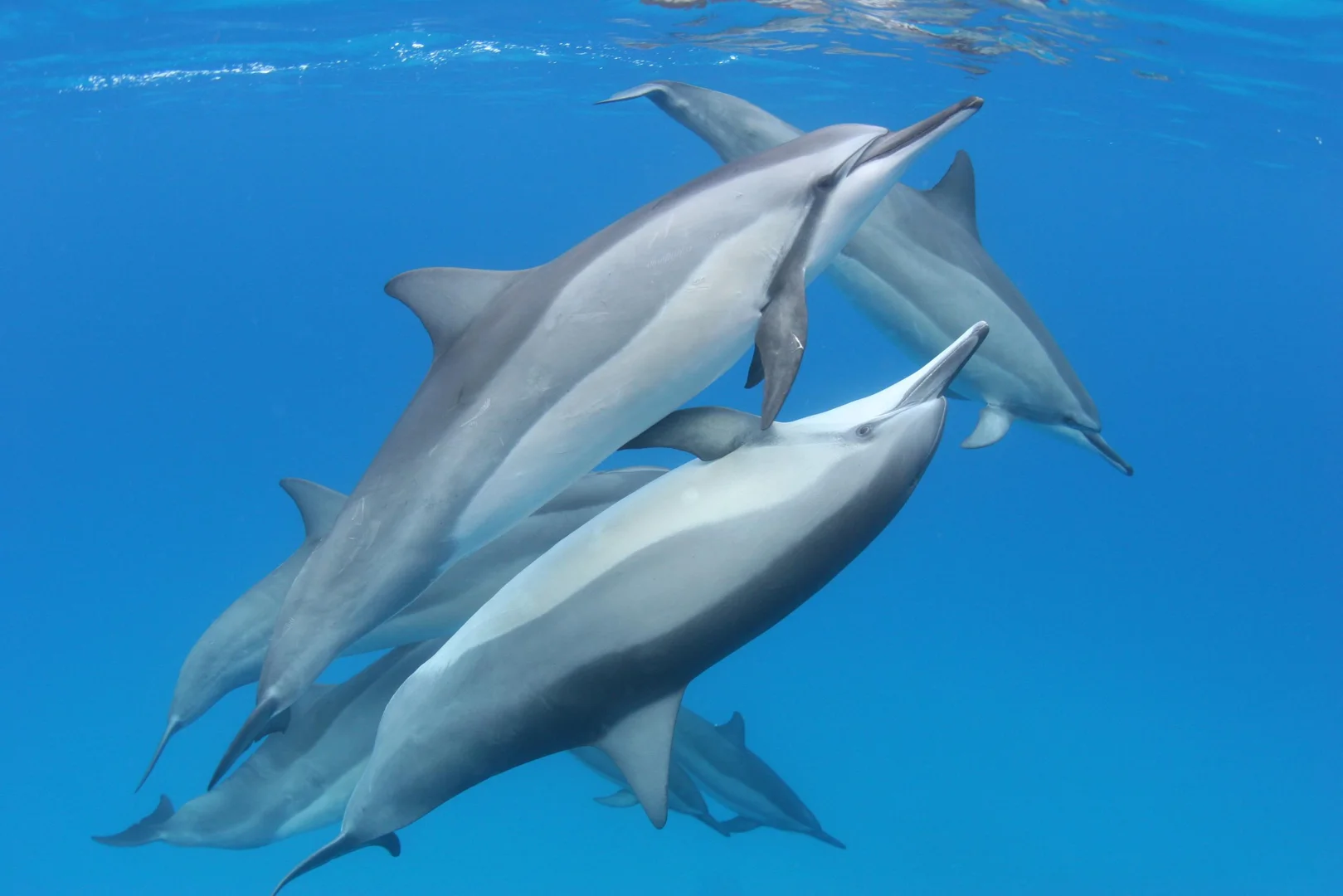
Along Hawaii's Kona Coast, pods of Hawaiian spinner dolphins rest in calm, sheltered bays during the morning before moving offshore into deeper waters in the afternoon to hunt. Shoreline cliffs often sit too far back to offer clear views of their leaps and acrobatics. From a boat, you can position yourself at a respectful distance and still see the full arc of a spinner dolphin's aerial spin, a detail that is easy to miss from land.
Booking with the best dolphin boat tours gets you onto the open water where naturalist guides can track surface activity safely and responsibly. Exploring the open ocean on dedicated vessels lets you witness these acrobatic maneuvers up close while staying well outside protected rest zones. You can preview these behaviors by viewing our Kona snorkeling videos.
Frequently Asked Questions About Dolphin Sightings
What is the single best time of day to spot dolphins from shore?
Early morning is consistently the most reliable window. Wind speeds are typically lowest at dawn, resulting in glassy water that makes dorsal fins and splashes easy to spot. Early morning also coincides with the tail end of nighttime offshore feeding runs, when pods return toward coastal waters. In many locations, the hour after sunrise offers the best combination of calm seas, low glare, and active dolphin movement.
How do ocean tides influence dolphin hunting behavior?
Incoming tides push water, nutrients, and schooling baitfish toward shore, into river mouths, and through narrow passes. Dolphins use these currents to pin schools against sandbars, reefs, or the water's surface. Slack tide, the pause between high and low tide, often sees a lull in feeding activity. If you are planning a shoreline watch, check the tide chart and aim for the period when the current is moving strongly through a known choke point.
What should you do if dolphins approach while you are in the water?
Always practice passive observation. Under federal guidelines, including NOAA regulations, swimmers and vessels must maintain a respectful 50-yard buffer from wild dolphins in coastal waters. If a pod approaches you, remain calm, keep your hands to your side, do not swim toward or chase them, and allow the animals to pass undisturbed. The safest encounter is one where the dolphins choose the distance and you simply observe.
Experience the Magic of Wild Encounters
Watching wild dolphins leap across the ocean surface is a truly surreal and life-changing experience. Whether you are scanning the horizon from a rugged coastal point or exploring open waters with experienced guides, respecting their natural habitat ensures these pods continue to thrive.
A great dolphin viewing point is not just about the perfect angle. It is about understanding the rhythm of the ocean, the movement of prey, and the behavior of the animals themselves. The more you learn to read those patterns, the more rewarding every sighting becomes.
If you are visiting the Big Island, joining our guided Kona ocean tours offers an unforgettable way to experience Hawaii's rich marine life. From morning dolphin encounters to snorkeling near historic Kealakekua Bay, our small-group excursions provide rich naturalist insights while keeping every encounter safe and secure. Aloha, and Mahalo Nui for sharing our commitment to ocean conservation.