

What to Know About Manta Ray Night Snorkeling Kona
As a light raft glows over Kona's dark water, manta ray night snorkeling kona lets you float at the surface while manta rays may glide below to feed on plankton drawn to the light.
- What it is: A guided evening boat trip to a manta viewing site off the Kona coast.
- What you do: Wear snorkel gear and flotation support, then hold onto a lighted float while watching from the surface.
- Why it is unique: Manta rays can swoop, loop, and barrel roll beneath snorkelers as they feed.
- Who can join: Confident beginners can often participate with guidance and flotation gear, though comfort in the ocean is important.
- What matters most: Keep your hands to yourself, stay calm, and remember that manta sightings are never guaranteed because these are wild animals.
At Dolphin Discoveries, we treat each encounter as a chance to observe these gentle animals responsibly, not to chase or touch them.
I'm Shelley Carey, and I'll walk you through how to plan a safe, comfortable, and ethical Kona manta night snorkel.
Why Manta Ray Night Snorkeling Kona Is a Must-Do Activity
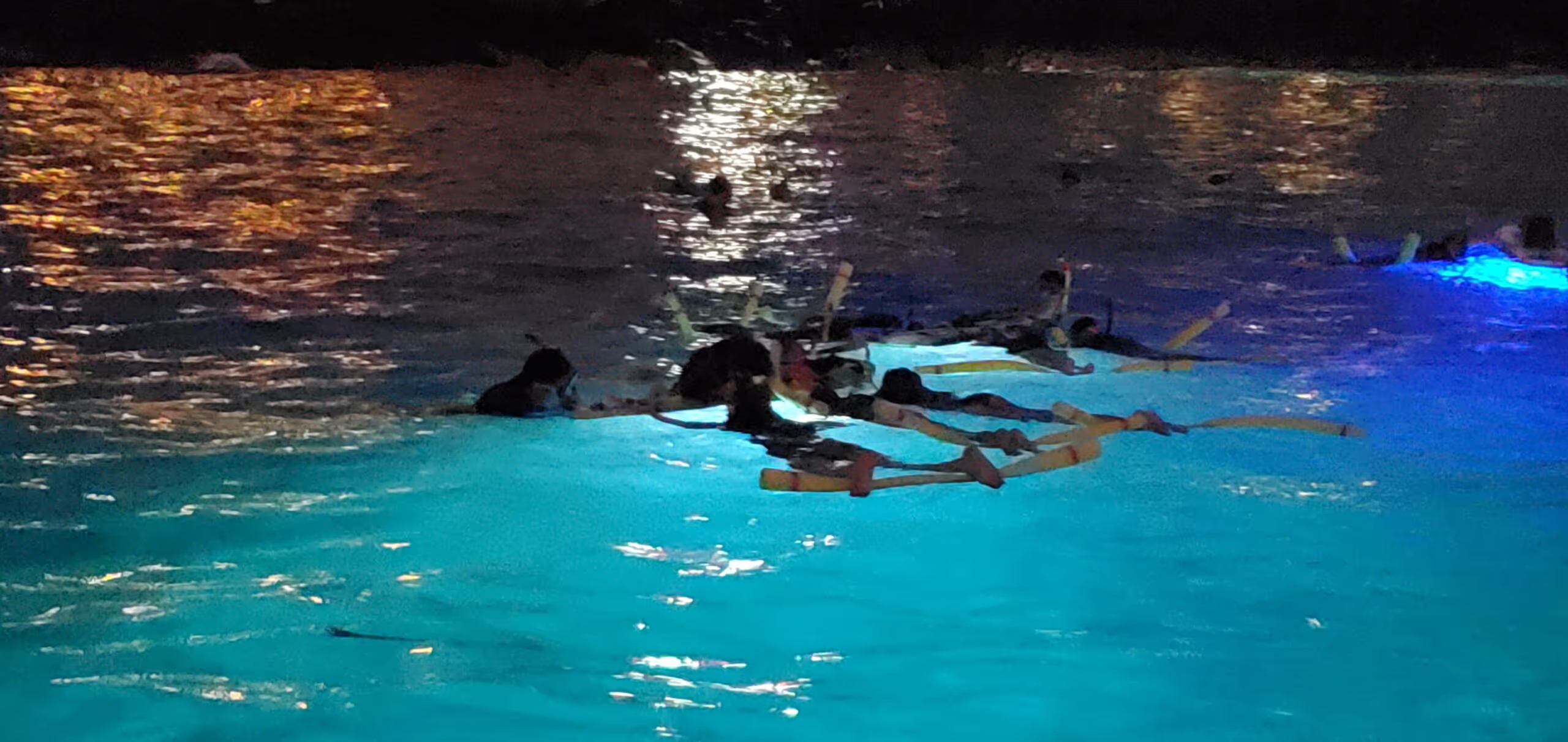
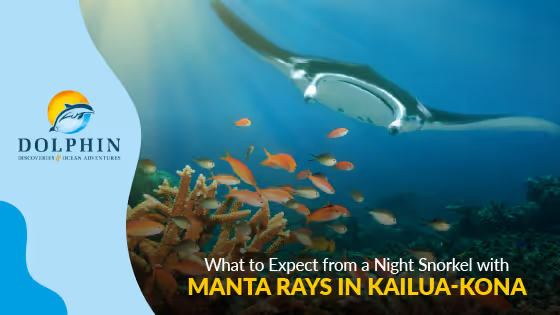
Snorkeling with giant reef manta rays (Mobula alfredi) at night is often called one of the most unforgettable wildlife encounters on the planet. Unlike stingrays or eagle rays, reef mantas do not have sharp barbs, tail stingers, or teeth. They are filter feeders that consume microscopic organisms called zooplankton.
What makes manta ray night snorkeling kona so distinct is how close you can get to these animals without disrupting their natural habits. When you enter the water at night, you hold onto a customized floating light raft. The bright LED lights shine downward into the ocean column. Plankton are naturally attracted to light, and as millions of tiny plankton assemble beneath the raft, local manta rays arrive to feast.
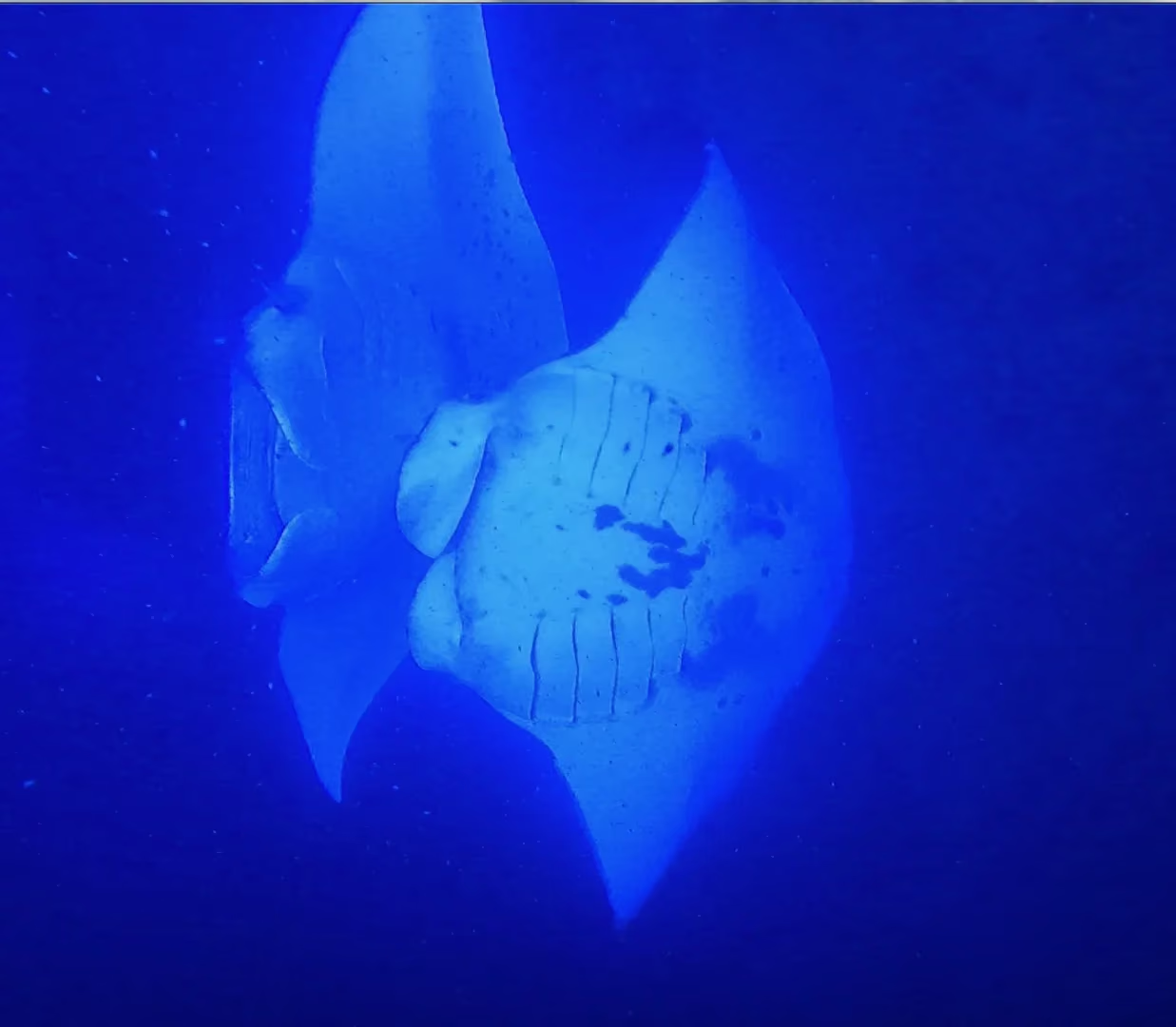
As mantas feed, they perform an acrobatic maneuver known as a barrel roll. A ray will start deep below, open its wide mouth, unfurl its flexible cephalic fins (the flap-like lobes on either side of its head to scoop water), and swim straight up toward the light. Just inches before reaching the float and the surface, the ray rolls backward into a full 360-degree loop, exposing its clean white underside before gliding back down to repeat the sequence.
When multiple mantas join the gathering, it creates an underwater ballet illuminated against the black backdrop of the night sea. For more background on what makes this experience so captivating, check out our insights on a Night Time Snorkel with Manta Rays Kona.
Best Time of Year for Manta Ray Night Snorkeling Kona
One of the great features of the Big Island's West Coast is that manta ray night snorkeling operates year-round. Kona is protected from trade winds by Big Island's massive volcanic peaks, Mauna Kea and Mauna Loa. This geography creates exceptionally calm sea conditions along the Kona coastline during most nights of the year.
While mantas are present in Kona all twelve months, seasonal shifts can subtly change ocean conditions:
- Summer (May through September): Ocean temperatures hover around 78 to 82 degrees Fahrenheit. Surface waters are typically very calm, and water clarity is exceptional. Plankton blooms are frequent, leading to consistent manta activity.
- Winter (October through April): Water temperatures cool slightly to 75 to 78 degrees Fahrenheit. North or west swells generated by Pacific storms can occasionally create larger waves near shore, though southern viewing sites remain well-sheltered. Humpback whales also arrive during this season, adding excitement to day trips, while nighttime manta feeding continues unabated.
Because mantas do not follow a long-distance migration pattern like humpback whales, Kona's resident population stays near the island's lee side permanently. You can read more about their biology and resident patterns on our guide to Learn About Manta Rays.
How Lights Safely Attract Manta Rays at Night
A common concern among ocean travelers is whether using artificial lights at night harms or disturbs the mantas. Marine biologists and local naturalists have studied Kona's manta population for decades, concluding that light rafts provide a safe, non-invasive, and beneficial feeding opportunity.
Here is how the interaction works step-by-step:
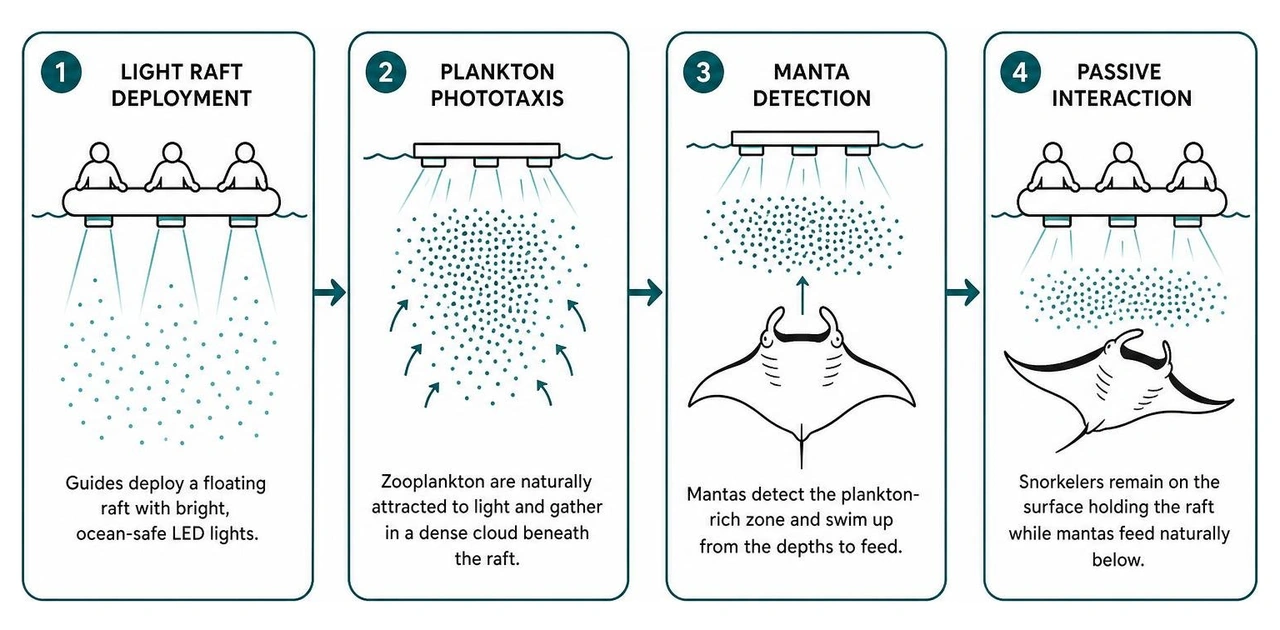
- Light Raft Deployment: Guides place custom-built floating rafts equipped with high-lumens, ocean-safe LED lights onto the water surface.
- Plankton Phototaxis: Zooplankton exhibit positive phototaxis, meaning they automatically swim toward light sources. Within minutes, a dense cloud of plankton gathers under the raft.
- Manta Detection: Local mantas possess keen senses and learn that light beams indicate a dense meal. Rather than spending energy hunting scattered plankton in open water, they travel directly to the illuminated zones.
- Passive Interaction: Snorkelers remain stationary on top of the water holding the float handles, keeping the water surface clear while mantas perform natural feeding sweeps below.
This method does not rely on bait, chum, or hand-feeding. It simply concentrates naturally occurring plankton in a single spot. The rays remain completely wild and free to come and go as they please.
Top Viewing Locations and How Night Tours Work
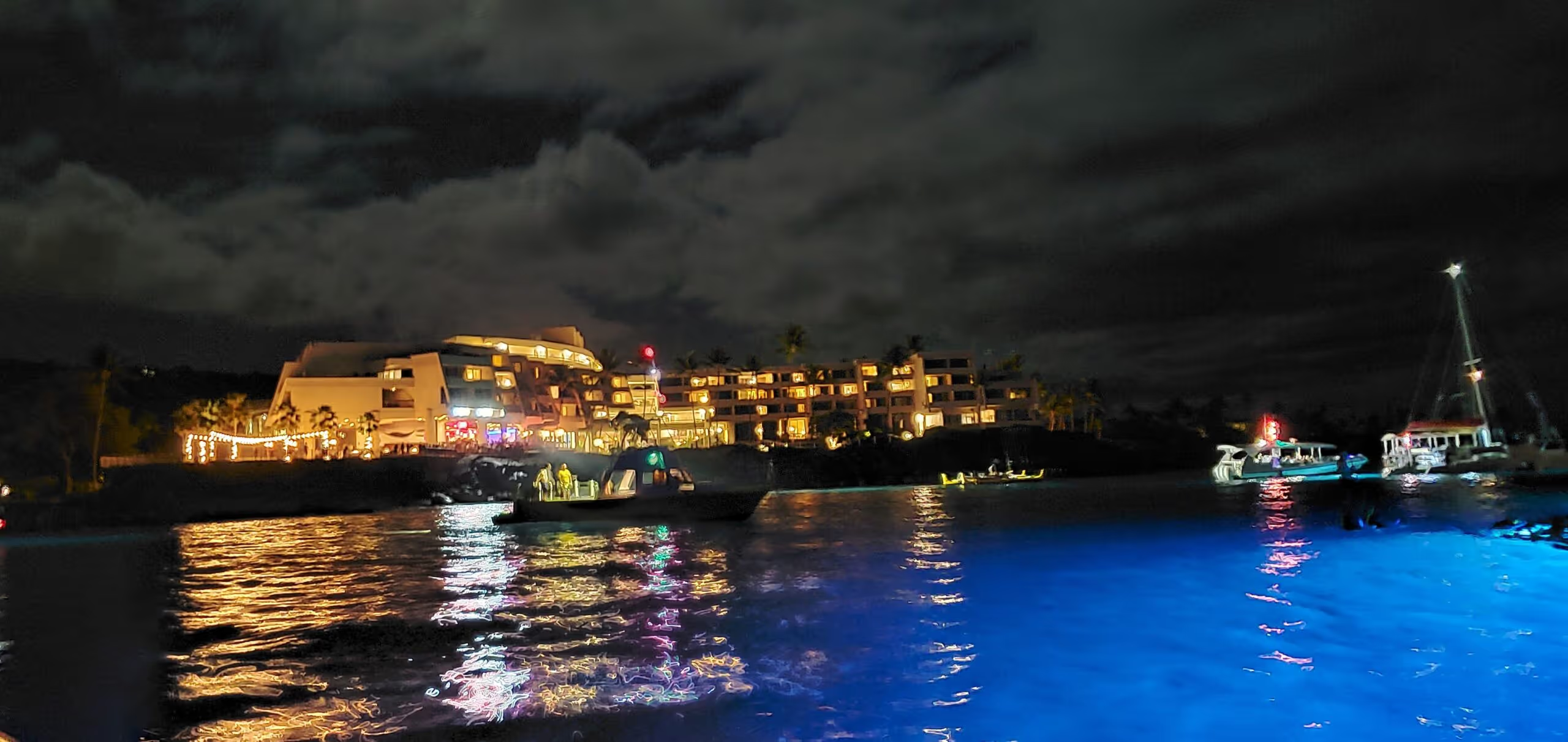
Kona features three main locations along the coast where manta night snorkeling takes place. Each site offers distinct advantages based on boat travel times and coastal geography.
- Manta Village (Keauhou Bay): Located directly outside Keauhou Bay on the southern end of Kailua-Kona. This site is famous for its history, as lights from shore first attracted mantas here decades ago. It features a high density of resident mantas and offers extremely short boat rides.
- Manta Heaven (Garden Eel Cove / Makako Bay): Situated further north near the Kona International Airport. This site sits near deeper drop-offs and attracts many individual mantas, making it a popular spot for both night divers and surface snorkelers.
- Manta Point (Kahuwai Bay): Positioned further north along the Kohala coast, this location serves guests staying in northern resort areas.
To explore all the hotspots along the coastline, read our guide on Manta Ray Snorkeling Kona.
Choosing the Right Kona Snorkel Location
When selecting a tour, depart location and transit time make a huge difference in your overall comfort, especially at night when ocean winds drop temperatures.
At Dolphin Discoveries, we operate directly out of Keauhou Bay. Departing from Keauhou Bay provides a major advantage: Manta Village is literally right around the corner. The boat ride from the harbor dock to the active manta site takes under 5 minutes.
Short transit times mean you spend less time travelling through dark open waters and maximum time in the ocean observing the marine life. It also keeps young family members and sensitive travelers comfortable, as there is almost no time for motion sickness to set in before you arrive.
Our Manta Ray Night Snorkel tour starts at $99.99 per person for a 2-hour experience. For guests interested in daytime trips, our 3-hour Captain Cook Snorkel Tour starts at $79.99 per person, while our 4-hour Kona Snorkel Tour featuring two distinct reef spots starts at $109.99 per person.
What to Expect: Gear, Skills, and Step-by-Step Itinerary
If you have never snorkeled at night before, you might wonder how dark water feels or how the trip unfolds. Knowing what to expect makes the adventure smooth and relaxing.
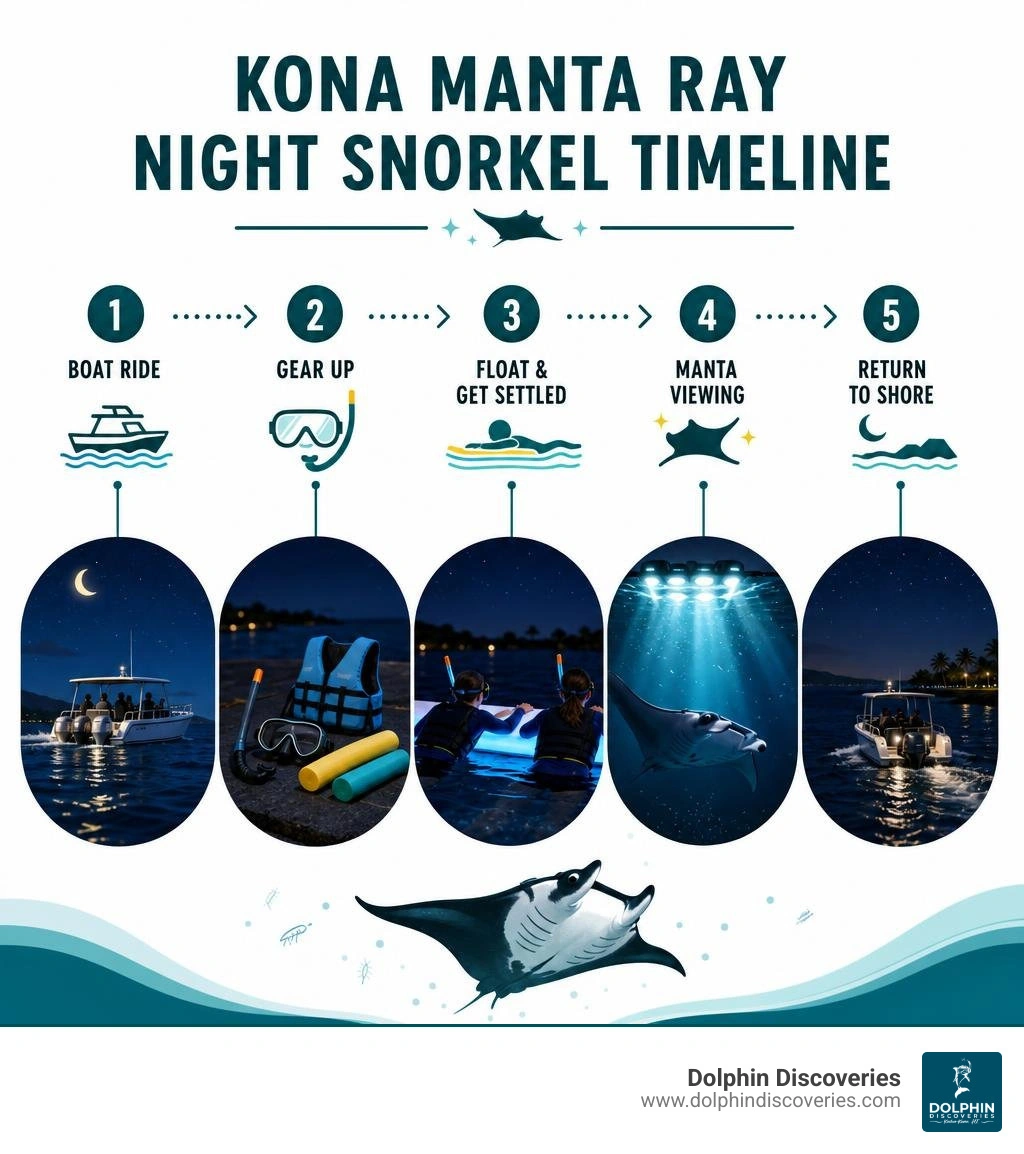
Here is how a typical evening with our naturalist team works:
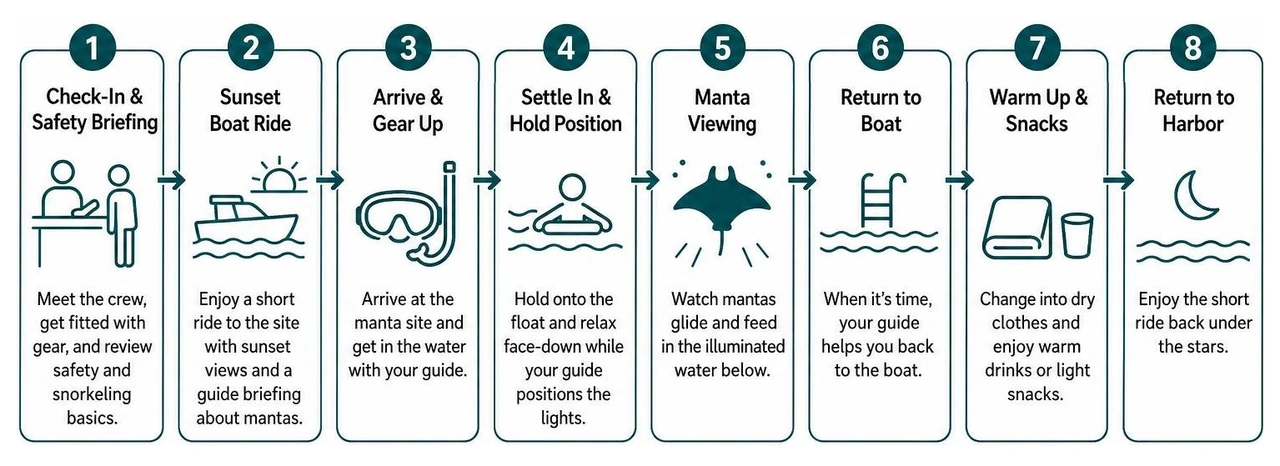
1. Check-In and Safety Briefing
You meet our team at Keauhou Bay before sunset. As a small-group tour operator, we keep guest numbers low on our rigid-inflatable boats. Our captain and marine naturalist fit you with neoprene wetsuit jackets, professional mask-and-snorkel sets, and optional swim fins or flotation aids. We review boat safety, environmental protection rules, and snorkeling techniques.
2. A Short Sunset Boat Ride
We board our fast vessel and depart Keauhou Harbor. During the brief ride to Manta Village, you can watch the sunset over the horizon while your guide explains manta ray biology, individual spot patterns, and feeding behavior.
3. Entering the Water
Once anchored, our crew launches the floating light board, often referred to as a floating campfire. The raft is equipped with sturdy handles around its perimeter and bright downward-facing lights. Guests lower themselves into the water and lay horizontally on the surface, holding the handles of the board. Neoprene wetsuits provide natural buoyancy, and pool noodles are placed under your ankles to keep your legs horizontal.
4. The Manta Encounter
For approximately 45 minutes, you float calmly while looking down into the lit water. Mantas swim up from the reef below, gliding within inches of the board to collect plankton. Your guide stays in the water right alongside you, pointing out individual rays by name based on their unique belly markings.
5. Warm Return to Harbor
After getting out of the water, our crew offers warm towels, drinks, and snacks while we make the short 5-minute trip back to Keauhou Bay. To prepare further, read detailed instructions on What to Expect on a Big Island Manta Ray Snorkel Trip.
Tips to Maximize Your Experience During Manta Ray Night Snorkeling Kona
To ensure you get the absolute best view of the mantas while staying safe and relaxed, follow these essential tips:
- Keep Your Body Horizontal: Mantas pass directly beneath your belly and mask. If you dangle your legs straight down like you are riding a bicycle, a manta's wing could brush against your feet, causing the ray to veer away. Keep your legs floating flat behind you.
- Hold Firmly to the Float Board: You do not need to kick or swim around. Staying anchored to the floating raft keeps everyone grouped together safely and provides a stable platform for the mantas to target plankton beneath you.
- Avoid Splashing: Loud splashing and rapid movements create air bubbles in the water column, which disrupts light beams and startles feeding rays. Move slowly and deliberately.
- Wear the Wetsuit Jacket: Ocean water at 78 degrees feels pleasant during the day, but floating still for 45 minutes at night can cause your core temperature to drop. Wetsuit jackets preserve body heat and add extra flotation.
- Trust Your Mask: Equalize your mask pressure by breathing out through your nose if it feels tight, and keep a clean seal around your face free of stray hair.
Environmental Rules and Ethical Manta Ray Encounters
Because manta rays are slow to mature and have low reproduction rates, protecting Kona's resident population is vital. Local ocean operators follow strict codes of conduct established alongside marine scientists to keep human interactions entirely passive and safe.
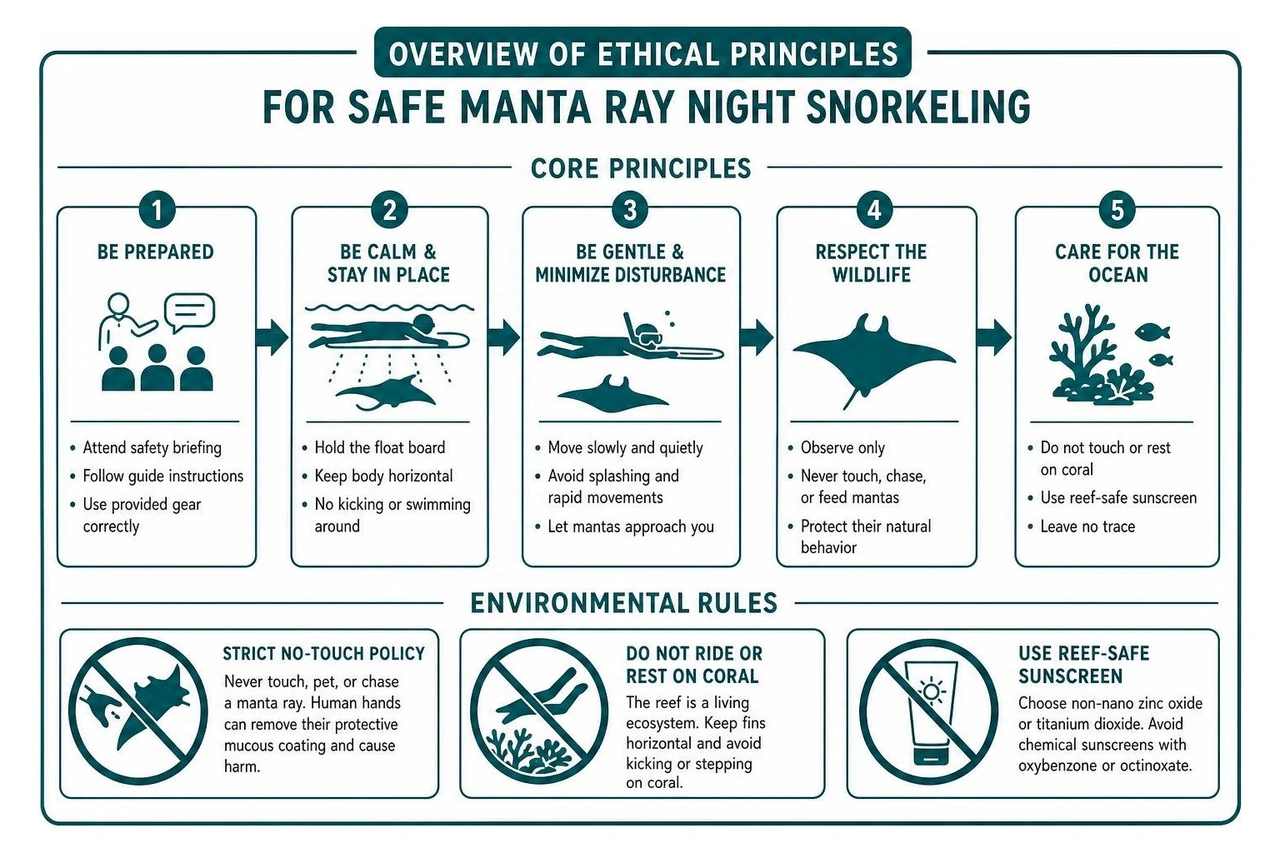
When snorkeling with mantas, remember these strict environmental rules:
- Strict No-Touch Policy: Never touch, pet, or chase a manta ray. Mantas possess a protective mucous coating on their skin that wards off bacterial infections. Human hands can strip away this slime layer, leaving the animal vulnerable to disease and lesions.
- Do Not Ride or Rest on Coral: The reef beneath Manta Village is a living ecosystem that provides shelter for fish and invertebrates. Keep your fins horizontal to avoid kicking or stepping on coral heads.
- Use Reef-Safe Sunscreen: If you arrive early while the sun is still up, make sure your sunscreen contains non-nano zinc oxide or titanium dioxide. Avoid chemical sunscreens containing oxybenzone or octinoxate, which harm marine life.
- Let the Mantas Drive the Encounter: Mantas are curious giants. If you stay still and calm, they will naturally pass extremely close to you. Forcing a physical approach will only cause them to leave the area.
You can review our full guide on Guidelines for a Safe and Enjoyable Hawaii Manta Ray Dive to help protect our oceans for future generations.
Frequently Asked Questions About Kona Manta Night Snorkeling
Is manta ray night snorkeling safe for beginners or non-swimmers?
Yes, beginner snorkelers can enjoy this activity, provided they are comfortable in open ocean water. You do not need advanced swimming skills because you are not actively swimming around in the dark. You simply hold onto a buoyant floating light board that supports your weight, wearing a wetsuit jacket and utilizing foot noodles for buoyancy.
Our professional guides swim beside the board at all times to assist anyone who needs extra reassurance or support. However, basic comfort in deep water is required so you can relax and enjoy the sight.
What happens if we do not see any manta rays during the tour?
Manta rays are wild, free-roaming marine animals that move freely across the ocean. While Kona's viewing sites enjoy a high sighting success rate year-round, there are rare nights when plankton counts are low or rays feed elsewhere.
Responsible tour operators keep track of sighting conditions. While wild nature can never be 100% guaranteed, our team works hard to give you the best possible chance of a close encounter on every single trip.
What gear and clothing should I bring on a night snorkel excursion?
You only need to bring a few basic personal items:
- A swimsuit (wear it under your clothes before arriving at the dock).
- A warm jacket or fleece sweater to put on after getting out of the water.
- A dry beach towel.
- A waterproof camera or GoPro equipped with a wrist strap (leave flash turned off, as the light board provides bright illumination).
- Motion sickness medication taken prior to check-in if you are sensitive to ocean swells.
We supply all snorkeling gear, wetsuit jackets, flotation devices, and safety equipment onboard.
Conclusion
A night spent in the warm ocean off Keauhou Bay watching manta rays perform underwater barrel rolls is one of the most rewarding adventures in Hawaii. By choosing a small-group, eco-conscious excursion, you get an intimate seat for this natural spectacle while protecting the fragile marine ecosystem.
At Dolphin Discoveries, as a local woman- and veteran-owned business, we focus on respectful, small-group marine tours guided by certified naturalists. Whether you want to witness mantas at night or join us during the day for our Captain Cook Snorkel Tour, our team is ready to share the beauty of the Kona coast with you.
Ready to see these gentle giants for yourself? Explore our Manta Ray Night Snorkel Kona tour page to check real-time availability and reserve your spot on the water.