

One of Hawaii's Most Unforgettable Wildlife Encounters Happens After Dark
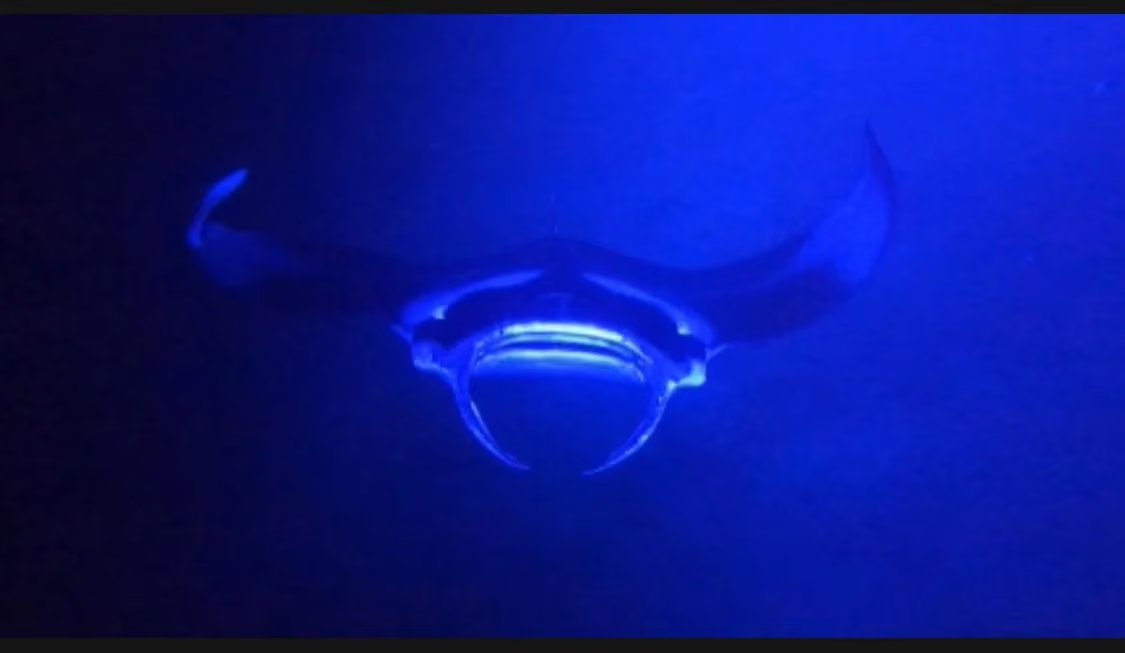
You are floating face-down on the ocean after sunset, holding onto a glowing light board, when an 18-foot manta ray glides up from below and barrel rolls inches beneath you.
That is a normal night in Kona.
A night time snorkel with manta rays in Kona is one of the most reliable and memorable wildlife experiences in Hawaii. Here's what you need to know at a glance:
- Where: Keauhou Bay on the Kona Coast, Big Island of Hawaii
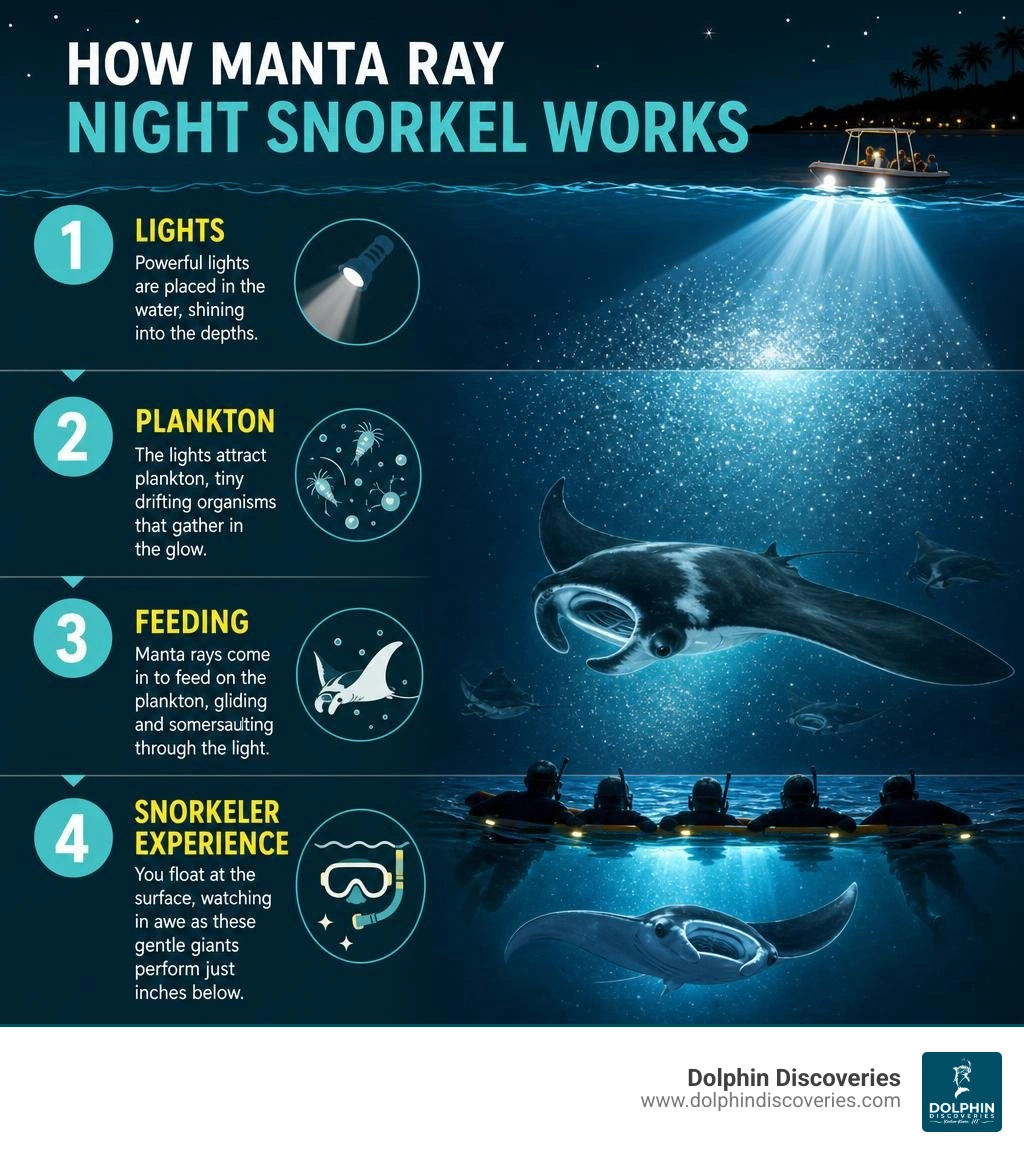
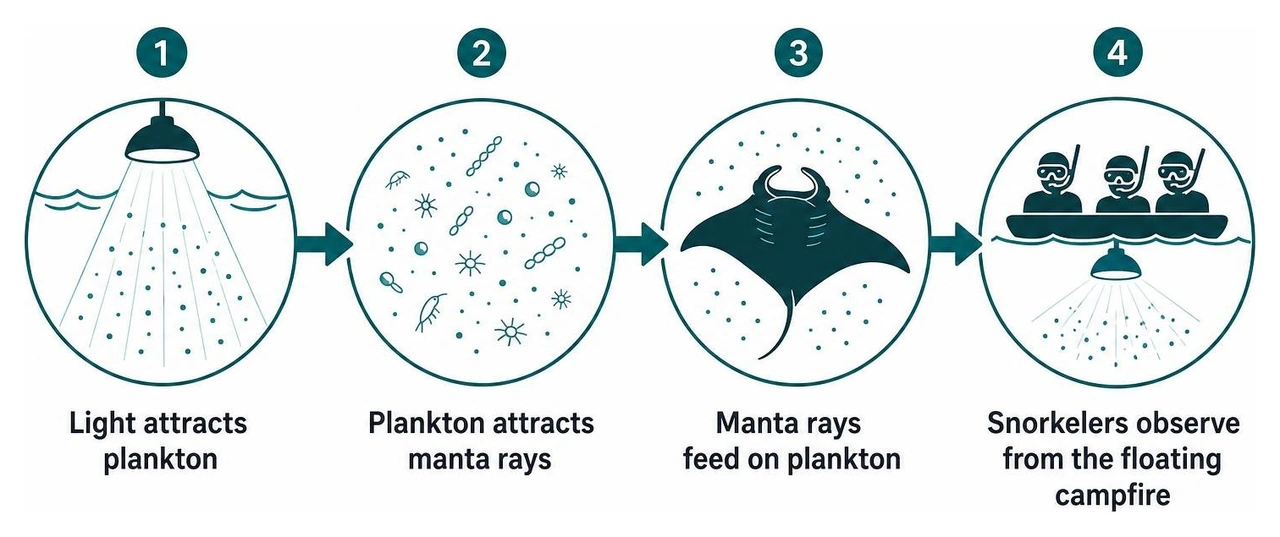
- What happens: Underwater lights attract plankton, which draws manta rays in to feed right beneath snorkelers
- Sighting rate: Over 90% of tours report manta ray sightings
- Tour length: 2 to 3 hours total, with 45 to 60 minutes in the water
- Who can join: All skill levels, including non-swimmers with flotation support
- Starting price: From $99.99 per person with Dolphin Discoveries
The Kona Coast is home to over 200 individually identified manta rays. Many return to the same feeding grounds night after night. That kind of consistency is rare in wildlife tourism, and it is a big reason this tour is such a favorite with visitors.
Whether this is your first snorkel or your tenth, the manta ray night snorkel feels different. You stay at the surface, hold onto the light board, and watch the feeding behavior unfold below you.
I'm Shelley Carey, marine naturalist and guide with Dolphin Discoveries. In this guide, I'll walk you through what to expect, how the tour works, and how to enjoy this experience safely and respectfully.
Night time snorkel with manta rays kona word list:
Why Kona Offers the Best Night Time Snorkel with Manta Rays Kona Experience
Kona has a special place in global marine tourism. Manta rays live in warm ocean waters around the world, but very few places offer such an accessible, consistent, and close-up feeding encounter.
The Kona Coast has the right mix of volcanic shoreline, calm evening water, and a long history of coastal lighting. In the 1970s, hotels near the water began using floodlights at night. Those lights attracted plankton. The plankton attracted manta rays. Over time, the mantas learned that lights often meant food.
Today, taking part in a night time snorkel with manta rays in Kona gives you a front-row view of that natural feeding behavior right off our shoreline.
The Science Behind the Nightly Plankton Feast
Manta rays are gentle filter-feeding giants. Unlike stingrays, mantas do not have sharp tail stingers, barbs, or teeth for hunting prey. They feed on tiny organisms called plankton.
During the day, microscopic phytoplankton and zooplankton move through the water column. After dark, bright lights in the water draw many of these organisms into one area.
Mantas have learned that strong light beams often mean an easy meal. As plankton gathers around the light board, the mantas arrive and unfurl their cephalic fins, which are the flap-like fins near their mouths. These fins help guide water and plankton into their mouths and across their gill rakers.
To explore more about their biology, growth, and feeding adaptations, check out our guide to Learn About Manta Rays.
How Other Destinations Compare to a Night Time Snorkel with Manta Rays Kona
In many ocean destinations, seeing a manta ray takes luck, scuba training, or a long search across open reef systems. Kona gives you much better odds.
Here is what makes a night time snorkel with manta rays in Kona stand out:
- Exceptional Sighting Consistency: Over 90% of guided tours in Kona successfully encounter manta rays.
- Known Resident Population: Marine scientists have cataloged over 200 individual reef manta rays (Mobula alfredi) along the Kona Coast, identifying them by unique spot patterns on their bellies.
- Calm, Protected Waters: The volcanic mountains of Mauna Kea and Hualalai help block easterly trade winds, creating a calmer lee shore along the West Hawaii coastline.
- Short Boat Rides: Sites like Keauhou Bay are located just a quick 5-minute boat ride from the harbor, meaning less travel time and more time in the water.
If you are comparing Big Island activities for your trip, you can also read Swimming with Giants: The Best Manta Ray Night Snorkeling in Kona.
What to Expect During Your Manta Ray Encounter
When you join us for an evening on the water, we keep the experience simple, comfortable, and personal. We run small-group tours on fast, comfortable rigid-inflatable boats, so our crew can give each guest the attention they need.
Our night tours depart right from Keauhou Bay, putting us just minutes away from the premier manta feeding ground known as "Manta Village."
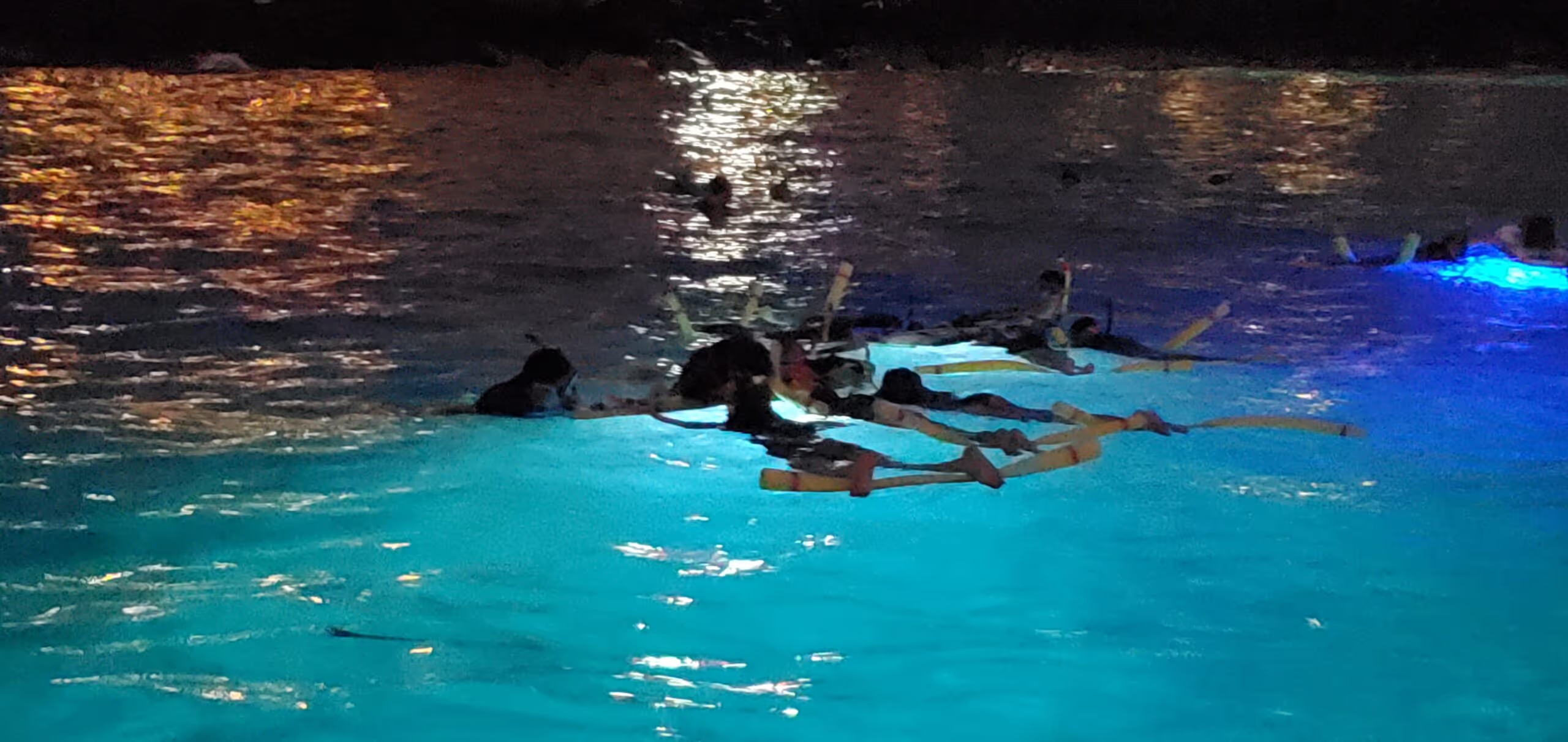
Preparing for the Water: Equipment and Safety Protocols
When you arrive at the boat, our crew fits you with gear designed for night snorkeling comfort, warmth, and flotation:
- Neoprene Wetsuits: We provide comfortable neoprene wetsuit tops or shorty suits that help keep you warm and add natural buoyancy.
- Mask and Snorkel: Professionally fitted, sanitized masks help give you a clear view without leaking.
- Floating Light Board: Often called our "floating campfire," this custom flotation craft features powerful downward-pointing blue and white LED lights. It gives you something stable to hold, so you can relax at the surface.
- Flotation Pool Noodles: Positioned under your feet or hips, these foam noodles help keep your body flat on top of the water.
Before entering the bay, your naturalist guide reviews safe snorkeling techniques, safety commands, and rules for interacting respectfully with wildlife. For helpful pre-trip advice on gear fitting and preparation, visit our page on Know Before You Go.
In the Water: Observing the Barrel Roll Behavior
Once in the water, you hold onto the perimeter handles of the illuminated raft, lie flat on the ocean surface, and look down through the clear water.
As plankton gathers in the light beams, manta rays often emerge from the darker water below. When feeding at night, they perform a behavior called a somatic loop, better known as the "barrel roll."
A manta will swim upward toward your light board with its mouth open, filter a gulp of plankton-rich water, and loop backward just beneath you before sweeping down again.
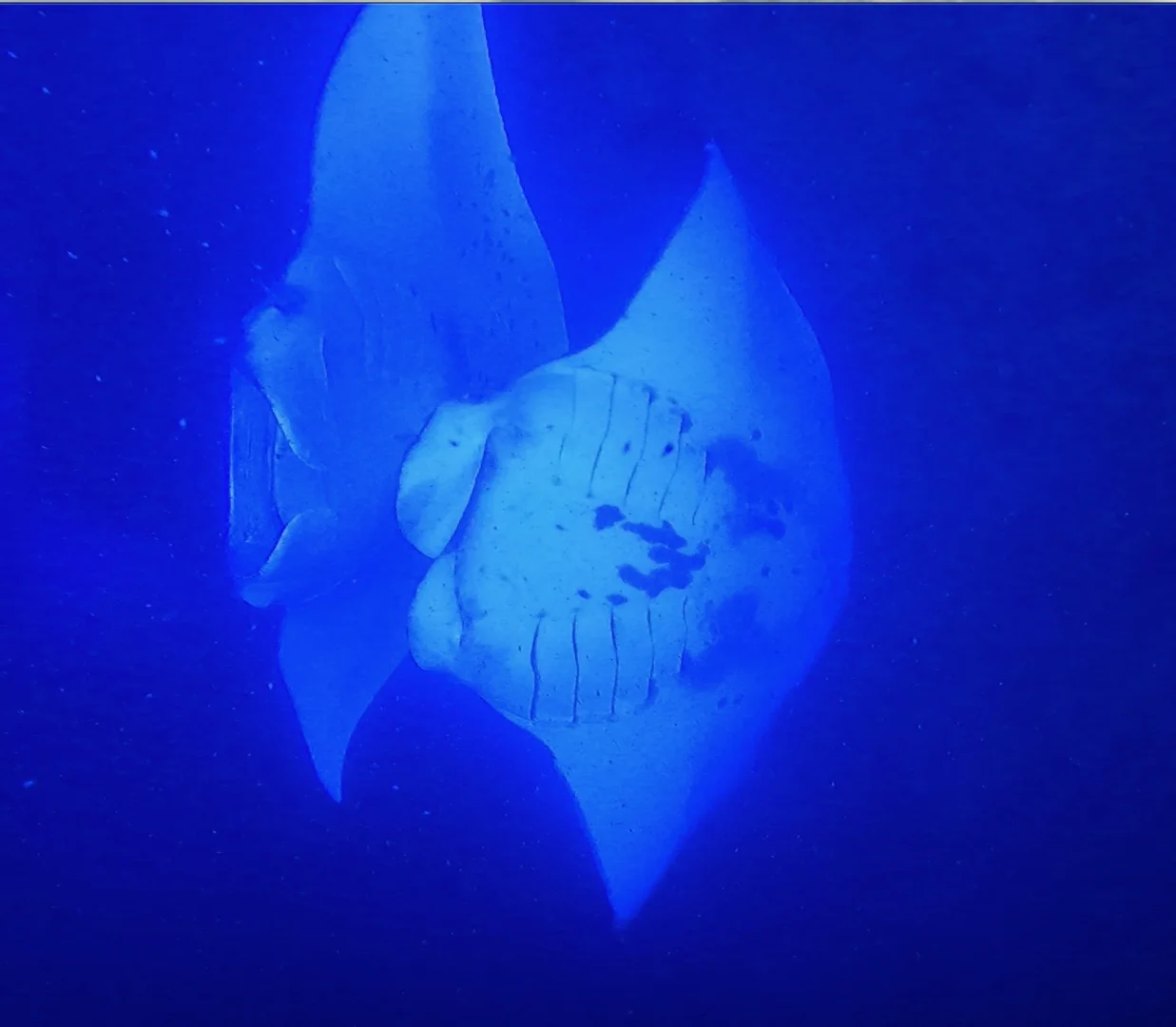
Watching a large manta with a wingspan that can reach up to 18 feet turn so smoothly under the light board is surreal. To read more naturalist observations on this feeding behavior, check out Witness the Spectacle on a Manta Ray Night Snorkel in Konas Illuminated Waters.
Planning Your Trip: Requirements, Timing, and Ethics
A successful night time snorkel with manta rays in Kona comes down to simple planning. Because manta rays feed in Kona year-round, there is no bad season to book your adventure. However, knowing what ocean conditions to expect helps you prepare comfortably.
Year-Round Ocean Conditions and Water Temperature
Water temperatures along the Kona coast remain comfortable throughout the calendar year, hovering between 78 degrees Fahrenheit in winter months and 80 degrees Fahrenheit in late summer.
| Season | Water Temp (°F) | Average Visibility | Ocean Conditions |
|---|---|---|---|
| Summer (May–Oct) | 79°F – 81°F | 60 – 80+ feet | Very calm, smooth seas, light breezes |
| Winter (Nov–Apr) | 76°F – 78°F | 50 – 70 feet | Occasional northwest winter swells, crisp night air |
Because air temperatures drop slightly after sunset, stepping out of 78-degree water into a night breeze can feel cool. That is why we provide thermal wetsuit jackets and warm towels to keep you cozy when returning to dock.
Ethical Practices During Your Night Time Snorkel with Manta Rays Kona
Manta rays possess a protective mucous coating on their skin that shields them from bacteria and marine infections. Human skin contact strips away this vital layer, leaving the rays vulnerable to injury and disease.
To safeguard our resident ray population, we enforce strict ethical rules:
- Strict No-Touch Rule: Never reach out, touch, pet, or chase a manta ray.
- Horizontal Position: Keep your body horizontally flat on the surface using flotation noodles so your fins stay clear of rays passing beneath you.
- Reef-Safe Sunscreen: If applying sunscreen earlier in the afternoon, use non-nano zinc oxide formulas that preserve coral health and coastal water quality.
- Passive Observation: Let the rays direct the encounter. They are naturally curious and will approach closely on their own terms.
Our crew operates in accordance with Hawaii's best operator practices to maintain a sustainable environment for wildlife. For a complete summary of guest safety guidelines and eco-friendly tips, consult our Manta Ray Night Swim Tips 2026.
Frequently Asked Questions About Kona Manta Snorkeling
Do I need strong swimming skills for a night snorkel tour?
You do not need to be an advanced swimmer to enjoy a night time manta snorkel. Because you remain afloat at the surface while gripping our high-buoyancy light board, active kicking or swimming is not required once you reach the raft.
We provide wetsuits, life vests, and foam pool noodles to make floating effortless. Our naturalist guides remain right beside you in the water throughout the excursion to offer hands-on assistance and ensure everyone feels secure.
What is the ocean temperature during the night snorkel?
Ocean temperatures in Keauhou Bay remain warm year-round, averaging 78 to 80 degrees Fahrenheit. We furnish thermal neoprene wetsuit tops for all guests, which keep you warm, buoyant, and comfortable for the entire duration of the swim.
How long are you in the water with the manta rays?
Our total tour length is approximately 2 hours, with around 45 to 60 minutes of dedicated in-water time at the feeding site. This provides ample time to watch multiple manta rays perform continuous feeding loops right in front of your mask.
Conclusion
Floating on the ocean at night while wild manta rays feed beneath you is one of Kona's most memorable ocean experiences. With the right crew, clear safety guidance, and respectful wildlife practices, it can feel calm, safe, and surprisingly easy.
If you are ready to see the mantas for yourself, take a look at our Manta Ray Night Snorkel Kona tour, starting at $99.99 per person.
Planning more time on the Big Island? You can also explore our full range of Kona ocean adventures on our tours page or contact our friendly team at Dolphin Discoveries. We would be happy to help you build a fun, ocean-filled itinerary.