

Why Big Island Snorkeling Stands Out
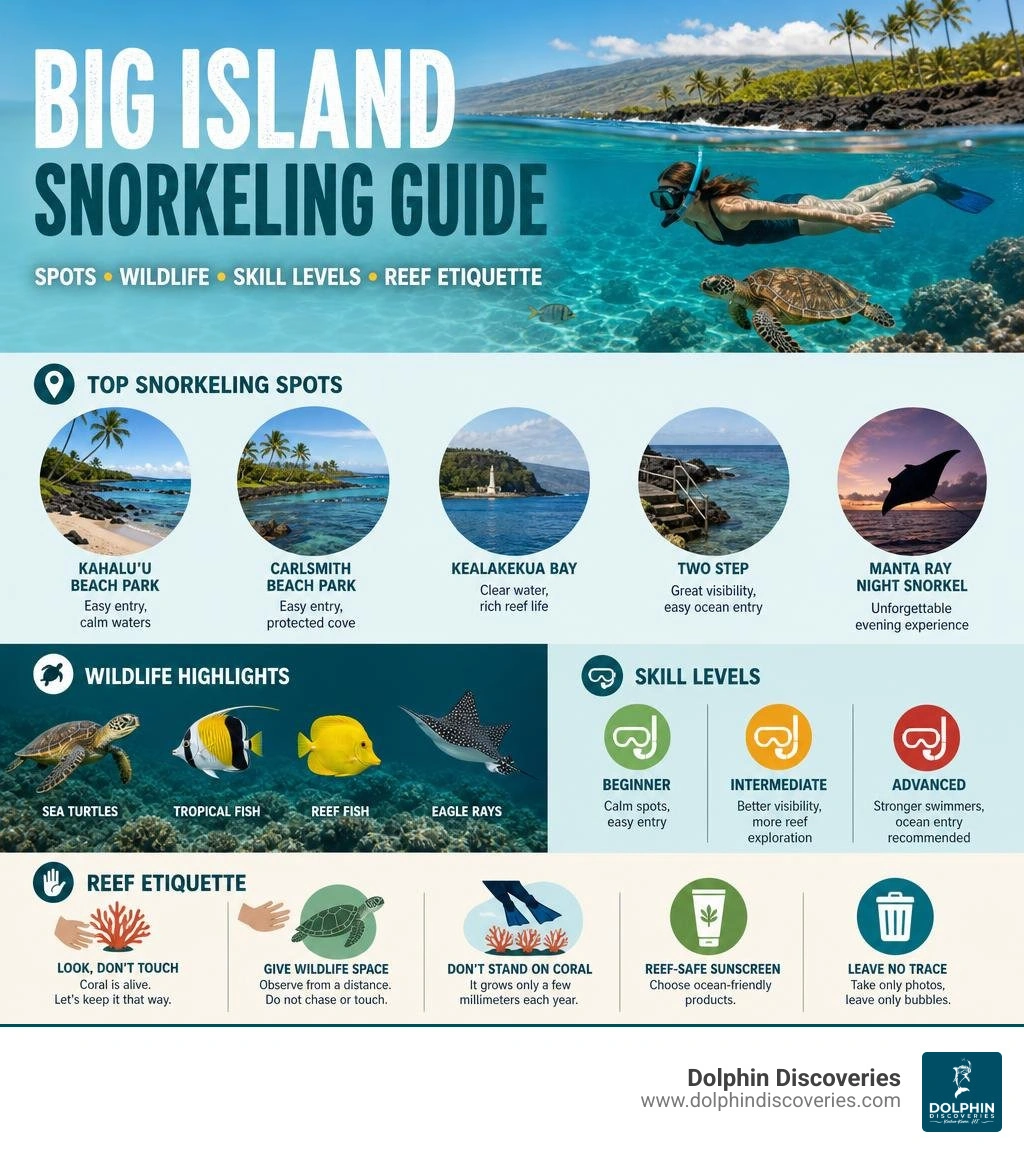
For the best Big Island snorkeling, start with protected, easy-entry spots such as Kahalu'u Beach Park or Carlsmith Beach Park if you are new to the water. Choose Kealakekua Bay and Two Step for clearer water and richer reef life when conditions are calm. For a standout evening experience, join a guided manta ray night snorkel in Kona.
The Big Island's young volcanic coastline creates lava shelves, sheltered bays, and reefs full of tropical fish. At Kahalu'u, observers have recorded more than 100 fish species. At Kealakekua Bay, visibility can reach 30 meters on an excellent day.
The key is simple: snorkel in the morning when the ocean is often calmer, check conditions before you enter, and never stand on coral or approach wildlife. Coral grows only a few millimeters each year, so every careful choice matters.
At Dolphin Discoveries, we are a small-group Kona marine tour company that believes great ocean time should also protect the reef and animals that make it special. I am Shelley Carey, and this guide will help you choose the right spot for your skills, schedule, and must-see wildlife list.
Simple guide to big island snorkeling:
The Top Spots for Big Island Snorkeling
Geologically speaking, Hawaii Island is the youngest in the archipelago—somewhere between 400,000 and 800,000 years old. Because active volcanoes have continuously shaped its shoreline, fresh basalt lava rock provides a sturdy, mineral-rich foundation where coral colonies thrive. Paired with a lower human population density than Oahu or Maui, our waters boast some of the healthiest and most vibrant reef systems in the state.
The Kona coast along the western shore sits sheltered in the lee of Mauna Loa and Hualalai. This geographical barrier blocks the prevailing trade winds, creating remarkably calm, mirror-like morning sea conditions that allow underwater visibility to stretch for vast distances.
| Snorkel Spot | Recommended Skill Level | Shore Entry Type | Top Marine Highlights | Key Amenities |
|---|---|---|---|---|
| Kealakekua Bay (Captain Cook) | Beginner (by boat) / Advanced (by hike) | Boat swim step or slippery boulders | Healthy corals, spinner dolphins, trevally | None at monument; boat tours provide full gear |
| Honaunau Bay (Two Step) | Intermediate to Confident | Flat volcanic lava shelf | Green sea turtles, yellow tangs, drop-offs | Port-a-potties, roadside parking, park restrooms nearby |
| Kahalu’u Beach Park | Beginner & Families | Sandy channel with smooth stones | Over 100 fish species, resting honu | Lifeguards, restrooms, showers, shade pavilion, gear rental |
| Carlsmith Beach Park | Beginner & All Ages | Grassy lawn to sandy lagoon | Foraging green sea turtles, brackish fish | Restrooms, outdoor showers, manicured picnic areas |
Kealakekua Bay and Captain Cook Monument
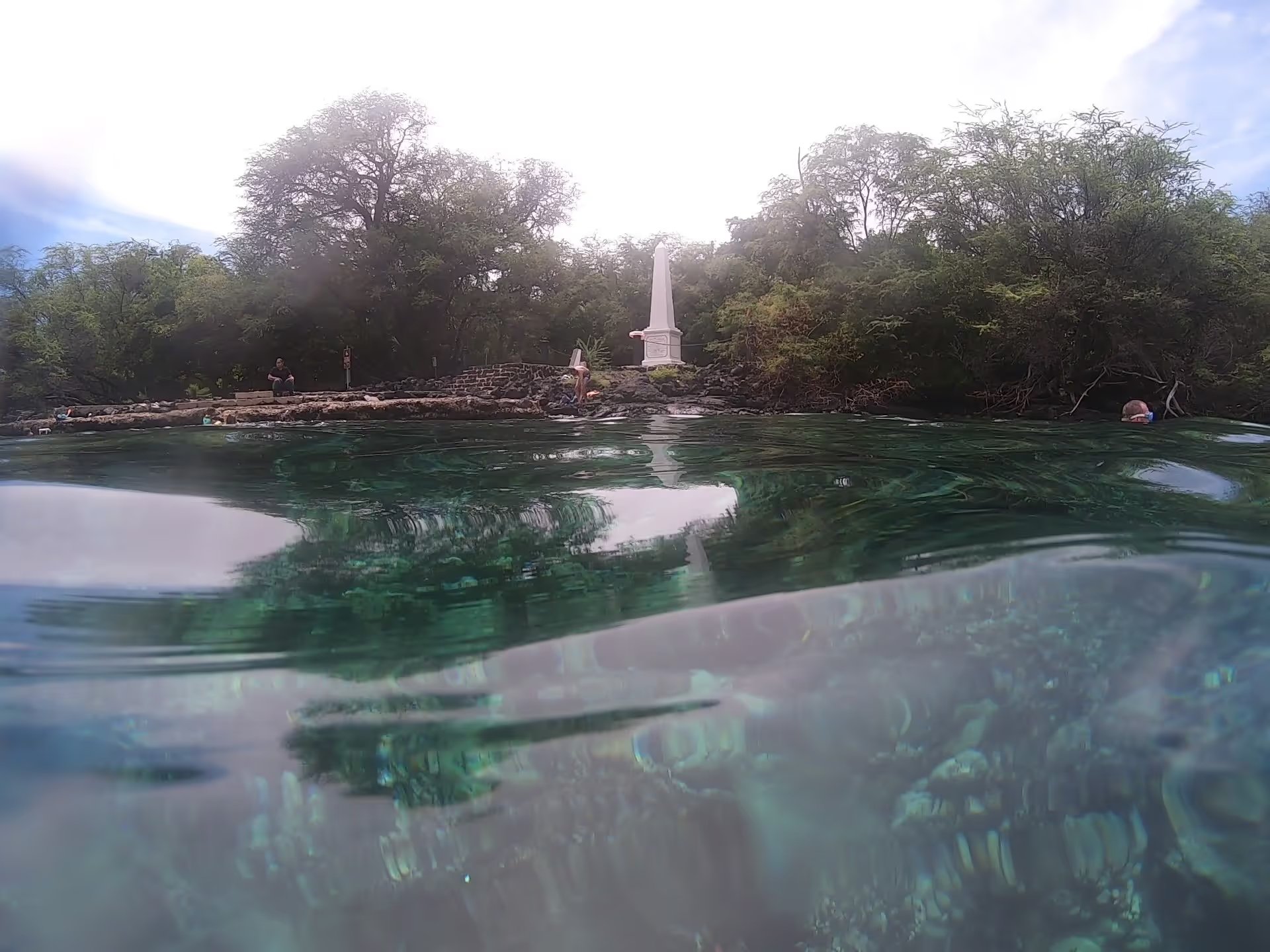
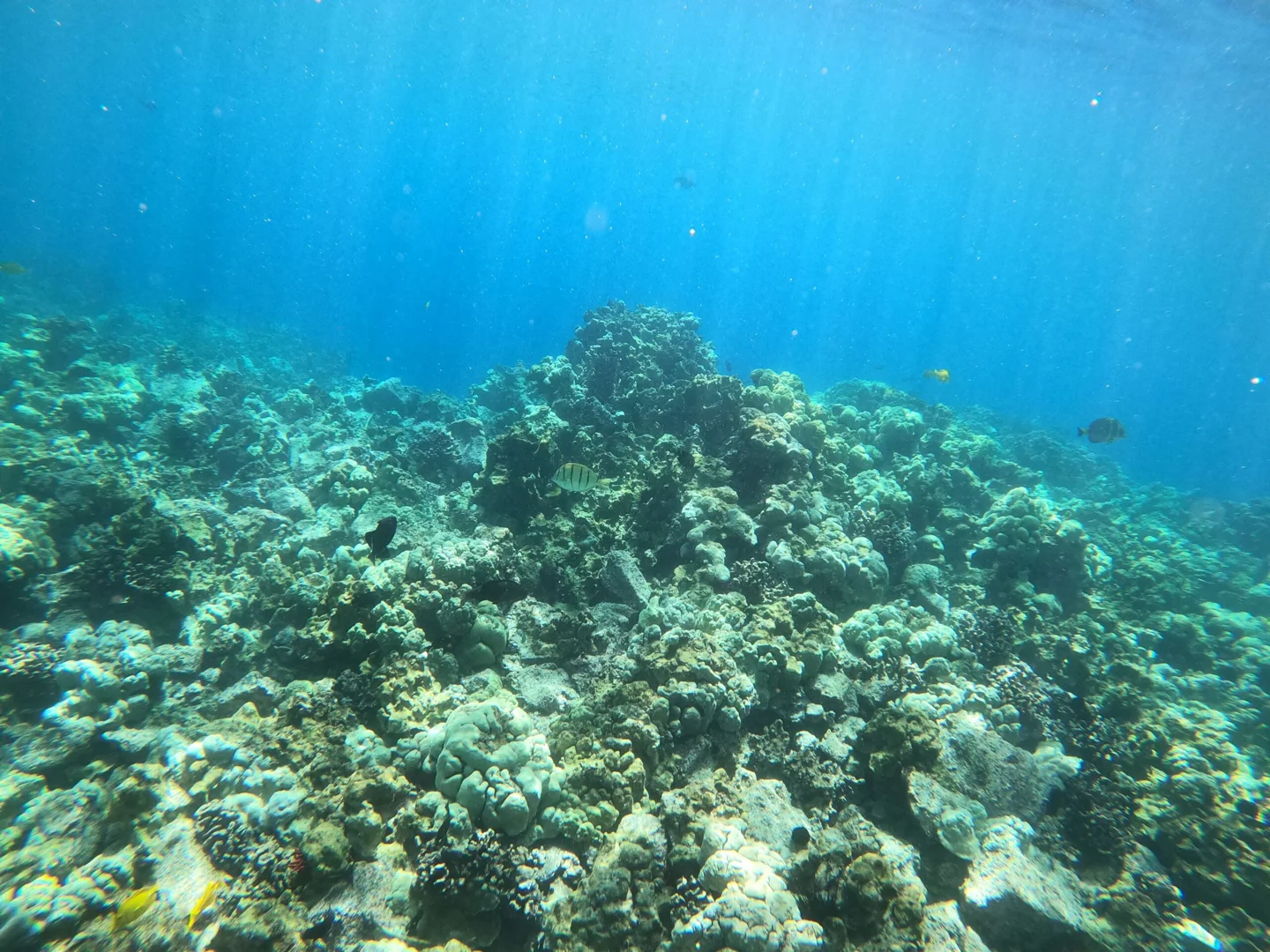
Kealakekua Bay is Hawaii's premier Marine Life Conservation District. Encompassing an expansive body of deep, protected blue water, it offers pristine underwater visibility that frequently reaches up to 30 meters in optimal morning weather. The historic white stone obelisk honoring Captain James Cook marks the northern tip of the bay, where the reef forms a vibrant coral garden teeming with life.
Reaching this remote cove by land requires tackling the rugged Captain Cook Monument Trail. This strenuous 4-mile roundtrip hike descends approximately 450 meters down an exposed, unshaded volcanic ridge—a challenging physical trek on the way back up under the Kona sun.
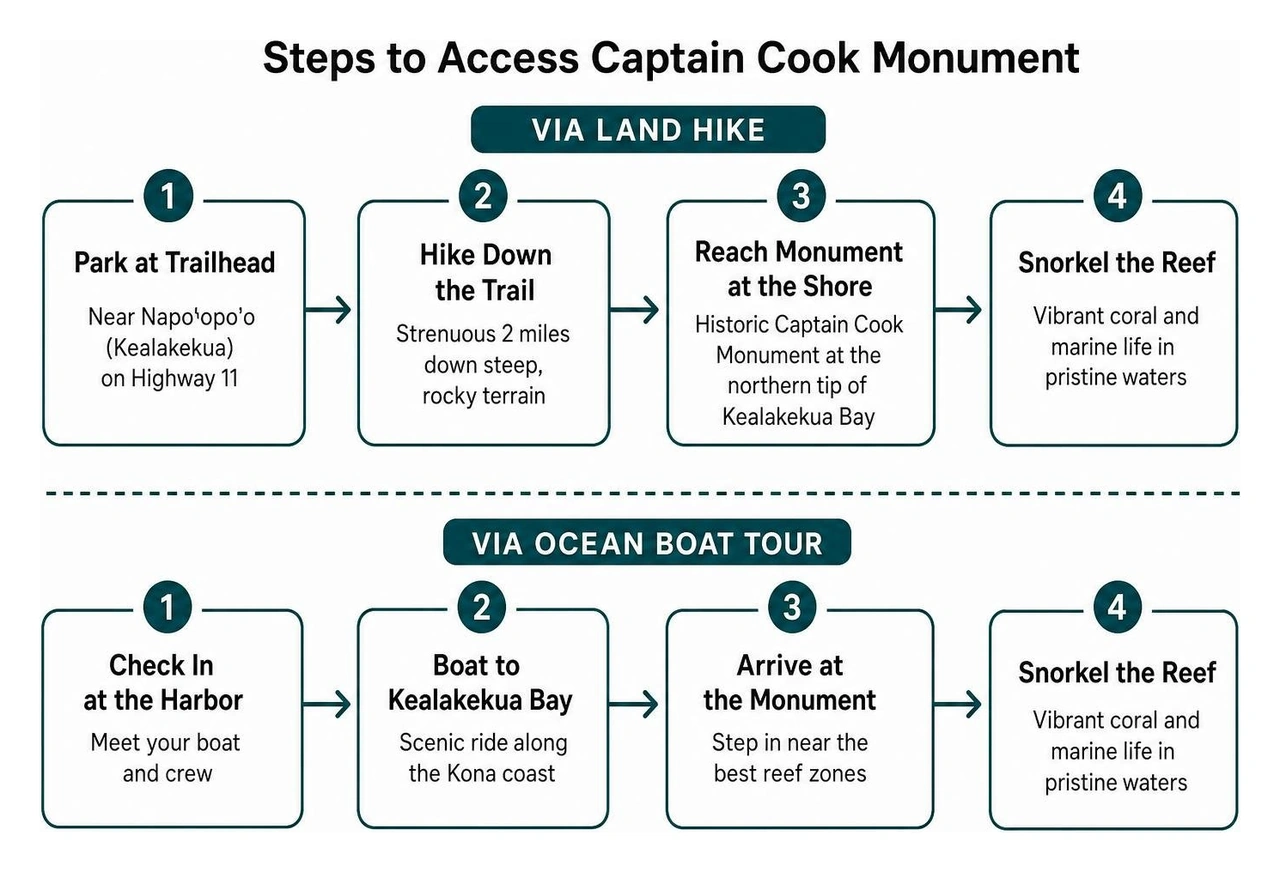
Taking a dedicated Captain Cook snorkel tour allows you to bypass the steep hike entirely, arriving directly at the best reef zones by boat. Pods of Hawaiian spinner dolphins frequently rest in the calm depths of the bay during the early morning hours, while schools of triggerfish, parrotfish, and moray eels flutter through the finger coral shallows along the shoreline.
Honaunau Bay and Two Step
Located roughly 23 miles south of Kona, Honaunau Bay—affectionately known as "Two Step"—is famous for its natural lava rock ledge that acts like a set of submerged steps into the ocean. There is no sandy beach here; snorkelers sit on the smooth basalt rock, slip on their fins, and step directly into water that immediately drops off into 15 to 30 feet of sapphire clarity.
Because entry and exit require timing your steps with gentle swells on hard volcanic rock, this spot is best suited for intermediate to confident swimmers. Inside the bay, hundreds of bright yellow tangs graze along the reef walls, while green sea turtles (honu) glide gracefully up from the depths to take a breath.
To plan your visit here along with nearby coastal highlights, check out our Kona snorkeling ultimate guide. Honaunau Bay sits directly adjacent to the sacred grounds of Puʻuhonua o Hōnaunau National Historical Park. Parking is available along the narrow coastal road or in small paid lots nearby ($5 to $10). Please remember that parking in the National Historical Park lot requires paying the park entry fee and is reserved for park visitors.
Safe Big Island Snorkeling for Families and Beginners
When planning snorkeling Big Island with kids, Kahalu’u Beach Park in Keauhou is one of the most accessible and beginner-friendly locations on the island. A historic rock breakwall spanning approximately 3,900 feet partially shelters the cove from heavy ocean swells, creating a shallow, natural saltwater pool.
Researchers and volunteer naturalists have documented over 100 species of fish along these protected shallows. First-time snorkelers can easily float above yellow tangs, butterflyfish, bullethead parrotfish, and humuhumunukunukuāpuaʻa (reef triggerfish) in waist- to chest-deep water.
Because Kahalu’u welcomes around 400,000 visitors each year, local non-profit educational kiosks operate on-site to teach reef etiquette. On-duty lifeguards, freshwater showers, restrooms, picnic pavilions, and gentle sandy entry channels make it a comfortable location for children and nervous swimmers to gain confidence in the ocean.
Carlsmith Beach Park and East Side Lagoons
Located roughly 3 miles east of downtown Hilo, Carlsmith Beach Park (also known as Four Mile) offers a different setting from Kona's open ocean reefs. Instead of crashing waves and direct drop-offs, Carlsmith consists of a series of calm, natural lagoons sheltered by surrounding lava rock barriers.
Subterranean freshwater springs bubble up into these sheltered pools, mixing with ocean tides to create cool, brackish water layered over clean, sandy bottoms. Because the waters remain tranquil year-round, green sea turtles frequently enter the lagoons to rest and graze on shoreline algae.
The manicured grassy lawns, natural shade trees, freshwater rinse showers, and easy-access stairs into the lagoons make Carlsmith a relaxing picnic and snorkeling stop when exploring the lush windward side of the Big Island.
Night Manta Ray Magic and Iconic Wildlife Encounters
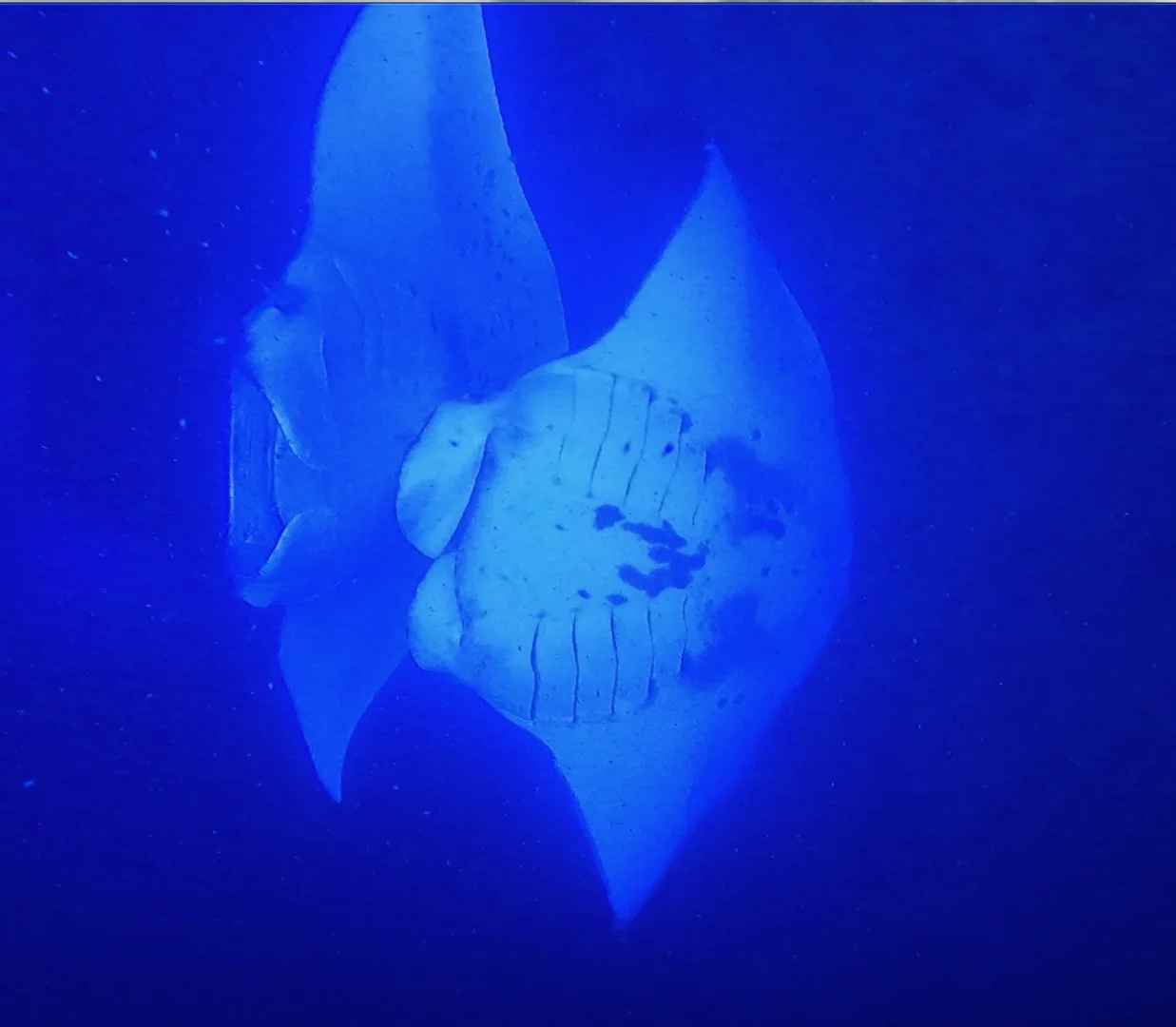
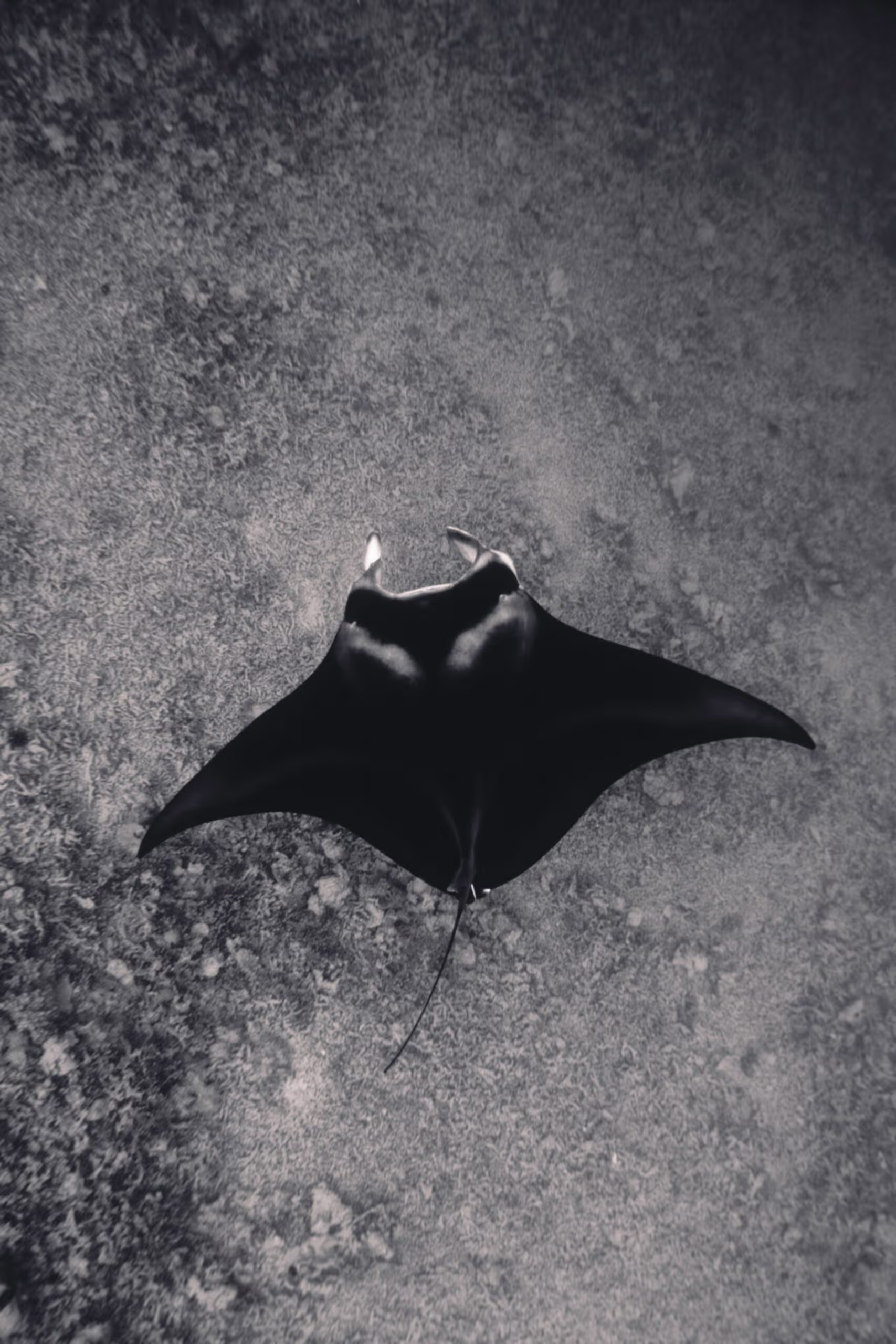
Few marine interactions compare to floating on the ocean surface after dark while massive, gentle manta rays swoop beneath you. Along the Kona coast, between 200 and 300 resident coastal manta rays (Mobula alfredi) live and feed year-round. Unlike stingrays, manta rays possess no barbs, stingers, or teeth; they are harmless filter feeders that consume microscopic ocean organisms.
Our two primary feeding zones in Kona are Makako Bay (near the Kona International Airport) and Keauhou Bay (Manta Village). Decades ago, coastal resorts set up floodlights over the water, which attracted dense clouds of plankton. The local mantas quickly learned that illuminated waters offered an effortless buffet, establishing a nightly feeding tradition.
The World-Famous Kona Manta Ray Night Snorkel
During our evening excursions, guests hold onto custom-designed, buoyant floating platforms fitted with powerful downward-facing blue LED lights. These lights illuminate the water column, drawing high concentrations of nutrient-rich plankton toward the surface.
Attracted by the food source, manta rays with wingspans reaching 10 to 14 feet glide up from the dark ocean floor. They perform backward somersaults—known as barrel rolls—just inches beneath the surface, scooping up plankton with their open mouths and cephalic fins.
Reserving a guided manta ray night snorkel in Kona is the safest and most ethical way to experience this spectacle. Because the tour takes place in open water at night, our professional crew handles navigation and safety gear so you can focus entirely on the animals. It is a fantastic experience for water-comfortable kids and adults alike. Before heading out, you can learn about manta rays to discover how researchers identify individual rays by the unique spot patterns on their bellies.
Respectful Encounters with Sea Turtles and Dolphins
The Big Island is a sanctuary for iconic Hawaiian marine life, including the Hawaiian green sea turtle (honu) and the Hawaiian spinner dolphin (naiʻa). Observing these animals in their natural habitat is a privilege that requires strict respect for state and federal conservation laws.
When encountering sea turtles, always maintain a respectful distance of at least 10 feet (3 meters). Never attempt to chase, ride, touch, or corner a turtle on the reef or while it is basking on the sand. Touching removes protective layers on their shells and causes unnecessary stress.
Hawaiian spinner dolphins use shallow bays during the daytime to rest, care for their calves, and avoid offshore predators after hunting all night in the deep sea. Under federal regulations under the Marine Mammal Protection Act, it is illegal to swim with, approach, or remain within 50 yards (45 meters) of spinner dolphins in Hawaii's coastal waters. We encourage visitors to learn about dolphins and enjoy observing their acrobatic behaviors responsibly from the deck of a boat without entering their resting zones.
Ocean Safety, Reef Etiquette, and Gear Essentials
Snorkeling safely in Hawaii requires understanding both ocean conditions and environmental stewardship. The ocean changes quickly throughout the day. In Kona, mornings typically bring calm waters and gentle breezes, while afternoon thermal trade winds generate surface chop and decrease visibility.
Lava rock entries demand extra care. Wet volcanic rock can be slick and sharp, and sea urchins (wana) frequently tuck themselves into rock crevices near entry points. Always look before putting your feet down, and never turn your back on the ocean when standing on a shoreline shelf.
Essential Gear and Etiquette for Big Island Snorkeling
Protecting Hawaii's fragile marine ecosystem begins with your gear selection. Hard corals grow at a rate of only about 3 millimeters per year; a single careless fin kick or footstep can destroy decades of fragile growth.
- Mineral-Only Sunscreen: Hawaii state law bans the sale and use of sunscreens containing oxybenzone and octinoxate, which cause coral bleaching and genetic damage. Always use non-nano zinc oxide or titanium dioxide mineral sunscreens.
- Traditional Two-Piece Snorkel Sets: We strongly advise against full-face snorkel masks. Many models pose safety risks associated with carbon dioxide ($CO_2$) buildup and cannot be purged quickly in an emergency. A traditional, well-fitted silicone mask and standard J-tube or dry snorkel are much safer.
- Thermal Rashguards & Flotation: A high-SPF rashguard protects your skin from the sun without washing chemicals into the water, while neoprene tops add buoyant warmth.
- Felt-Soled Water Boots or Sturdy Sandals: For rocky shore entries at Two Step or tide pool zones, durable footwear protects feet from sharp basalt and sea urchins until you put on your fins.
For more helpful preparation tips, explore our know before you go guide.
Shore Snorkeling vs. Guided Boat Excursions
While shore snorkeling offers independent flexibility, it comes with limitations—including challenging shoreline entries, limited parking, and heavy crowds at popular spots like Kahalu’u.
Guided boat excursions allow access to pristine, remote marine sanctuaries that are otherwise difficult or impossible to reach safely from shore. On a boat tour, you benefit from professional captain navigation, on-board safety equipment, high-grade snorkeling gear, and naturalist insights regarding fish behavior and island geology.
Joining a two-spot Kona snorkel tour lets you experience two distinct reef systems in a single morning outing, while taking in views of sea caves and volcanic sea cliffs along the coast. It quickly becomes clear why Kona snorkeling is the best in Hawaii.
Frequently Asked Questions About Big Island Snorkeling
When is the best time of day to snorkel on the Big Island?
The best time for reef snorkeling is early morning, between 7:30 AM and 11:00 AM. Morning hours consistently feature the calmest ocean conditions, lowest winds, and optimal sunlight penetration for high underwater visibility. After midday, onshore winds tend to stir up surface waves and reduce clarity. For manta ray excursions, tours depart just before sunset to position over illuminated feeding sites by nightfall.
How far do I need to stay away from sea turtles and dolphins?
State and federal wildlife regulations require snorkelers and swimmers to maintain a minimum distance of 10 feet (3 meters) from Hawaiian green sea turtles and at least 50 yards (45 meters) from Hawaiian spinner dolphins. Never reach out to touch, chase, feed, or encircle any marine mammal or reptile.
Can non-swimmers or young children participate in snorkeling tours?
Yes. Reputable small-group boat tours provide high-flotation life vests, floating platforms with grab lines, and snorkel view-boards that allow guests to observe the reef without submerging their faces. With small group sizes, experienced naturalists can provide extra attention to ensure everyone feels secure and comfortable in the water.
Conclusion
The clear coastal waters of the Big Island offer extraordinary opportunities to connect with Hawaii’s vibrant marine life. From colorful coral gardens set against black volcanic basalt to evening encounters with gentle manta rays, this coastline rewards thoughtful, ocean-conscious explorers.
As a small, locally operated, woman- and veteran-owned team, Dolphin Discoveries is dedicated to sharing the magic of the Kona coast through small-group, ethical wildlife excursions. Whether you are eager to glide through the pristine waters of Kealakekua Bay or watch manta rays flip beneath your floating light board, we would love to welcome you aboard.
Whenever you are ready to plan your morning reef trip or evening manta encounter, we invite you to explore our tours and join us out on the water.