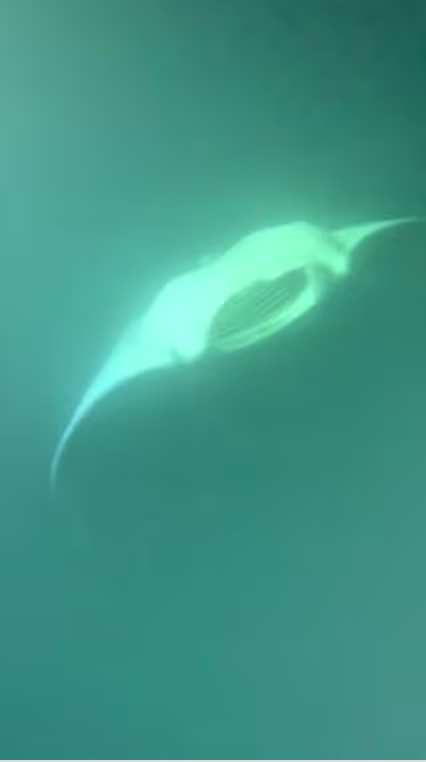


Start Your Two Step Beach Kona Snorkel the Safe Way
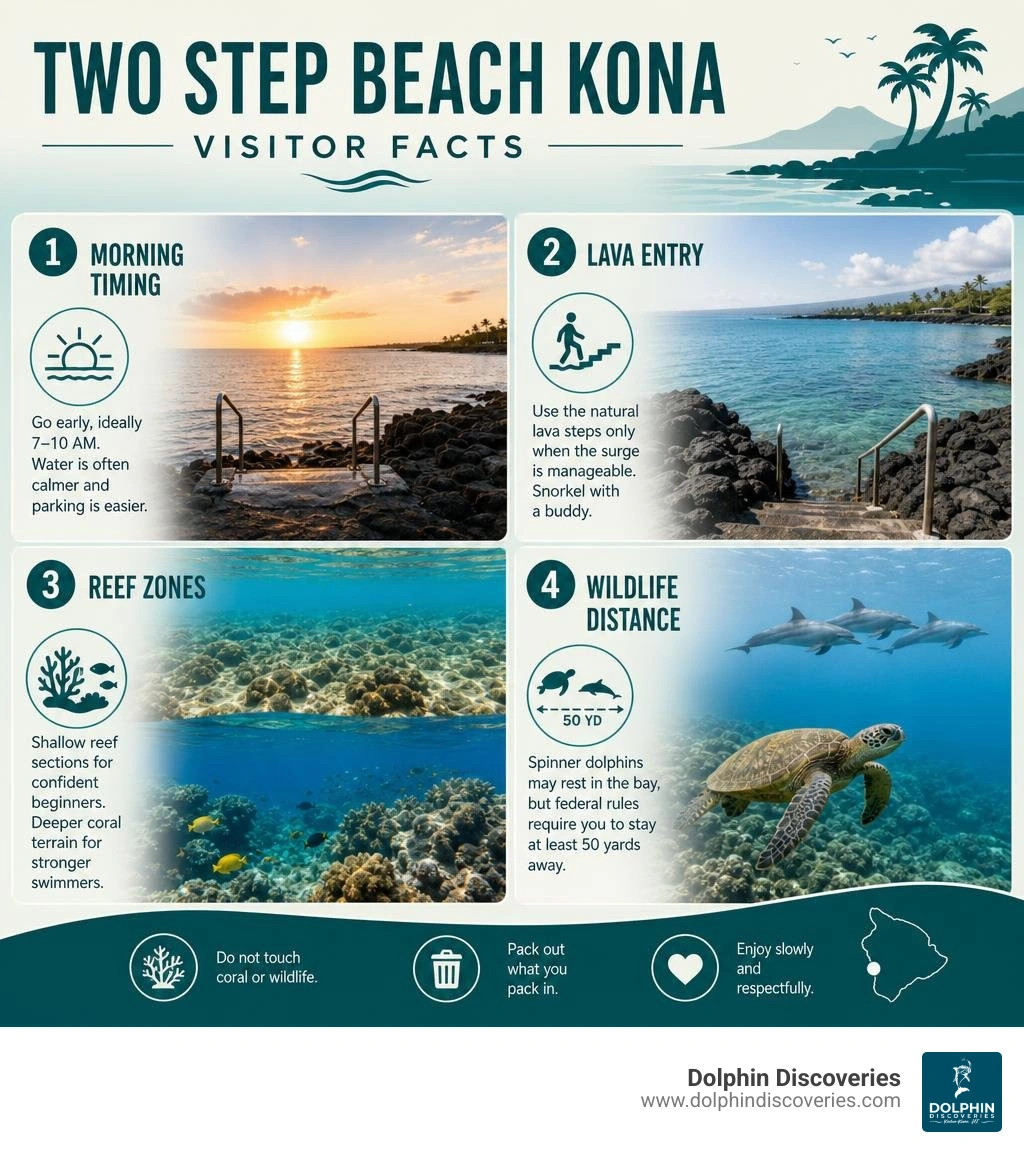
Two Step Beach Kona is a lava-rock snorkeling access point in Honaunau Bay, about 45 minutes south of Kailua-Kona. Go early, ideally between 7 and 10 AM, when water is often calmer and parking is easier. Check surf conditions first, use the natural lava steps only when the surge is manageable, and snorkel with a buddy.
There is no broad sandy beach here. The reward for a careful entry is clear water, shallow reef sections for confident beginners, deeper coral terrain for stronger swimmers, and the chance to see reef fish, honu, and other marine life. Spinner dolphins may rest in the bay, but federal rules require you to stay at least 50 yards away.
Two Step sits beside the culturally important Puʻuhonua o Hōnaunau National Historical Park, so this is a place to enjoy slowly and respectfully. Do not touch coral, turtles, or any wildlife, and pack out what you bring in.
I am Shelley Carey, writing with the Dolphin Discoveries team to help you plan a safer, reef-friendly Kona snorkel day.
Must-know two step beach kona terms:
What Is Two Step Beach Kona and Why Is It Famous?
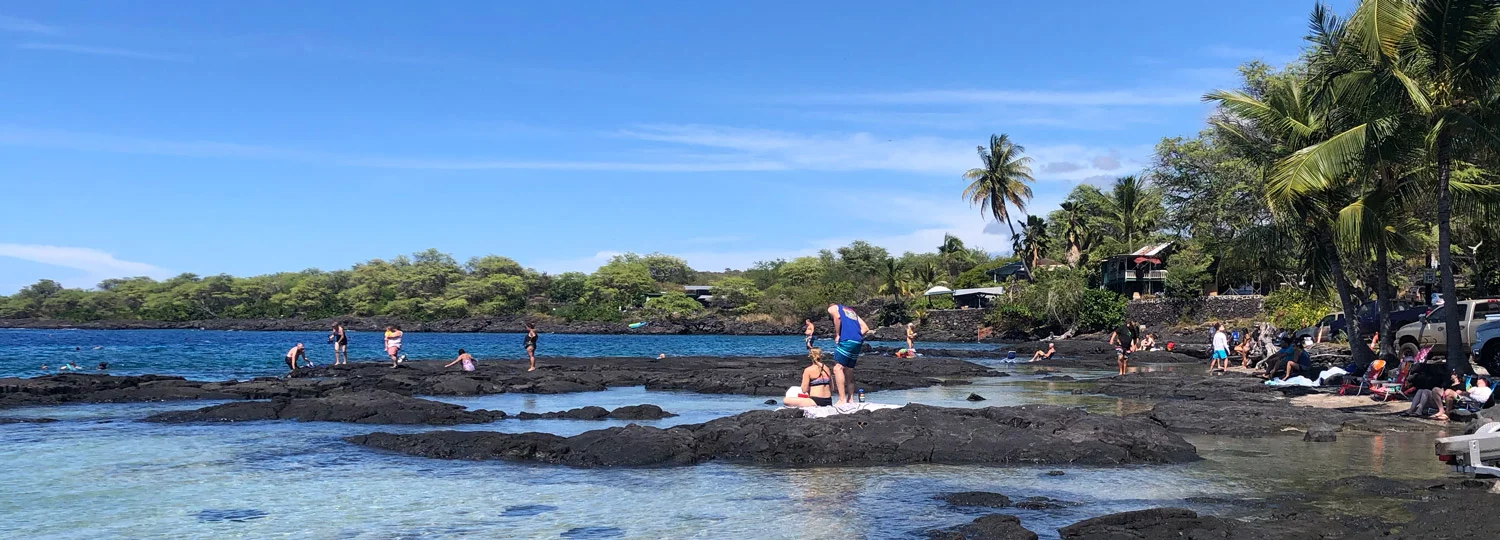
Despite being referred to worldwide as a "beach," there is virtually no sand along the primary entry shoreline at this famous site. The entire shoreline consists of smooth, dark pāhoehoe lava rock created by ancient volcanic flows from Mauna Loa. The Unique History of Two Step Beach in Kona, Hawaii reveals how this natural volcanic shelf evolved into one of the most beloved ocean access points along the South Kona coast.
Because there is no sand kicking up in the shorebreak, Hōnaunau Bay offers underwater visibility that frequently reaches 100 feet or more. The bay forms a wide, partially sheltered marine basin where healthy coral structures thrive right up against the volcanic coastline.
The Origin of the Name at Two Step Beach Kona
The descriptive moniker comes straight from the geology of the shoreline. Rather than wading in from a sloping shoreline, swimmers walk to a specific rock platform where the lava creates two distinct underwater ledges. To discover more About Honaunau Bay, it helps to visualize this geological formation:
- The First Step: A shallow, flat lava ledge submerged in roughly 10 feet of clear water.
- The Second Step: A lower shelf positioned right below the first, dropping quickly into about 25 feet of water.
This setup lets you slip on your fins, take two simple steps downward, and glide out into deep ocean water.
Adjacent to the lava shelf lies Keoneʻele Cove. It is essential to recognize that Keoneʻele Cove sits within the protected cultural boundaries of the neighboring park; recreational swimming and snorkeling are prohibited directly inside that cove to protect its historical integrity. All water activities take place along the outer lava flat.
Puʻuhonua o Hōnaunau National Historical Park Connection
Directly bordering Two Step to the south is the 182-acre Honaunau Bay National Park (Puʻuhonua o Hōnaunau National Historical Park). In ancient Hawaii, this sacred sanctuary served as a true "Place of Refuge." Under the strict kapu legal system, breaking a sacred law was punishable by death; however, if an individual managed to reach the boundaries of this puʻuhonua, a kahuna (priest) would perform a purification ceremony, granting absolution and a fresh chance at life. Defeated warriors also sought refuge here during times of conflict.
Today, the park safeguards meticulously preserved heiau (temples), royal fishponds, traditional thatched structures, and towering wooden kiʻi (carved religious statues) guarding the coastline.
Because of this profound cultural significance, visitors should always exercise respectful etiquette. Do not climb on historical stone walls, never cross into the park wearing dripping swimwear, and always treat the adjoining land with deep reverence.
Snorkeling Zones and Marine Life in Hōnaunau Bay
When entering the water for some of the best Honaunau Bay Snorkeling, you will quickly notice how clear the conditions are. You may occasionally encounter a cool, shimmering surface layer known as a halocline. This optical effect occurs when natural, cool freshwater springs mix with the warm ocean saltwater. It can temporarily blur your mask view, but swimming a few yards farther clears it up immediately.
Exploring Coral Reefs and Depths Across Two Step Beach Kona
Hōnaunau Bay features distinct zones that cater to varying skill levels. Consulting What to know about Two Step snorkeling on the Kona coast - Flashpacking America helps highlight these distinct depth zones:
| Snorkeling Zone | Average Water Depth | Marine Life Highlights | Skill Level |
|---|---|---|---|
| Right Side (North Reef) | 6 to 10 feet | Butterflyfish, damselfish, finger coral, shallow boulder crevices | Beginner to Intermediate |
| Left Side (South Point) | 15 to 25+ feet | Green sea turtles, lobe coral, moray eels, large parrotfish | Intermediate to Advanced |
| Central Outer Bay | 30 to 100+ feet | Pelagic species, deep coral canyons, resting spinner dolphins (view from distance) | Advanced / Freedivers |
The reef to the right of the entry stretches approximately 350 feet outward and maintains a comfortable 6 to 10-foot depth, making it a great area for observing vibrant reef structures.
The left side extends around 700 feet toward the outer point, dropping into deeper coral canyons where green sea turtles love to feed and rest.

Marine Life Encounters: Honu, Tropical Fish, and Spinner Dolphins
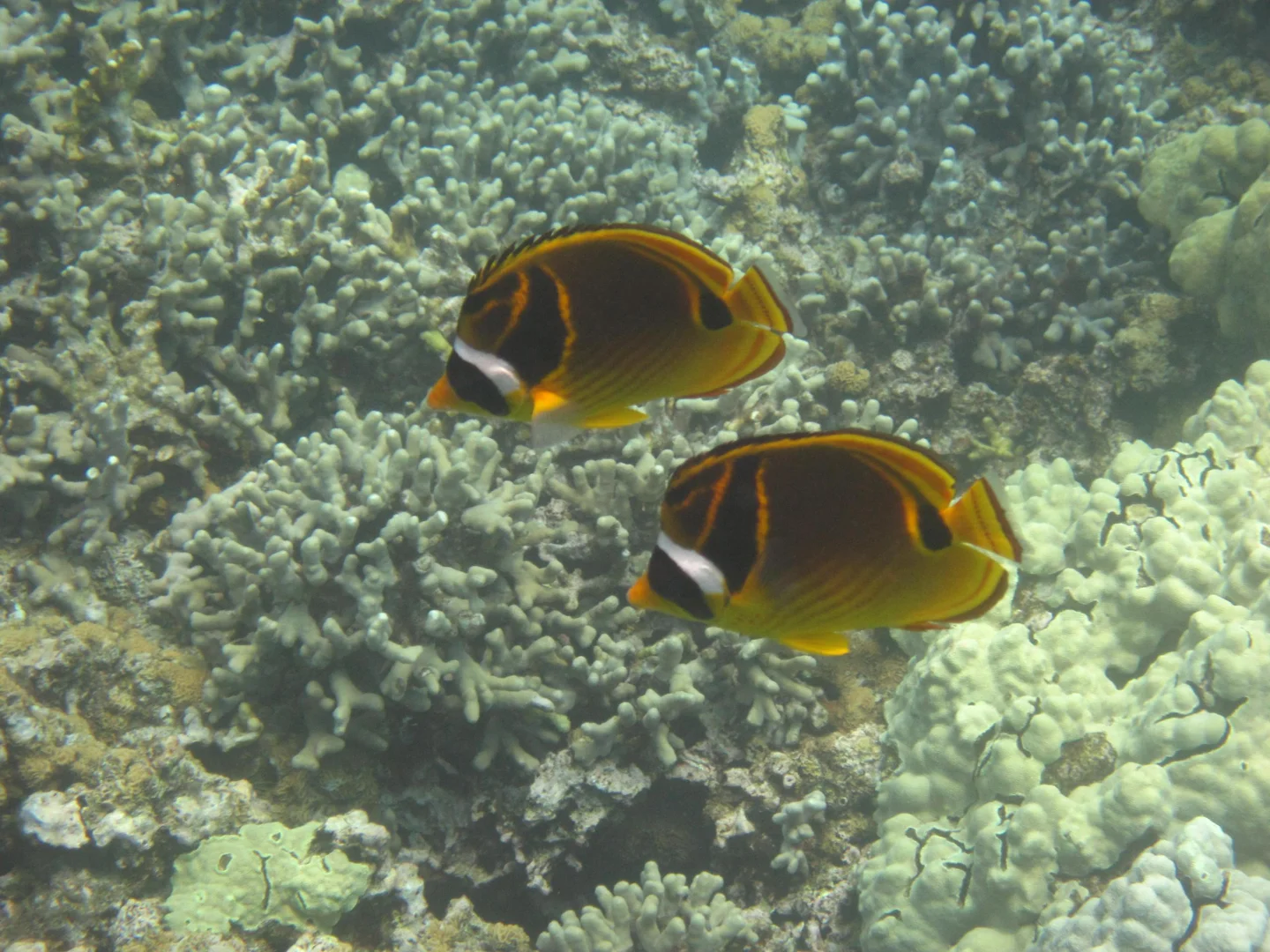
The diverse underwater landscape makes this bay one of The 3 Best Snorkeling Spots in Kona. As you snorkel over the fingers of lobe and brain coral, keep an eye out for Hawaii's famous state fish, the humuhumunukunukuāpuaʻa (wedge-tail triggerfish), along with brilliant yellow tangs, parrotfish (uhu), raccoon butterflyfish, and trumpetfish. Moray eels frequently peek out from volcanic crevices, and white-tip reef sharks can occasionally be spotted resting quietly beneath deep overhangs.
Honu (Hawaiian green sea turtles) frequent the bay to graze on marine algae. All sea turtles are protected under state and federal laws; always maintain a distance of at least 10 feet (3 meters) and never chase, touch, or crowd them.
Hawaiian spinner dolphins (Stenella longirostris) often use the quiet, protected waters of Hōnaunau Bay to rest, socialize, and nurse their calves after feeding offshore all night.
To give these animals the rest they need, federal law strictly prohibits approaching within 50 yards (150 feet) of Hawaiian spinner dolphins in coastal waters. If dolphins enter the bay while you are snorkeling, remain calm, maintain your course, and give them ample space.
How to Safely Enter, Exit, and Navigate the Water
Entering the ocean from raw lava rock requires focus, technique, and awareness of surge patterns. Taking time to learn the proper entry process ensures your Kona Snorkeling experience remains safe and fun.
Navigating the Natural Lava Steps and Surge
The natural stone staircase at Honaunau Bay Two Step requires good timing. Never try to jump in blindly without watching the rhythm of the waves for several minutes first.

- Entry Technique: Walk carefully across the flat lava shelf to the designated ledge. Sit down on the upper step, adjust your mask and snorkel, and slip your fins securely onto your feet. When the water rises with a gentle surge, push yourself smoothly off the second step into deep water and immediately swim outward away from the rock face.
- Urchin Awareness: Inspect the rock ledges carefully before setting your feet down. Long-spined venomous sea urchins (wana) nest inside cracks along the lava. Water shoes or dive booties help protect your soles while walking on the shore.
- Exit Strategy: Exiting requires patience. Swim toward the steps, pause a few yards out, and observe the ocean swell. As an incoming wave lifts you, use that momentum to float onto the lower step. Place your palms completely flat on the rock (to avoid urchin spines) and let the water recede beneath you before stepping up onto dry rock.
Beginner Entry Points and Safety Considerations
If the two-step lava drop feels intimidating, you can use the alternate boat ramp entry located near the north end of the shoreline. This gentle, sloping ramp provides access to a shallow sandy channel where you can ease into the water at your own pace.
However, because the water quickly deepens across most of the bay, Two Step is best suited for confident swimmers. Always utilize the buddy system, consider using a snorkel vest or flotation belt if you need extra support, and review our Best Snorkel Spots Big Island Guide before heading out.
Planning Your Visit: Location, Parking, and Amenities
Careful trip planning makes all the difference when visiting this popular South Kona destination. Checking our Honaunau Bay Map Guide 2026 will help you pinpoint travel routes and parking areas before you leave your hotel or vacation rental.
Driving Directions and Parking Logistics
Two Step Beach is located approximately 20 miles south of downtown Kailua-Kona, requiring about a 45-minute drive:
- Travel south from Kailua-Kona along Highway 11 (Mamalahoa Highway).
- Near mile marker 104, turn right onto Highway 160 (City of Refuge Road) by the Honaunau Post Office.
- Follow Highway 160 down the winding hill for about 3.5 miles toward the coast.
- Just before reaching the entrance gates to Puʻuhonua o Hōnaunau National Historical Park, veer right onto the narrow one-way shoreline access road.
Parking near the shoreline is limited. There are a handful of free roadside spaces along the one-way road that fill up well before 8:00 AM.
Adjacent to the road, a private lot offers parking for a $5 cash fee. If all shoreline parking is full, you can pay the standard vehicle entrance fee to park inside the National Historical Park lot and take a short walk over to the access point.
Essential Facilities, Gear Preparation, and Marine Etiquette
Facilities at Two Step are rustic and minimal. Planning ahead is crucial:
- Restrooms: A few portable toilets (porta-potties) are situated near the parking area. There are no running-water showers, changing rooms, or foot-wash stations.
- Picnic Facilities: A small number of picnic tables and shaded trees sit back from the lava flats.
- Gear Rentals & Food: There are no gear rental shops or concession stands at Hōnaunau Bay. Pick up your mask, snorkel, and fins from a dive shop in Kailua-Kona or Keauhou beforehand, and pack plenty of fresh drinking water and snacks.
- Sun Protection & Etiquette: Use only mineral-based, reef-safe sunscreen (active ingredients zinc oxide or titanium dioxide) to protect delicate corals. Always practice a strict pack-it-in, pack-it-out approach by taking all trash with you, as outlined in our guide to Snorkeling on the Big Island.
Frequently Asked Questions About Two Step Beach
Is Two Step Beach suitable for beginner snorkelers?
Two Step can work well for confident beginners on calm mornings, particularly in the shallow 6 to 10-foot reef zone on the right side of the bay. However, because the main entry requires navigating lava ledges directly into deep water without a sandy wading area, nervous swimmers and young children should use flotation aids or consider the gentler boat ramp entry.
Are there snorkel gear rentals or food concessions at Two Step Beach?
No. There are no on-site gear rentals, snack shacks, or retail vendors at Two Step Beach. Visitors must rent or purchase their snorkel equipment in advance and bring their own drinking water, food, and reef-safe sunscreen.
What is the best time of day to visit Two Step Beach for snorkeling?
The ideal window is early morning, between 7:00 AM and 10:00 AM. Ocean swells are generally calmest during these hours, water visibility is at its peak, and South Kona's typical afternoon cloud cover and onshore breezes have not yet rolled in. Arriving early also makes finding a parking space much simpler.
Conclusion
Hōnaunau Bay is a remarkable natural treasure where volcanic geology, vibrant marine ecosystems, and ancient Hawaiian history meet along the South Kona coastline. By giving resting spinner dolphins their required space, using mineral sun protection, and minding the delicate corals beneath your fins, you help preserve this fragile habitat for generations to come.
If you would like to explore South Kona's offshore coral reefs with an experienced team, join us on our naturalist-guided boat trips. We operate daily from nearby Keauhou Bay, offering small-group adventures on fast, comfortable rigid-hull inflatable boats with a deep commitment to ethical wildlife viewing.
Experience our Kona Snorkel Tour – Two Snorkeling Spots starting at $109.99 per person for a 4-hour adventure, or check out our popular Captain Cook Snorkel Tour at $99.99 per person (3.5 hours, including check-in). We also offer 2-hour Manta Ray Night Snorkels and Dolphin & Whale Watching tours starting at $99.99 per person, as well as private boat charters starting at $1,050 for up to 34 guests.
Have questions about conditions, tour details, or ocean safety? Feel free to contact Dolphin Discoveries today. As a local, woman- and veteran-owned ocean tour operator, our crew is always happy to help you enjoy Kona's waters safely.