


If you're packing for a Kona snorkel trip, sunscreen is on the list. In Hawaii, which sunscreen you bring matters. The state limits the sale of sunscreens with two common chemical filters, and the Big Island has its own stricter rule. This guide explains what the law says, how to read a label, and how to protect your skin and the reef on our tours.
The short version: pack a mineral sunscreen with zinc oxide or titanium dioxide, wear a rash guard, and keep your hands off the coral.
What Hawaii's Sunscreen Law Says
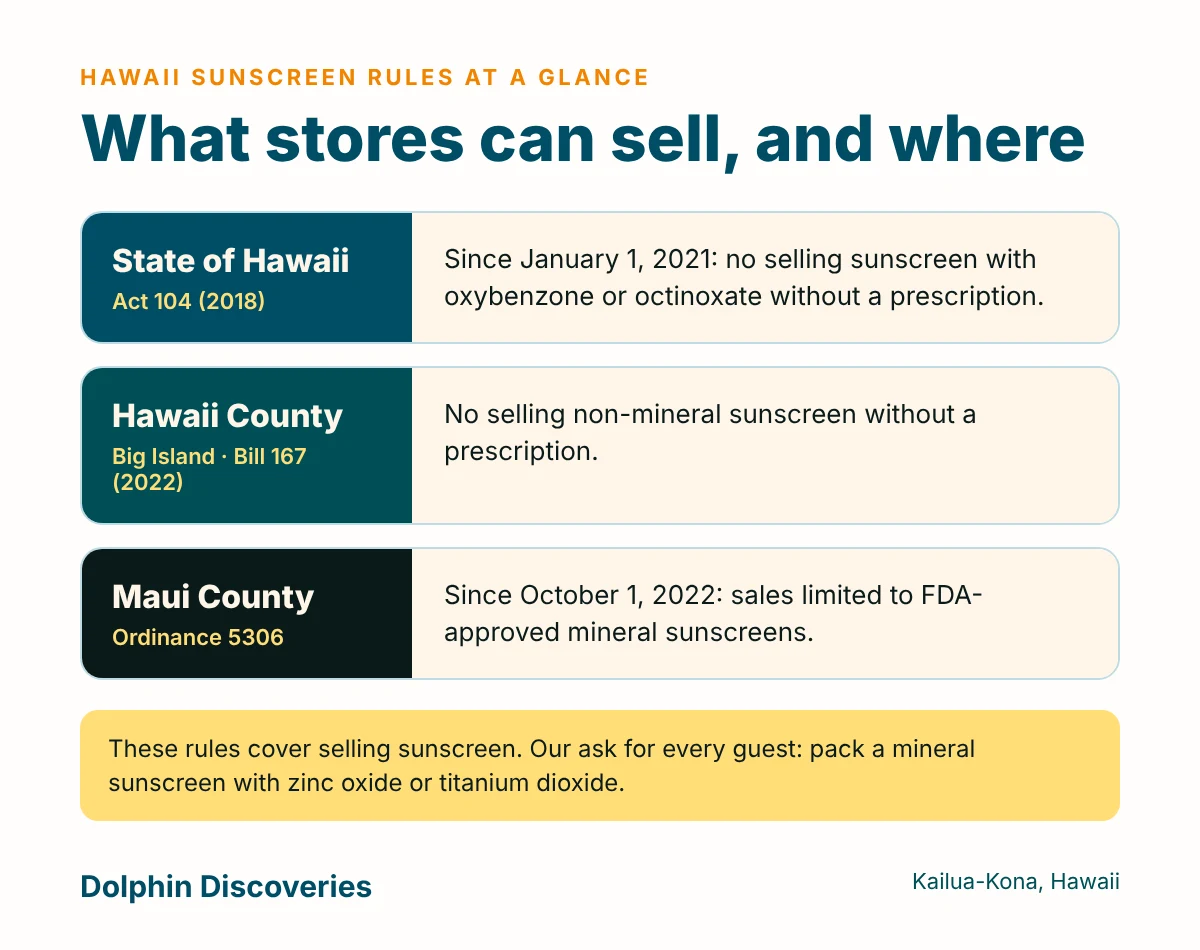
Here is how the rules stack up.
- State of Hawaii: Act 104 (2018) made it unlawful, beginning January 1, 2021, to sell, offer for sale, or distribute for sale any sunscreen that contains oxybenzone or octinoxate without a prescription from a licensed healthcare provider.
- Hawaii County (the Big Island): In 2022 the county council passed Bill 167, which prohibits the sale and distribution for sale of non-mineral sunscreen on the Big Island without a prescription.
- Maui County: According to NOAA's National Centers for Coastal Ocean Science, Maui's Ordinance 5306 restricts sales to FDA-approved mineral sunscreens starting October 1, 2022.
These rules cover selling sunscreen. Kona is on the Big Island, so the store shelves here follow the county rule. If you buy sunscreen after you land, expect mineral options. Our store in the Keauhou Shopping Center, where you check in for every tour, sells sunscreen too. If you pack from home, our ask is the same: bring a mineral sunscreen.
Why Hawaii passed it
In Act 104, the Legislature found that oxybenzone and octinoxate cause mortality in developing coral, increase coral bleaching, and can degrade corals' resiliency and ability to adjust to climate change. NOAA's ocean service sums up a 2016 study that found oxybenzone "highly toxic to juvenile corals," with effects that included bleaching, DNA damage, abnormal skeleton growth and deformities.
Sunscreen doesn't only reach the reef from swimmers. NOAA researchers found that beach showers in Hawaii can be a source of sunscreen chemicals reaching shoreline habitats and coral reefs, because a number of these showers don't drain to the sewer.
How to Pick a Reef-Safe Sunscreen for Hawaii
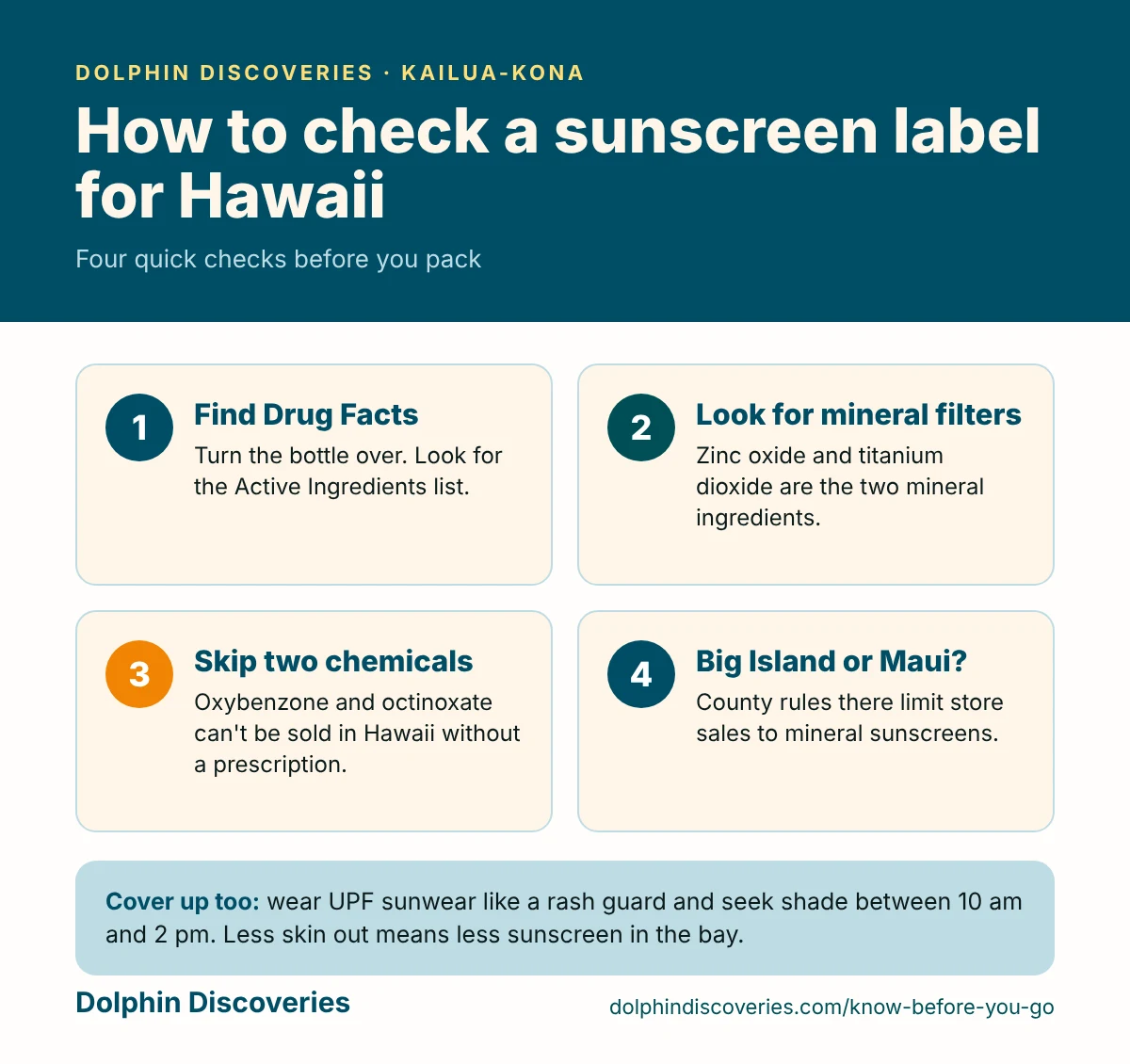
The front of a bottle can say almost anything. The back tells you what's inside. Use these four checks.
- Find Drug Facts - Turn the bottle over and look for the Active Ingredients list.
- Look for mineral filters - Zinc oxide and titanium dioxide are the two mineral ingredients. Big Island Now reported that the FDA regards them as the only two active sunscreen ingredients considered safe and effective.
- Skip two chemicals - Oxybenzone and octinoxate can't be sold in Hawaii without a prescription. If either one is on the list, leave that bottle at home.
- Big Island or Maui? - County rules there limit store sales to mineral sunscreens, so a mineral bottle works anywhere you travel in Hawaii.
Cover up and use less
The easiest way to protect the reef is to need less sunscreen. NOAA suggests you seek shade between 10 am and 2 pm, use UPF sunwear, and choose sunscreens with chemicals that don't harm marine life. A long-sleeve rash guard or swim shirt covers your back and shoulders, which is the part of you that faces the sun while you float face-down. Less skin out means less sunscreen in the bay.
Sun Protection on a Snorkel Tour: Step by Step
- Pack it the night before - Our Know Before You Go packing list includes reef-safe sunscreen, swimwear, a towel, and motion sickness remedies if you need them. Forgot it? Pick some up at our store when you check in.
- Put it on before you leave - Apply it at your hotel so you aren't rushing on the boat.
- Wear your cover - Arrive in swim attire with a light cover-up, and wear a rash guard or swim shirt in the water.
- Float, don't stand - Stay flat on the surface. NOAA's advice for reef visitors is simple: don't touch, and don't stir up sediment, which can smother corals.
- Look, don't touch - Keep your hands off coral, turtles and fish. Read our Hawaiian fish identification guide so you know what you're looking at.
- Reapply between stops - On longer tours, dry off with your towel, reapply on skin that's showing, and cover up for the ride home.
Which of Our Tours Need Sunscreen?
All of our tours check in at our store in the Keauhou Shopping Center, 78-6831 Ali'i Dr, Suite F-146, Kailua-Kona, and depart from Keauhou Bay on small-group rigid-hull inflatable boats. Here is how sun protection fits each one.
- Captain Cook Snorkel Tour - A daytime trip to Kealakekua Bay, a Marine Life Conservation District, with about an hour of snorkeling on average. Our Captain Cook snorkel tour is 3.5 hours including check-in, for ages 6 to 70, at $99.99.
- Morning Captain Cook Snorkel Adventure - A slower-paced morning on the same bay, made for new snorkelers, with pool noodles included. The Morning Captain Cook Snorkel Adventure is 3.5 hours including check-in, for ages 6 to 70, at $99.99.
- Deluxe Kona Snorkel Adventure (Two Spots) - The longest day in the sun: Kealakekua Bay and the Place of Refuge, 5 hours total with 4 hours on the water, for ages 6 to 70, at $119.99. Compare it with our other Kona snorkel tours.
- Dolphin and Whale Watching Kailua-Kona - No swimming, but it's an open-air boat, so bring a hat and sunscreen. Dolphin and Whale Watching Kailua-Kona is 2.5 hours with check-in time built into the schedule, for guests ages 5 to 70, at $99.99.
- Manta Ray Night Snorkel - It's already dark by the time our first manta tour starts, so you won't need sunscreen in the water. Short sleeve wetsuit tops are provided. Our manta ray night snorkel in Kona is 2 hours, with about 30 minutes in the water, for ages 6 to 70, at $99.99.
On every snorkel tour, guests in the water need to know how to swim. Wondering if you'll want a wetsuit? Check our guide to Kona water temperature by month.
Reef-Safe Sunscreen in Hawaii FAQ
What sunscreen ingredients are banned in Hawaii?
Statewide, since January 1, 2021, sunscreens that contain oxybenzone or octinoxate can't be sold without a prescription. On the Big Island and in Maui County, county rules go further and limit sales to mineral sunscreens.
Can I bring my own sunscreen to Hawaii?
The rules cover selling and distributing sunscreen for sale. To protect the reef, we still ask every guest to pack a mineral sunscreen with zinc oxide or titanium dioxide. Forgot yours? We sell sunscreen at our store in the Keauhou Shopping Center, where you check in.
What does reef-safe mean on a sunscreen label?
Words on the front of the bottle aren't the best guide. Check the Active Ingredients list on the back. Look for zinc oxide or titanium dioxide, and skip oxybenzone and octinoxate.
Do I need sunscreen on the manta ray night snorkel?
Not in the water. The tour runs after dark, and short sleeve wetsuit tops are provided. If you're coming straight from a day at the beach, rinse off at your hotel first.
What's the best way to avoid sunburn while snorkeling?
Cover up. A rash guard or swim shirt protects your back while you float face-down. Add mineral sunscreen on any skin that's still showing, and seek shade between 10 am and 2 pm when you can. Questions before your tour? Call us at (808) 322-8000 or read our FAQ.