

Why Choose a Manta Ray Tour Big Island Hawaii Experience?
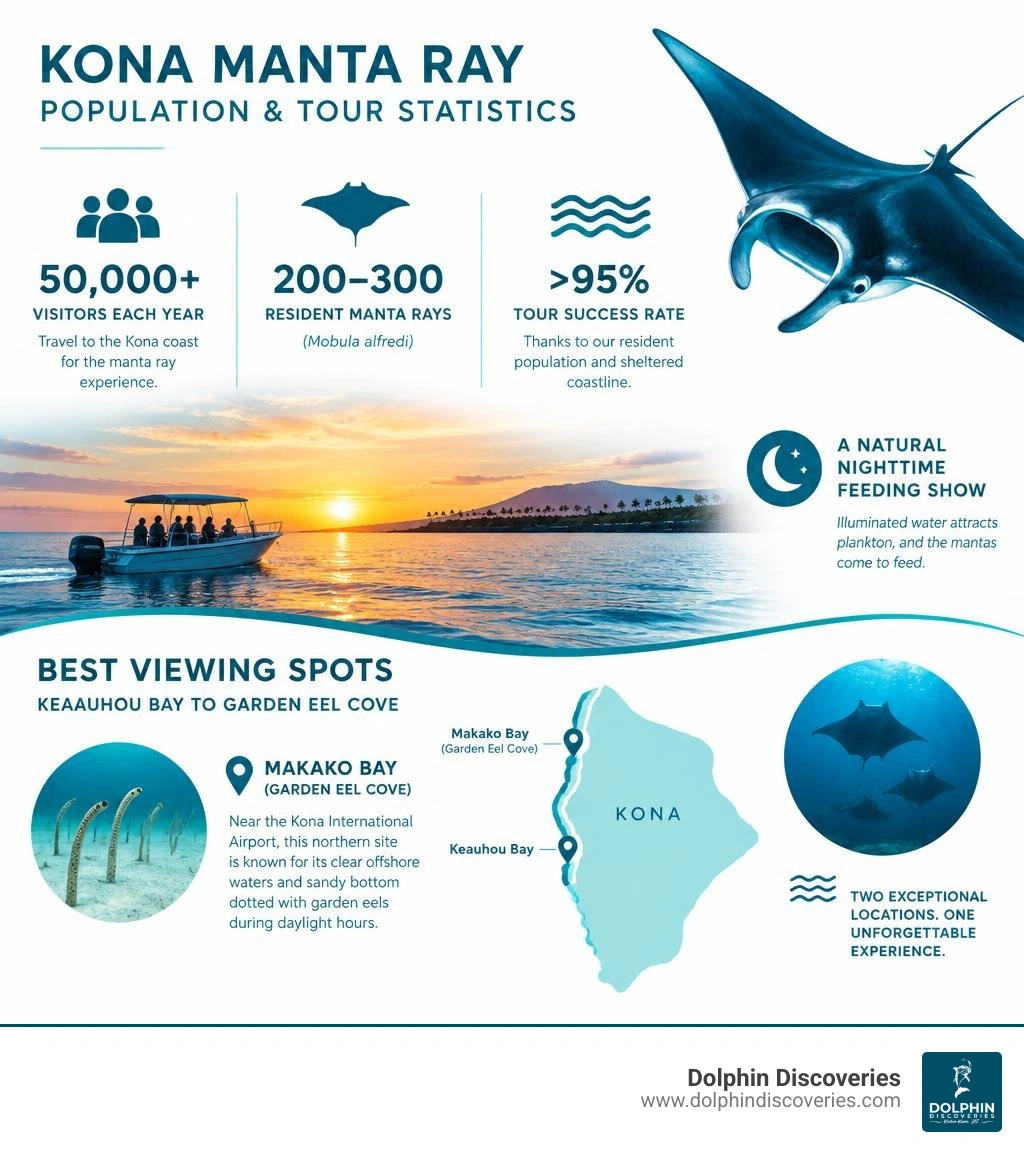
Every year, over 50,000 ocean lovers travel to the Kona coast to experience this evening phenomenon. What sets the Kona side of Hawaii apart from nearly every other marine destination is our resident population of roughly 200 to 300 reef manta rays (Mobula alfredi). Because these animals live along our sheltered coastline rather than migrating across open oceans, tour operators see an overall success rate topping 95%.
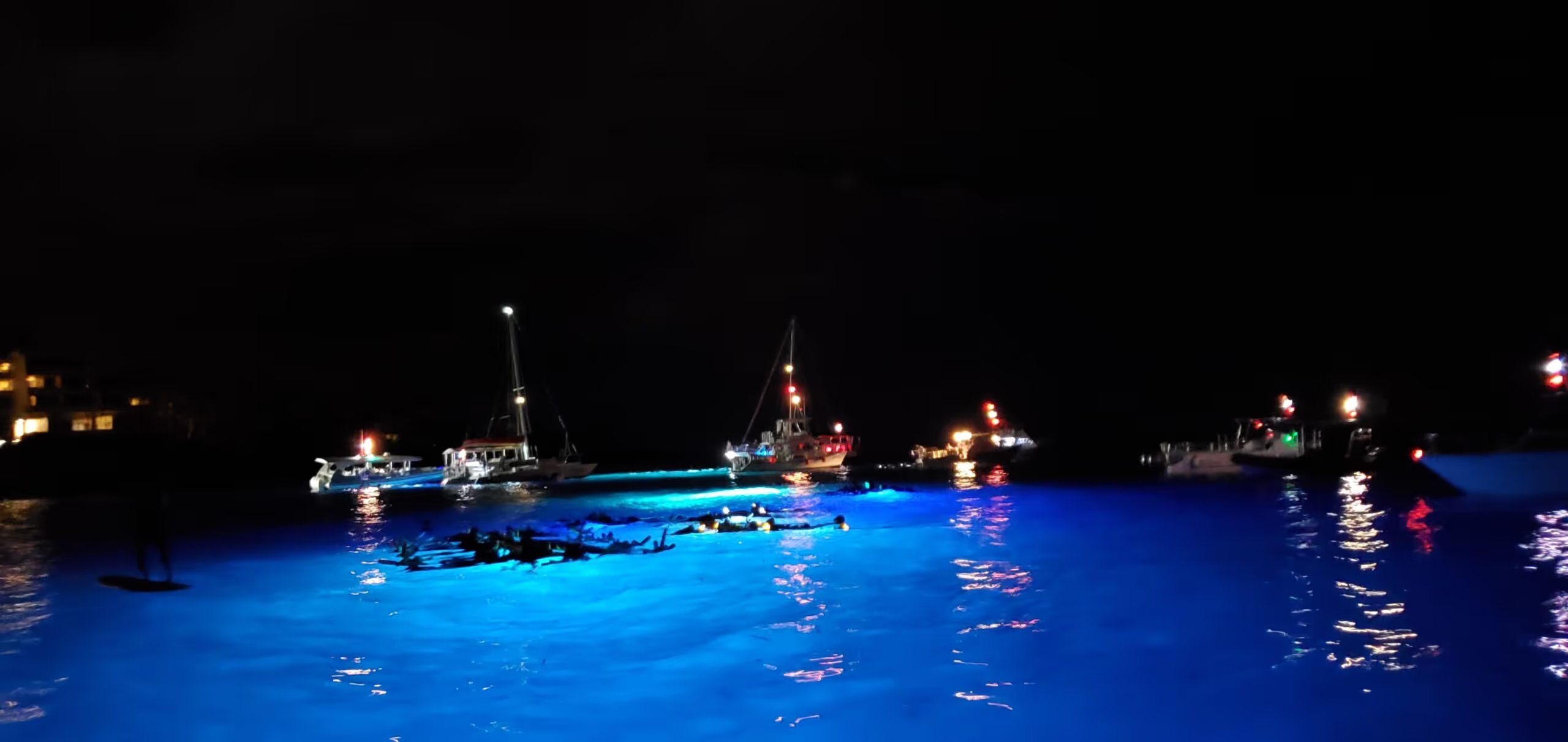
The entire experience relies on an accidental discovery made decades ago. Oceanfront resorts along Keauhou began shining floodlights onto the surf at night. Those bright beams drew clouds of microscopic plankton, and the mantas quickly learned that illuminated water offered an easy, concentrated buffet.
Today, joining a dedicated manta ray night snorkel in Kona allows you to witness this feeding behavior directly from the surface. Instead of chasing animals across open water, you simply hold onto an illuminated board and let the marine life come to you. This behavior is part of a broader group of filter feeding strategies used by marine animals that strain plankton and small organisms from the water.
Best Viewing Spots: Keauhou Bay to Garden Eel Cove
Along the Kona coast, two primary locations host the vast majority of manta ray encounters:
- Makako Bay (Garden Eel Cove): Situated near the Kona International Airport, this northern site is known for its clear offshore waters and sandy bottom dotted with garden eels during daylight hours.
- Keauhou Bay (Sheraton / Outrigger area): Located along the south Kona coast, this historic spot is one of the most reliable and accessible feeding areas in Hawaii.
One major benefit of departing from Keauhou Bay is proximity. When we head out from the harbor, it takes only a quick 5-minute boat ride to reach the primary manta viewing site. Less time traveling across open water means more calm, comfortable time on the water. These sites also feature natural cleaning stations where smaller reef fish pick parasites off the mantas before evening feeding begins.
Biology and Behavior of Kona's Coastal Manta Rays
Reef manta rays are among the gentlest giants in the ocean. Unlike stingrays, manta rays possess no stinging barb, no venomous spine, and no sharp teeth. They are completely harmless filter feeders.
Here are a few quick biological facts our crew shares during our naturalist insights on board:
- Wingspan and Size: While giant oceanic mantas can reach wingspans of up to 20 feet, the coastal reef mantas here average between 10 and 12 feet from wingtip to wingtip.
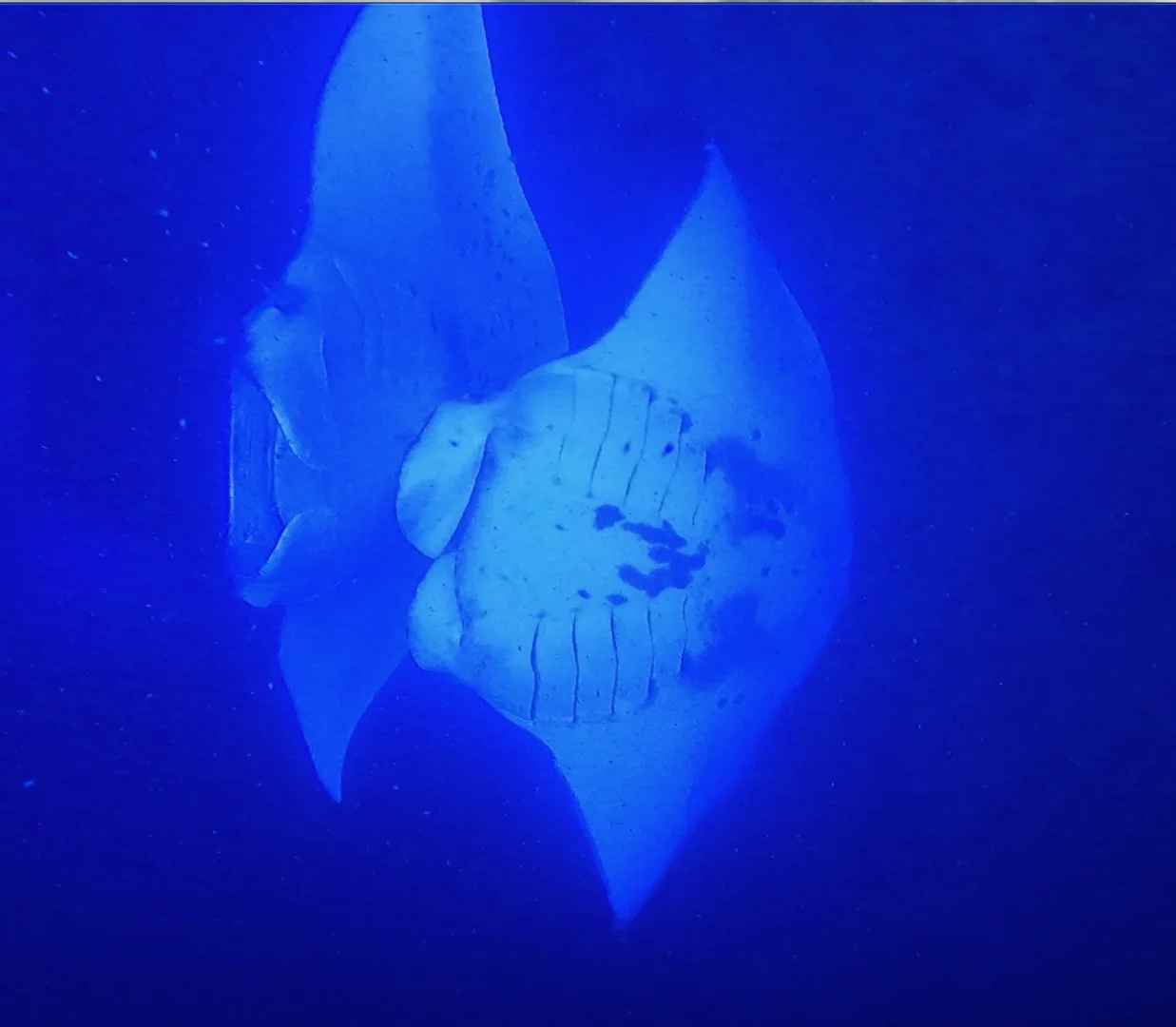
- Cephalic Fins: The flexible, horn-like fins on the front of their head unfurl into wide scoops that funnel plankton-rich water straight into their mouths.
- Filter Feeding: Water passes through internal gill plates, which trap microscopic copepods, larval crabs, and other plankton while allowing filtered water to exit through their gill slits.
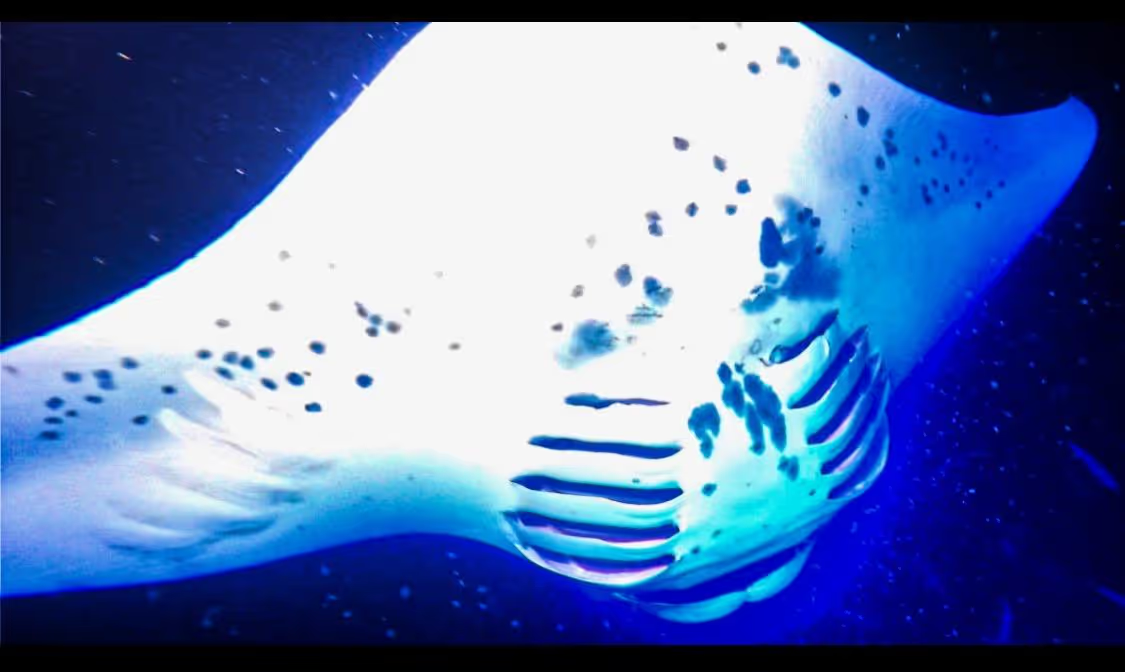
- Spot Patterns: Every individual manta has a completely unique collection of black spots on its white ventral (belly) side. Researchers have cataloged and tracked Kona's mantas using these natural "fingerprints" since the 1970s.
If you want to dive deeper into how these gentle creatures live, explore our dedicated page to learn about manta rays before your trip.
How Night Snorkel Tours Work
A manta night tour centers around specialized light boards. These custom flotation devices act like a floating campfire on the surface of the dark ocean. High-powered, downward-facing lights illuminate the water column below, creating a dense soup of plankton.
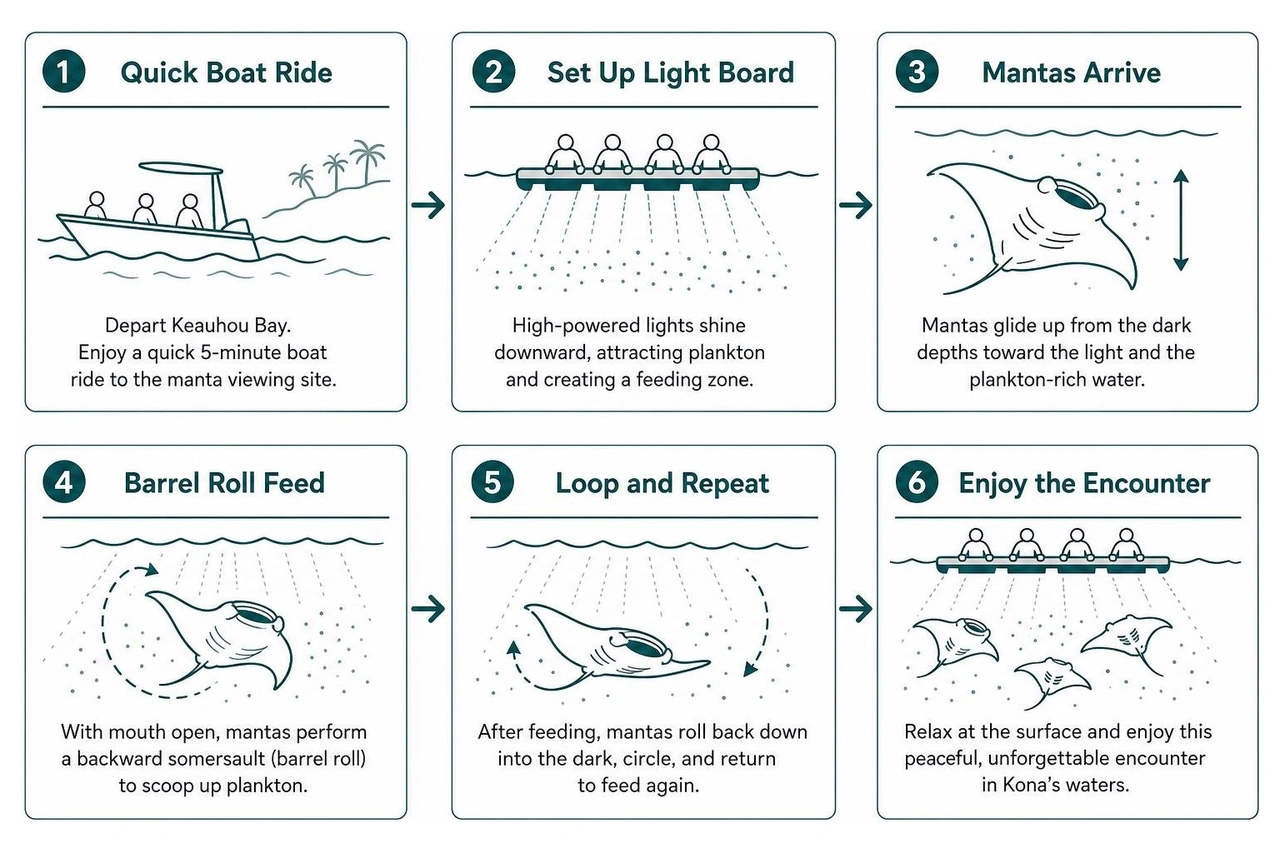
As plankton collects in the light beams, mantas swim up from the darker depths. To feed efficiently, they perform backward somersaults known as barrel rolls. They start deep, glide up toward the lights with open mouths, scoop through the plankton right beneath your chest, and roll back down into the dark to loop around again.
Tours typically run for 2 to 3 hours from dock departure to return, giving you plenty of time in the water without feeling rushed or chilled.
What to Expect on a Manta Ray Tour Big Island Hawaii Night Excursion
Your trip begins with a warm welcome and a thorough safety briefing at the harbor. We review ocean conditions, explain how to use the equipment, and discuss ethical wildlife viewing standards.
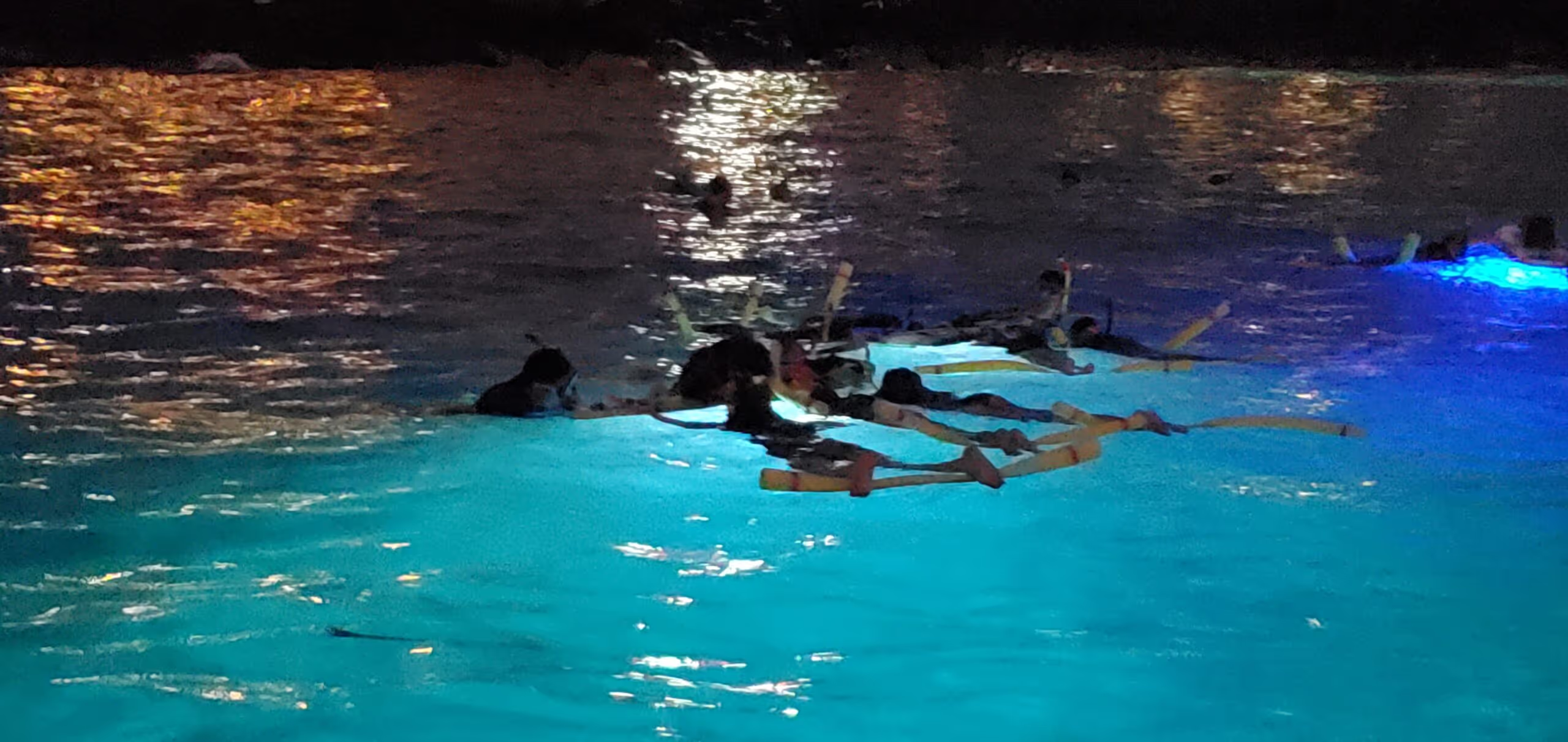
Once you reach the site, you slip into the water wearing a comfortable neoprene wetsuit top or shorty for warmth and buoyancy. You will hold onto the perimeter handles of the lit float board with your face in the water, breathing steadily through your snorkel.
To keep the mantas comfortable and protected, everyone follows strict passive viewing guidelines:
- Float flat on the surface with your legs extended horizontally.
- Keep hands on the float board handles at all times.
- Never reach down to touch or pet a passing manta.
- Avoid kicking your feet downward, which can accidentally make contact with rays feeding just below you.
Small-group tours offer a noticeable advantage over large catamaran cruises. Traveling with just a handful of guests per boat means quick water entries, open views along the board, and direct access to your guide throughout the swim.
Planning and Preparing for Your Excursion
Advance planning makes all the difference when booking water activities in Hawaii. Because manta tours are popular and boat capacities are intentionally kept small, prime evening slots often sell out several weeks ahead.
If your travel itinerary allows, schedule other ocean adventures during daylight hours. A morning Captain Cook snorkel tour to historic Kealakekua Bay lets you view vibrant coral reefs and Hawaiian green sea turtles (Honu). You can also look into a two-location Kona snorkel trip or seasonal Kona whale watching during the winter months. Families or private parties often opt for a private Kona boat charter to set their own pace.
Best Seasons, Times, and Environmental Conditions
Manta rays feed in Kona all twelve months of the year, making this a true year-round activity. However, a few seasonal and environmental details can shape your evening:
- Time of Year: Fall and winter months (October through March) often bring higher numbers of feeding rays to Keauhou Bay, though summer offers exceptionally calm surface conditions.
- Departure Timing: Tours depart either at sunset (dusk) or during full darkness. Sunset trips offer sweeping coastal views before the night snorkel begins, while later trips feature pitch-black waters where the light boards create vivid contrast.
- Moon Phases and Currents: Strong full-moon nights spread ambient light over the open ocean, which can disperse plankton across larger areas. Darker new-moon nights tend to concentrate plankton directly under our artificial lights.
What to Wear, Bring, and Booking Tips for a Manta Ray Tour Big Island Hawaii
Packing appropriately ensures you stay comfortable from the moment you step aboard until you dry off at the dock.
- Wear Your Swimwear: Put your swimsuit on before arriving at the harbor, as changing areas at the marina are limited.
- Bring Warm Layers: Even in tropical Hawaii, ocean breezes can feel brisk after 45 minutes in evening water. Pack a dry towel, a windbreaker, or a fleece jacket.
- Prevent Motion Sickness: Floating on the surface while looking down in dark water can challenge your inner ear. If you are prone to seasickness, take non-drowsy medication or natural ginger remedies an hour before departure.
- Underwater Cameras: Action cameras with video capabilities work well in illuminated water. Keep them secured to your wrist so your hands remain free to hold the board.
For more preparation tips, packing advice, and marina guidelines, take a look at our complete know before you go guide.
Frequently Asked Questions About Kona Manta Ray Tours
If you have additional questions about booking, logistics, or boat amenities, check our comprehensive list of frequently asked questions.
Are manta ray encounters safe for non-swimmers?
Yes, provided you are comfortable wearing a life vest and keeping your face in the water with a mask and snorkel. Because you hold onto a buoyant, rigid float board the entire time, you do not need to tread water or swim long distances. Our guides remain in the water right beside the board to assist anyone who feels nervous.
What happens if we don't see any manta rays?
While Kona boasts a sighting rate over 95%, mantas are wild animals in open water. Natural shifts in plankton drift or ocean swell can occasionally keep them deeper offshore. Most reputable operators offer a return policy that lets you join another tour on a standby basis if no mantas appear during your scheduled swim.
How close do the manta rays actually come to snorkelers?
Mantas frequently pass within inches of your mask. As they complete their barrel rolls, their cephalic fins or bellies may glide right under the surface lights. While they get remarkably close, they are aware of their surroundings and steer around snorkelers. We enforce a strict no-touch policy to safeguard the protective slime coat on their skin.
Conclusion
Floating under the stars while majestic manta rays loop through illuminated water is a life-changing experience. Watching these peaceful animals up close provides a deep appreciation for the delicate marine ecosystems along our coast.
At Dolphin Discoveries, our small-group tours are led by dedicated naturalists who treat every guest like Ohana and prioritize the well-being of the wildlife we visit. Whether you are planning a family excursion or checking a personal goal off your bucket list, we would love to share the magic of the Kona coast with you. Mahalo Nui for exploring our ocean home responsibly, and we look forward to welcoming you aboard with warm Aloha. You can contact our crew anytime to learn more about our trips or secure your spot on the water.