

The Best Big Island Snorkeling: Top Spots at a Glance
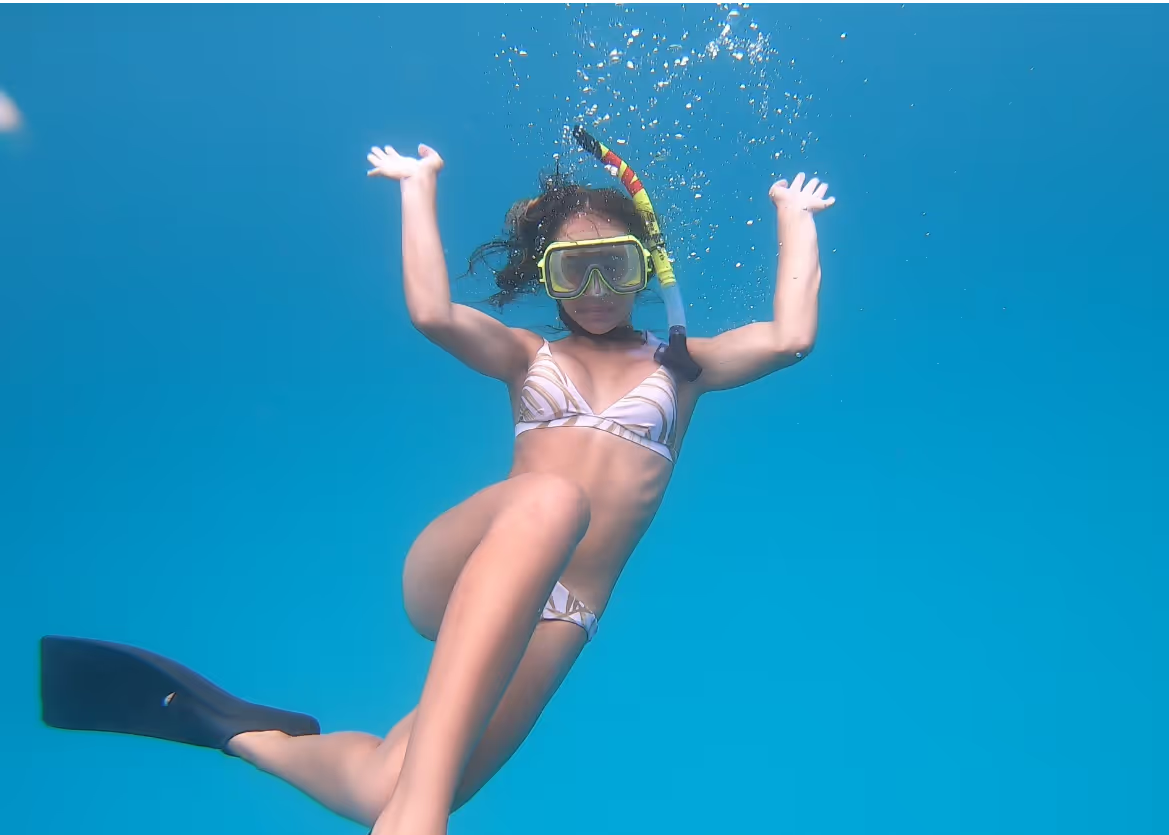
The best Big Island snorkeling puts you face-to-face with sea turtles, spinner dolphins, manta rays, and some of the healthiest coral reefs in all of Hawaii — and knowing where to go makes all the difference.
Here are the top spots to get in the water:
- Kealakekua Bay (Captain Cook) — Best overall; up to 30-meter visibility, pristine reefs
- Honaunau Bay (Two Step) — Best for advanced snorkelers; diverse marine life, deep drop-offs
- Kahalu'u Beach Park — Best for beginners and families; calm, shallow, protected bay
- Carlsmith Beach Park — Best near Hilo; reliable sea turtle sightings
- Punalu'u Black Sand Beach — Best for green sea turtles basking on shore
- Manta Ray Village / Keauhou Bay — Best for night snorkeling with manta rays
The Big Island's coastline is enormous — 266 miles of it — and not every stretch of water is created equal. Some spots are calm and shallow enough for first-timers. Others reward experienced swimmers with visibility so clear it feels like floating in glass. And one spot, only accessible after dark, delivers one of the most jaw-dropping wildlife encounters on the planet.
The challenge is knowing which spots match your skill level, what to expect when you get there, and how to experience it all without harming the reef or the animals that call it home.
I'm Patrick Marvin, and I've spent years exploring the Kona Coast — here's everything you need to plan the perfect Big Island snorkel trip.
Why the Big Island Offers the Best Snorkeling in Hawaii
If you are trying to decide which Hawaiian island to visit for underwater adventures, let us make it easy for you: the Big Island is unmatched.
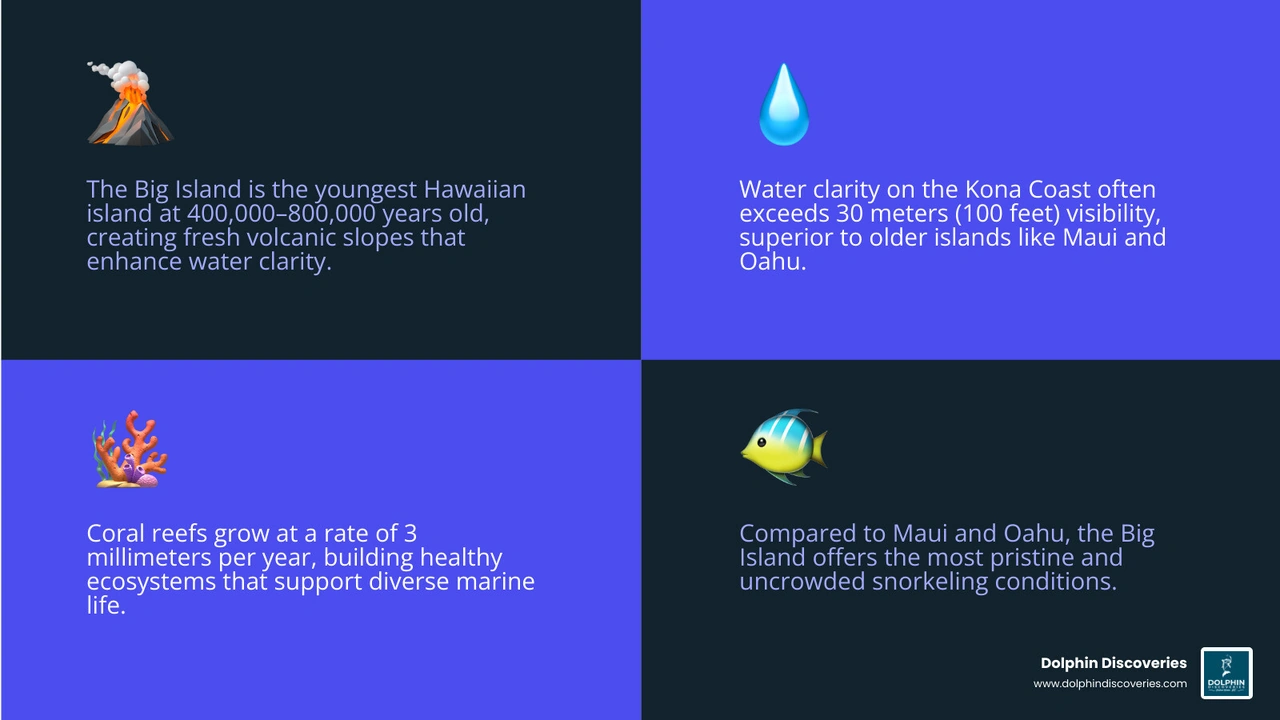
The secret lies in the island's geology. The Big Island is the "baby" of the Hawaiian archipelago, geologically speaking. At a measly 400,000 to 800,000 years old, it is the youngest island in the chain. Because it is so young, its volcanic shores have not had enough time to erode into the fine, powdery sand that characterizes the older islands. Less sand means less sediment swirling around in the water, resulting in jaw-dropping underwater visibility that can reach up to 30 meters on a clear morning.
Additionally, active volcanoes on the island have constantly deposited fresh lava rock over the millennia. Coral reefs absolutely love growing on this hard, volcanic basalt. Since coral grows at a very slow rate of only about 3 millimeters per year, having a stable, nutrient-rich foundation is vital.
Because the Big Island has a smaller permanent population and fewer tourist numbers compared to Oahu or Maui, our reefs experience significantly less human stress. This translates to healthier coral gardens and a much denser population of colorful reef fish.
To help you visualize how the Big Island stacks up against the other major islands, here is a quick comparison:
| Feature | The Big Island | Maui | Oahu |
|---|---|---|---|
| Water Visibility | Outstanding (up to 30m) | Good | Moderate |
| Reef Health | Pristine & growing | Healthy but heavily visited | Variable |
| Crowd Levels | Low to Moderate | Moderate to High | Very High |
| Unique Encounters | Night manta rays, spinner dolphins | Humpback whales (seasonal) | Sea turtles |
| Geological Age | 400,000 – 800,000 years | 1.3 million years | 2.2 – 3.4 million years |
If you want to dive deeper into why our waters are so spectacular, check out our guide on Why Kona Snorkeling is the Best in Hawaii.
Top Spots for the Best Big Island Snorkeling
The Kona Coast, on the western side of the island, is shielded from the strong trade winds by the massive peaks of Mauna Loa and Mauna Kea. This creates a massive, calm, and sunny playground perfect for ocean exploration. Many of the finest spots along this coast are designated as Marine Life Conservation Districts (MLCDs), which enjoy strict environmental protections to keep the marine life thriving.
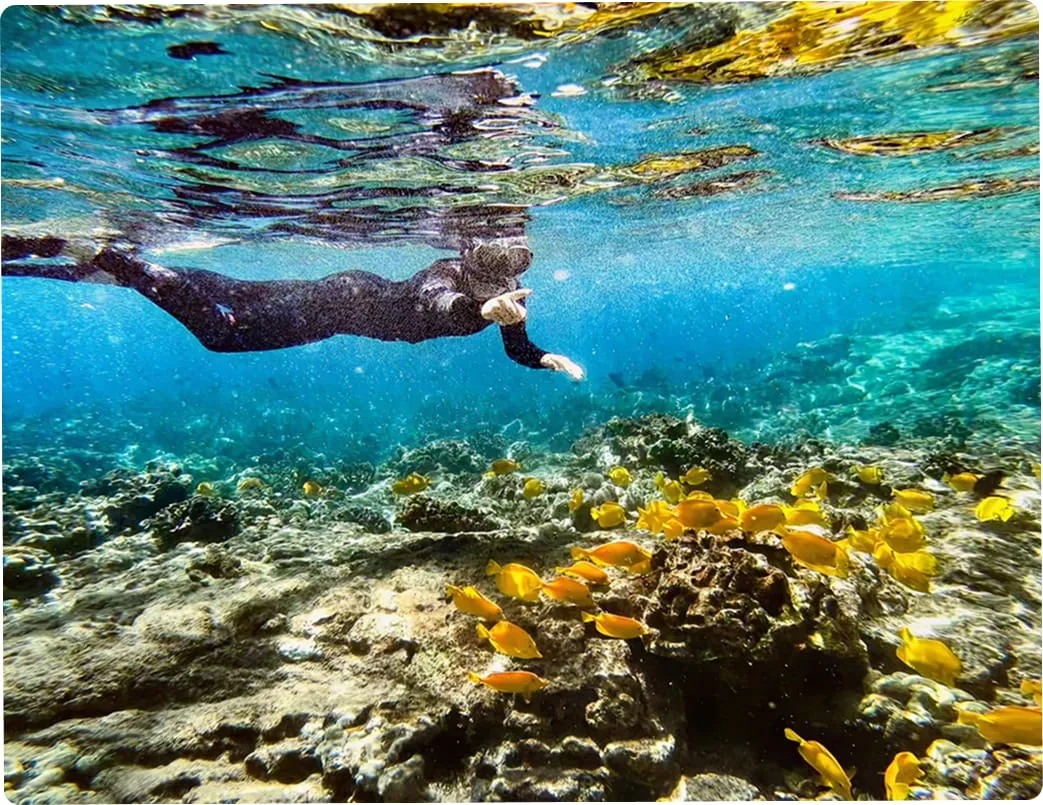
While some of these spots can be reached from the shore, entering the ocean over sharp, hot, and slippery volcanic rock can be a physical challenge. Booking a boat tour bypasses the rocky entries, keeps you safe from unpredictable shore currents, and gets you straight to the best parts of the reef. For a complete breakdown of the coast's top underwater treasures, check out our Kona Snorkeling Ultimate Guide 2026.
Kealakekua Bay: The Best Big Island Snorkeling for Pristine Reefs
Ask anyone who has dipped a mask into Hawaiian waters, and they will tell you that Kealakekua Bay is hands down the gold standard of snorkeling. As the largest Marine Life Conservation District in the state, this historic bay offers unparalleled reef health and mind-blowing clarity.
The crown jewel of the bay is the water surrounding the Captain Cook Monument, a 27-foot white stone obelisk erected in 1874 to mark the spot where British explorer Captain James Cook lost his life in 1779. In a quirky twist of history, the tiny plot of land where the monument stands was actually deeded to the United Kingdom for just $1 in the late 19th century, making it technically British soil!
Underneath the surface, however, is where the real magic happens. The shallow reef shelf near the monument is packed with vibrant yellow tangs, parrotfish, and intricate coral formations. Then, the reef suddenly drops off into a deep, dramatic blue abyss.
Getting to this remote spot on your own is no easy task. You can hike the Captain Cook Monument Trail, which is a strenuous 4-mile roundtrip hike with a grueling 450-meter elevation drop. The trail is hot, steep, and takes about an hour of hard walking each way while hauling heavy snorkel gear.
The easiest and most enjoyable way to experience this underwater paradise is on a comfortable boat excursion. If you want to skip the sweaty hike and slide straight into the water, join us on our premier Captain Cook Snorkel Tour.
Honaunau Bay (Two Step): Deep Water and Diverse Marine Life
Located about 23 miles south of Kailua-Kona, right next to the Pu'uhonua O Honaunau National Historical Park, lies Honaunau Bay—affectionately known by locals as "Two Step."
The nickname comes from the natural flat lava rock steps used to enter and exit the water. You simply wait for a gentle swell to lift you up, and you step right off the rock into a vibrant, deep-blue marine wonderland.
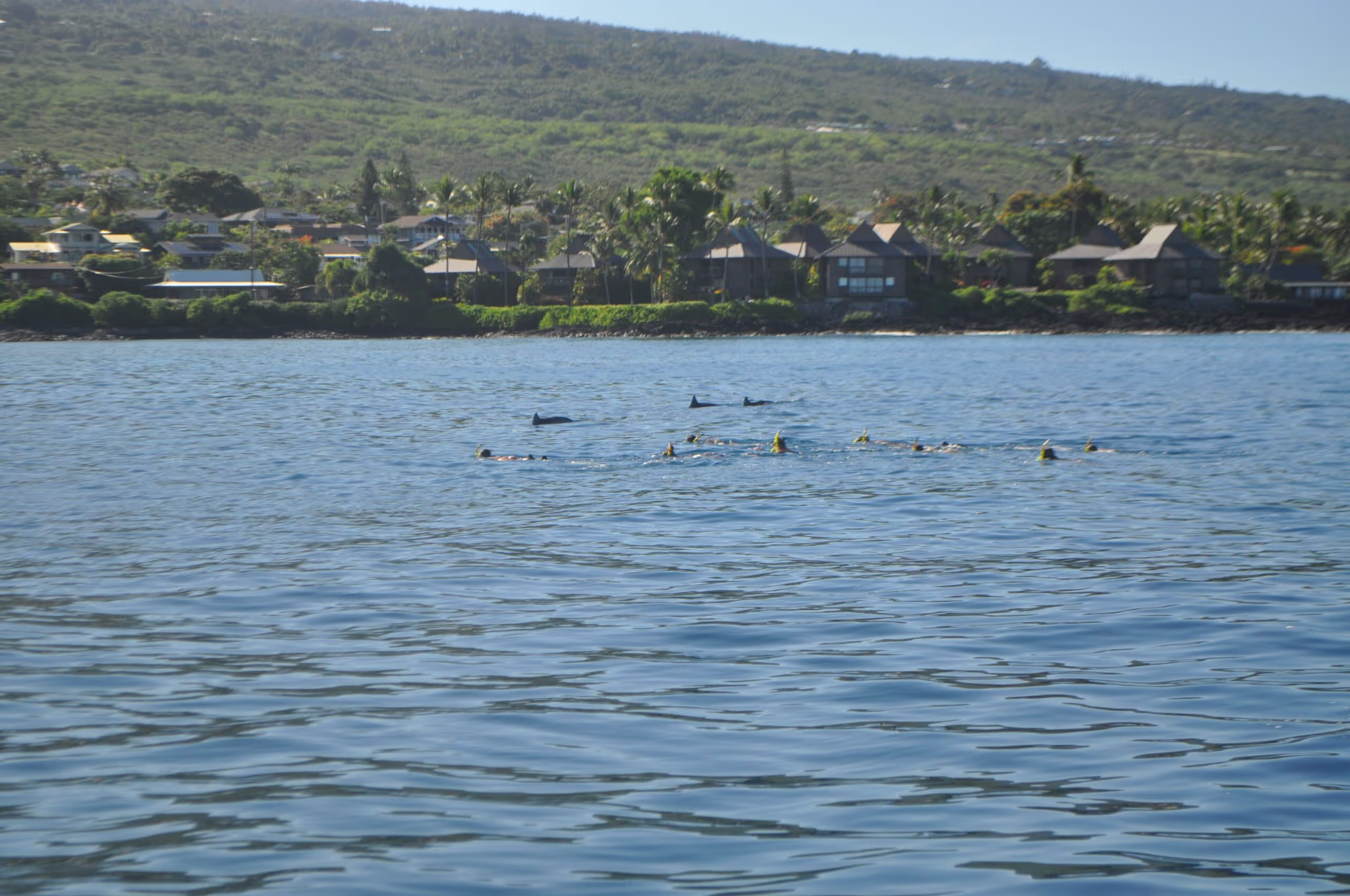
Honaunau Bay is famous for its incredible depth and structural diversity. Near the entry, the water is shallow and filled with thriving coral heads. As you swim further out, the ocean floor drops off quickly, creating a deep channel where pods of wild spinner dolphins frequently rest and play.
A quick word of warning: Keep your eyes peeled for long-spined black sea urchins (wana) tucked into the cracks of the lava rock near the entry steps. Stepping on one of these will put a quick damper on your day!
To learn more about navigating this local favorite, read our dedicated guide on Honaunau Bay Two Step.
Kahalu'u Beach Park: The Best Big Island Snorkeling for Families and Beginners
If you are traveling with young kids, or if you are still getting comfortable with a snorkel and mask, Kahalu'u Beach Park is your absolute best bet.
What makes Kahalu'u so safe and calm is a massive, 3,900-foot-long breakwall constructed by ancient Hawaiians. This historic rock barrier absorbs the brunt of the ocean swells, leaving the inner bay incredibly calm, shallow, and protected.
Because it is so accessible and beginner-friendly, Kahalu'u is incredibly popular, welcoming roughly 400,000 annual visitors. The beach park features excellent facilities, including restrooms, showers, and active lifeguards on duty. The bottom of the bay is a mix of sand and rock, meaning you can easily find a sandy spot to stand up and adjust your mask without accidentally stepping on fragile living coral.
For parents planning a family beach day, our guide on Snorkeling Big Island with Kids is packed with safety tips and recommendations to keep your little ones smiling.
Magical Marine Encounters: Turtles and Manta Rays
While colorful reef fish are wonderful, the Big Island is world-famous for its larger-than-life marine encounters. From graceful green sea turtles to giant manta rays, our waters offer front-row seats to some of nature's greatest spectacles.
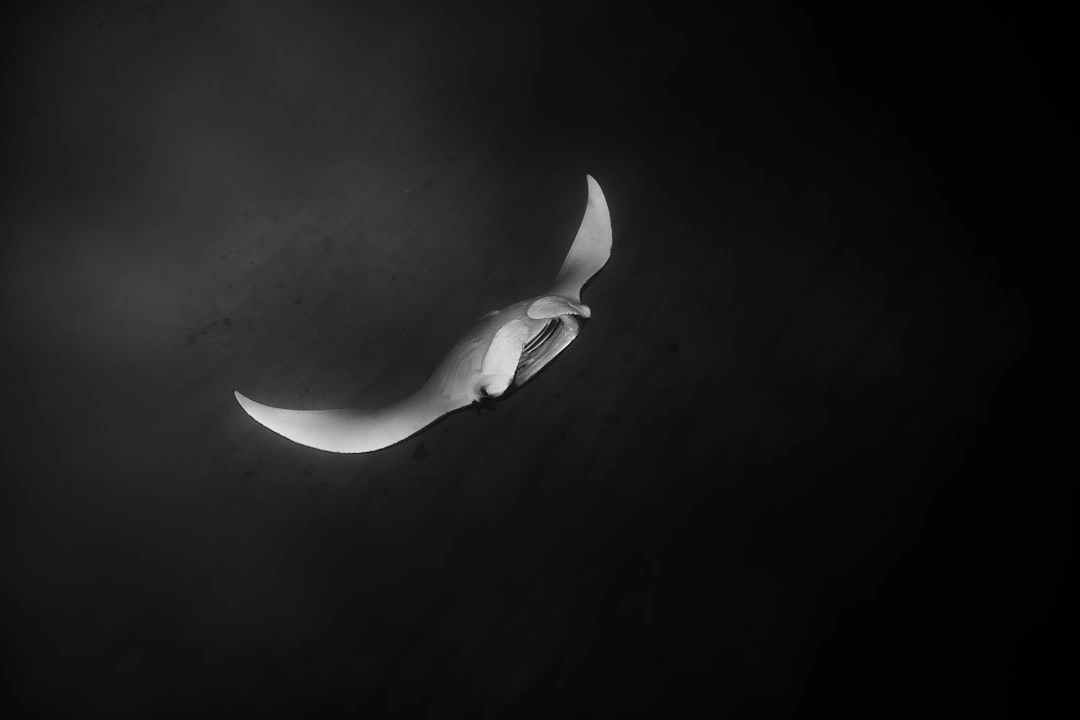
When swimming with these majestic creatures, it is vital to practice ethical wildlife viewing. Never chase, corner, or attempt to touch them. Not only is it stressful for the animals, but touching sea turtles is strictly illegal under federal law, and touching manta rays can rub off the protective mucus coating that shields them from infections. For an overview of what you might spot in our waters, check out our guide on Kona Snorkeling.
Where to See Sea Turtles: Carlsmith Beach Park and Punalu'u
If seeing a green sea turtle (honu) is at the top of your bucket list, you are in luck.
Over on the lush, eastern side of the island near Hilo, Carlsmith Beach Park offers a unique and beautiful setting. Rather than a typical sandy beach, Carlsmith features a series of calm, lava-rock-enclosed lagoons fed by cold, freshwater natural springs. The mixing of cold spring water and warm ocean water creates a refreshing, brackish environment that sea turtles absolutely love. The turtles here are incredibly accustomed to humans and will often swim right up to wading snorkelers!
On the southern coast, Punalu'u Black Sand Beach is another legendary turtle hotspot. The striking jet-black sand, created by hot lava exploding as it hit the cold ocean water, absorbs heat from the sun. Green sea turtles love to crawl up onto the warm black sand to bask in the sun and warm up. While the snorkeling at Punalu'u can get quite choppy and rocky, it is a fantastic place to observe these ancient creatures resting on the shore.
To learn more about the incredible creatures you can spot on your journey, check out From Sea Turtles to Tropical Fish 5 Things You May See on a Big Island Snorkel Trip.
Night Snorkeling with Manta Rays at Keauhou Bay
There are very few places on Earth where you can reliably swim with manta rays, and Kona is the only place where you can do it year-round at night.
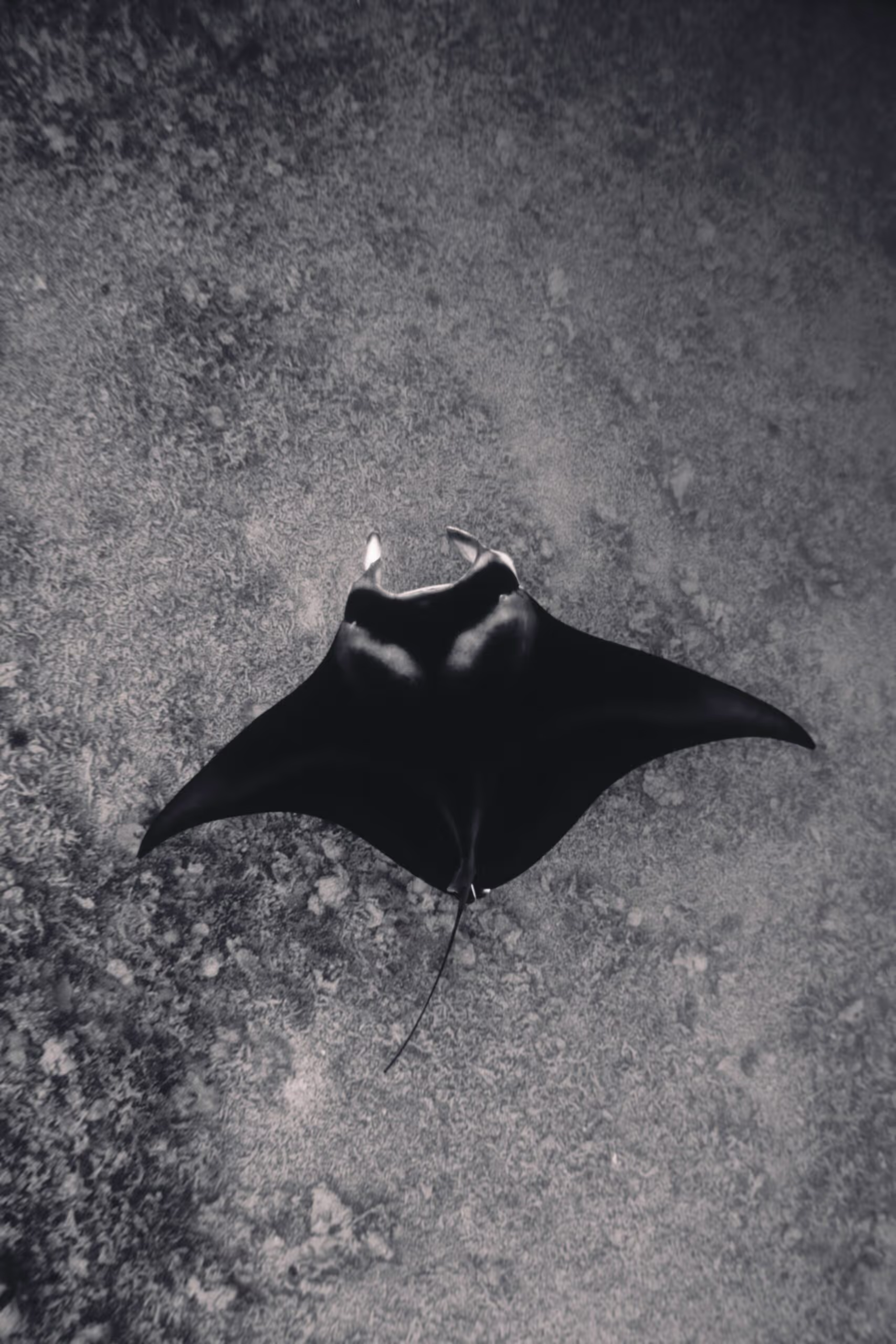
Manta rays are gentle giants of the sea. Unlike stingrays, they do not have barbs or teeth, and they can grow to have massive wingspans of up to 12 feet!
The magic happens right outside Keauhou Bay. After the sun goes down, tour boats gather and deploy specialized floating light rafts. The bright, high-powered lights shine down into the dark water, attracting clouds of microscopic plankton. Because plankton is the manta rays' primary food source, these giant creatures emerge from the deep to feed.
As you hold onto the floating light raft, the manta rays swim up from the darkness, performing graceful, looping "barrel rolls" just inches from your mask to scoop up the plankton. It is an awe-inspiring, almost spiritual experience that routinely ranks as one of the top wildlife encounters in the world.
Ready to experience this nighttime magic for yourself? Book your spot on our world-famous Manta Ray Night Snorkel.
Essential Big Island Snorkeling Safety and Etiquette
To ensure our beautiful reefs remain healthy for generations to come, every snorkeler must practice responsible ocean etiquette.
- Always wear reef-safe, mineral-based sunscreen. Traditional chemical sunscreens contain oxybenzone and octinoxate, which cause "coral cancer" and bleaching. Look for active ingredients like zinc oxide or titanium dioxide.
- Keep your hands to yourself. Never touch, stand on, or kick the coral. Coral is a living animal that grows just 3 millimeters a year!
- Respect the local wildlife. It is illegal to approach closer than 50 yards to wild spinner dolphins. If dolphins swim near you, stay calm, keep your hands at your sides, and let them pass. For current federal guidance, review the NOAA Fisheries marine life viewing guidelines.
- Never swim alone. Ocean conditions can change rapidly in Hawaii. Always use the buddy system and stay aware of your surroundings.
Before you pack your bags, make sure you have the right gear. Here is our recommended packing list for a successful snorkel trip:
- A high-quality silicone mask and dry-top snorkel with a purge valve
- Comfortable, snug-fitting fins
- A thermal rashguard (the water averages a comfortable 78°F, but you can get chilly during longer swims)
- Sturdy hiking sandals or water shoes for navigating hot, sharp volcanic rock
- Reef-safe mineral sunscreen
- An underwater action camera to capture the memories
For a complete safety briefing and preparation guide, read our Know Before You Go page.
Frequently Asked Questions About Big Island Snorkeling
Planning an ocean adventure can bring up plenty of questions. Here are the answers to some of the most common questions we hear from visitors. If you have more questions, explore our comprehensive FAQ page.
How do you access the Captain Cook Monument at Kealakekua Bay?
There are only three ways to reach the monument:
- By Boat: The safest, most popular, and most comfortable option is to book a guided boat tour.
- By Hike: You can hike the 4-mile roundtrip Captain Cook Monument Trail. Be prepared for a steep, hot climb on the way back up (450-meter elevation gain) with zero shade.
- By Kayak: You can rent a kayak from a licensed vendor at Napo'opo'o Pier, but you must obtain a state permit to land your kayak near the monument.
For a detailed look at planning your visit to this historic spot, check out our guide on Captain Cook Snorkeling.
What is the best time of day to go snorkeling on the Big Island?
For daytime snorkeling, morning is king. The ocean is almost always calmer, clearer, and less windy in the morning hours before the afternoon sea breezes kick up.
For our manta ray night tours, booking the latest available slot (around 9:00 PM) is often a fantastic insider secret. By late evening, many of the earlier tour boats have headed back to harbor, meaning there are fewer lights and rafts in the water, which often concentrates the manta rays around our group!
For more tips on timing your day, read How to Plan the Best Day Snorkeling on the Big Island Kona Coast.
Which Big Island snorkeling spots are free versus paid?
Most of the island's beach parks—including Kahalu'u, Carlsmith, and Punalu'u—are completely free to access, though some may charge a small fee for parking.
Two Step (Honaunau Bay) is free to snorkel, but parking in the adjacent national park lot costs $20 (unless you have an America the Beautiful National Parks Pass), though nearby private lots offer parking for $5 to $10.
While spots like Kealakekua Bay are technically free to snorkel if you hike in, joining a guided boat tour is a paid experience that saves you hours of exhausting physical labor and provides expert instruction, safety gear, and refreshments. To explore our tour options, visit our Tours page.
Conclusion
The Big Island of Hawaii is a wild, elemental paradise that boasts some of the most spectacular, pristine underwater environments on earth. Whether you are floating above the colorful coral gardens of Kealakekua Bay, watching sea turtles swim through the cool springs of Carlsmith, or locking eyes with a giant manta ray under the stars, the ocean here will leave you changed forever.
At Dolphin Discoveries, we specialize in sharing the magic of the Kona Coast through intimate, small-group tours. Departing from the convenient Keauhou Bay, our fast, rigid-hull inflatable boats get you to the best snorkel sites quickly and comfortably, leaving the crowds far behind. Led by certified marine naturalists, we focus on safe, educational, and deeply ethical wildlife encounters.
Our tours are designed to fit any budget and adventure level:
- Captain Cook Snorkel Tour (3 hours): Starts at $79.99 per person—perfect for exploring pristine reefs and historic landmarks.
- Manta Ray Night Snorkel (2 hours): Starts at $99.99 per person—an absolute bucket-list night adventure.
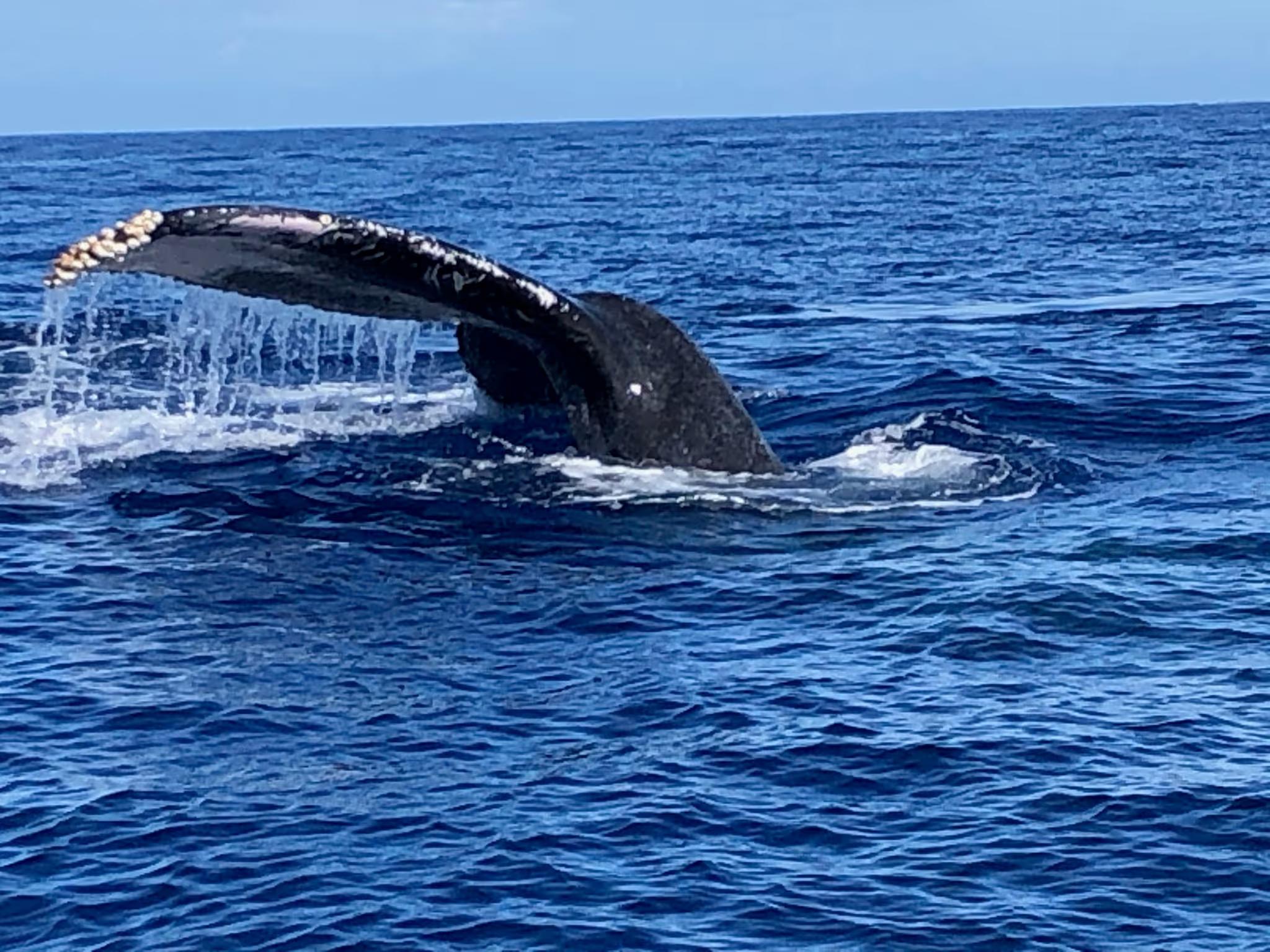
- Dolphin & Whale Watching (2 hours): Starts at $99.99 per person—ideal for spotting ocean mammals in their natural habitat.
- Kona Snorkel Tour – Two Snorkeling Spots (4 hours): Starts at $109.99 per person—the ultimate half-day ocean expedition.
- Private Boat Charter: Starts at $1,050 for up to 34 guests on our fully customizable "Holo Holo" boat—perfect for families, wedding parties, or groups seeking a private VIP experience.
Please note: All prices are subject to change. Always confirm current rates, schedules, and availability directly at dolphindiscoveries.com.
Ready to make some waves? Book your ultimate private adventure on our Kona Private Boat Tour and let's get wet!