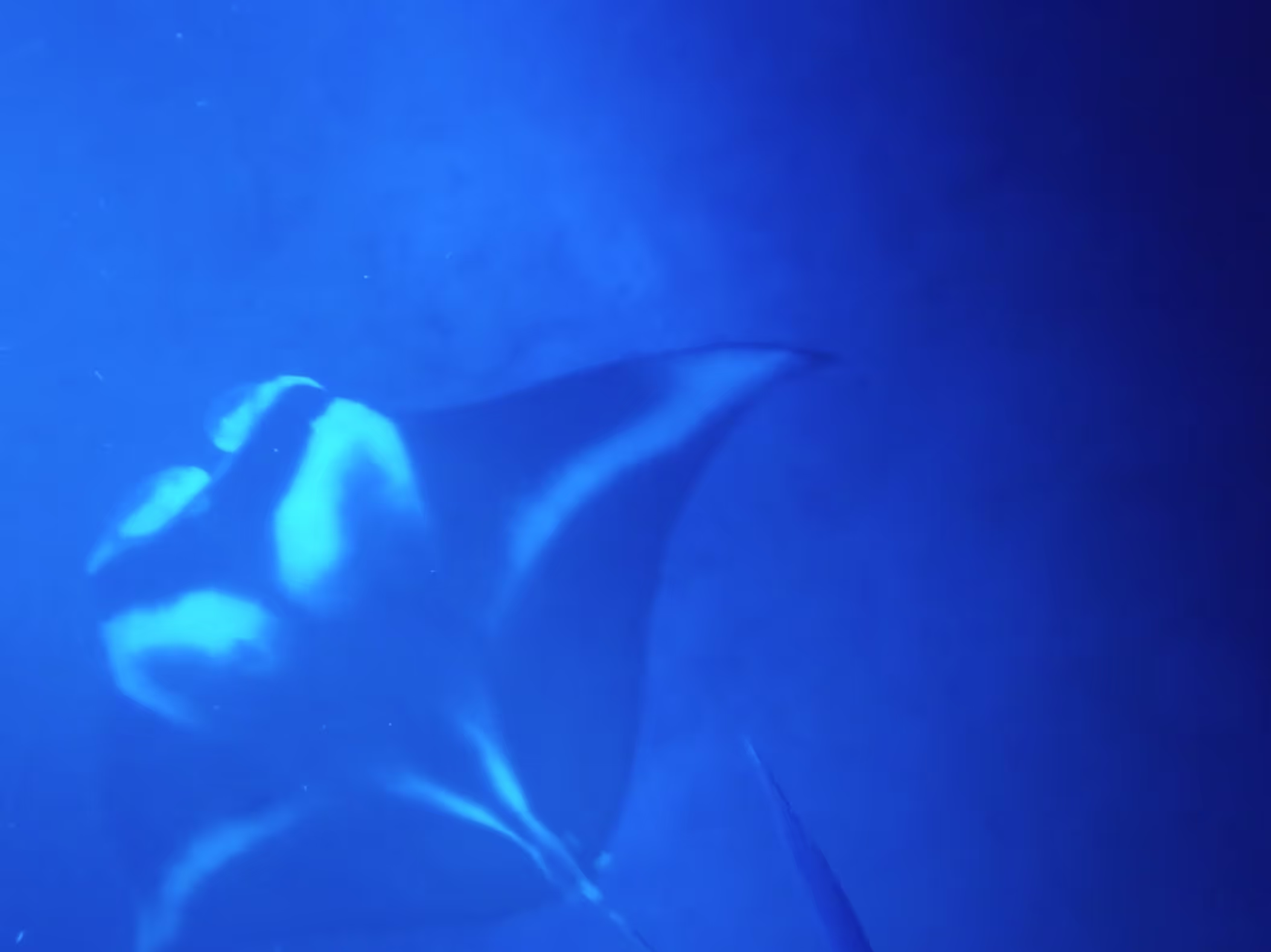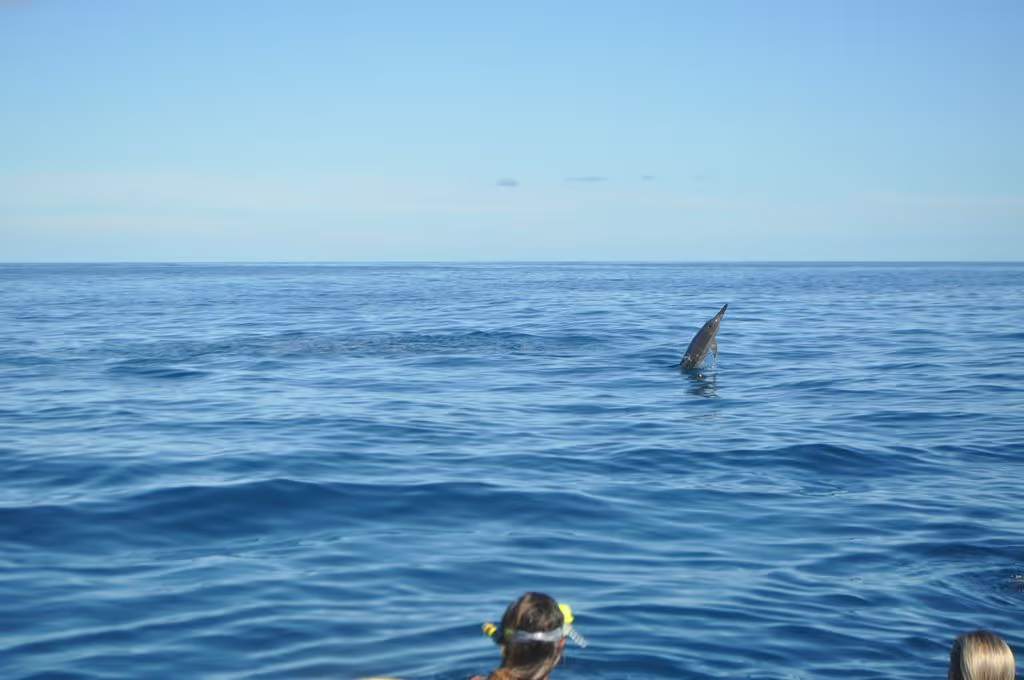



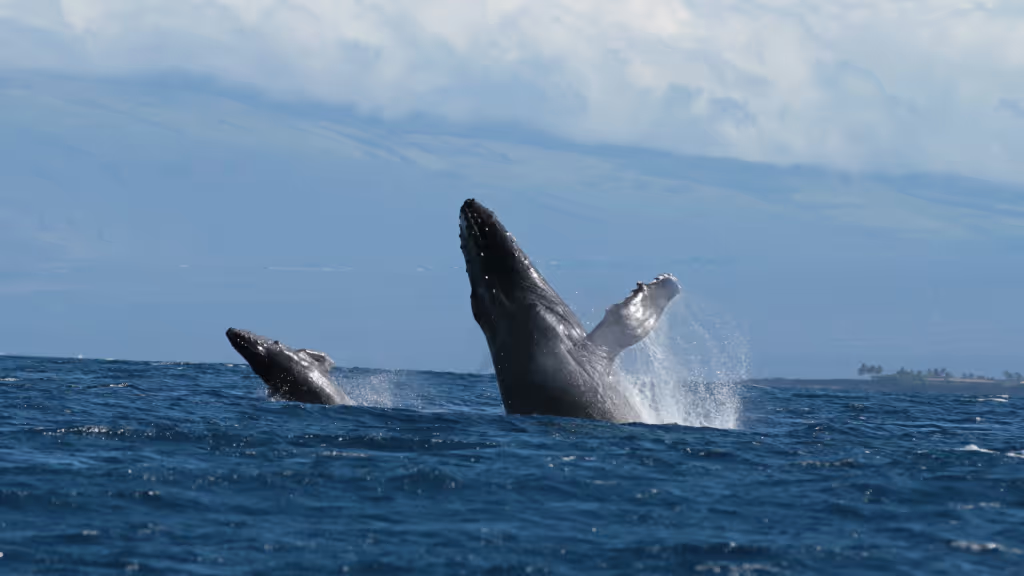
Hawaii's Division of Aquatic Resources compares an adult humpback to a school bus. Watching one launch itself out of the ocean is hard to forget. So why do whales breach? The short answer: scientists are still working it out. They have strong clues, though, and most of them point to communication. Off Kona, humpback whales breach, slap and spy hop most often during whale season, when they come to Hawaii to mate and give birth.
This guide covers what researchers know about breaching, the other surface behaviors to watch for, and what you can expect to see from the boat on a whale tour with us out of Keauhou Bay.
Why Do Whales Breach?
A breach is when a whale pushes its body up and out of the water. NOAA describes full breaches, half breaches, spinning breaches and chin-slap breaches.
Hawaii's Division of Aquatic Resources (DAR) says scientists have not settled on one reason. The reasons it lists include:
- Communication - A breach makes a loud splash that other whales may pick up from far away.
- Male competition - Males compete for females during the breeding season in Hawaii.
- Protective mothers - Mothers stay very close to their calves during the first year.
- Curiosity and play - Some surface activity may simply be whales being whales.
What the research says
The best evidence comes from a study published in Marine Mammal Science by Kavanagh and colleagues at the University of Queensland. They watched migrating humpbacks off the east coast of Australia and recorded the sounds around them.
- Breaching was linked to distance - Whales were less likely to breach when the nearest other group was within 4 kilometers (about 2.5 miles). That suggests a breach is a long-distance signal between groups.
- Wind made a difference - Hakai Magazine reported that whales were more likely to breach and slap when it was windy. A splash may carry better than a call when the ocean is noisy.
- Slaps were close-range - Fin, tail and peduncle slaps were tied to groups joining or splitting up, which points to short-range communication.
So a breach may be a whale's way of saying "here I am" to whales far away. A slap may be more like a conversation with whales nearby.
Humpback Behaviors to Watch For
DAR lists breaching, spy hopping, tail slaps, peduncle throws and pectoral fin slaps among the behaviors seen in Hawaii during whale season. Here is what each one looks like.
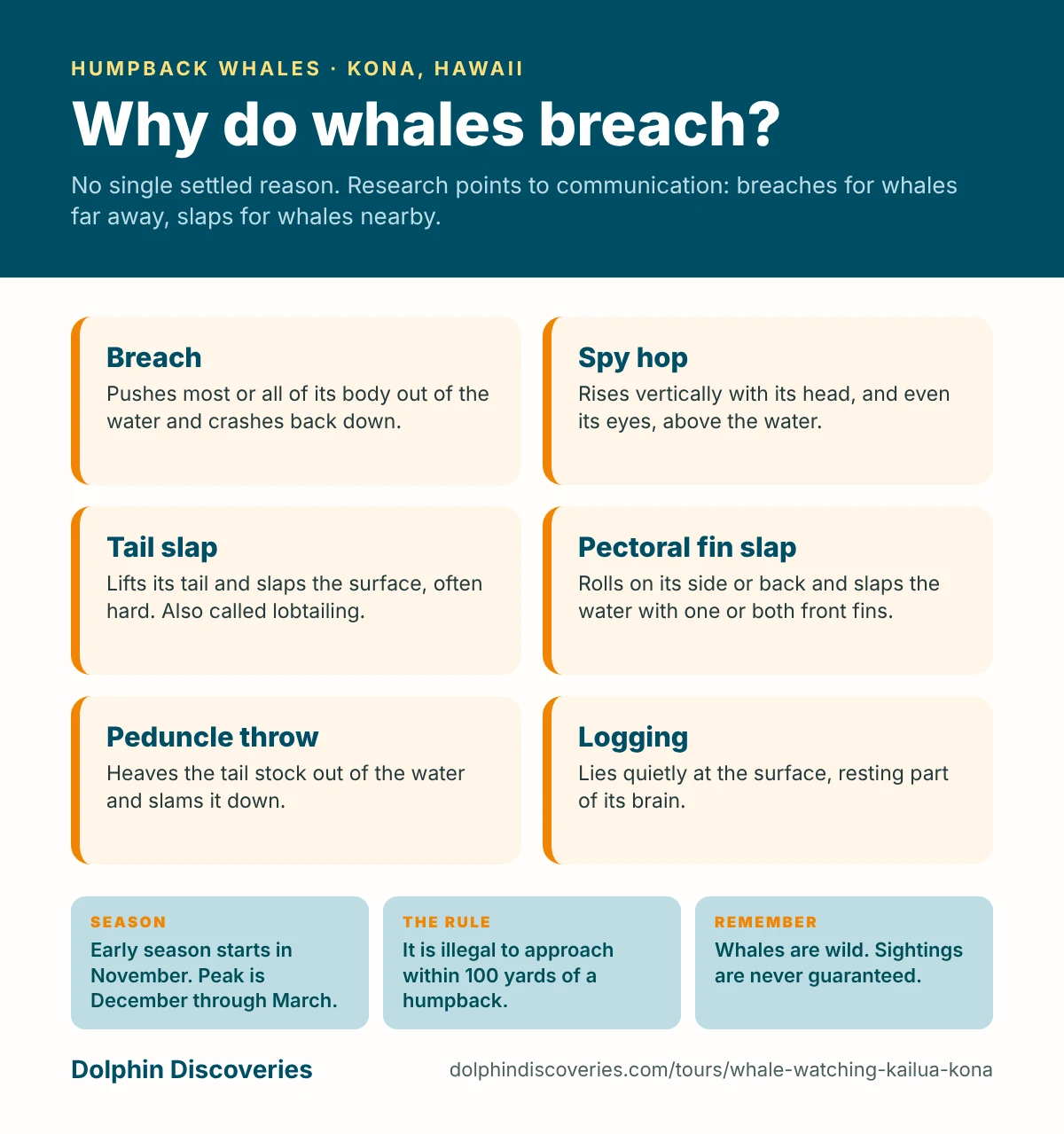
- Breach - The whale pushes most or all of its body out of the water and crashes back down. Look for a tall white splash on the horizon.
- Spy hop - NOAA describes a whale rising vertically or at an angle with its head, and even its eyes, above the water. It may turn 90 to 180 degrees before slipping back under.
- Tail slap - Also called lobtailing. The whale lifts its tail and slaps the surface, often hard.
- Pectoral fin slap - The whale rolls on its side or back and slaps the water with one or both long front fins. NOAA says this may help the whale cool off or communicate.
- Peduncle throw - The whale heaves the thick rear part of its body, the tail stock, out of the water and slams it down. In the Australian study, peduncle slaps came up when groups were meeting or parting.
- Logging - A whale lying quietly at the surface. NOAA says scientists believe whales rest part of their brain this way while the other part stays alert.
Calves and competition pods
Hawaii is where humpbacks come to give birth. Our whale watching Kona tour page describes calves learning to flip over and slap their fins, and the action of a competition pod. DAR notes that females typically have one calf every 2 to 3 years, and that warm Hawaiian water helps newborn calves stay warm.
To learn more about humpbacks in general, see our Learn About Whales page.
When You Can See Breaching in Kona
Humpbacks travel more than 3,000 miles from Alaska to Hawaii each year. Early whale season starts in November. Peak season runs December through March. Our Big Island whale season guide covers timing in more detail.
Whales are wild, and no one can promise a breach. This is an El Niño year, and sightings and timing have been harder to predict. Some trips see lots of surface action. Others see whales that stay low and quiet.
What to Expect on a Kona Whale Tour
Our Dolphin and Whale Watching Kailua-Kona tour is $99.99 and lasts 2.5 hours, with check-in time built into the schedule. Guests ages 5 to 70 are welcome, and no swimming is involved. Groups are small, 6 to 20 guests, on an open-air boat.

- Check in - Meet us at our retail store in the Keauhou Shopping Center, 78-6831 Ali'i Dr, Suite F-146, Kailua-Kona. Arrive no more than 10 minutes before your check-in time.
- Head to Keauhou Bay - You board at Keauhou Bay. We are the only whale-watching operator departing Keauhou Harbor.
- Scan the water - Kona is home to the southernmost whale watching in the United States. Look for blows, splashes and dark backs. Binoculars are available on board.
- Listen in - Our boat has an underwater hydrophone system, so you can listen for whale sounds.
- Learn as you go - The captain narrates what you are seeing, from a breach to a spy hop.
- Watch for dolphins too - Spinner, bottlenose and pantropical spotted dolphins live off Kona all year.
Tips for spotting a breach
- Watch the horizon - A breach often shows up first as a white burst far away.
- Keep your camera ready - Surface action can happen fast.
- Plan for motion - Our tips on how long seasickness lasts can help you prepare.
- Check the list - See Know Before You Go for what to bring.
The 100-Yard Rule
The Hawaiian Islands Humpback Whale National Marine Sanctuary says it is illegal to approach within 100 yards of a humpback whale. DAR adds that this applies to boats, kayaks, paddleboards, swimmers and drones. If you see an injured or entangled whale, call the NOAA hotline at (888) 256-9840.
Frequently Asked Questions
Why do whales breach?
No one knows for sure. Research suggests breaching helps whales communicate with groups far away. DAR also lists male competition, protective mothers, curiosity and play as possible reasons.
When is the best time to see humpbacks breach in Kona?
Early whale season starts in November, and peak season runs December through March. Sightings are never guaranteed.
Do whales breach more in windy weather?
In the Australian study, whales were more likely to breach and slap on windy days, possibly because a splash carries better than a call over a noisy ocean.
How close can you get to a humpback whale in Hawaii?
It is illegal to approach within 100 yards of a humpback whale in Hawaii, by boat, kayak, paddleboard, swimming or drone.
How long is the whale watching tour?
Our Dolphin and Whale Watching Kailua-Kona tour lasts 2.5 hours, with check-in time built into the schedule. It is $99.99 for ages 5 to 70.
Do I need to swim on the whale tour?
No. It is a boat-based tour with no swimming. You stay on board the whole time.
Ready to watch for breaches? Book a Dolphin and Whale Watching Kailua-Kona tour, or call (808) 322-8000 with questions.