

Understanding Manta Ray Behavior: Why These Giants Are Safe to Swim With
When travelers first consider slipping into the ocean with giant rays, apprehension is natural. Seeing a creature with a massive silhouette approach through open water can get your heart pumping. However, mantas are among the most harmless and gentle animals in the sea. They have zero interest in humans as prey and possess no defensive weapons.
These ocean giants are cartilaginous fish closely related to sharks, yet they evolved down a completely non-aggressive path. Rather than hunting large prey, they glide effortlessly through the water column, funneling microscopic plankton into their wide mouths using flexible cephalic fins located on either side of their head. You can learn about manta rays to better understand how their anatomy, feeding patterns, and calm temperaments make them exceptional animals to observe in their natural habitat.
Understanding the difference between mantas and their bottom-dwelling relatives is essential for water confidence:
| Feature | Manta Rays (Mobula alfredi / Mobula birostris) | Stingrays (Various species, e.g., Dasyatidae) |
|---|---|---|
| Dietary Style | Filter feeders targeting zooplankton | Carnivores eating crabs, mollusks, and small fish |
| Tail Barb | None; completely barbless and harmless | Sharp, venomous barb used for self-defense |
| Water Column Position | Pelagic; actively swims through open water | Benthic; rests on or buries in the sandy seabed |
| Average Size | Wingspans from 3 to over 5 meters (up to 3,000 kg) | Typically 0.3 to 2 meters across |
| Human Interaction | Harmless, gentle, and naturally curious | Docile, but may sting if stepped on accidentally |
Manta Rays vs Stingrays: Filter Feeders Without Barbs
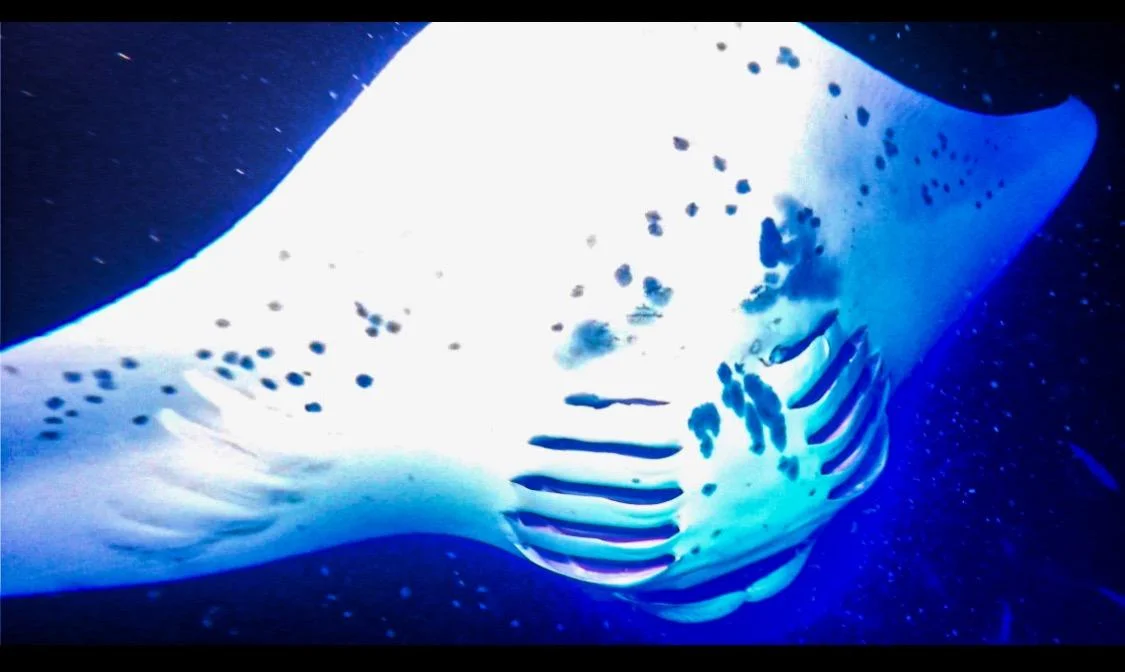
The most common misconception is that a manta ray possesses a venomous barb like a stingray. Mantas do not have stingers, barbs, or defensive spikes of any kind. They also do not have sharp teeth capable of biting; instead, they have tiny, non-functional tooth bands that play no role in feeding.
Because they are filter feeders, their survival depends entirely on gathering concentrated clouds of plankton. Mantas rely on speed, grace, and situational awareness to navigate their surroundings, posing no threat to swimmers who treat them with basic ocean etiquette.
Essential Code of Conduct for Safe Manta Ray Encounters
Because these animals pose no danger to us, human behavior is the main variable that determines whether an interaction is safe and sustainable. Following a dedicated code of conduct prevents distress to the rays while protecting human participants from accidental collisions.
Unregulated tourism can crowd feeding zones and disrupt natural behaviors. Adhering to proven guidelines for ethical manta encounters ensures that our presence supports wildlife conservation rather than creating stress for local populations.
The 10-Step Protocol for Safe Manta Ray Encounters
Practicing safe manta ray encounters involves following clear, field-tested rules established by marine scientists and responsible guides worldwide. The internationally recognized 10-step guide to swimming with mantas provides a clear framework for every water entry:
- Enter quietly: Slip into the ocean calmly without jumping, stomping, or creating loud splashes that could startle marine life.
- Keep fins submerged: Swim smoothly while keeping your fin blades under the surface to minimize splashing and turbulence.
- Maintain initial spacing: Position yourself at least 10 meters (33 feet) away upon entering the water before settling into your viewing position.
- Observe the three-meter rule: Never intentionally swim closer than 3 meters (10 feet) to a manta ray.
- Approach from the side: If swimming near a ray, stay parallel to its side to leave its forward swimming path completely clear.
- Never chase: Mantas easily outpace human swimmers; chasing creates acute stress and causes them to abandon the feeding area.
- Never touch: Touching strips away their delicate protective mucous coating, leaving them vulnerable to skin infections and bacterial lesions.
- Stay low around cleaning stations: Scuba divers should stay close to the seabed along the perimeter, avoiding the central cleaning zone.
- Yield the right of way: If a manta glides overhead, remain still and low, giving the animal ample clearance.
- Follow local rules: Comply with all local marine sanctuary regulations and specific briefing instructions provided by your tour crew.
Maintaining Safe Distance and Managing Direct Approaches
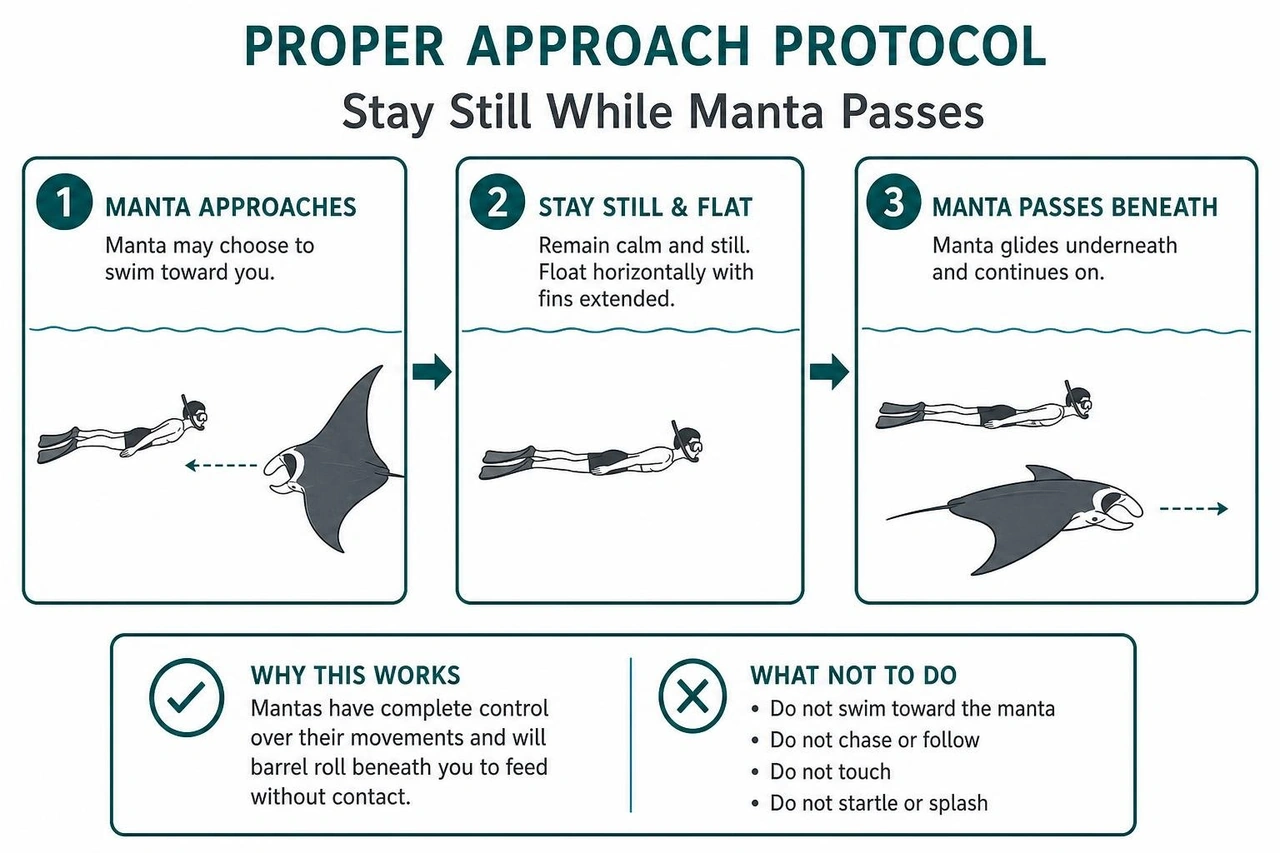
While human participants must never swim toward a ray within the 3-meter boundary, mantas themselves are naturally curious and frequently choose to close the distance. Understanding what to expect during night manta snorkeling helps you stay calm when a multi-ton giant glides within inches of your mask.
If a ray approaches you directly, remain stationary. Floating horizontally at the surface with your legs extended keeps your profile compact. Mantas have complete control over their movements and will perform an acrobatic "barrel roll" beneath you to scoop up plankton without making physical contact.
Protecting Cleaning Stations and Coral Reefs
During daylight hours, mantas often visit specific reef sections known as cleaning stations. Small cleaner wrasses and butterflyfish pick parasites and dead tissue from the ray's skin, gills, and mouth.
Human disturbance can drive mantas away from these vital cleaning stations, compromising their health. Maintaining neutral buoyancy and avoiding direct contact with coral heads protects fragile reef structures while preserving these essential gathering spots.
Preparing for Your Snorkel: Gear, Family Logistics, and Site Regulations
Proper physical preparation and high-quality gear ensure a calm, comfortable experience in open water. Reviewing practical manta ray night snorkel tips beforehand helps you prepare for water temperature, gear fit, and nighttime conditions.
- Exposure protection: A comfortable 3mm neoprene wetsuit or top provides essential thermal insulation and added buoyancy.
- Fitted mask and snorkel: Ensure your mask has a snug seal to prevent leaks, and apply a reliable defog solution before entering the water.
- Flotation equipment: Holding onto a specialized floating light board keeps your group together and lets you view the action effortlessly without treading water.
- Reef-safe sunscreen: If you are out before sunset, use physical mineral sunscreens (zinc oxide or titanium dioxide) that do not contain reef-damaging chemicals like oxybenzone.
How Families and Children Can Experience Safe Manta Ray Encounters
Manta snorkeling is accessible to a wide range of ages. Children aged 6 and above who are comfortable wearing a mask in open water can participate safely alongside their family.
Small-group tours provide a safe and secure setting where guides can offer dedicated assistance to younger snorkelers. Holding onto a shared surface light board allows children to look directly down into the illuminated water while keeping their bodies horizontal and stable throughout the swim.
Global Standards and Regional Marine Protected Area Rules
Around the world, marine sanctuaries enforce strict policies to balance visitor access with animal welfare. For example, the UNESCO Biosphere Reserve at Hanifaru Bay caps simultaneous visitors at 80 people and prohibits scuba diving to prevent exhaust bubbles from disturbing feeding aggregations.
In Hawaii, similar protective values guide responsible ocean tourism. Operators along the Kona Coast coordinate light board placement and group sizes to prevent overcrowding at popular sites, ensuring that our presence remains safe, respectful, and sustainable for the local manta population.
The Role of Sustainable Ecotourism in Manta Ray Conservation
Worldwide, manta tourism generates an estimated US$140 million annually. This economic value provides a strong incentive for coastal communities and governments to protect manta rays and their habitats rather than exploit them.
When you join a well-managed excursion, your participation directly supports active research, photo-identification catalogs, and marine education. Our small-group Kona manta ray night snorkeling excursions depart just a short 5-minute boat ride from Keauhou Bay, allowing our naturalist guides to share detailed insights on individual mantas while minimizing environmental impact.
Frequently Asked Questions About Swimming with Manta Rays
Are manta rays dangerous to swim or snorkel with?
No. Manta rays are non-aggressive filter feeders that lack stingers, venomous barbs, and biting teeth. They feed exclusively on microscopic zooplankton and pose no threat to humans in the water.
What should you do if a manta ray swims directly toward you?
Stay completely still, keep your body horizontal at the surface, and let the ray dictate the movement. Mantas have remarkable spatial awareness and will glide gracefully underneath or around you without making contact.
What equipment do you need for a manta ray night snorkel?
You need a fitted snorkel mask, a snorkel, a wetsuit for warmth and buoyancy, and access to a stable, illuminated surface board that attracts plankton and gives you a comfortable handhold throughout the tour.
Experience the Magic with Dolphin Discoveries
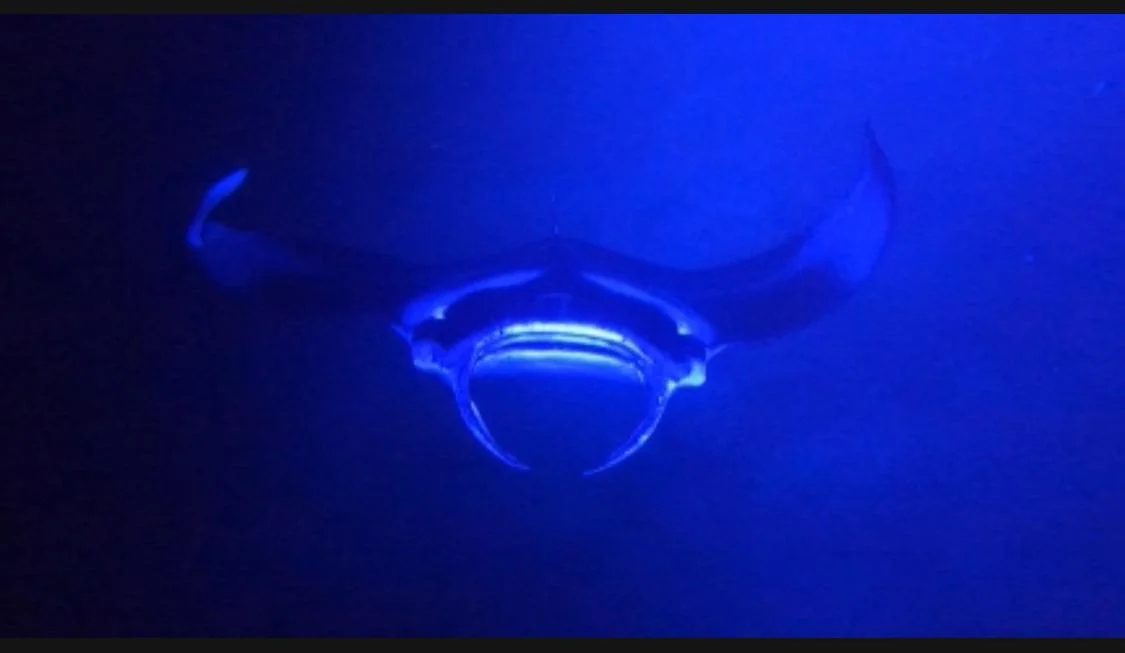
Observing a manta ray glide up from the dark to perform a graceful barrel roll in the beam of our "floating campfire" light board is a surreal, life-changing ocean encounter.
At Dolphin Discoveries, we keep our groups small to avoid the crowded feel of large "cattle-maran" boats. Our knowledgeable crew shares authentic naturalist insights on every trip, treating the ocean and its residents with the deepest Aloha. If you are ready to experience the wonders of the Kona Coast with a team dedicated to safe, respectful wildlife viewing, we invite you to join our manta ray night snorkel in Kona or explore our other guided adventures from Keauhou Bay. Mahalo Nui for choosing sustainable ocean tourism!